
Binance Academy
2.2k ໂພສ

Binance Academy
 ບັນຊີທີ່ຮອງຮັບຈາກ Binance ເປັນທາງການ
ລາຍງານ
Your complete guide to crypto and blockchain
6 ກໍາລັງຕິດຕາມ
900.2K+ ຜູ້ຕິດຕາມ
214.0K+ Liked
ໂພສ
ທັງໝົດ
ວົງຢືມ
ວີດີໂອ
ຖ່າຍທອດສົດ
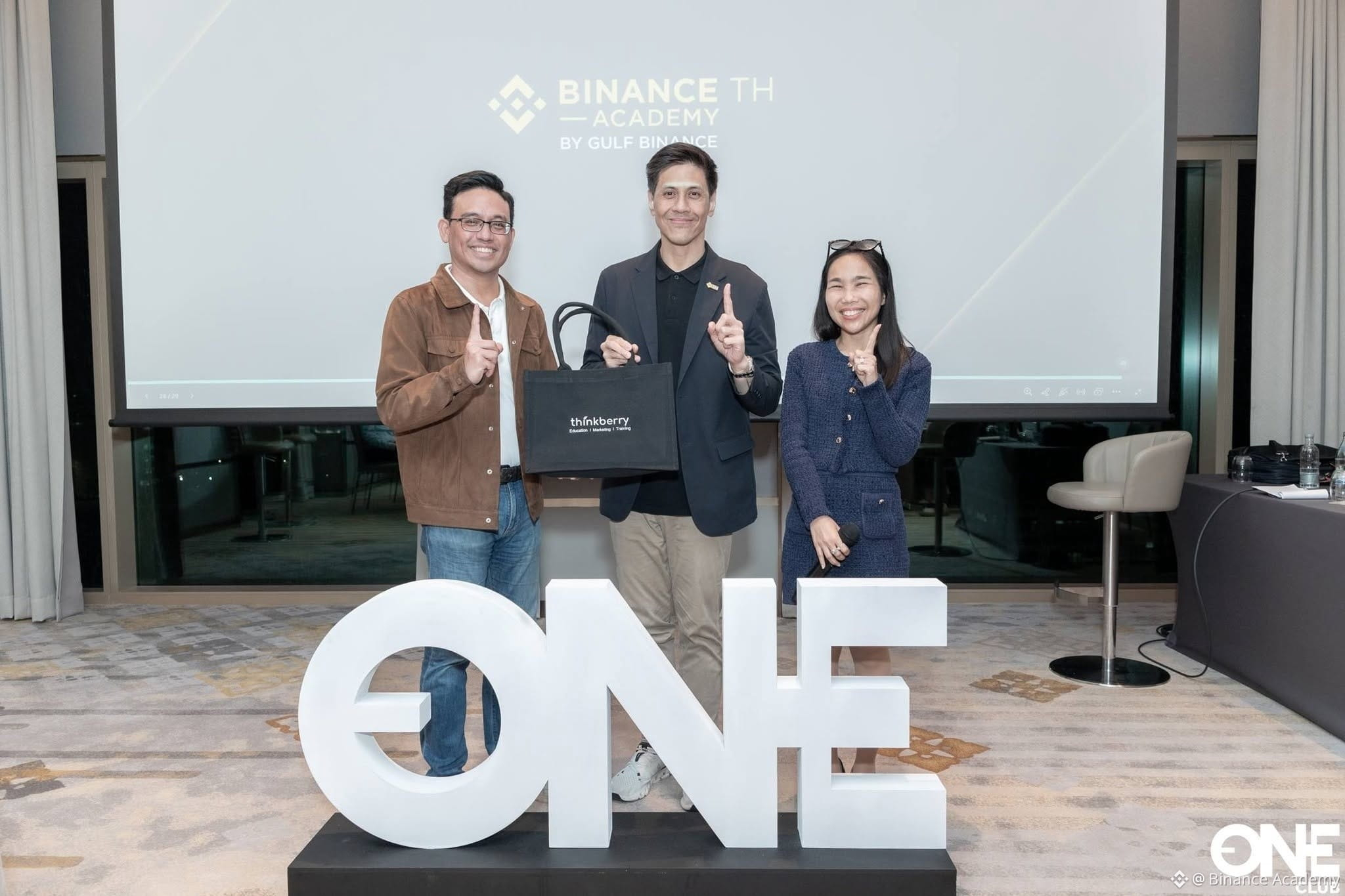
AI is changing business fast and for founders, keeping up with the tech is only step one 🇹🇭
Highlights from our session with ONE Club Bangkok on how executives can spot opportunities across AI and digital assets and turn strategy into real results before 2030 👇
AI is changing business fast and for founders, keeping up with the tech is only step one 🇹🇭
Highlights from our session with ONE Club Bangkok on how executives can spot opportunities across AI and digital assets and turn strategy into real results before 2030 👇
Highlights from our session with ONE Club Bangkok on how executives can spot opportunities across AI and digital assets and turn strategy into real results before 2030 👇



1
14
33.7k
Smart contracts on Ethereum are deterministic, but they have one built-in blind spot: they cannot natively fetch off-chain interest rates, equity prices, or banking records on their own.
On November 19, UBS and Chainlink deployed a live production workflow on Ethereum to automate tokenized structured notes—targeting a global structured-products market exceeding $2 trillion where manual servicing errors cost institutions billions annually. The deployment shows how modern oracle infrastructure goes well beyond basic crypto price feeds:
1️⃣ Independent Data Verification:
Multiple Chainlink node operators fetch and validate external market data so no single data source can corrupt contract execution.
2️⃣ Chainlink Runtime Environment (CRE):
Modular off-chain and on-chain workflows monitor note conditions and trigger multi-step lifecycle events automatically on Ethereum.
3️⃣ Legacy Ledger Sync:
Verified oracle messaging keeps on-chain token contracts synchronized with regulated banking systems throughout issuance, coupon calculation, and maturity.
👉 [See how Chainlink’s decentralized node network, CCIP, and Runtime Environment power smart contracts.](https://www.binance.com/en/academy/articles/what-is-chainlink-link?utm_source=binanceacademysquare&utm_medium=social&utm_campaign=article)
Smart contracts on Ethereum are deterministic, but they have one built-in blind spot: they cannot natively fetch off-chain interest rates, equity prices, or banking records on their own.
On November 19, UBS and Chainlink deployed a live production workflow on Ethereum to automate tokenized structured notes—targeting a global structured-products market exceeding $2 trillion where manual servicing errors cost institutions billions annually. The deployment shows how modern oracle infrastructure goes well beyond basic crypto price feeds:
1️⃣ Independent Data Verification:
Multiple Chainlink node operators fetch and validate external market data so no single data source can corrupt contract execution.
2️⃣ Chainlink Runtime Environment (CRE):
Modular off-chain and on-chain workflows monitor note conditions and trigger multi-step lifecycle events automatically on Ethereum.
3️⃣ Legacy Ledger Sync:
Verified oracle messaging keeps on-chain token contracts synchronized with regulated banking systems throughout issuance, coupon calculation, and maturity.
👉 See how Chainlink’s decentralized node network, CCIP, and Runtime Environment power smart contracts.
15
31.5k
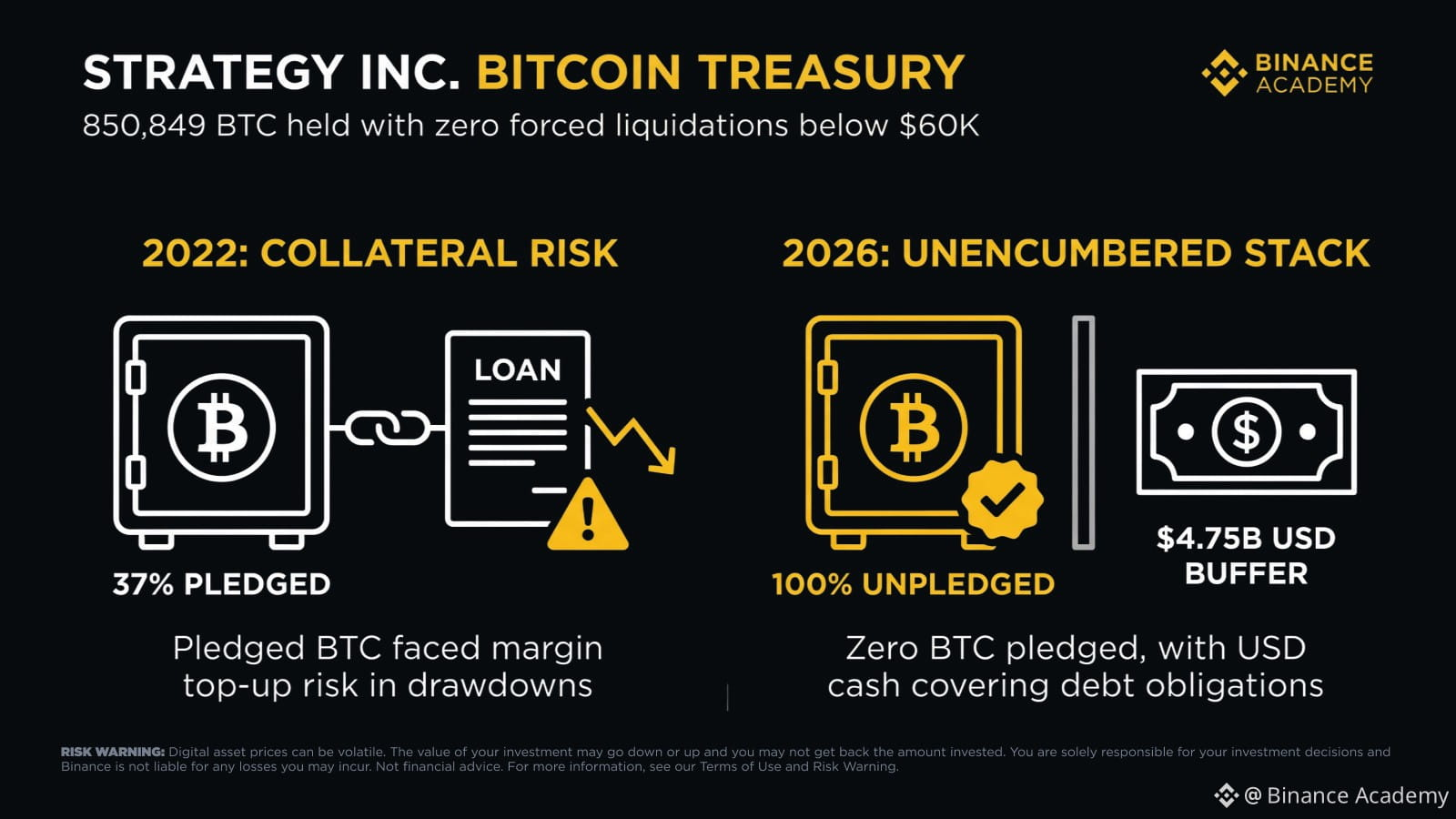
A Bitcoin treasury strategy differs fundamentally from a short-term trading position: companies hold BTC on the balance sheet for multi-year horizons, which means survival during sharp drawdowns comes down to how the reserve is financed and custodied.
Per Strategy Inc.’s November 16 SEC Form 8-K and November 20 reserve update, the largest corporate Bitcoin holder now holds 850,849 BTC (4.05% of maximum supply) acquired at an average price of $75,452. Even as November’s pullback below $60,000 pushed unrealized paper losses past $12.5 billion, zero coins faced forced liquidation. Unlike 2022—when roughly 37% of Strategy’s BTC was pledged as loan collateral with top-up triggers—100% of its Bitcoin stack is now unencumbered, while a dedicated $4.75 billion U.S. dollar reserve covers ongoing interest and dividend obligations on its unsecured debt and preferred shares.
Holding volatile reserves on a corporate balance sheet still carries real market, financing, and custody risk—which is why separating long-term reserve custody from collateralized debt is central to institutional treasury design.
👉 [Explore why corporations and governments hold Bitcoin reserves and the key risks involved.](https://www.binance.com/en/academy/articles/what-is-a-bitcoin-treasury-strategy?utm_source=binanceacademysquare&utm_medium=social&utm_campaign=article)
A Bitcoin treasury strategy differs fundamentally from a short-term trading position: companies hold BTC on the balance sheet for multi-year horizons, which means survival during sharp drawdowns comes down to how the reserve is financed and custodied.
Per Strategy Inc.’s November 16 SEC Form 8-K and November 20 reserve update, the largest corporate Bitcoin holder now holds 850,849 BTC (4.05% of maximum supply) acquired at an average price of $75,452. Even as November’s pullback below $60,000 pushed unrealized paper losses past $12.5 billion, zero coins faced forced liquidation. Unlike 2022—when roughly 37% of Strategy’s BTC was pledged as loan collateral with top-up triggers—100% of its Bitcoin stack is now unencumbered, while a dedicated $4.75 billion U.S. dollar reserve covers ongoing interest and dividend obligations on its unsecured debt and preferred shares.
Holding volatile reserves on a corporate balance sheet still carries real market, financing, and custody risk—which is why separating long-term reserve custody from collateralized debt is central to institutional treasury design.
👉 Explore why corporations and governments hold Bitcoin reserves and the key risks involved.
14
28.8k
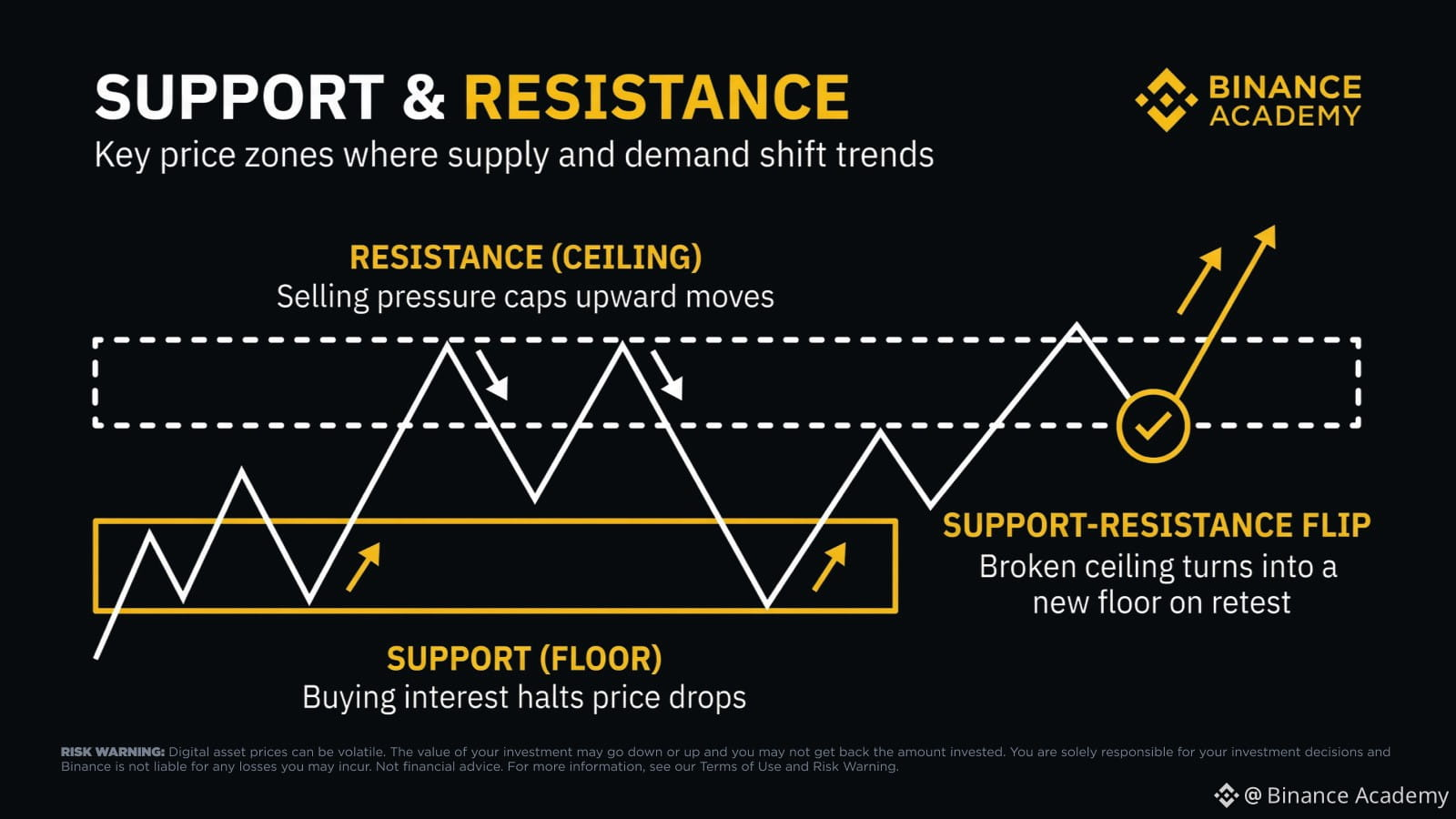
When Bitcoin slipped below $60,000 on November 20 for the first time since July, roughly $1.89 billion in leveraged positions liquidated within 24 hours—accelerating the slide to ~$55,130 before spot buyers pushed price back to the $60,000 threshold over the weekend. The round trip is a textbook study in how psychological levels govern volatile markets.
👉 Psychological Support ($55,000 Zone)
Traders naturally cluster limit buy orders around major round numbers. Once forced derivatives selling exhausted itself near $55,130–$55,250, resting spot bids absorbed the excess supply and triggered a sharp reflex bounce.
👉 The Support-Resistance Flip ($60,000 Retest)
In technical analysis, when a major floor like $60,000 breaks decisively, it frequently acts as overhead resistance on the first bounce back—as trapped buyers look to exit near breakeven and short sellers defend the breakdown zone. Turning $60,000 back into reliable support typically requires confluence across spot volume, order-book depth, and broader market stability rather than a single wick above the level.
[Read how psychological levels, confluence, and support-resistance flips work across market cycles.](https://www.binance.com/en/academy/articles/the-basics-of-support-and-resistance-explained?utm_source=binanceacademysquare&utm_medium=social&utm_campaign=article)
When Bitcoin slipped below $60,000 on November 20 for the first time since July, roughly $1.89 billion in leveraged positions liquidated within 24 hours—accelerating the slide to ~$55,130 before spot buyers pushed price back to the $60,000 threshold over the weekend. The round trip is a textbook study in how psychological levels govern volatile markets.
👉 Psychological Support ($55,000 Zone)
Traders naturally cluster limit buy orders around major round numbers. Once forced derivatives selling exhausted itself near $55,130–$55,250, resting spot bids absorbed the excess supply and triggered a sharp reflex bounce.
👉 The Support-Resistance Flip ($60,000 Retest)
In technical analysis, when a major floor like $60,000 breaks decisively, it frequently acts as overhead resistance on the first bounce back—as trapped buyers look to exit near breakeven and short sellers defend the breakdown zone. Turning $60,000 back into reliable support typically requires confluence across spot volume, order-book depth, and broader market stability rather than a single wick above the level.
Read how psychological levels, confluence, and support-resistance flips work across market cycles.
4
1
30
137k
ບົດຄວາມ
TradFi 101: How to Buy Your First Stock$Bought crypto before? You're one step away from owning your first share.
1. What's TradFi? You Use It Every Day
TradFi = Traditional Finance
If you’ve ever put money in a savings account or just downloaded a brokerage app, that already makes you a TradFi user.
If you trade crypto, you've already accessed the three core mechanisms of stock trading:
Asset ownership — What am I actually holding?Price discovery — What does the market think this stock is worth?Placing orders — How do I buy and sell?
2. What's a Stock? Become an "Owner"
A stock (also called a share) is a small piece of ownership in a company.
Think of the chips that run many AI models today: they’re likely from Nvidia (NVDA).
Nvidia is divided into more than 24 billion shares.
With owning each share comes a fraction of Nvidia's earnings and its future, and you stand to gain three things:
📈 Capital gains: If the company’s value grows, your shares can be worth more than what you paid.
🗳️ Shareholder rights: Shareholders can vote on some company decisions.
💵 Dividends: Some companies pay part of their profit out to shareholders.
3. Buying Stocks on Binance: Two Routes, Your Pick
Don’t confuse Binance Stocks and bStocks! Here’s a quick look at how they’re different:
What you get
Binance Stocks: Beneficial ownership of real sharesbStocks: A 1:1-backed tokenized stock
When you can trade
Binance Stocks: Regular market sessionsbStocks: 24/7
Where to trade
Binance Stocks: Binance Stocks platformbStocks: Binance Spot
🔸 Route A: Binance Stocks
You can get started in 3 steps:
Account: You’ll need a Binance accountFunds: At least 5 USD, held in your Funding or Spot AccountOrder: Pay mainly with USDC. BNB, USDT, U and USD1 also work
After you tap “Buy”, your order is matched with a seller and the exchange fills it accordingly.
🔸 Route B: bStocks
bStocks are issued by BTech Holdings Limited, a Binance group affiliate.
Note: bStocks do not give you direct ownership of shares in the underlying company.
They give you exposure to the stock's price performance and economic benefits, such as dividend reinvestment.
4. What Does Stock Trading Cost?
There are two main costs:
🔸 Commission fees: paid to the brokerage firm.
🔸 The bid-ask spread: also known as the buy-sell gap.
Say Nvidia is quoted at $180.05 to buy from a seller and $180.00 to sell to a buyer.
This 5-cent gap is the spread.
Note: Stock prices can be volatile. Only invest what you can afford to lose.
Want to learn more before you decide?
Learn about how exchanges and brokers work, using diversification to manage risk, and more.
👉 It's all in the Binance Academy course [Understanding Stocks: From Shares to Markets](https://www.binance.com/en/academy/track/understanding-stocks).
TradFi 101: How to Buy Your First Stock
$Bought crypto before? You're one step away from owning your first share.
1. What's TradFi? You Use It Every Day
TradFi = Traditional Finance
If you’ve ever put money in a savings account or just downloaded a brokerage app, that already makes you a TradFi user.
If you trade crypto, you've already accessed the three core mechanisms of stock trading:
Asset ownership — What am I actually holding?Price discovery — What does the market think this stock is worth?Placing orders — How do I buy and sell?
2. What's a Stock? Become an "Owner"
A stock (also called a share) is a small piece of ownership in a company.
Think of the chips that run many AI models today: they’re likely from Nvidia (NVDA).
Nvidia is divided into more than 24 billion shares.
With owning each share comes a fraction of Nvidia's earnings and its future, and you stand to gain three things:
📈 Capital gains: If the company’s value grows, your shares can be worth more than what you paid.
🗳️ Shareholder rights: Shareholders can vote on some company decisions.
💵 Dividends: Some companies pay part of their profit out to shareholders.
3. Buying Stocks on Binance: Two Routes, Your Pick
Don’t confuse Binance Stocks and bStocks! Here’s a quick look at how they’re different:
What you get
Binance Stocks: Beneficial ownership of real sharesbStocks: A 1:1-backed tokenized stock
When you can trade
Binance Stocks: Regular market sessionsbStocks: 24/7
Where to trade
Binance Stocks: Binance Stocks platformbStocks: Binance Spot
🔸 Route A: Binance Stocks
You can get started in 3 steps:
Account: You’ll need a Binance accountFunds: At least 5 USD, held in your Funding or Spot AccountOrder: Pay mainly with USDC. BNB, USDT, U and USD1 also work
After you tap “Buy”, your order is matched with a seller and the exchange fills it accordingly.
🔸 Route B: bStocks
bStocks are issued by BTech Holdings Limited, a Binance group affiliate.
Note: bStocks do not give you direct ownership of shares in the underlying company.
They give you exposure to the stock's price performance and economic benefits, such as dividend reinvestment.
4. What Does Stock Trading Cost?
There are two main costs:
🔸 Commission fees: paid to the brokerage firm.
🔸 The bid-ask spread: also known as the buy-sell gap.
Say Nvidia is quoted at $180.05 to buy from a seller and $180.00 to sell to a buyer.
This 5-cent gap is the spread.
Note: Stock prices can be volatile. Only invest what you can afford to lose.
Want to learn more before you decide?
Learn about how exchanges and brokers work, using diversification to manage risk, and more.
👉 It's all in the Binance Academy course Understanding Stocks: From Shares to Markets.
9
2
59
150.7k
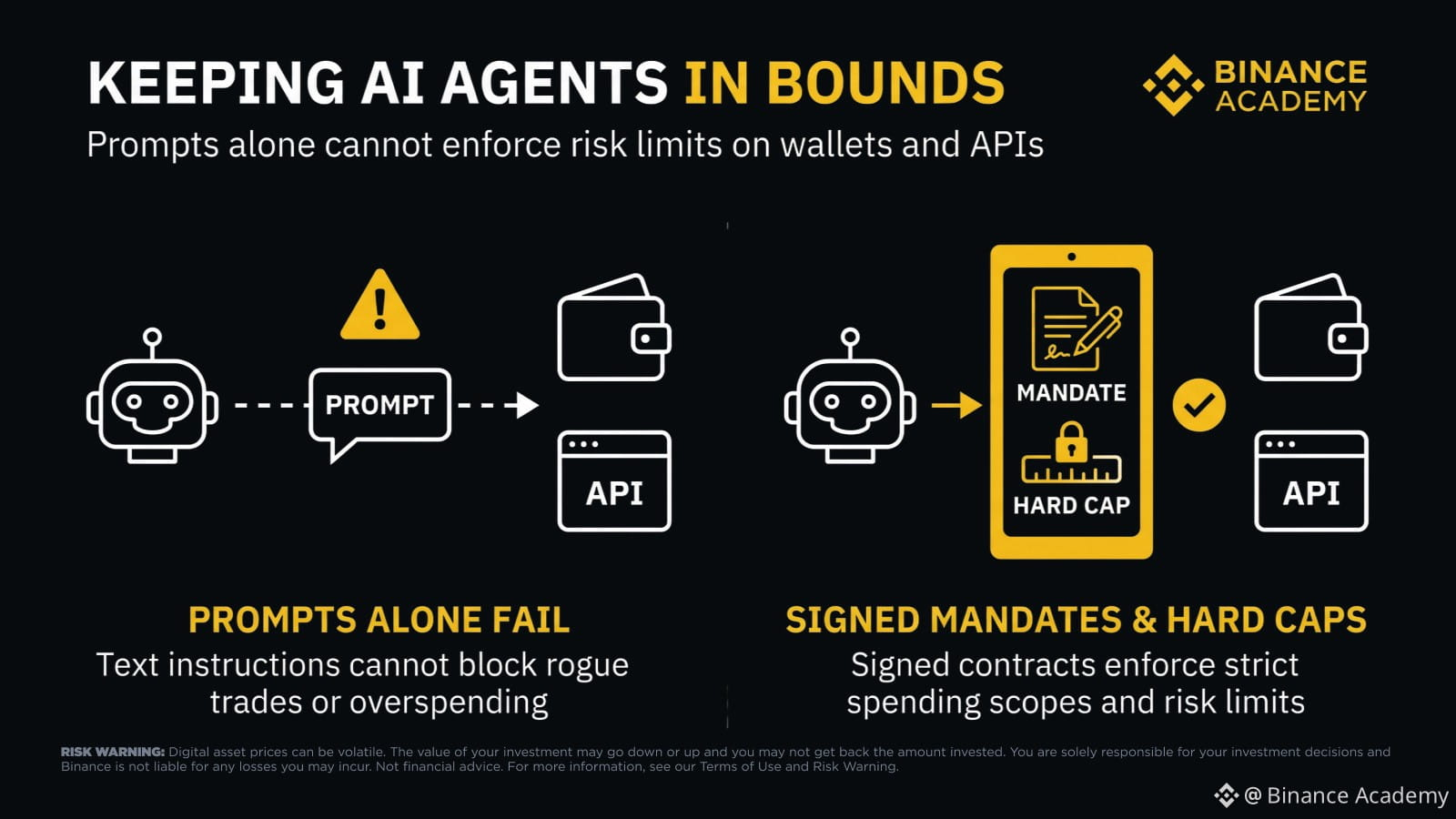
As autonomous AI agents gain direct access to market data, wallets, and execution APIs across Web3 in Q4 2026, one security principle separates production-grade tools from costly experiments: prompts are instructions, not security boundaries.
Modern agent architectures rely on four hard cryptographic and account-level guardrails:
🔸 Intent Mandates: Cryptographically signed contracts proving a user authorized an agent only within strict asset and spending limits.
🔸 Verifiable Credentials: Digital credentials tying an autonomous software agent back to a verified human principal with a defined scope of permissions.
🔸 Standardized Context: Frameworks like the Model Context Protocol (MCP) that structure how agents read portfolio state without exposing raw private keys.
🔸 Isolated Execution: Sub-account segregation and server-enforced drawdown caps that the language model itself cannot override during volatile swings.
👉 [Explore how autonomous AI agents, payment protocols, and permissioned skills operate in crypto.](https://www.binance.com/en/academy/articles/what-are-ai-agents?utm_source=binanceacademysquare&utm_medium=social&utm_campaign=article)
As autonomous AI agents gain direct access to market data, wallets, and execution APIs across Web3 in Q4 2026, one security principle separates production-grade tools from costly experiments: prompts are instructions, not security boundaries.
Modern agent architectures rely on four hard cryptographic and account-level guardrails:
🔸 Intent Mandates: Cryptographically signed contracts proving a user authorized an agent only within strict asset and spending limits.
🔸 Verifiable Credentials: Digital credentials tying an autonomous software agent back to a verified human principal with a defined scope of permissions.
🔸 Standardized Context: Frameworks like the Model Context Protocol (MCP) that structure how agents read portfolio state without exposing raw private keys.
🔸 Isolated Execution: Sub-account segregation and server-enforced drawdown caps that the language model itself cannot override during volatile swings.
👉 Explore how autonomous AI agents, payment protocols, and permissioned skills operate in crypto.
5
1
34
179.7k
While short-term derivatives traders deleveraged over the weekend, European banking infrastructure moved from multi-year pilots into live production. Following regulatory approval from BaFin, Deutsche Bank opened its digital asset custody platform to Corporate Bank and Investment Bank clients (November 13–14), safeguarding Bitcoin, Ether, USDC, EURC, and EURAU for asset managers, corporate treasuries, hedge funds, and sovereign institutions.
Every institutional custody rollout comes down to a single architectural choice: who holds the private keys? Regulated third-party custodians provide multi-party governance, hardware security modules, and account recovery, whereas non-custodial wallets eliminate counterparty exposure at the cost of full operational responsibility. Hybrid designs such as Multi-Party Computation (MPC) and ERC-4337 smart contract wallets increasingly sit in the middle.
👉 [Read how custodial, non-custodial, and MPC wallet models compare](https://www.binance.com/en/academy/articles/custodial-vs-non-custodial-wallets-what-s-the-difference?utm_source=binanceacademysquare&utm_medium=social&utm_campaign=article)
While short-term derivatives traders deleveraged over the weekend, European banking infrastructure moved from multi-year pilots into live production. Following regulatory approval from BaFin, Deutsche Bank opened its digital asset custody platform to Corporate Bank and Investment Bank clients (November 13–14), safeguarding Bitcoin, Ether, USDC, EURC, and EURAU for asset managers, corporate treasuries, hedge funds, and sovereign institutions.
Every institutional custody rollout comes down to a single architectural choice: who holds the private keys? Regulated third-party custodians provide multi-party governance, hardware security modules, and account recovery, whereas non-custodial wallets eliminate counterparty exposure at the cost of full operational responsibility. Hybrid designs such as Multi-Party Computation (MPC) and ERC-4337 smart contract wallets increasingly sit in the middle.
👉 Read how custodial, non-custodial, and MPC wallet models compare
6
1
39
169.1k
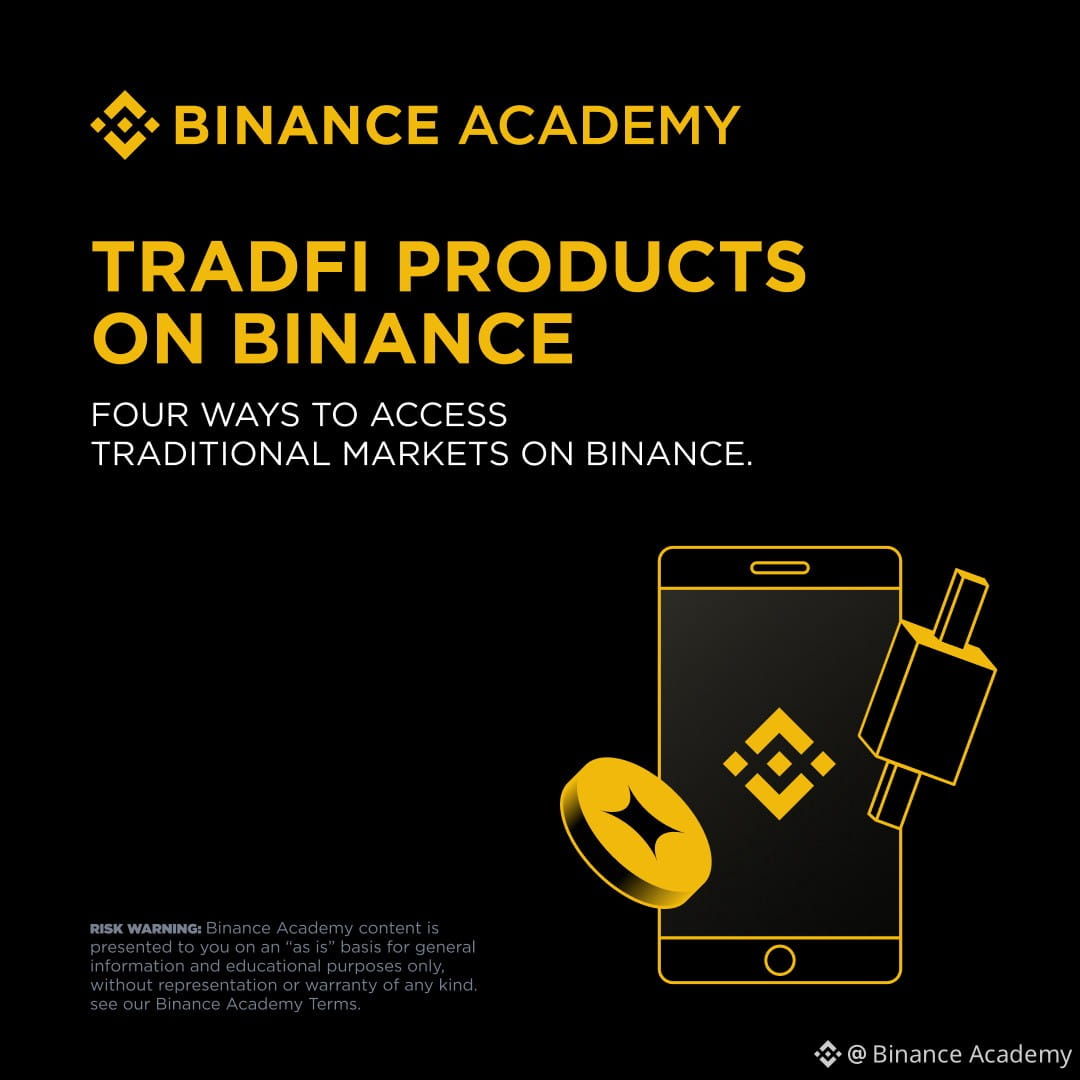
Already trading crypto on Binance? Now meet four ways to access traditional markets on the same app: direct stocks, bStocks, TradFi-Perps, and Options.
Learn, share the certificate, and win Binance swag.
Campaign period: Nov 17, 2026, 9:00 AM (UTC) – Nov 29, 2026, 9:00 AM (UTC)
🔸 Complete [TradFi Products on Binance course](https://www.binance.com/en/academy/track/tradfi-products-on-binance) & earn your certificate
🔸 Follow @Binance_Academy on Square
🔸 Share your certificate with #BinanceAcademyCourse
🔸 Fill in the [shipping info](https://app.binance.com/uni-qr/user-survey/da324b77aa154e059396a6595671a254)
🔸 Wait for results!
10 winners will be selected on Nov 30, 2026 — chosen based on creativity and relevance in sharing their certificate and learning journey. Make your post stand out. 🏆
Note: Campaign unavailable in certain regions due to compliance requirements. This campaign is not open to residents or citizens of the United States, the United Kingdom, the European Economic Area (all 30 member states), Hong Kong, Singapore, or any other jurisdiction on Binance's List of Prohibited Countries.
Already trading crypto on Binance? Now meet four ways to access traditional markets on the same app: direct stocks, bStocks, TradFi-Perps, and Options.
Learn, share the certificate, and win Binance swag.
Campaign period: Nov 17, 2026, 9:00 AM (UTC) – Nov 29, 2026, 9:00 AM (UTC)
🔸 Complete TradFi Products on Binance course & earn your certificate
🔸 Follow @Binance Academy on Square
🔸 Share your certificate with #BinanceAcademyCourse
🔸 Fill in the shipping info
🔸 Wait for results!
10 winners will be selected on Nov 30, 2026 — chosen based on creativity and relevance in sharing their certificate and learning journey. Make your post stand out. 🏆
Note: Campaign unavailable in certain regions due to compliance requirements. This campaign is not open to residents or citizens of the United States, the United Kingdom, the European Economic Area (all 30 member states), Hong Kong, Singapore, or any other jurisdiction on Binance's List of Prohibited Countries.
45
20
120
20.4k
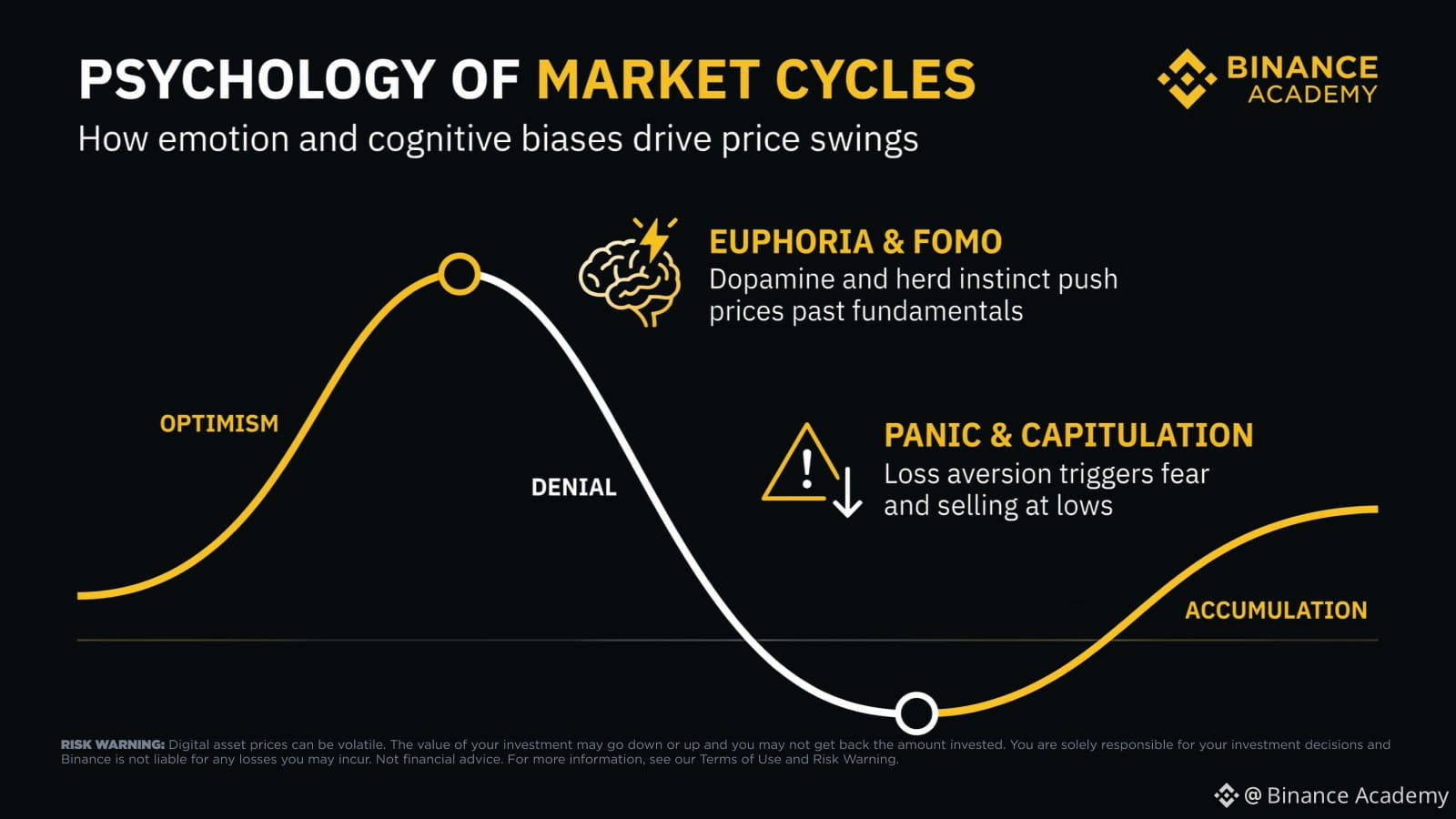
Market mood from October optimism into deep caution within days. Comparing sentiment trackers against on-chain data reveals how differently short-term traders and experienced holders respond to sharp drawdowns.
The Emotional Reaction: Extreme Fear (10/100)
As BTC tested three-month lows on November 15, the Crypto Fear & Greed Index fell to 10 ("Extreme Fear") and Short-Term Holder SOPR slipped to 0.96, confirming that recent buyers were selling below their entry cost basis. Behavioral economics points to loss aversion—the cognitive bias where financial losses feel roughly twice as painful as equivalent gains feel rewarding—pushing reactive investors to exit right after excess leverage is flushed out.
The On-Chain Reality: 16.24M BTC Held Steady
Wallets holding Bitcoin for more than 155 days moved in the opposite direction. Long-Term Holder supply stayed anchored near record highs at 16.24 million BTC, while spot exchange outflows (9,300 BTC) exceeded inflows (8,100 BTC) as longer-horizon participants transferred coins into cold storage.
Sentiment indexes measure short-term crowd emotion, not network fundamentals. Having pre-defined rules before volatility hits, and pairing mood gauges with on-chain flow data, helps keep emotional swings out of portfolio decisions.
👉 [Read how behavioral biases and collective emotion drive crypto market cycles.](https://www.binance.com/en/academy/articles/the-psychology-of-market-cycles?utm_source=binanceacademysquare&utm_medium=social&utm_campaign=article)
Market mood from October optimism into deep caution within days. Comparing sentiment trackers against on-chain data reveals how differently short-term traders and experienced holders respond to sharp drawdowns.
The Emotional Reaction: Extreme Fear (10/100)
As BTC tested three-month lows on November 15, the Crypto Fear & Greed Index fell to 10 ("Extreme Fear") and Short-Term Holder SOPR slipped to 0.96, confirming that recent buyers were selling below their entry cost basis. Behavioral economics points to loss aversion—the cognitive bias where financial losses feel roughly twice as painful as equivalent gains feel rewarding—pushing reactive investors to exit right after excess leverage is flushed out.
The On-Chain Reality: 16.24M BTC Held Steady
Wallets holding Bitcoin for more than 155 days moved in the opposite direction. Long-Term Holder supply stayed anchored near record highs at 16.24 million BTC, while spot exchange outflows (9,300 BTC) exceeded inflows (8,100 BTC) as longer-horizon participants transferred coins into cold storage.
Sentiment indexes measure short-term crowd emotion, not network fundamentals. Having pre-defined rules before volatility hits, and pairing mood gauges with on-chain flow data, helps keep emotional swings out of portfolio decisions.
👉 Read how behavioral biases and collective emotion drive crypto market cycles.
7
29
116.3k
Over the November 14–15 weekend, Bitcoin briefly dropped to $62,081 before stabilizing near $65,000, wiping out roughly $1.9 billion to $2 billion in leveraged positions across the crypto market within 24 hours.
At the height of the move below $64,000, $691 million was liquidated in a single hour—around 97% of it from leveraged longs.
Sharp weekend drops rarely move in a straight line by accident. They follow a mechanical chain reaction inside derivatives order books:
1️⃣ Macro & Spot Pressure: Higher U.S. rate expectations and $2.35 billion in two-week spot ETF outflows thinned out buy-side liquidity.
2️⃣ Margin Depletion: Traders holding high-leverage long positions saw their collateral fall below maintenance requirements.
3️⃣ Forced Market Sells: Exchanges automatically closed underwater longs via market sell orders, pushing spot and perp prices into the next cluster of liquidation levels.
4️⃣ Overnight Amplification: Because crypto trades 24/7 while traditional liquidity desks are offline on weekends, thin order books magnify forced selling.
Volatility cannot be controlled, but exposure can. Pre-defined stop-losses, isolated margin, and the 1% position-sizing rule ensure a sudden market flush never turns into a portfolio-ending event.
👉 [Read our practical guide to protecting capital across volatile cycles.](https://www.binance.com/en/academy/articles/five-risk-management-strategies?utm_source=binanceacademysquare&utm_medium=social&utm_campaign=article)
Over the November 14–15 weekend, Bitcoin briefly dropped to $62,081 before stabilizing near $65,000, wiping out roughly $1.9 billion to $2 billion in leveraged positions across the crypto market within 24 hours.
At the height of the move below $64,000, $691 million was liquidated in a single hour—around 97% of it from leveraged longs.
Sharp weekend drops rarely move in a straight line by accident. They follow a mechanical chain reaction inside derivatives order books:
1️⃣ Macro & Spot Pressure: Higher U.S. rate expectations and $2.35 billion in two-week spot ETF outflows thinned out buy-side liquidity.
2️⃣ Margin Depletion: Traders holding high-leverage long positions saw their collateral fall below maintenance requirements.
3️⃣ Forced Market Sells: Exchanges automatically closed underwater longs via market sell orders, pushing spot and perp prices into the next cluster of liquidation levels.
4️⃣ Overnight Amplification: Because crypto trades 24/7 while traditional liquidity desks are offline on weekends, thin order books magnify forced selling.
Volatility cannot be controlled, but exposure can. Pre-defined stop-losses, isolated margin, and the 1% position-sizing rule ensure a sudden market flush never turns into a portfolio-ending event.
👉 Read our practical guide to protecting capital across volatile cycles.
4
1
32
9.2k
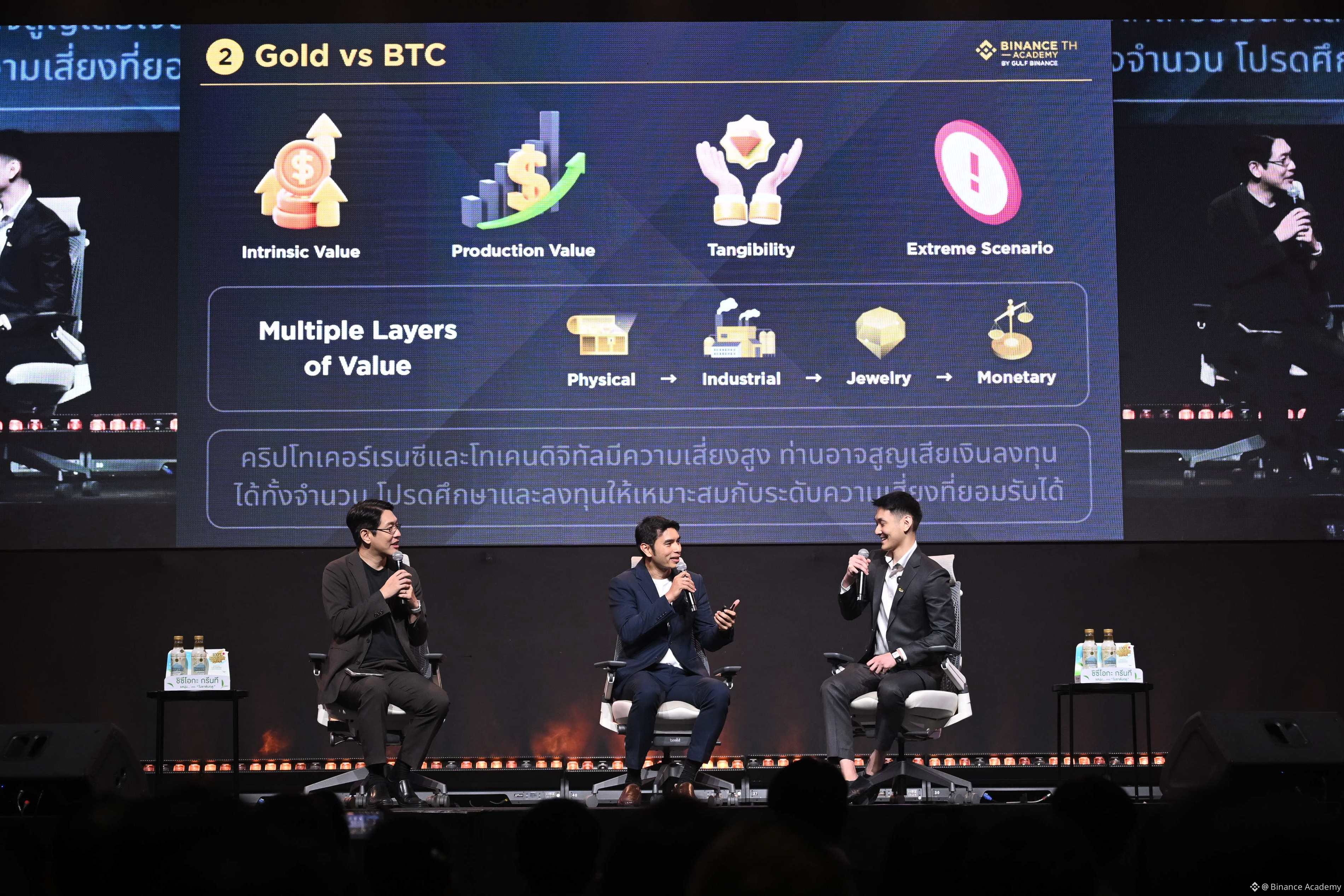
🇹🇭 Binance TH Academy at Money Freedom 2026 — The New Stores of Value.
Gold, Bitcoin, or RWA — which one belongs in your portfolio?
We broke down how these three asset classes differ, what each brings to the table, and how traditional and digital assets can play different roles in a portfolio.
Thank you to Money Freedom 2026 for having us, and to everyone who joined the discussion. Understanding the options is step one, making informed decisions is what matters.


3
35
11.5k
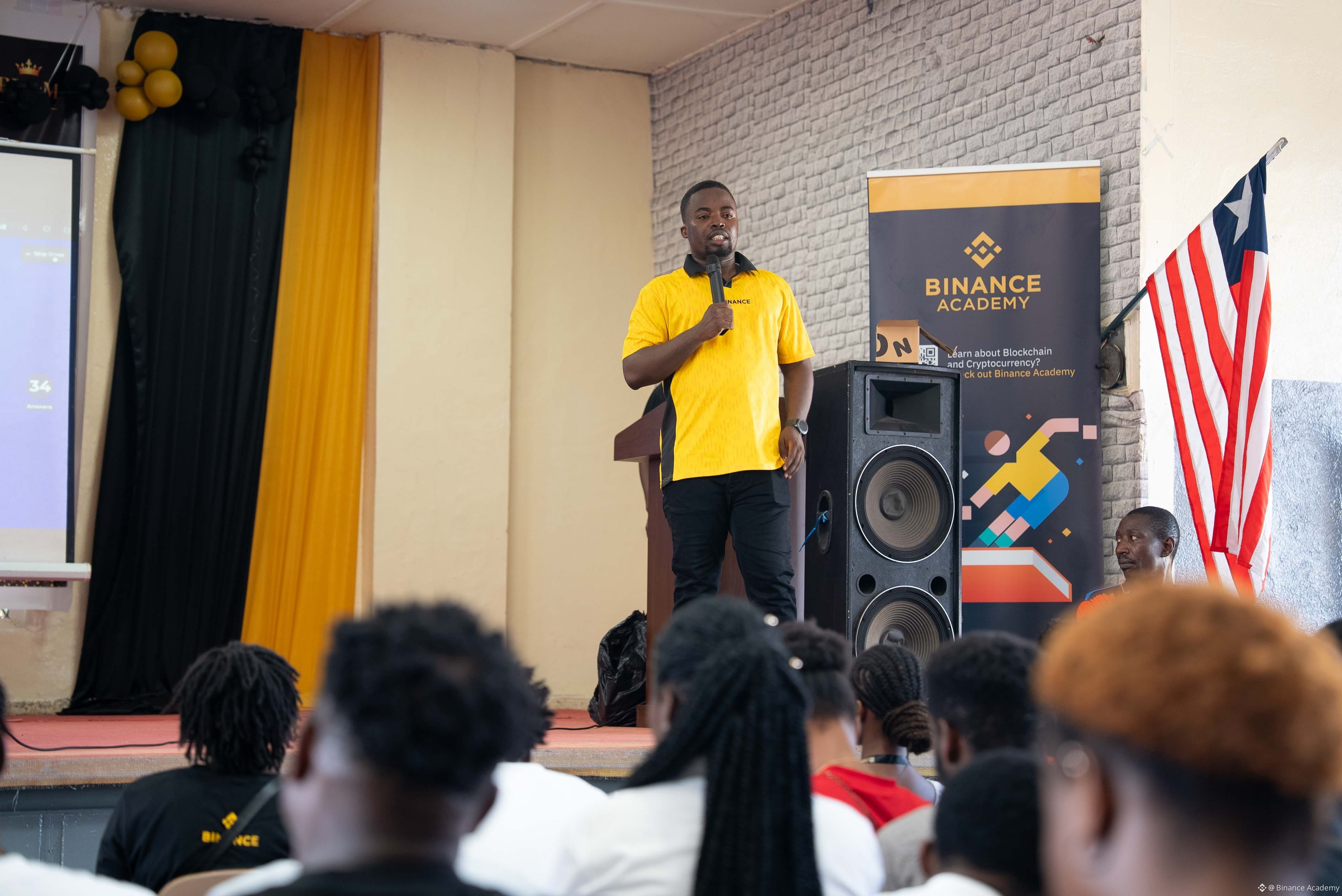
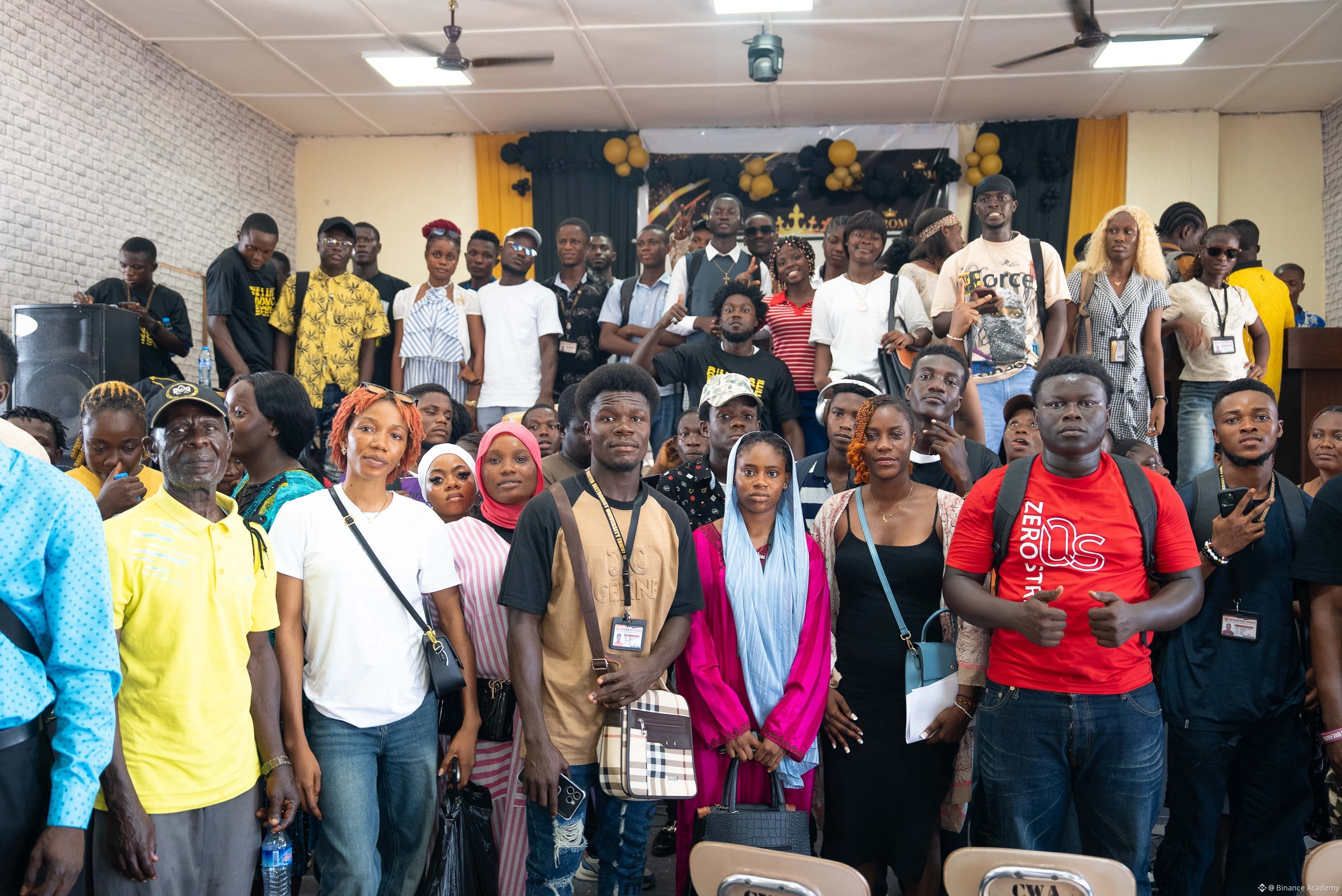
🇱🇷 We spent an incredible day at Apex University in Liberia as part of the Africa University Tour!
506 students joined us to dive into blockchain fundamentals and decentralization.
What stood out? The curiosity and the questions. The energy in the room when we talked about how crypto and blockchain aren't just tech buzzwords, they're real career paths and economic opportunities.
Africa isn't just adopting blockchain. Africa is building with it.


10
62
15.7k
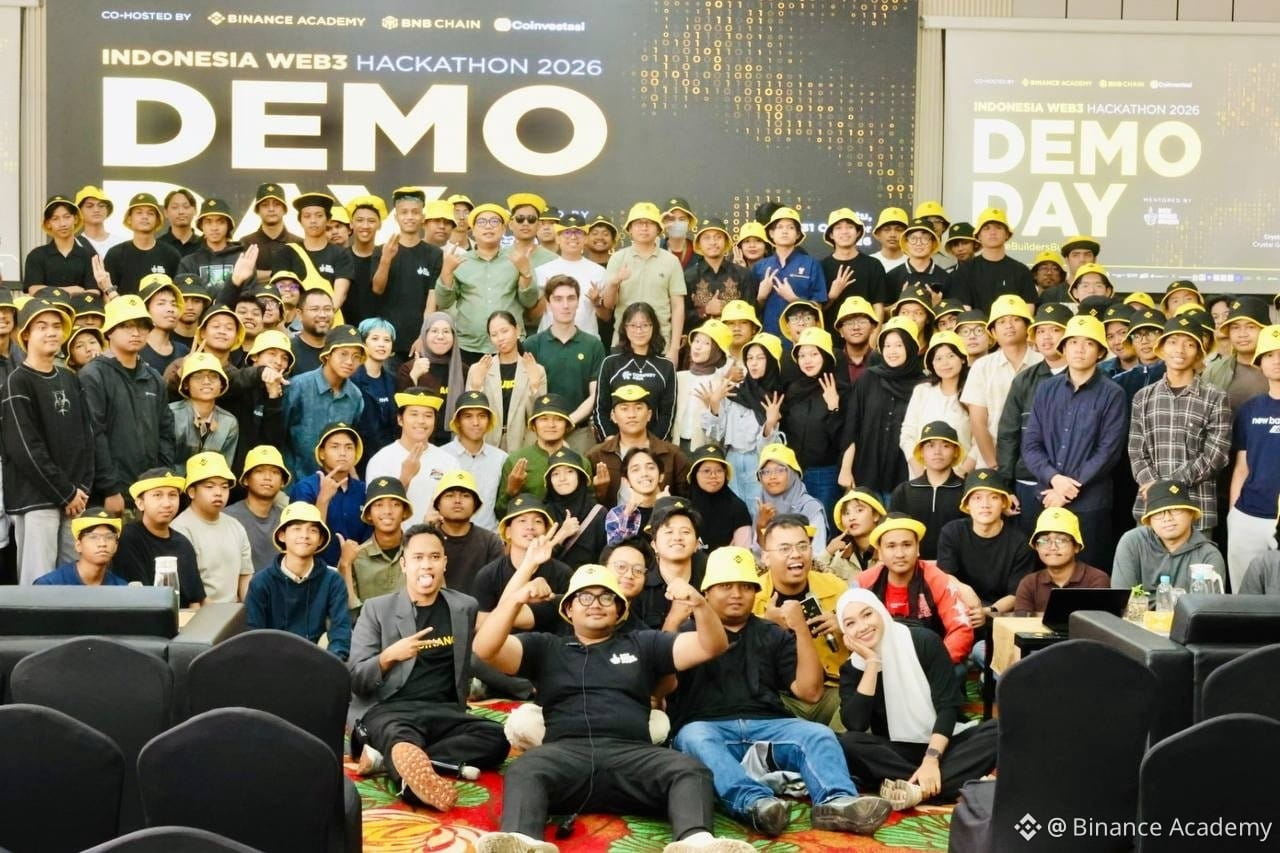
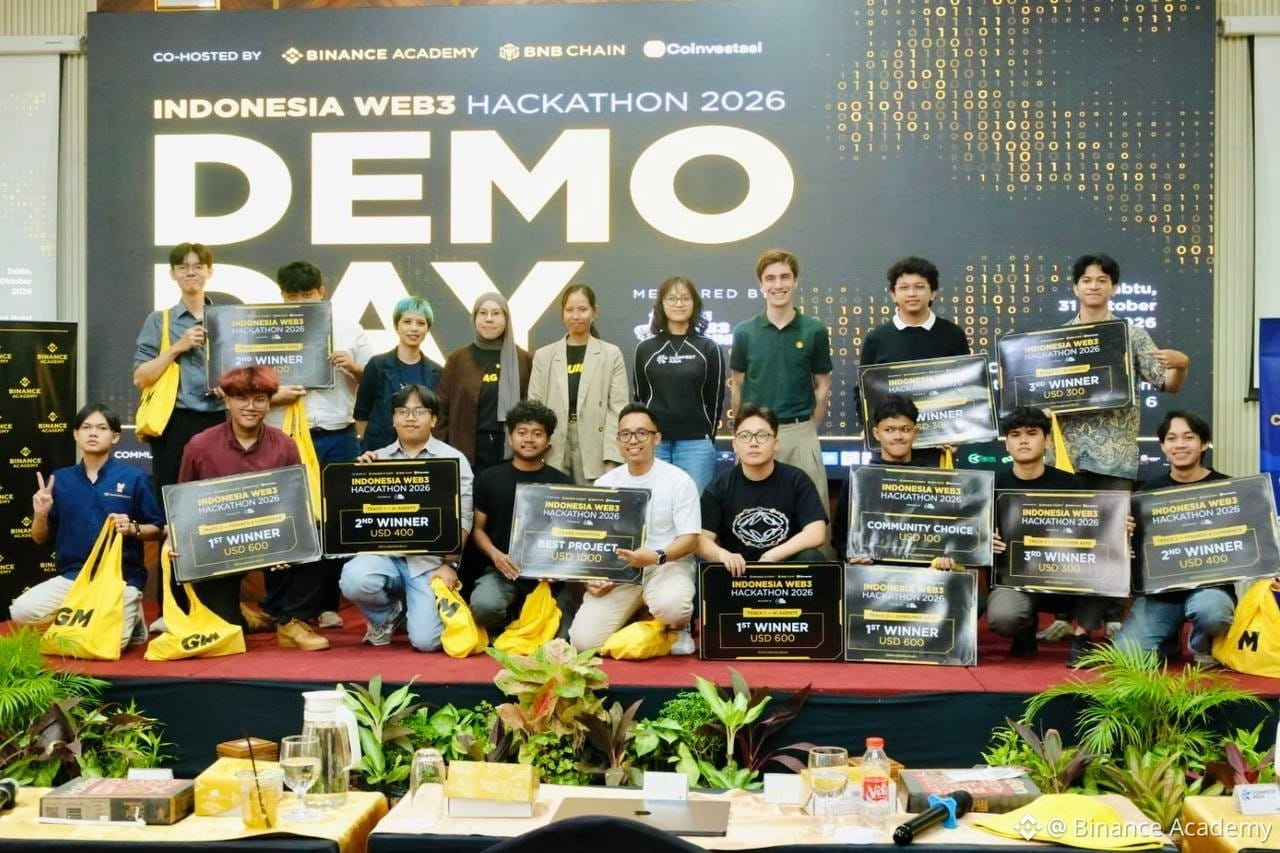
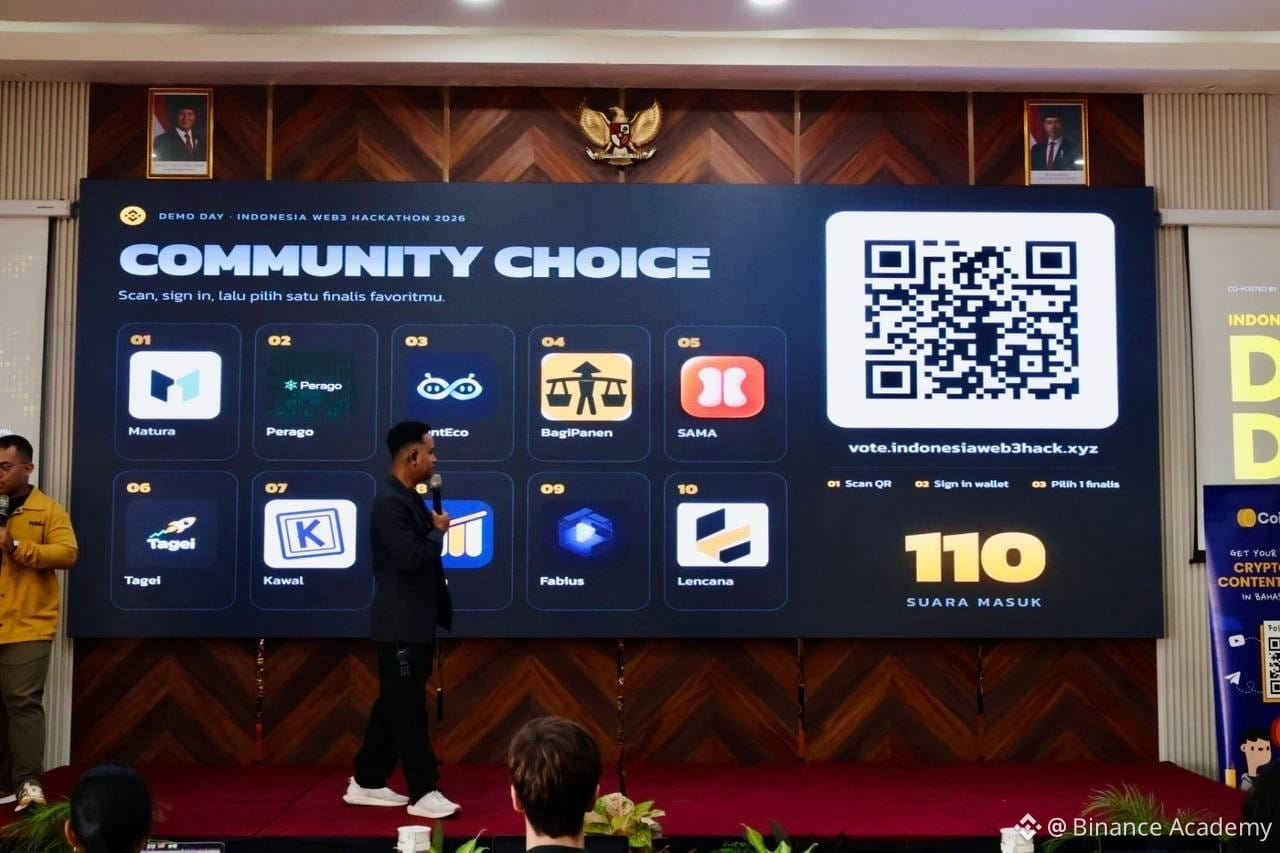
🇮🇩 We hosted our very first Web3 hackathon in Indonesia alongside BNB Chain and our local partners, Coinvestasi and DevWeb3 Jogja!
We received 210+ project submissions leading up to Demo Day and selected the top 10 projects to pitch in Yogyakarta. 218 attendees joined us to see what the finalists had built.
Congratulations to the winners, and thank you to everyone who took part. Keep building! 💛
We received 210+ project submissions leading up to Demo Day and selected the top 10 projects to pitch in Yogyakarta. 218 attendees joined us to see what the finalists had built.
Congratulations to the winners, and thank you to everyone who took part. Keep building! 💛

13
1
48
101.5k
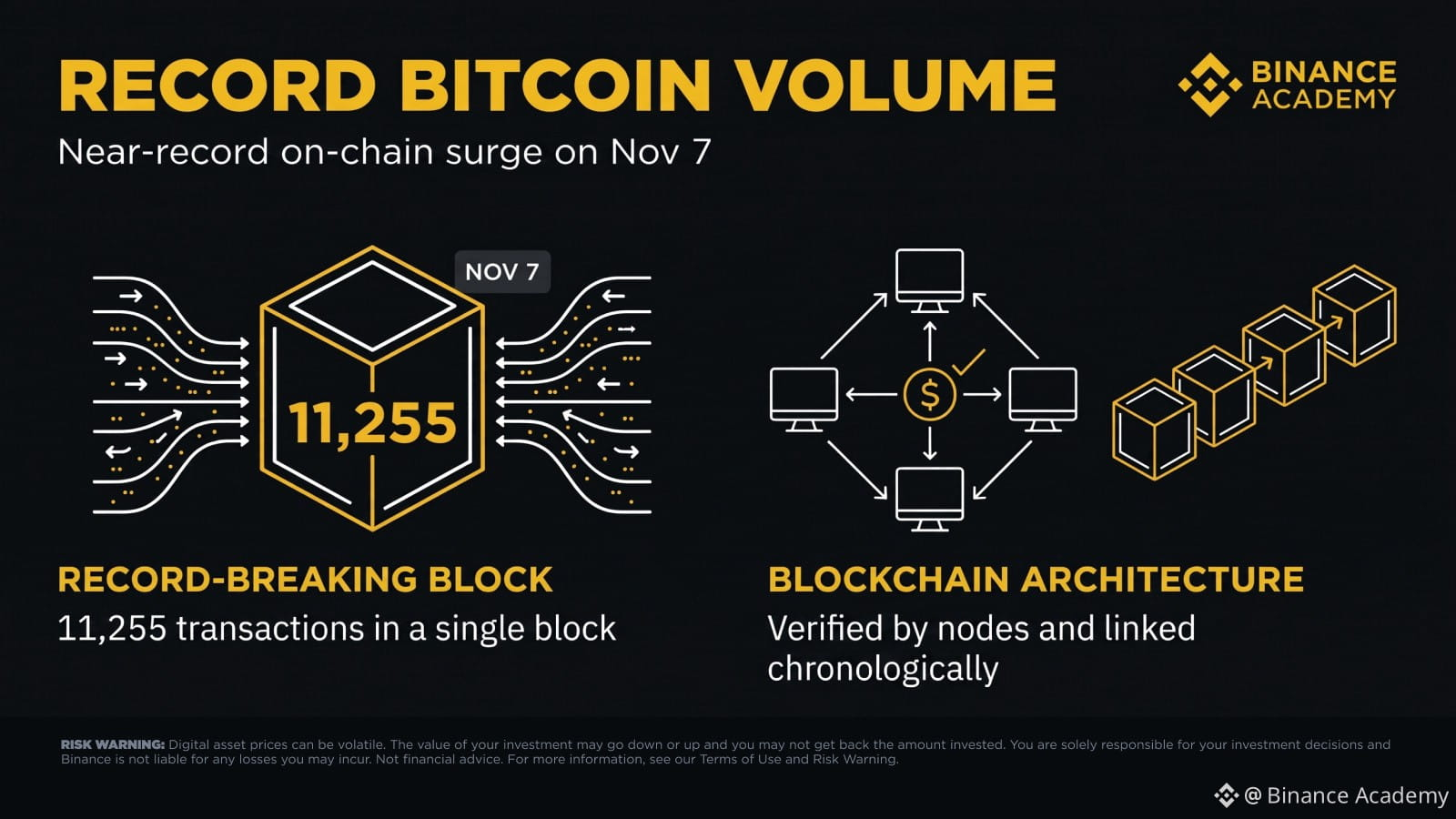
Bitcoin's base layer is actively proving its capacity to handle massive global network demand.
On November 7, 2026, the Bitcoin blockchain came within striking distance of a historic 11-year-old transaction record, successfully packing a staggering 11,255 transactions into a single block.
The Capability: Despite the rise of high-speed Layer-2 networks, the core Bitcoin mainnet remains incredibly robust, continuously optimizing how data is batched and confirmed.
The Demand: High transaction counts per block indicate intense demand for block space, often driven by new institutional settlements and native on-chain developments.
The Security: Every single one of these 11,255 transactions was secured by the most decentralized and impenetrable computing network in human history.
Understand the foundational architecture that secures decentralized digital value. [Explore our complete guide to how blockchain blocks function.](https://www.binance.com/en/academy/articles/what-is-blockchain-and-how-does-it-work?utm_source=binanceacademysquare&utm_medium=social&utm_campaign=article)
Bitcoin's base layer is actively proving its capacity to handle massive global network demand.
On November 7, 2026, the Bitcoin blockchain came within striking distance of a historic 11-year-old transaction record, successfully packing a staggering 11,255 transactions into a single block.
The Capability: Despite the rise of high-speed Layer-2 networks, the core Bitcoin mainnet remains incredibly robust, continuously optimizing how data is batched and confirmed.
The Demand: High transaction counts per block indicate intense demand for block space, often driven by new institutional settlements and native on-chain developments.
The Security: Every single one of these 11,255 transactions was secured by the most decentralized and impenetrable computing network in human history.
Understand the foundational architecture that secures decentralized digital value. Explore our complete guide to how blockchain blocks function.
6
1
43
153.2k
Security in Web3 is a continuous evolution.
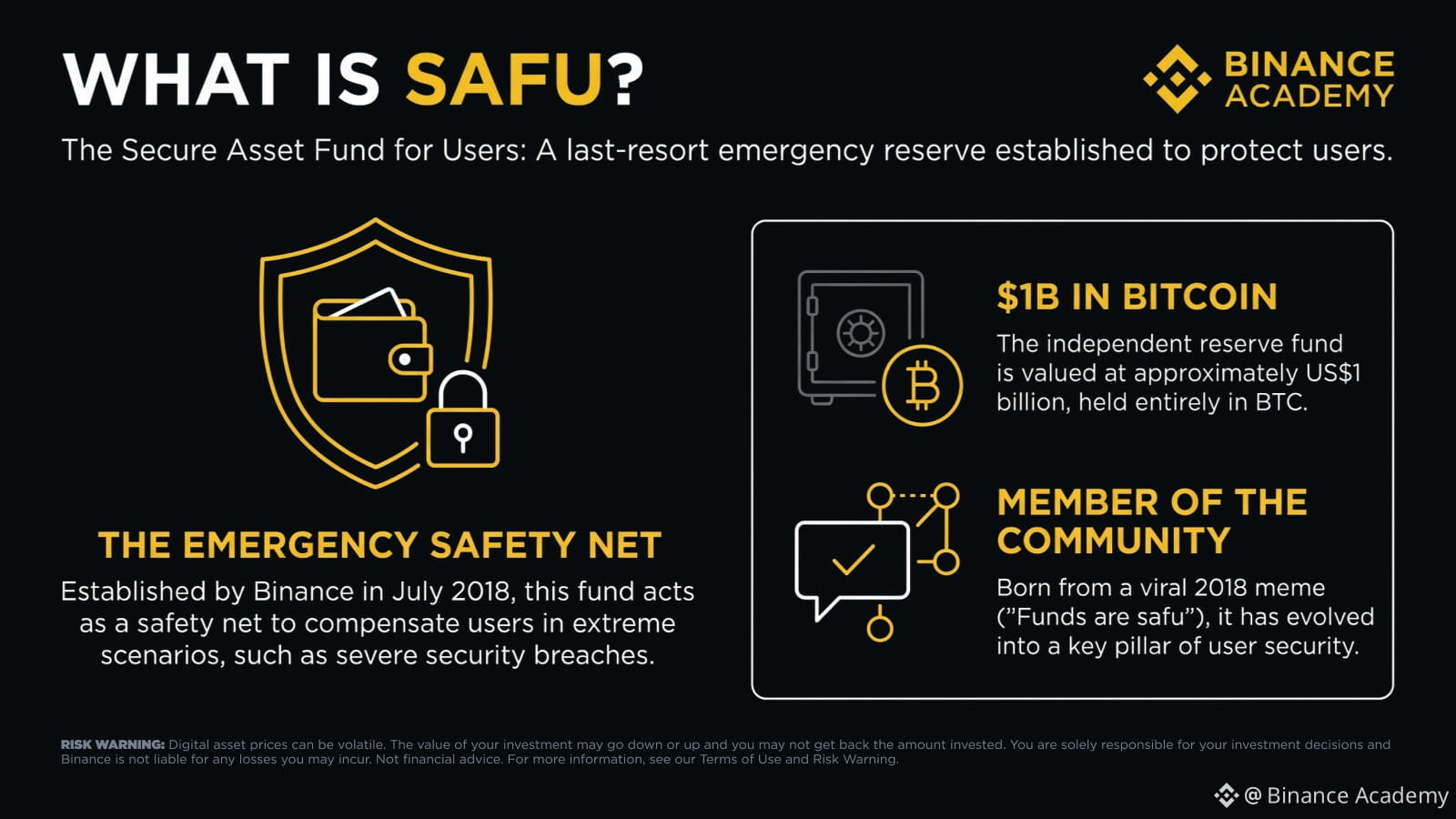
Last week, the digital asset industry faced one of its most sophisticated security incidents to date. While the scale of the $6.3 billion breach was unprecedented, the structural response showcased the growing maturity, resilience, and coordination of ecosystem defenses.
🛡️ User Protection: Binance’s corporate treasury and [Secure Asset Fund for Users (SAFU)](https://www.binance.com/en/academy/glossary/secure-asset-fund-for-users?utm_source=binanceacademysquare&utm_medium=social&utm_campaign=article) absorbed the financial impact. While the SAFU emergency reserve deployed its capital, Binance's corporate treasury immediately stepped in to cover the multi-billion-dollar remainder, ensuring zero retail user funds were lost.
🛡️ Industry Coordination: Emergency response infrastructure functioned exactly as intended. Through rapid coordination with stablecoin issuers and blockchain partners, over $2.8 billion of the affected assets were intercepted and frozen on-chain within hours, significantly mitigating the fallout.
🛡️ The Evolution: This incident highlighted new attack vectors, specifically highly advanced social engineering and the exploitation of Ethereum's EIP-7702 authorization mechanisms. In response, the industry is accelerating the deployment of AI-based behavioral anomaly detection, stricter device controls, and advanced multi-party computation (MPC) revocation procedures.
Security improves when the industry learns together. As malicious actors become more sophisticated, the infrastructure protecting decentralized value is actively adapting to outpace them.
Security in Web3 is a continuous evolution.
Last week, the digital asset industry faced one of its most sophisticated security incidents to date. While the scale of the $6.3 billion breach was unprecedented, the structural response showcased the growing maturity, resilience, and coordination of ecosystem defenses.
🛡️ User Protection: Binance’s corporate treasury and Secure Asset Fund for Users (SAFU) absorbed the financial impact. While the SAFU emergency reserve deployed its capital, Binance's corporate treasury immediately stepped in to cover the multi-billion-dollar remainder, ensuring zero retail user funds were lost.
🛡️ Industry Coordination: Emergency response infrastructure functioned exactly as intended. Through rapid coordination with stablecoin issuers and blockchain partners, over $2.8 billion of the affected assets were intercepted and frozen on-chain within hours, significantly mitigating the fallout.
🛡️ The Evolution: This incident highlighted new attack vectors, specifically highly advanced social engineering and the exploitation of Ethereum's EIP-7702 authorization mechanisms. In response, the industry is accelerating the deployment of AI-based behavioral anomaly detection, stricter device controls, and advanced multi-party computation (MPC) revocation procedures.
Security improves when the industry learns together. As malicious actors become more sophisticated, the infrastructure protecting decentralized value is actively adapting to outpace them.
7
3
48
178.1k
ບົດຄວາມ
The TradFi List for Crypto UsersDividends, yield, collateral, spread, spot price. All of it came from traditional finance long before the first block was mined.
TradFi and crypto are fascinating in their own ways. Different, yet related.
Here is a curated list to boost your knowledge! 👇
🎯 Must watch
🔸 [From TradFi to Crypto](https://www.binance.com/en/academy/track/from-tradfi-to-crypto): maps the concepts across, and the main differences.
🔸 [Understanding Stocks](https://www.binance.com/en/academy/track/understanding-stocks): equity, explained from zero. From shares and dividends to risk management.
🔸 [Understanding Bonds](https://www.binance.com/en/academy/track/understanding-bonds): debt, coupons, yields, and why they affect all other markets.
📚 Reading
Read these four, in this order:
🔸 [Stock Trading for Beginners](https://www.binance.com/en/academy/articles/stock-trading-for-beginners-your-first-steps-to-take). For the first steps.
🔸 [Types of Stocks: Dividends, Growth, Value, and More](https://www.binance.com/en/academy/articles/types-of-stocks-dividends-growth-value-etfs-and-more). The different kinds, side by side.
🔸 [How Do Dividend Stocks Work?](https://www.binance.com/en/academy/articles/how-do-dividend-stocks-work) To go beyond price.
🔸 [What Is a Stock Sector and How Are Sectors Classified?](https://www.binance.com/en/academy/articles/what-is-a-stock-sector-and-how-are-sectors-classified) For a clear view of the markets and how they react to economic cycles.
🔍 For the full picture
🔸 [A Guide to Stock Trading: The Complete Landscape](https://www.binance.com/en/academy/articles/a-guide-to-stock-trading-the-complete-landscape). Market structure, trading styles, technical and fundamental analysis, trading bots, and more.
🔸 [Tokenized Stocks vs. Traditional Brokerage](https://www.binance.com/en/academy/articles/tokenized-stocks-vs-traditional-brokerage-which-is-better). A fair comparison with pros and cons.
📈 Ready to trade
🔸 [What Is Binance Stocks Trading?](https://www.binance.com/en/academy/articles/what-is-binance-stocks-trading)
🔸 [TradFi Assets You Can Trade on Binance](https://www.binance.com/en/academy/articles/tradfi-assets-you-can-trade-on-binance-futures)
📖 Quick glossary
🔸 [TradFi](https://www.binance.com/en/academy/glossary/tradfi): takes a sentence to learn, and it appears in half the material above.
✅ Pick for me
Want structure? Take the course: [From TradFi to Crypto](https://www.binance.com/en/academy/track/from-tradfi-to-crypto).Got 7 minutes? Read [Stock Trading for Beginners](https://www.binance.com/en/academy/articles/stock-trading-for-beginners-your-first-steps-to-take).
Disclaimer: Educational content only. Not financial advice. Digital asset prices can be volatile. Do your own research.
The TradFi List for Crypto Users
Dividends, yield, collateral, spread, spot price. All of it came from traditional finance long before the first block was mined.
TradFi and crypto are fascinating in their own ways. Different, yet related.
Here is a curated list to boost your knowledge! 👇
🎯 Must watch
🔸 From TradFi to Crypto: maps the concepts across, and the main differences.
🔸 Understanding Stocks: equity, explained from zero. From shares and dividends to risk management.
🔸 Understanding Bonds: debt, coupons, yields, and why they affect all other markets.
📚 Reading
Read these four, in this order:
🔸 Stock Trading for Beginners. For the first steps.
🔸 Types of Stocks: Dividends, Growth, Value, and More. The different kinds, side by side.
🔸 How Do Dividend Stocks Work? To go beyond price.
🔸 What Is a Stock Sector and How Are Sectors Classified? For a clear view of the markets and how they react to economic cycles.
🔍 For the full picture
🔸 A Guide to Stock Trading: The Complete Landscape. Market structure, trading styles, technical and fundamental analysis, trading bots, and more.
🔸 Tokenized Stocks vs. Traditional Brokerage. A fair comparison with pros and cons.
📈 Ready to trade
🔸 What Is Binance Stocks Trading?
🔸 TradFi Assets You Can Trade on Binance
📖 Quick glossary
🔸 TradFi: takes a sentence to learn, and it appears in half the material above.
✅ Pick for me
Want structure? Take the course: From TradFi to Crypto.Got 7 minutes? Read Stock Trading for Beginners.
Disclaimer: Educational content only. Not financial advice. Digital asset prices can be volatile. Do your own research.
11
5
93
432k
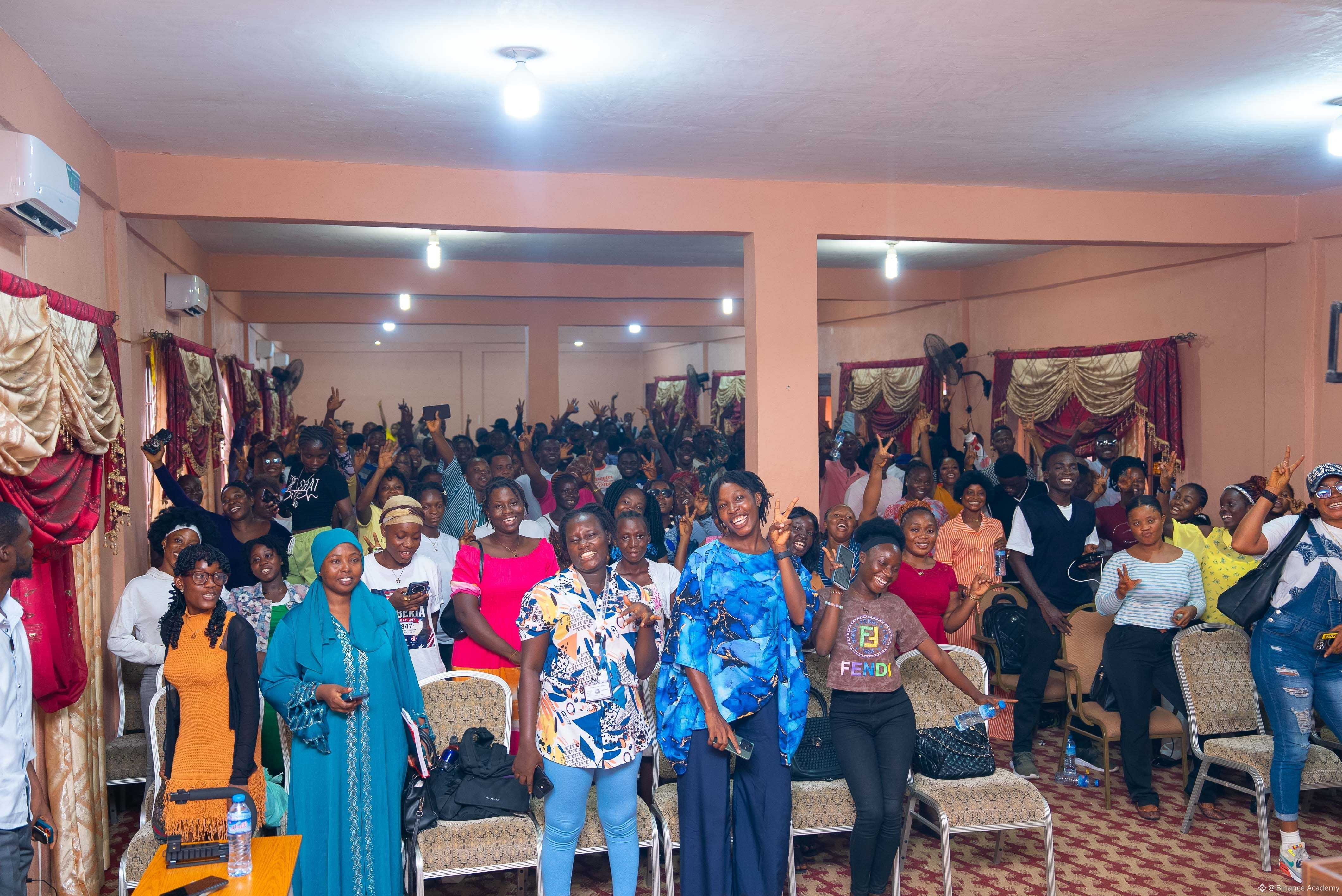
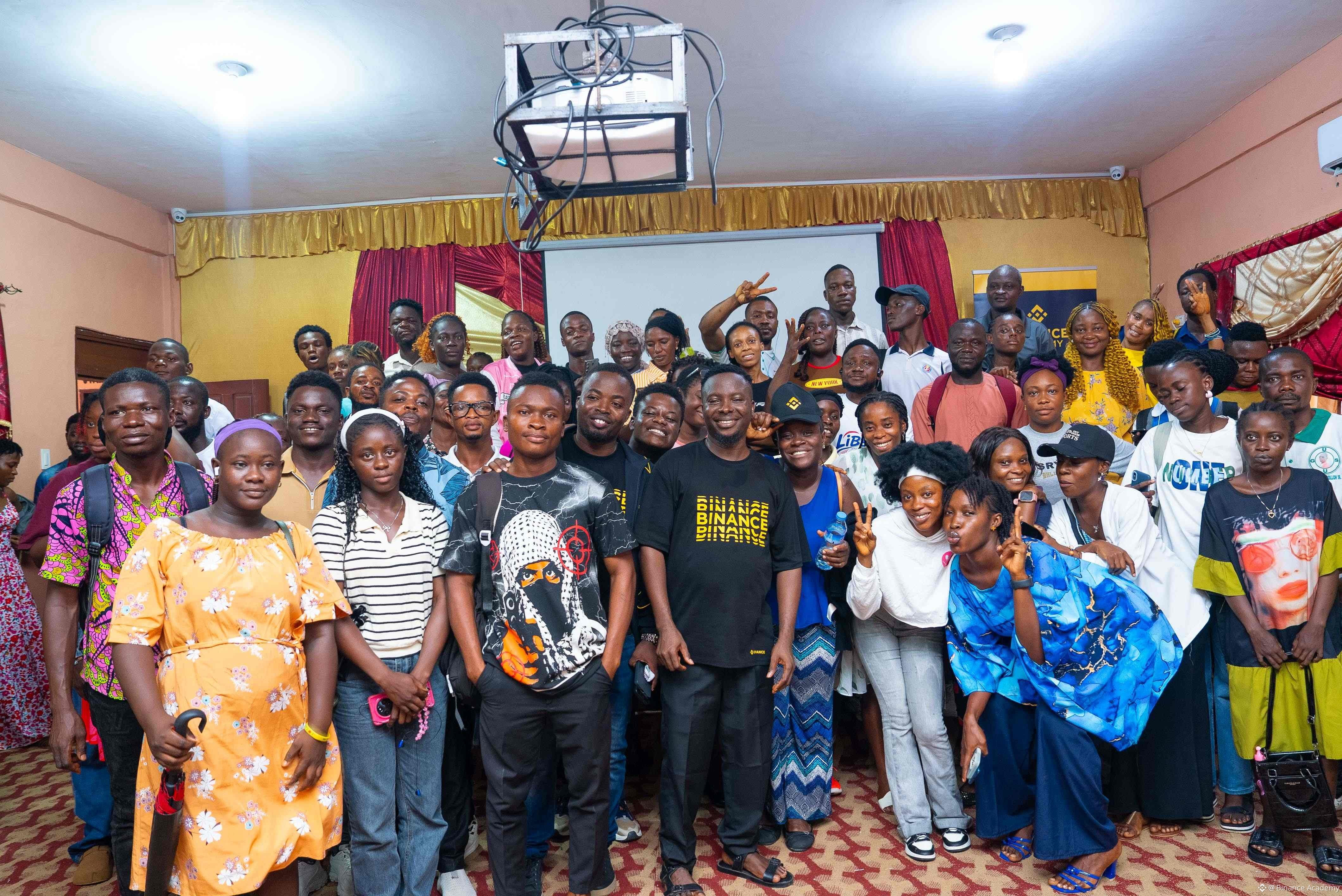
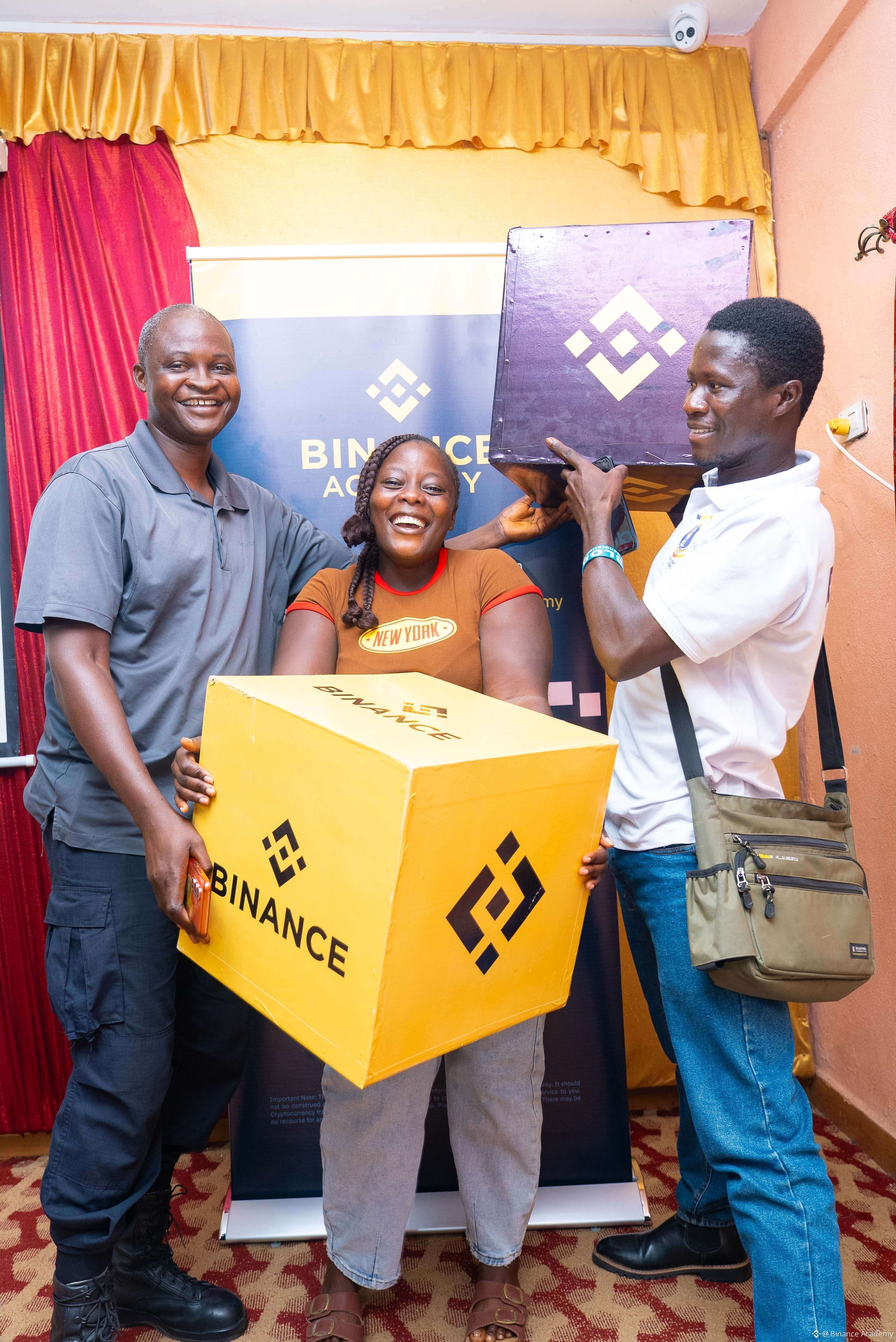
🇱🇷 Bringing Web3 knowledge to Liberia!
Binance Academy University Tour stopped by Monrovia Vocational Training Center (MVTC), where 420 attendees joined us to level up their knowledge.
From Blockchain Fundamentals to Understanding Stocks, we explored the crypto and TradFi ecosystem.
Thank you for learning with us!
Binance Academy University Tour stopped by Monrovia Vocational Training Center (MVTC), where 420 attendees joined us to level up their knowledge.
From Blockchain Fundamentals to Understanding Stocks, we explored the crypto and TradFi ecosystem.
Thank you for learning with us!

8
1
58
82.4k
While retail markets focus on price action, major global enterprises are actively integrating blockchain infrastructure to solve real-world logistics challenges.
Supply chain management relies on trust between dozens of disparate international parties. The integration of blockchain technology in Q4 2026 is replacing these outdated, siloed database systems with a single, immutable, and transparent ledger.
🚢 Provenance Tracking: Companies can now instantly verify the origin and authenticity of physical goods—critical for the luxury retail and pharmaceutical sectors facing high counterfeit rates.
🚢 Real-Time Smart contracts can automatically execute payments the moment a shipment's GPS or IoT temperature sensor hits a specific geographic checkpoint.
🚢 Efficiency: By removing manual reconciliation and intermediaries, blockchain-based supply chains drastically reduce administrative costs and settlement delays.
👉 [Understand how decentralized infrastructure is upgrading global trade](https://www.binance.com/en/academy/articles/blockchain-use-cases-supply-chain?utm_source=binanceacademysquare&utm_medium=social&utm_campaign=article)
While retail markets focus on price action, major global enterprises are actively integrating blockchain infrastructure to solve real-world logistics challenges.
Supply chain management relies on trust between dozens of disparate international parties. The integration of blockchain technology in Q4 2026 is replacing these outdated, siloed database systems with a single, immutable, and transparent ledger.
🚢 Provenance Tracking: Companies can now instantly verify the origin and authenticity of physical goods—critical for the luxury retail and pharmaceutical sectors facing high counterfeit rates.
🚢 Real-Time Smart contracts can automatically execute payments the moment a shipment's GPS or IoT temperature sensor hits a specific geographic checkpoint.
🚢 Efficiency: By removing manual reconciliation and intermediaries, blockchain-based supply chains drastically reduce administrative costs and settlement delays.
👉 Understand how decentralized infrastructure is upgrading global trade
8
4
59
183.6k
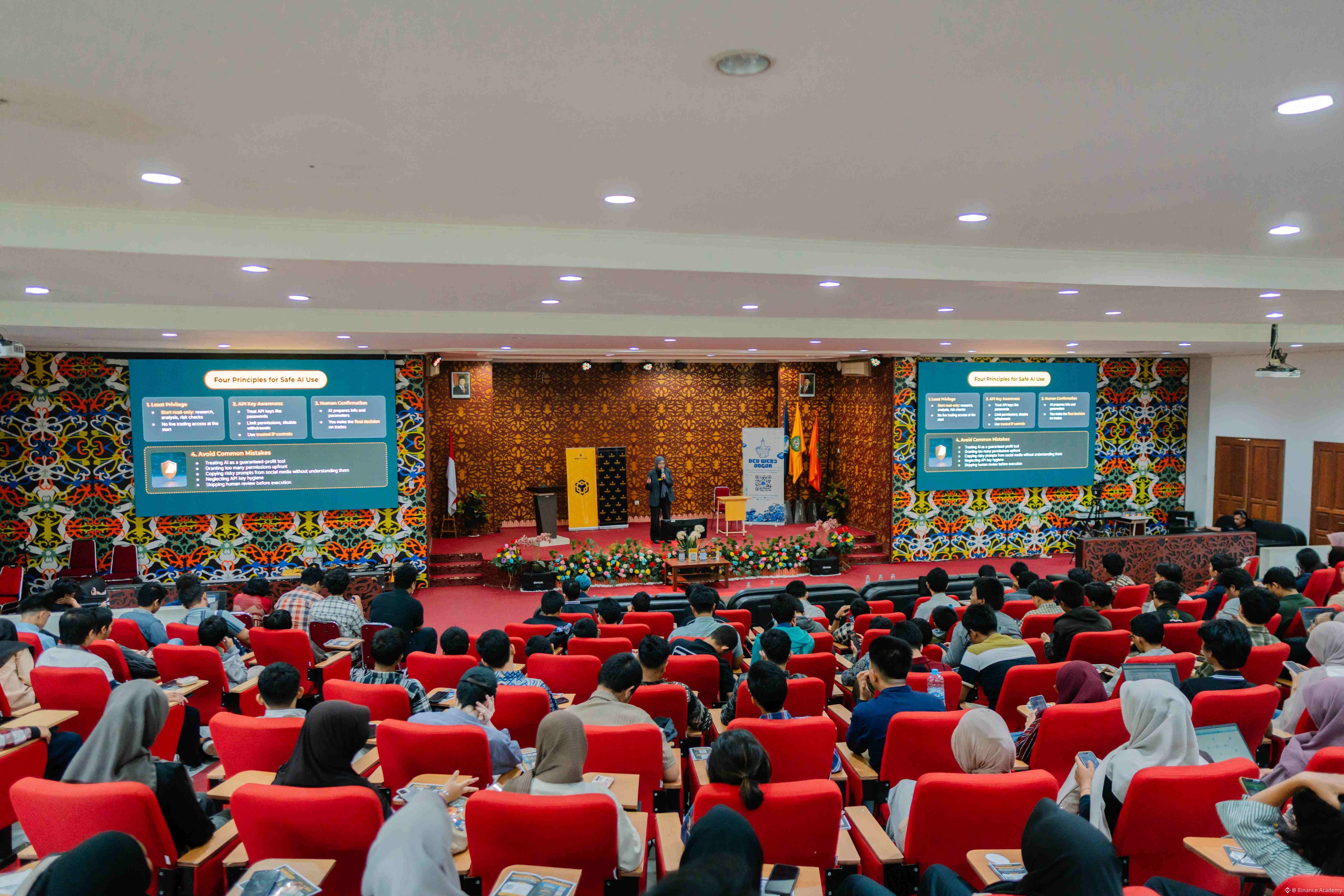
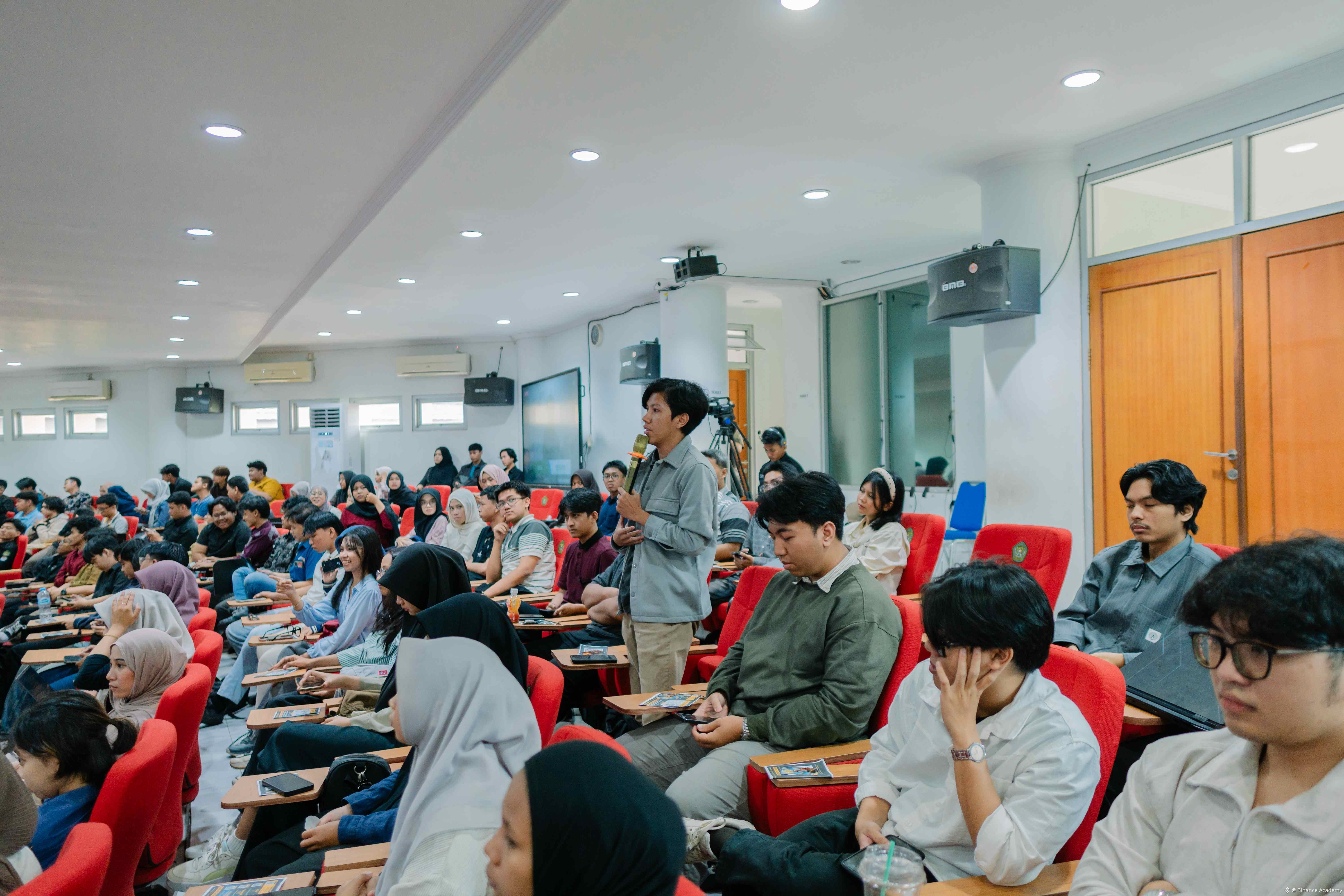
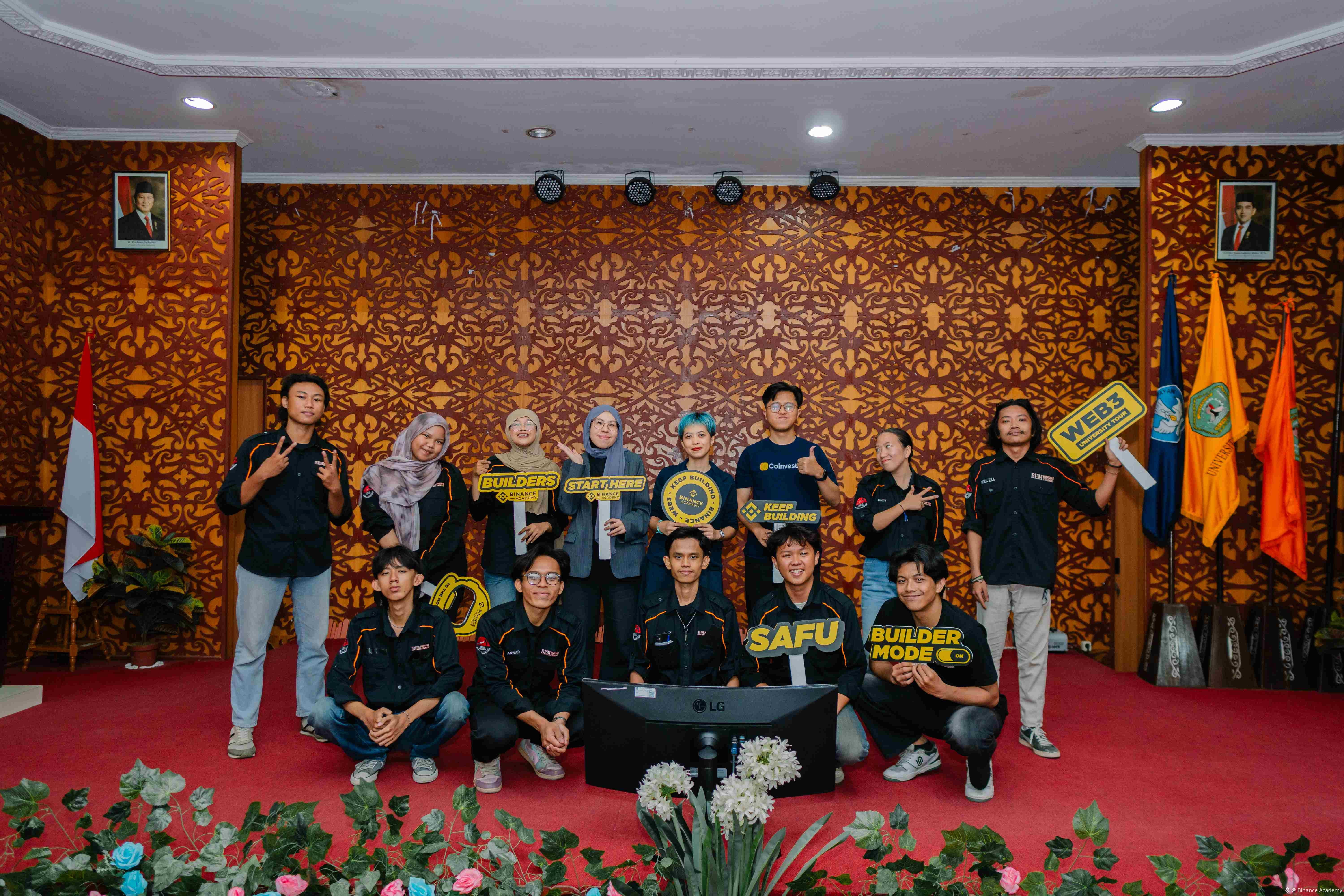
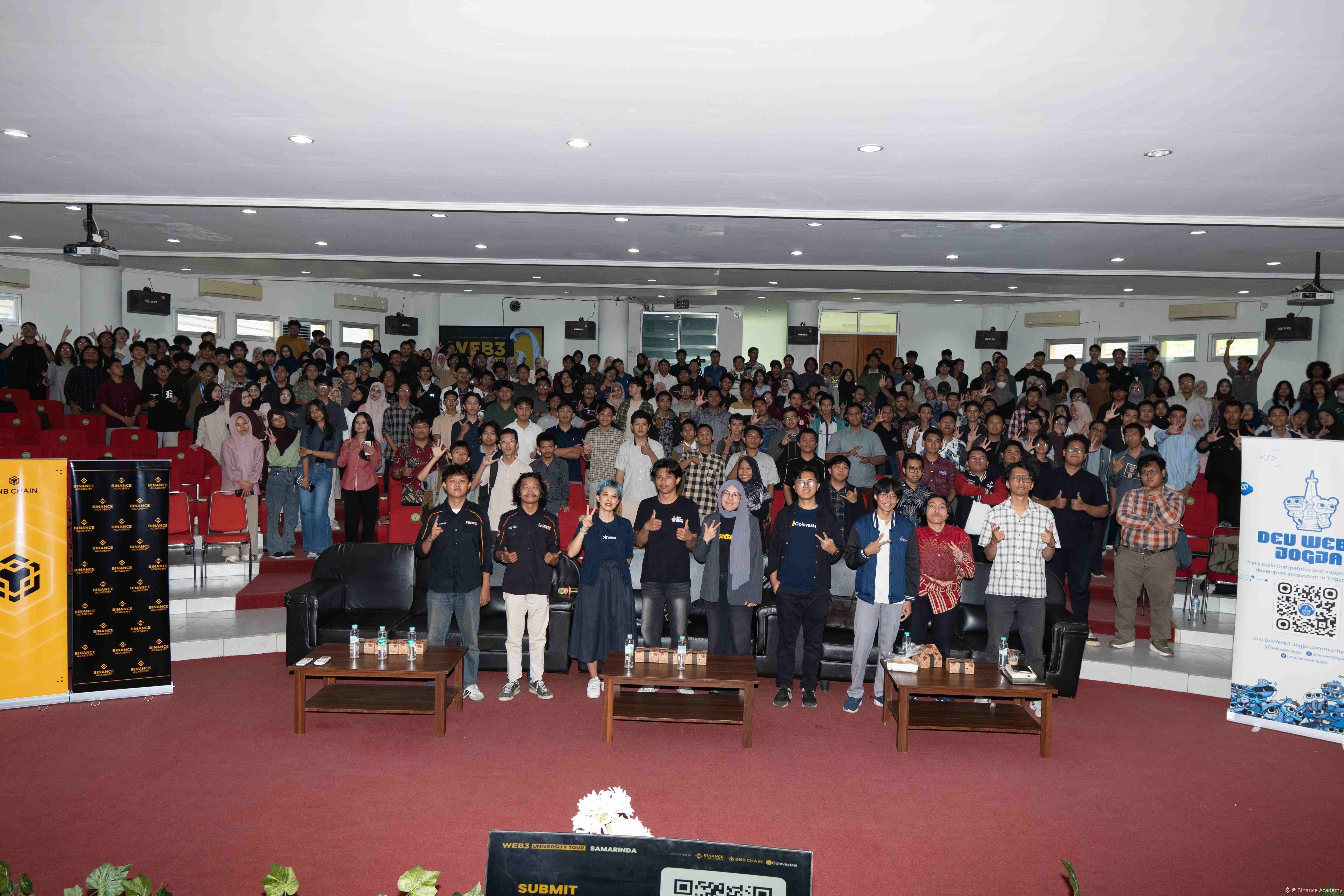
🇮🇩 Binance Academy University Tour visited Mulawarman University in Samarinda, Indonesia.
We dove into Web3 career opportunities and building awareness around the use of AI.
🙌 279 students joined us! Thank you to everyone who came and brought such amazing energy.
Keep learning, stay curious, and explore what's next!
We dove into Web3 career opportunities and building awareness around the use of AI.
🙌 279 students joined us! Thank you to everyone who came and brought such amazing energy.
Keep learning, stay curious, and explore what's next!
9
54
16.4k
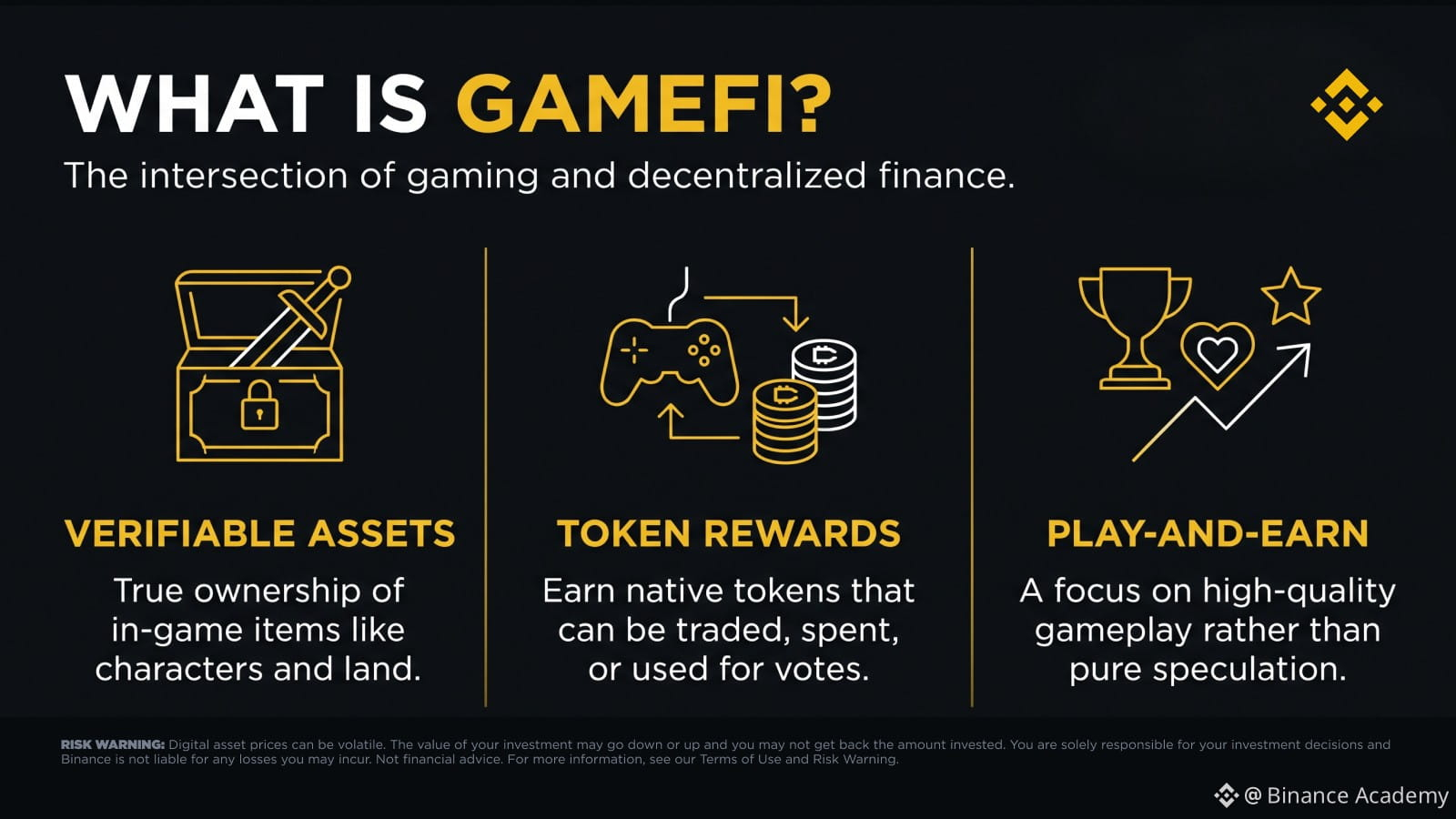
While traditional markets focus on macroeconomic shifts, the Web3 gaming sector is experiencing massive structural growth in Q4.
Recent October 2026 on-chain data highlights a significant trend: GameFi applications currently account for over 30% of all decentralized application (dApp) activity across the blockchain ecosystem. Rather than purely speculative tokens, the new wave of Web3 games is focused on sustainable economies and true asset ownership.
👉 [Explore how blockchain technology is fundamentally upgrading the global gaming industry.](https://www.binance.com/en/academy/articles/what-is-gamefi-and-how-does-it-work?utm_source=binanceacademysquare&utm_medium=social&utm_campaign=article)
While traditional markets focus on macroeconomic shifts, the Web3 gaming sector is experiencing massive structural growth in Q4.
Recent October 2026 on-chain data highlights a significant trend: GameFi applications currently account for over 30% of all decentralized application (dApp) activity across the blockchain ecosystem. Rather than purely speculative tokens, the new wave of Web3 games is focused on sustainable economies and true asset ownership.
👉 Explore how blockchain technology is fundamentally upgrading the global gaming industry.
12
2
44
97.5k
ເຂົ້າສູ່ລະບົບເພື່ອສຳຫຼວດເນື້ອຫາເພີ່ມເຕີມ
ເຂົ້າຮ່ວມກຸ່ມຜູ້ໃຊ້ຄຣິບໂຕທົ່ວໂລກໃນ Binance Square.
⚡️ ໄດ້ຮັບຂໍ້ມູນຫຼ້າສຸດ ແລະ ທີ່ມີປະໂຫຍດກ່ຽວກັບຄຣິບໂຕ.
💬 ໄດ້ຮັບຄວາມໄວ້ວາງໃຈຈາກຕະຫຼາດແລກປ່ຽນຄຣິບໂຕທີ່ໃຫຍ່ທີ່ສຸດໃນໂລກ.
👍 ຄົ້ນຫາຂໍ້ມູນເຊີງເລິກທີ່ແທ້ຈາກນັກສ້າງທີ່ໄດ້ຮັບການຢືນຢັນ.
ອີເມວ / ເບີໂທລະສັບ
ຫົວຂໍ້ທີ່ກໍາລັງນິຍົມ
BitcoinAndStocksSlipAgainAmidTrump’sTariffPlans
5,991 ຄັ້ງທີ່ເບິ່ງ
151 ກຳລັງສົນທະນາ
U.S. Plans New Tariffs on China, EU and Others; Bitcoin Slips Below $60,000 and Nasdaq Falls 1.5%
Binance News
·4 ຖືກໃຈ
·1.6k ຄັ້ງທີ່ເບິ່ງ
JensenHuangSaysNvidiaDoesn’tNeedASuccessionPlan
6,628 ຄັ້ງທີ່ເບິ່ງ
116 ກຳລັງສົນທະນາ
AnthropicBreaksBelowIPOPriceAmidAISlump
95,343 ຄັ້ງທີ່ເບິ່ງ
876 ກຳລັງສົນທະນາ