

#FearGreedIndexFallsTo10ExtremeFear
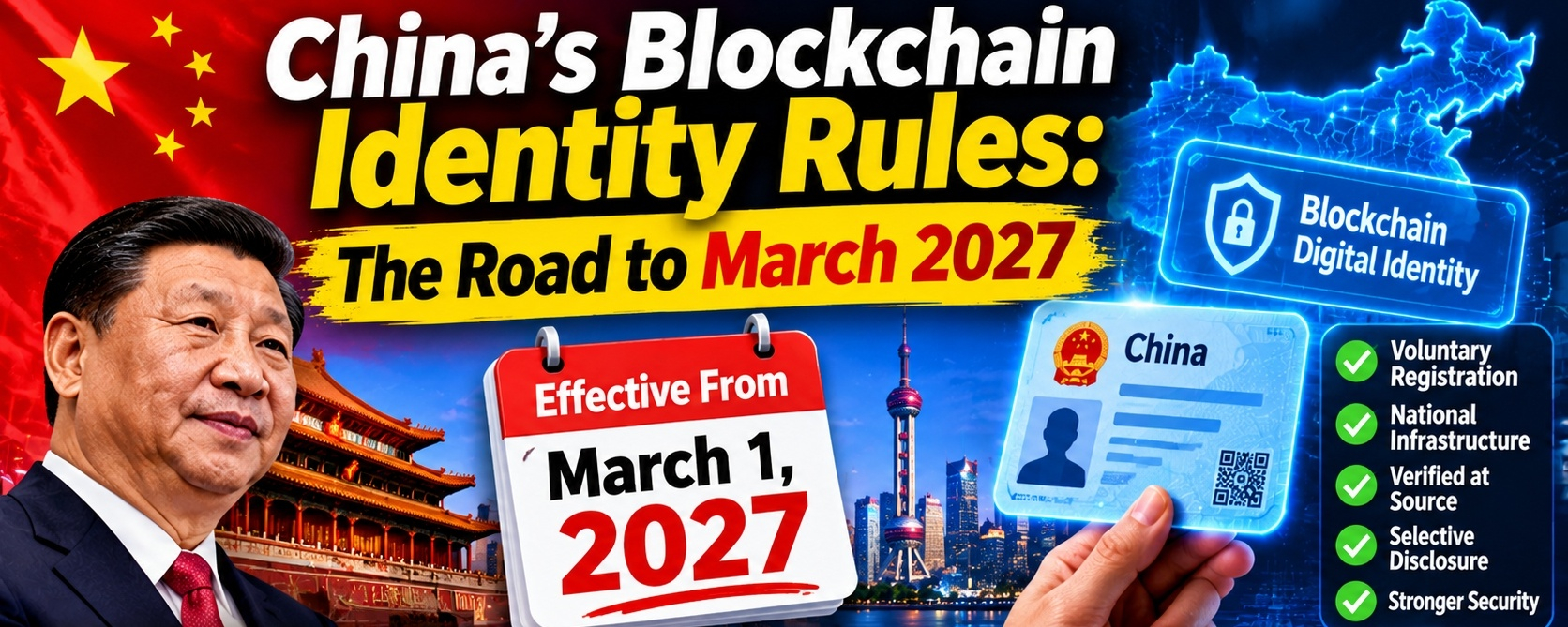
China has published new rules for blockchain-based digital identity, set to take effect on March 1, 2027. 🗓️ Released on November 27 by 11 government bodies, including the Cyberspace Administration of China and the People’s Bank of China, they aim to make identity checks work across regions, industries and online platforms. 🔗
🆔 How the System Works
• ✅ Voluntary registration: people, organizations and even industrial equipment and goods can receive identities.
• ⛓️ National infrastructure: an “identity chain” built on China’s National Blockchain Network will be run by an authorized operator.
• 🏛️ Verified at the source: recognized authorities check applications before identities are issued.
• 📜 Verifiable credentials: users could prove a qualification or other fact without exposing a full record.
• 🔑 Private keys: users are responsible for keeping them safe.
Imagine proving you hold a professional certificate without sending your complete education file. 🎓 That is the selective-disclosure idea at the center of the framework.
🛡️ Privacy Limits
The rules require data minimization: services should collect only what they need. 🔍 Verification activity cannot be used for cross-platform user profiling or targeted marketing. Providers must also maintain security protections and respond to incidents.
At the same time, identities remain anchored to government verification systems. 🏛️ How privacy protection works in practice will be an important test.
🌐 Where It Could Be Used
• 💴 Digital yuan: mutual recognition with digital RMB identities is encouraged.
• 🧾 Tax: verification and authorization.
• 🚚 Transport and customs: credential checks that could simplify processes.
• 🏢 Public bidding: confirming bidders’ identities.
• 🤖 AI agents: identifying software agents and what they are allowed to do.
• 🌏 Cross-border services: cooperation with overseas identity providers under safe, controlled conditions.
💡 What It Means for Blockchain
This is a major signal that China sees blockchain as public digital infrastructure. 🏗️ It does not open the door to crypto trading: restrictions on cryptocurrency activity in mainland China remain. 🚫 Readers should not treat this news as automatic support for any identity token.
👀 What to Watch Before March 2027
• 🧩 Which platforms and credential providers connect first
• ⚙️ How technical standards and authorization rules develop
• 💴 How the digital yuan link takes shape
• 🔐 How privacy limits are enforced
• 🌍 Whether cross-border recognition becomes practical
China is also targeting 2030 to largely complete its national blockchain infrastructure. 🚀
🏁 Final Thoughts
China’s framework could reduce repeated identity checks and give blockchain a practical role in daily services. ✨ Its success will depend on adoption, security, interoperability and public trust. The March 2027 start date is not the finish line: it is when the next stage of testing in the real world begins. 📈
💬 Could blockchain identity make online verification safer, or will privacy remain the biggest concern? 👇
⚠️ This article is for information only and is not financial advice.
#China #Blockchain #DigitalIdentity #Web3 #CryptoNews
Sources, checked November 28, 2026: Asia Daily · Cointelegraph via TradingView#Citi$35BRiskAssetErrorTriggersExits #PBOCDefinesHighRateDepositsCutsCDThreshold #VitalikWantsWalletChipDesignsOpened #WhaleHolds1.38MHYPELongUp$34M