$PAXG: PAXG Baseline Consistency
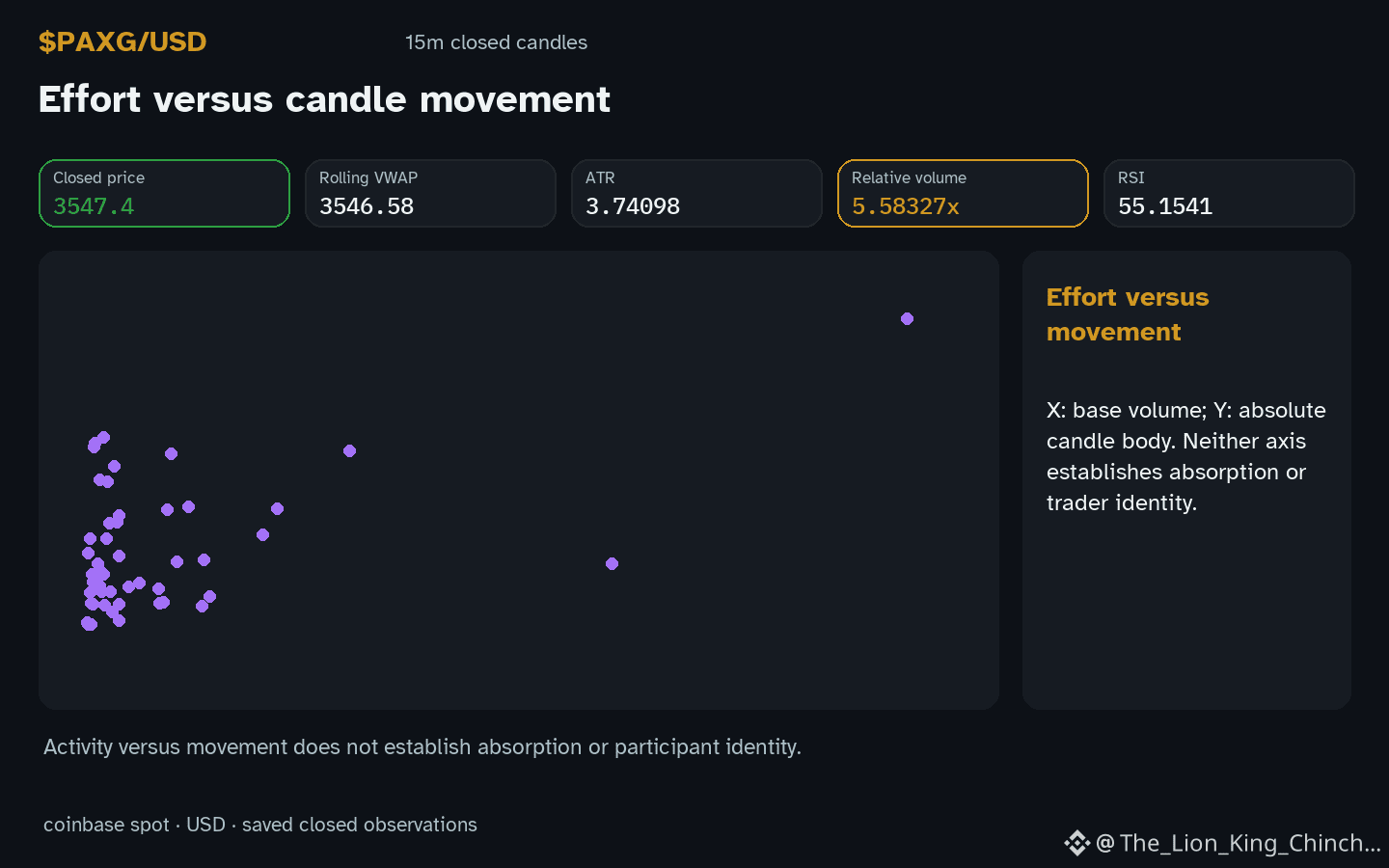
$PAXG: PAXG trades down with volume above baseline. This tension raises a question. Consistency in measurement matters. A common assumption is: tighter stops mean better control. But tighter stops need more noise tolerance. Consider a thought experiment. Imagine two observers watching PAXG. One uses a loose baseline. The other uses a tight one. The tight observer triggers exits on small candles. The loose observer waits. Neither is right or wrong. The difference is the definition of noise. A counterexample helps clarity. Suppose relative volume is 5.58x baseline. For one person, this is high. For another, it is normal. The same data yields different conclusions. This is the core risk. Standardized baselines prevent this drift. They ensure that "high" and "low" mean the same thing across checks. To apply this, define your baseline before entering. Use a fixed lookback period. Do not adjust it after the fact. If the price closes below support 3531.58, the baseline shifts. Reassess the reading. If the close stays above support, the original view holds. This simple check keeps the analysis grounded. It avoids reacting to every candle. The goal is not prediction. It is consistent interpretation. When the baseline is fixed, invalidation becomes clear. You know exactly what must happen to change your mind. This clarity is the practical trade-off. It favors waiting over chasing. It favors a clear exit rule over a vague one.
Probabilistic market research, not a recommendation or guaranteed return.
A useful cross-check: $BTC has hourly direction down and volume not above its baseline; $STRK has hourly direction up and volume not above its baseline. This alone does not establish correlation.
Clear invalidation or a stronger-looking entry?
#PAXG