
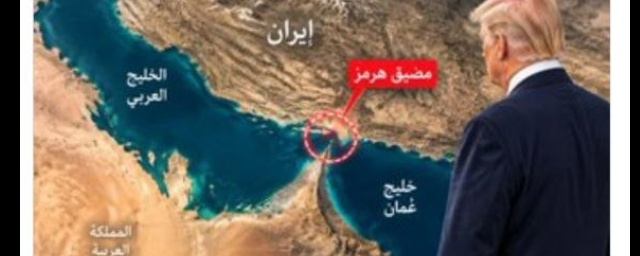

The first result of the trilateral meeting between Russia, China, and America on the sidelines of the APEC summit: China pressing for Iranian oil to reach its shores..
And Iran is on the verge of imposing a new equation: Iranian oil reaching its customers in Asia in exchange for the same amount of Arab oil being produced. In other words, if Iranian ships do not make it to China, #ايران will preemptively strike power stations in the Gulf..
The story is that America imposed a naval blockade on Iran on April 13, lifted it in June after a preliminary understanding, and reinstated it on July 14 after the agreement was signed. According to an analysis by the shipment-tracking company "Kpler" on October 22, Iran has not loaded any crude since August 25, and September passed without any loading at all. This is the first time since 1979 that Iran's oil exports (by sea) have reached zero. Iranian oil that was outside the blockade zone fell from around 88.8 million barrels on July 14 to (zero) in mid-October, while China usually pays one or two months after unloading. That means the money could run out around (mid-December), and this accounts for roughly 30 to 40% of the Iranian government's revenue.
Yesterday, U.S. Central Command issued a statement relayed by Reuters saying that any ship taking on a cargo from another ship at sea, where the cargo comes from an Iranian port, could be treated as circumventing the blockade even if it has not entered an Iranian port. It could be stopped, searched, and seized, and force could be used if it refuses.
Today at 2:47 p.m. Cairo time, Reuters quoted Samir Madani of the tanker-tracking website "Tanker Trackers" as saying that a tanker is loading Iranian crude from another ship inside the Gulf. This tanker is not on the U.S. sanctions lists, and if it gets through, it will be the first shipment to pass the blockade since mid-July.. But so far, there is no name for the tanker, no known destination, and no evidence that it has passed through.
The "Fars" news agency published a commentary calling for a convoy of tankers to China, saying that "a single shot" at a tanker would bring oil facilities in the UAE, Saudi Arabia, and Qatar into the equation of retaliation.
And this is the most important part of the story
Trump can destroy Gulf power stations if he strikes Iranian oil tankers, because the Iranian leadership threatened to expand the war some time ago. It also alluded to the idea of breaking the naval blockade as something some Gulf states want, having pressured Trump to do it in the first place in exchange for their oil passing through the Strait of Hormuz..
Today, the IRGC Navy announced that two giant tankers carrying more than (4 million barrels) had hit mines inside the opposite lane near the Omani coast, and that the explosions caused fires that are still burning. Despite that, there are no names, no flags, no owners, and no news about the crews, and Reuters said it could not verify the IRGC's report.
The analysis is that the IRGC's report is a (political message) saying: the blockade has a price, and convoys have a price too. Iran is determined to impose full control over the strait, and any American naval blockade of its oil will be met with the destruction of oil facilities on the other side..
A new equation (oil = oil) (no exports = no exports)
And the right to the strait that has belonged to Iran forever was relinquished by Iran in past decades, but the war has restored that right that was taken away..
So what does this have to do with the trilateral peace declaration by Russia, China, and America?
The answer: the declaration contains a clause saying the three countries will increase the production and supply of refined petroleum products, and it emphasizes the stability of energy flows, which of course include the Straits of Hormuz and Bab el-Mandeb.
It was completely silent on the wars in Iran, Yemen, and Ukraine, and Trump said that he and Chinese President Xi said oil must pass through the Strait of Hormuz, but he did not mention Iran publicly.
What suggests there is a connection:
1- All of this happened in a single day.
2- China is Iran's number one customer.
3- The Iranian treasury's deadline (mid-December) and Trump's threshold (after January 1) are running on the same calendar.
Bottom line: there is (political synchronization), but there is no confirmed, announced (transit deal), and the synchronization is (a clue), not (a cause).
And finally, the question: what if America does not allow Iranian tankers to pass?
There are possibilities:
First: a reciprocal interception and seizure, like what happened with the Iranian tanker "Grace 1" off Gibraltar on July 4, 2019, after which Iran seized the British tanker "Stena Impero" on July 19 of the same month. In other words, a seizure in response to a seizure.
And that means the world will witness a new, large-scale tanker war like the one that took place in the 1980s between Iran and America as well..
Second: the tanker turns back or stays put in the Gulf as leverage without passing through, like the Soviet ships that stopped in front of the American blockade around Cuba on October 24, 1962, because bluffing is cheaper than confrontation.
In other words, Iran will fill its tankers with oil and crowd them into the Gulf as leverage, and if anything happens to them, that will be justification for carrying out the threat it announced through the Fars agency.
3- America might impose sanctions on Chinese refineries that buy oil from Iran, but that possibility is weak this particular week, because Trump is still sitting with Xi, and they have agreed to protect and guarantee energy supply chains.. including the Iranian one to China, of course, without discrimination.,,
4- Escalation in Hormuz or strikes on Gulf facilities: this is the most dangerous, and its likelihood is moderate if Iranian tankers are intercepted. If it is carried out, the war will reach China's own customer and Washington's allies. In other words, this threat is (a deterrent while it is just talk, and destructive if carried out).
The fourth possibility is Iran's last weapon for exporting their oil..
And the questions on the table: when China signs with Trump on "stable energy flows," does that mean it will receive a blockaded convoy from Iran? Or does it mean Hormuz stays open for Gulf oil only, but not Iranian oil? And why is the call for an Iranian convoy to China coming in a Fars agency commentary, and not in an Iranian government decision?
#USGovernment #worldnews
