Smart Strategy Investment Plans: A Neutral Framework for Top Tokens
Crypto markets remain highly volatile. Any allocation below is an educational illustration only — not financial advice, a recommendation, or a promise of returns. Always do your own research, consider your risk tolerance, time horizon, and consult a qualified advisor. Limit crypto to a small portion of overall wealth (many frameworks suggest 5–10%).
Core Principles of a Smart Approach
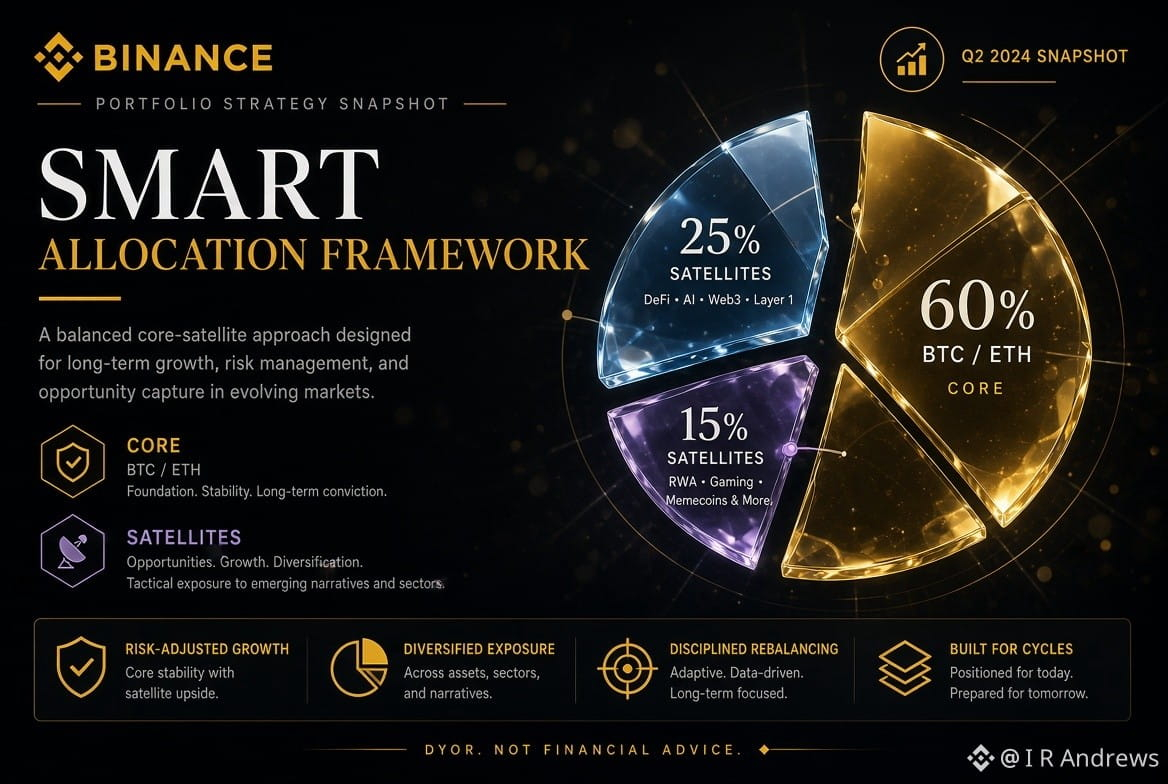
Core-satellite structure: #Anchor with the largest, most liquid assets (#Bitcoin and #Ethereum dominate by market cap).
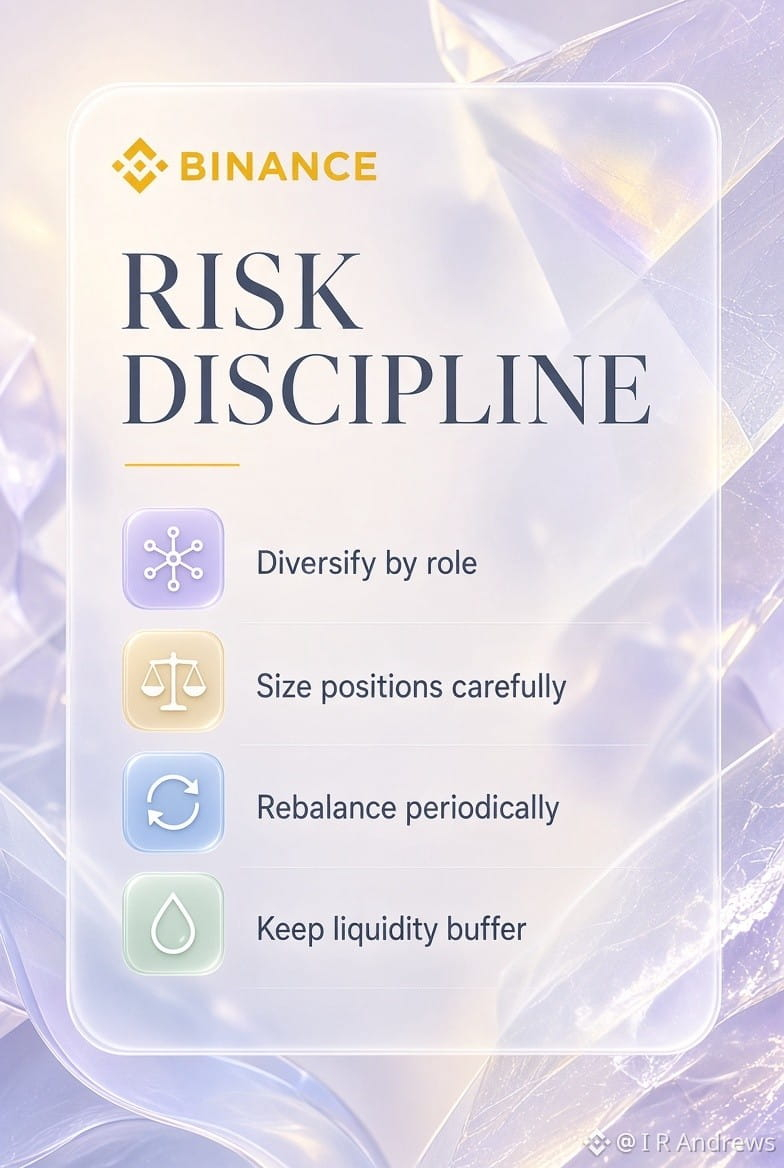
Diversification by role: Store-of-value / monetary ($BTC ), smart-contract platforms ($ETH + leading L1s), selective large-cap utilities, and a liquidity buffer (stablecoins).
Position sizing & rebalancing: Cap any single satellite at a modest share; review periodically rather than reacting to short-term noise.
Risk awareness: Large-caps generally show relatively lower volatility than mid/small-caps, but the entire sector correlates strongly in stress periods.
Illustrative balanced framework (adjust to personal risk profile):
40–60% Bitcoin (BTC)
15–25% Ethereum (ETH)
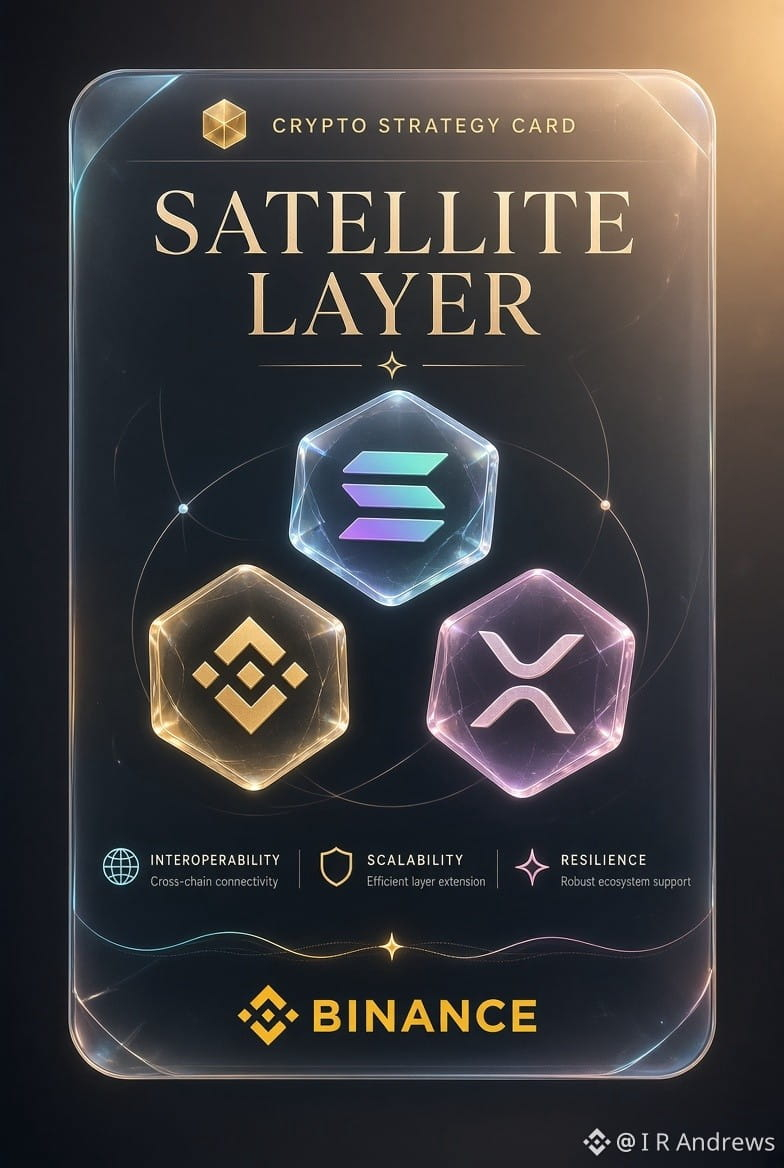
10–20% leading large-cap platforms / utilities (e.g., $BNB , #SOL , #XRP )
10–20% stablecoins (liquidity / dry powder)
Data as of mid-November 2026 market-cap rankings show BTC and ETH continuing to lead by a wide margin, followed by major stablecoins and then BNB, XRP, SOL and others.