

#us-irantalksfuelstrongstockmarketrebound
QatarEnergy’s Historic LNG Shipping Expansion Program encompasses 128 vessels. Designed to support the North Field Expansion (NFE and NFS) projects and long-term fleet renewal, the program is split between 104 conventional-sized carriers and 24 world-record ultra-large QC-Max carriers
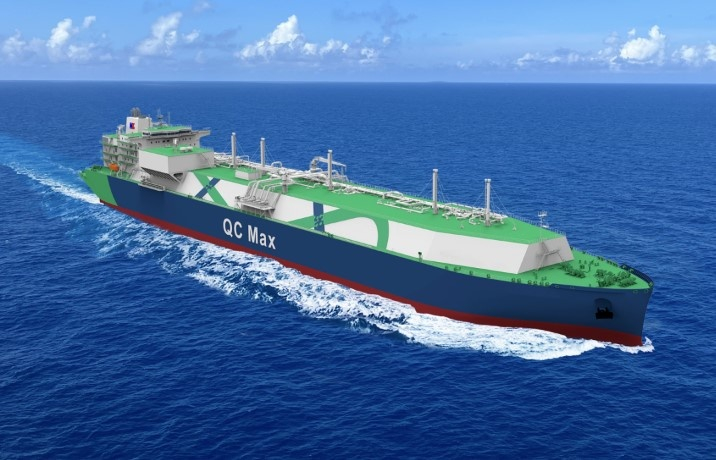
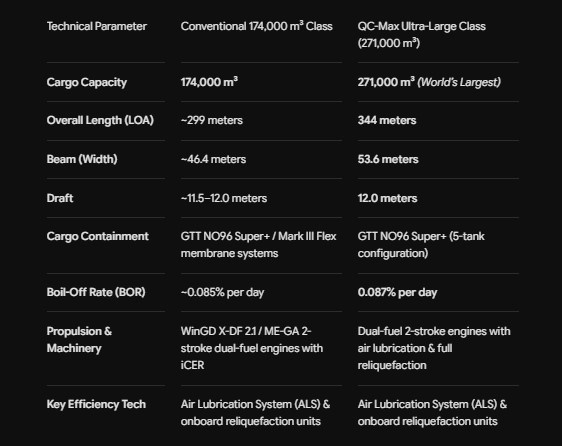
Key Vessel Specifications by Class
The orderbook is divided into two distinct vessel classes engineered for high thermodynamic efficiency and strict environmental compliance:
Shipyard Allocation & Builder Shares
Four major global shipyards are executing the 128-ship orderbook under Phase I and Phase II contracts:
HD Hyundai Heavy Industries (South Korea): Building 34 conventional 174,000 m³ vessels.
Samsung Heavy Industries (South Korea): Building 31 conventional 174,000 m³ vessels.
Hanwha Ocean (South Korea): Building 27 conventional 174,000 m³ vessels.
Hudong-Zhonghua Shipbuilding (China): Building 36 vessels total—12 conventional 174,000 m³ units and all 24 QC-Max (271,000 m³) mega-carriers.
Phase-by-Phase Delivery Timelines
The delivery schedule is phased across multiple years to align directly with onshore production train start-ups at Ras Laffan
Initial Deliveries (2024 – 2025): 32 conventional vessels were handed over by late 2025 (including early units like Sharq, Shra'Ouh, Mraikh, and Mesaieed).
Current Peak Deliveries (2026 – 2027): Conventional 174,000 m³ vessels are being delivered at an active rate of 25–35 ships per year. Over 40 time-charter agreements are assigned across international owners (such as MISC, K-Line, MOL, NYK, and China Merchants).
QC-Max Ramp-Up (2028 – 2030): Deliveries for the 24 QC-Max vessels from Hudong-Zhonghua begin in H1 2028 and extend through 2030, timed to match full-capacity output from the North Field South expansion.
$BTC $OILK.ETF #FollowersGrowth #SupportCreators #TipsNeeded