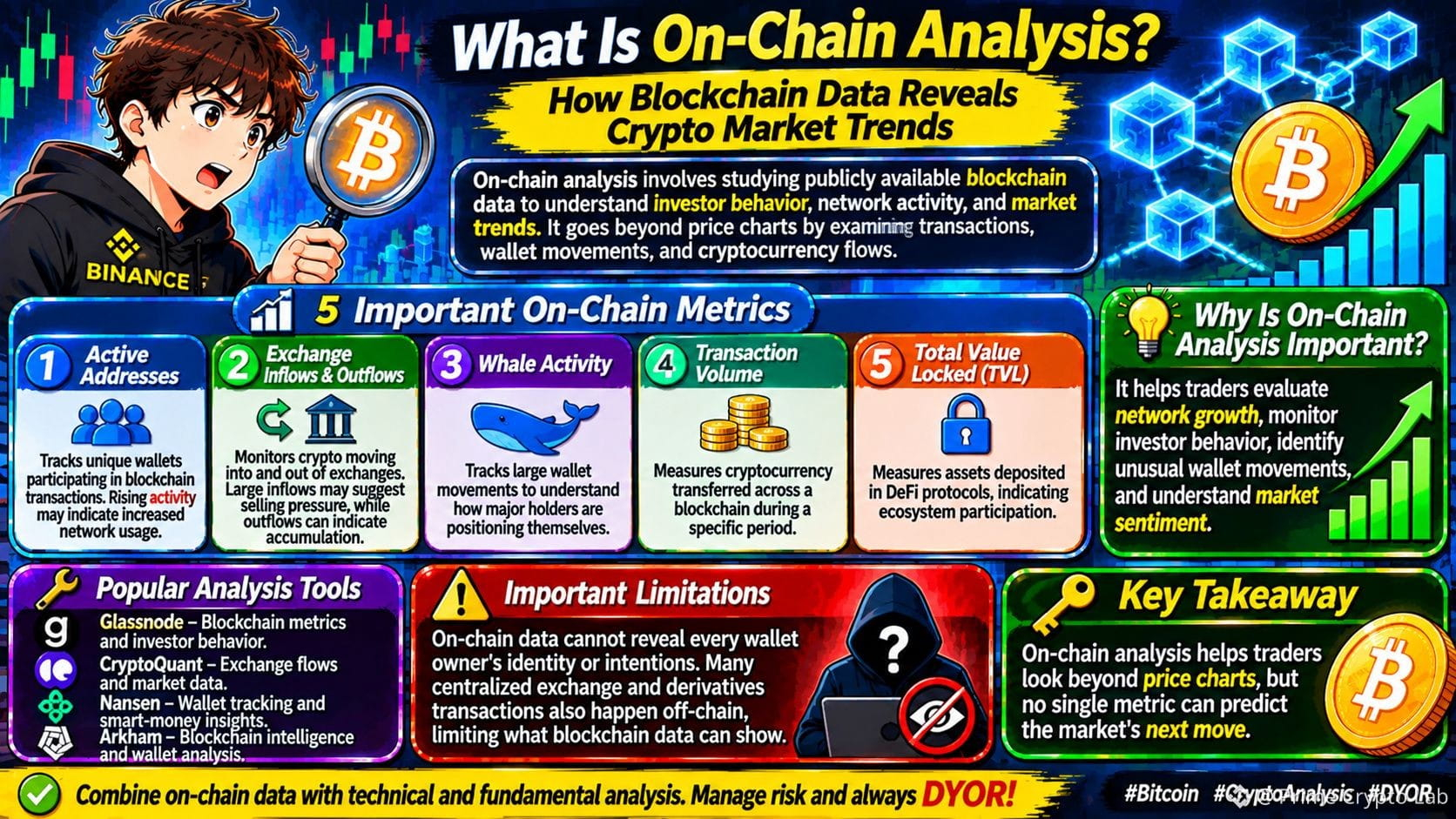
🔍 What Is On-Chain Analysis? How Blockchain Data Reveals Crypto Market Trends
$BTC | On-chain analysis involves studying publicly available blockchain data to understand investor behavior, network activity, and market trends. It goes beyond price charts by examining transactions, wallet movements, and cryptocurrency flows.
📊 5 Important On-Chain Metrics
1️⃣ Active Addresses: Tracks unique wallets participating in blockchain transactions. Rising activity may indicate increased network usage.
2️⃣ Exchange Inflows & Outflows: Monitors crypto moving into and out of exchanges. Large inflows may suggest selling pressure, while outflows can indicate accumulation.
3️⃣ Whale Activity: Tracks large wallet movements to understand how major holders are positioning themselves.
4️⃣ Transaction Volume: Measures cryptocurrency transferred across a blockchain during a specific period.
5️⃣ Total Value Locked (TVL): Measures assets deposited in DeFi protocols, indicating ecosystem participation.
📈 Why Is On-Chain Analysis Important?
$ETH | It helps traders evaluate network growth, monitor investor behavior, identify unusual wallet movements, and understand market sentiment.
🛠️ Popular Analysis Tools
Glassnode: Blockchain metrics and investor behavior.
CryptoQuant: Exchange flows and market data.
Nansen: Wallet tracking and smart-money insights.
Arkham: Blockchain intelligence and wallet analysis.
⚠️ Important Limitations
On-chain data cannot reveal every wallet owner's identity or intentions. Many centralized exchange and derivatives transactions also happen off-chain, limiting what blockchain data can show.
$BNB | Key Takeaway: On-chain analysis helps traders look beyond price charts, but no single metric can predict the market's next move.
📌 Combine on-chain data with technical and fundamental analysis. Manage risk and always DYOR!
#bitcoin #Crypto_Jobs🎯 #CryptoNewss #BinanceSquareTalks