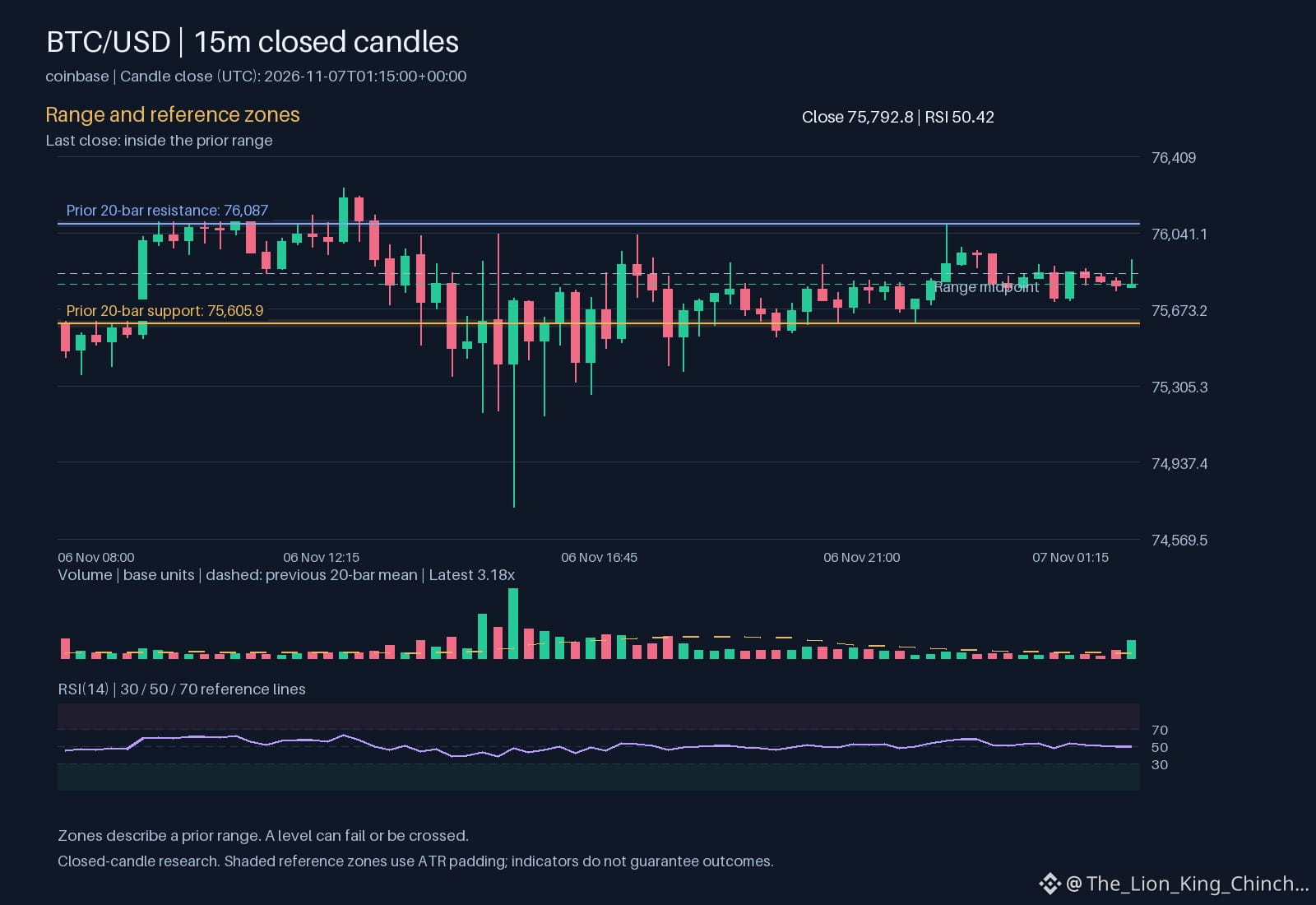
$BTC: The Cost of a Missed Move
Missing a trend often feels like a personal failure rather than a statistical outcome. This reaction stems from loss aversion. Humans typically feel the pain of a loss more intensely than the joy of an equivalent gain. When $BTC moves down hourly despite volume running above baseline, the market is active. Price remains inside the recorded range, yet pressure exists. If a trader hesitates to act during this drop, they may later regret not buying the dip. This regret can distort future research. Instead of analyzing the structure, the mind searches for reasons to justify entering now. This shift replaces objective evidence with emotional repair.
Consider a simple rule. Wait for price to stabilize above 50.4154 before entering. If you stick to this rule, you accept that some moves will be missed. That certainty is valuable. It prevents chasing volatility when uncertainty is high. Missing a leg of a trend is an acceptable risk when the alternative is buying into weakness without a defined setup. The goal is consistent execution, not perfect timing. Every trade has a probability profile. Accepting a missed opportunity protects the capital needed for the next valid setup. This discipline turns emotional noise into manageable data points.
Try a practical self-check. Ask yourself why you want to enter right now. Is it based on the current structure or on anxiety about missing the next move? If the answer leans toward fear, wait. Reassess the interpretation by checking if the current volume supports an immediate reversal or if it simply confirms the downward flow. Keep the rule simple. If the setup is not there, the decision is to wait. This approach reduces the impact of regret on your next move and keeps your research grounded in observed facts rather than imagined losses.
Probabilistic market research, not a recommendation or guaranteed return.
Would you keep the same rule after missing a move?
#BTC #TradingPsychology #CryptoLearning