
#FedWatch
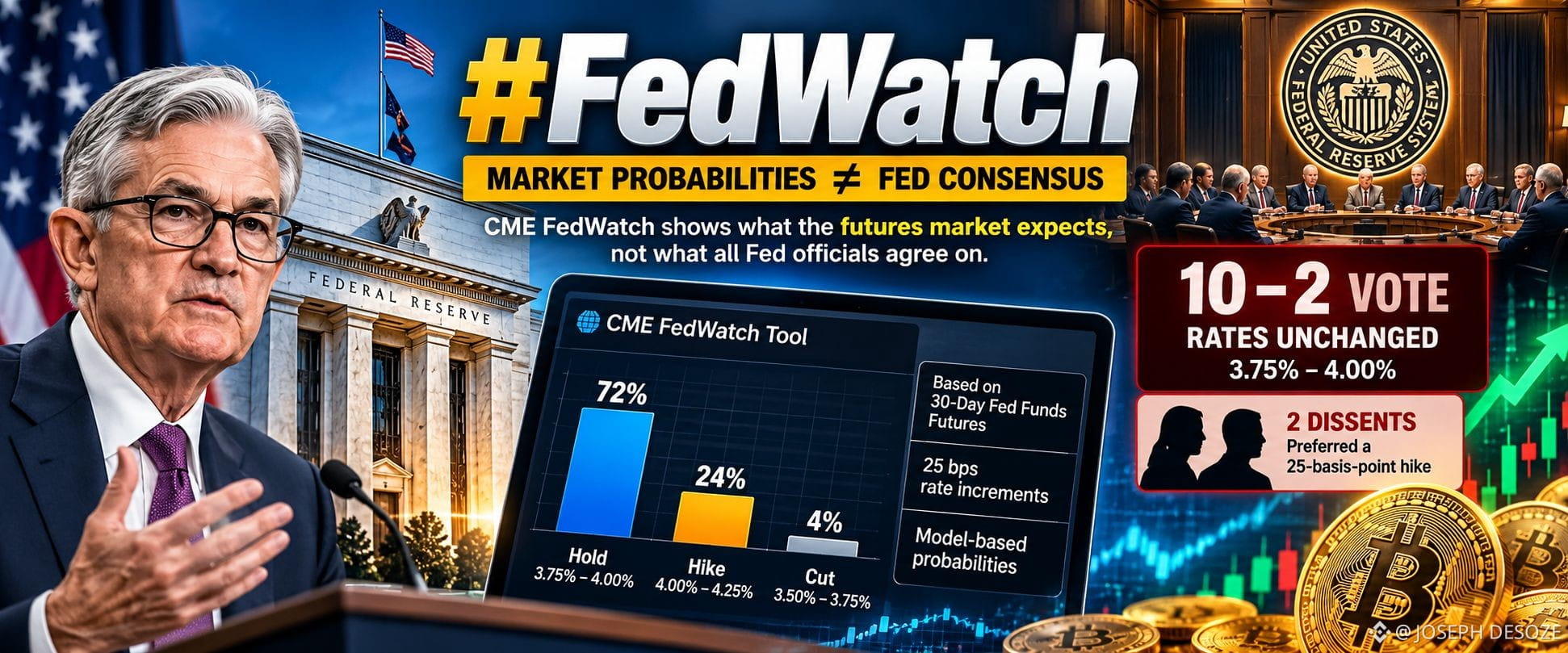
On October 28, the Fed held rates—but the 10–2 vote is the detail worth noticing. The FOMC kept its target range at 3.75%–4.00%, while Lisa Cook and Beth Hammack dissented because they preferred a 25-basis-point hike.
That matters when reading FedWatch.CME’s tool does not poll Fed officials or measure committee consensus. It infers probabilities from 30-Day Fed Funds futures, which reflect market expectations for the average effective federal funds rate during each contract month. CME’s calculation also assumes rate moves in 25-basis-point increments and that the effective rate responds proportionally. These are model assumptions, not guarantees that every real-world policy path fits neatly into the probability tree.
So a high “hold” probability means the futures market is pricing that outcome as more likely under this framework. It does not mean policymakers agree, and it is not certainty about the next decision. October’s vote makes the distinction tangible: the official outcome was unchanged rates, but two voters wanted tighter policy. That does not prove a hike is coming; it shows how one headline probability can hide disagreement about the balance of risks.
For crypto, rate expectations shape liquidity narratives, but FedWatch alone cannot tell us how BTC or other assets will react. The key signal to watch now is whether futures-implied probabilities shift as traders weigh the Fed’s inflation language alongside the dissent—not merely whether the headline rate changed.