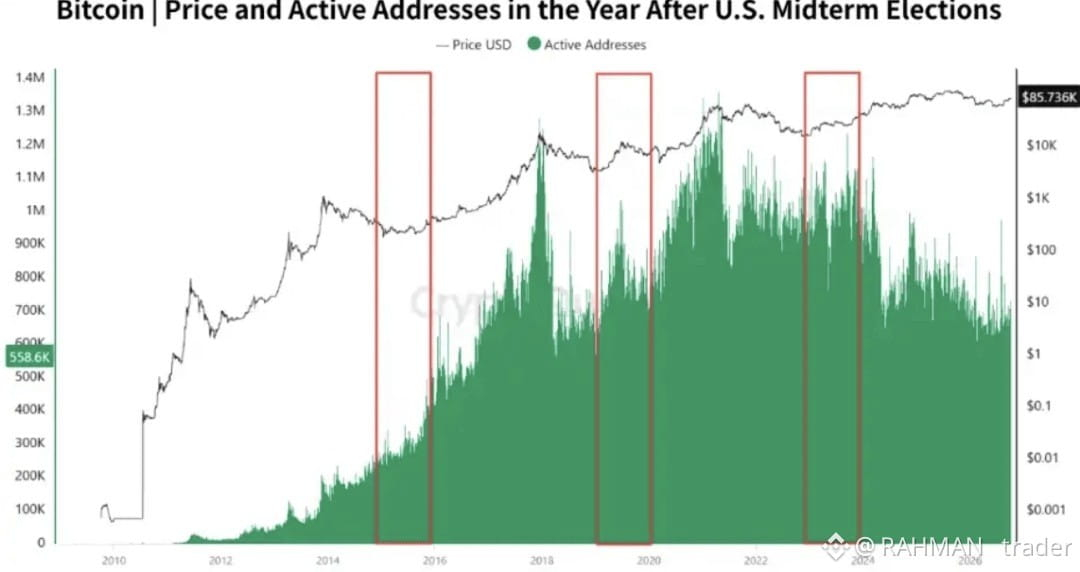
📊 Bitcoin & U.S. Midterm Elections
Bitcoin has delivered positive 12-month returns after every U.S. midterm election in its available history.
Following the 2014, 2018 and 2022 midterms, BTC gained 24.5%, 44.9% and 92.3%, respectively.
A similar trend has been seen in U.S. stocks. Since 1950, the S&P 500 has ended higher 12 months after all 19 midterm elections, with an average gain of 15.4%.
However, Bitcoin’s sample is limited to just three cycles, so a “100% probability” should not be taken as a reliable prediction. BTC also experienced a sharp 45.5% drop in the first month after the 2018 election before recovering over the following year.
For 2026, factors such as Treasury yields, institutional demand and U.S. crypto regulation could have a bigger impact on Bitcoin than historical election patterns alone. 📈
$BTC