



Market data referenced below is based on September 29, 2026 snapshots and can change rapidly. This is an informational analysis, not a price prediction or investment recommendation.
Introduction
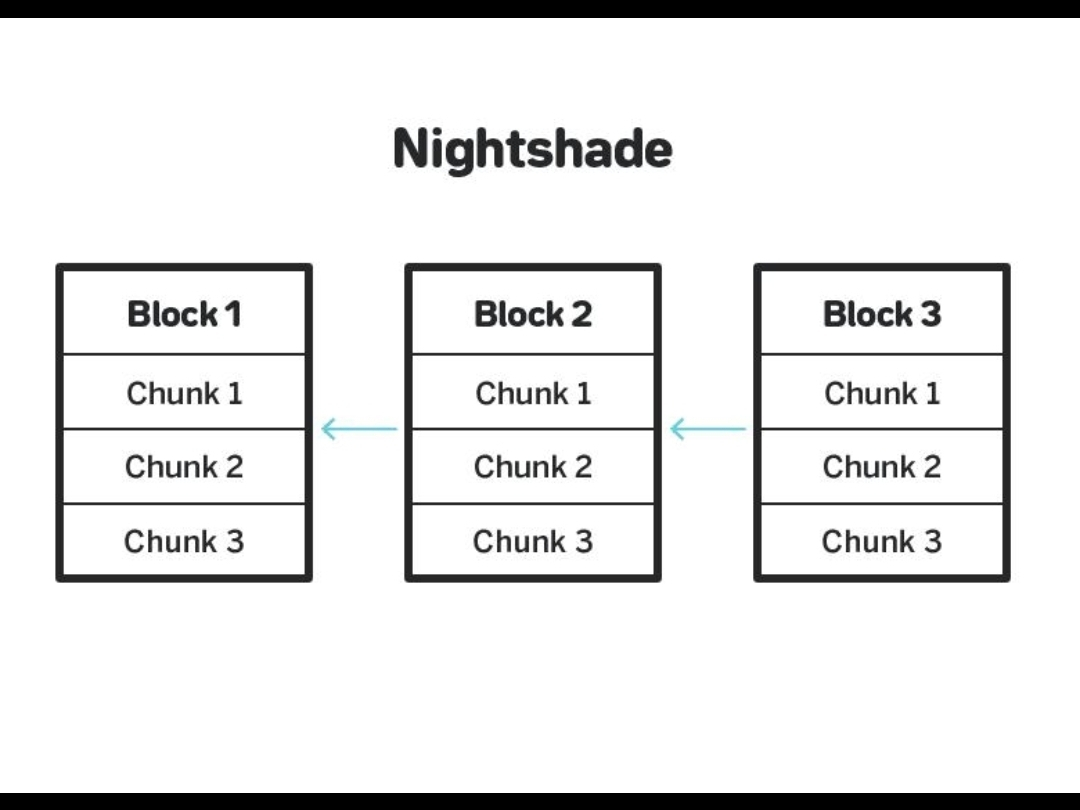
$NEAR Protocol (NEAR) is a Layer-1 blockchain that has increasingly positioned itself around scalability, chain abstraction and AI-related infrastructure. The network uses sharding to process activity in parallel and is developing infrastructure for applications and autonomous AI agents.
From a market-cap perspective, $NEAR is already a relatively large crypto asset rather than a small-cap token. @CoinMarketCap p's September 29, 2026 snapshot puts NEAR at approximately $6.05 billion market capitalization, with a circulating supply of about 1.30 billion NEAR and a price around $4.63 at the time of the snapshot. It was ranked #18 on CoinMarketCap.
CoinMarketCap
Because @crypto prices move continuously, other data providers can show somewhat different figures at the same time. For example, CoinGecko's recent data showed a market capitalization around $5.87 billion.
The important point is that market capitalization is more informative than token price alone.
A $5 token is not automatically "cheaper" than a $50 token. Market cap is calculated approximately as:
Market Cap = Token Price × Circulating Supply
With roughly 1.3 billion NEAR circulating, a $1 change in NEAR's price corresponds to roughly $1.3 billion of additional or reduced market capitalization, assuming supply remains approximately constant.
$NEAR and the AI Narrative
One of the biggest changes in the NEAR story is its increasing emphasis on artificial intelligence.
NEAR currently describes itself as infrastructure for the AI and agent economy, including AI applications, user-owned AI, chain abstraction and autonomous agents. �
Near
This matters for market-cap analysis because cryptocurrency valuations often incorporate expectations about future network usage, not simply today's transactions.
If AI applications eventually create significant blockchain activity, NEAR's AI positioning could become economically relevant. However, the market-cap thesis ultimately depends on actual adoption, revenue, transaction activity and demand for NEAR—not simply the existence of an AI narrative.
@takenomic and Supply $NEAR originally launched with 1 billion tokens at genesis, but its supply has subsequently increased through network issuance.
CoinMarketCap currently reports approximately 1.3 billion NEAR in circulation. �
CoinMarketCap
NEAR has also been changing its approach to token economics.
A September 2026 governance proposal discusses moving gradually from an issuance-funded security model toward a model in which network revenue contributes more to staking rewards, with the objective of reducing unnecessary token dilution. Importantly, this is a proposal, not something that should automatically be treated as an implemented change. �
$NEAR Forum
This is an important variable for long-term market-cap analysis:
If network usage grows while unnecessary dilution decreases, the relationship between network economics and token valuation could change.
NEAR's Market-Cap-to-Usage Question
One useful way to analyze NEAR is to compare its valuation with actual network usage.
CoinGecko's recent figures showed approximately:
Market cap: $5.87B
TVL: $127.84M
Market-cap/TVL: approximately 45.9×
24-hour trading volume: approximately $1.46B
The market-cap/TVL ratio should not be interpreted as a standalone valuation signal. NEAR is a general-purpose Layer-1 and its value proposition extends beyond DeFi TVL.
Nevertheless, it highlights an important research question:
How much real economic activity is being generated by the network relative to the value assigned to its token?
For a long-term fundamental analysis, this is arguably more useful than simply asking whether the NEAR price has risen or fallen.
Potential Drivers of NEAR's Market Capitalization
Several factors could affect NEAR's future market capitalization.
1. Network adoption
More users, developers and applications could increase demand for network infrastructure.
2. AI adoption
NEAR's current strategy places considerable emphasis on AI agents and AI infrastructure.
Near
3. Chain abstraction
NEAR is developing infrastructure intended to make interactions across different blockchains easier, potentially expanding the network's addressable market.
4. Token economics
Changes to issuance, staking rewards and token burns can affect effective supply dynamics.
5. Developer activity
A growing developer ecosystem can create additional applications and network usage.
6. Broader crypto-market conditions
NEAR's market capitalization is also influenced by Bitcoin, Ethereum, liquidity conditions, interest rates and overall crypto risk appetite.
Key Risks
A market-cap analysis should also consider the downside factors.
Competition: NEAR competes with numerous Layer-1 and interoperability networks.
Execution risk: A strong technical roadmap does not guarantee widespread adoption.
Narrative risk: AI-related crypto projects have attracted significant attention, but market narratives can change quickly.
Token dilution: Issuance can affect the value of existing tokens if network growth does not compensate for additional supply.
Market-Cap Scenarios
A useful framework is to consider hypothetical capitalization levels rather than predicting a particular price.
Assuming approximately 1.3 billion circulating NEAR, the relationship would look roughly like this.