AAVE IS LENDING AGAINST COLLATERAL IT NEVER HOLDS
Aave is proposing a lending market where the collateral never actually enters Aave.
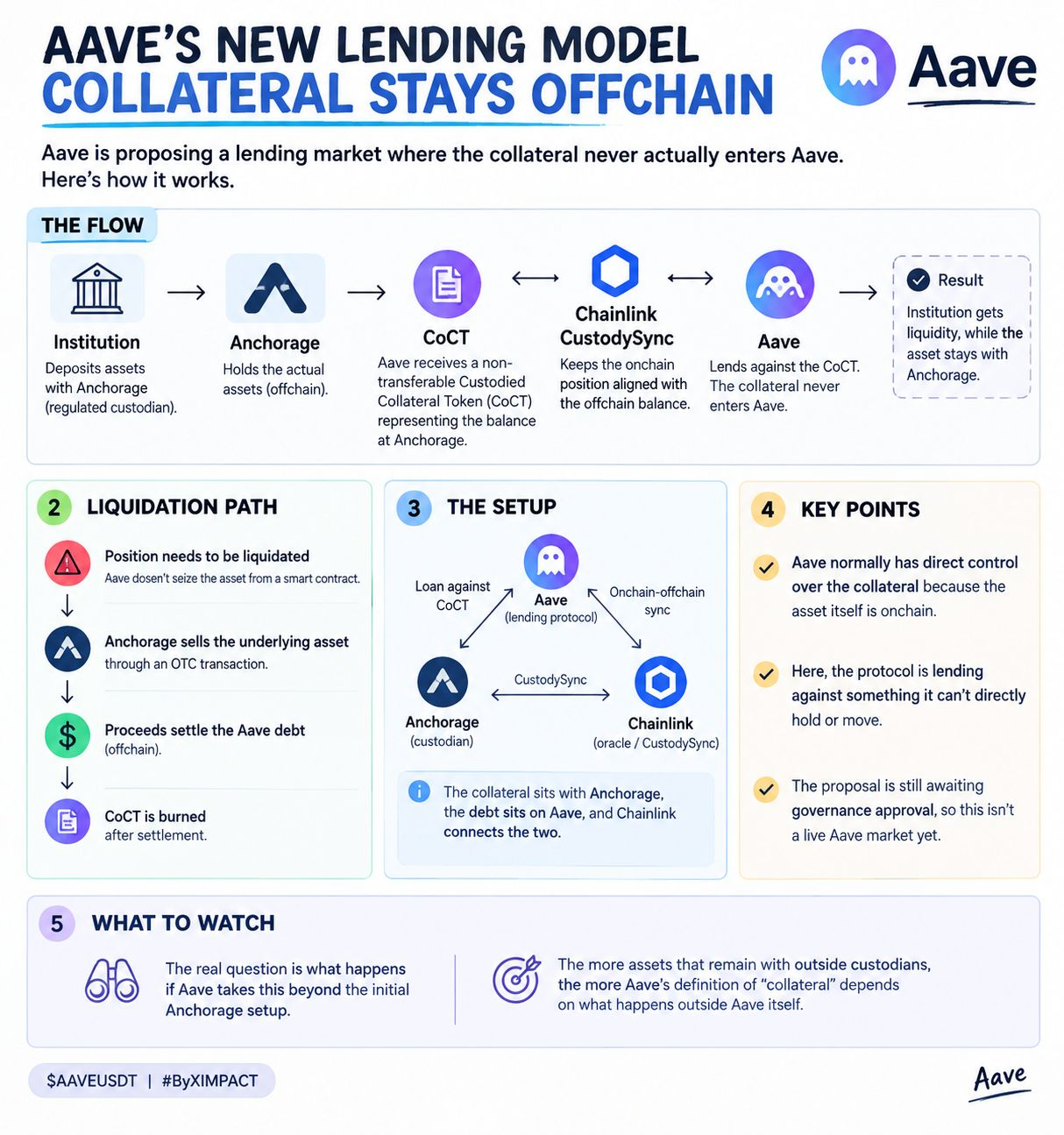
The first version would let institutions keep their assets with Anchorage while borrowing through Aave. Instead of the asset itself, Aave receives a non-transferable Custodied Collateral Token representing the balance held with the custodian, with Chainlink’s CustodySync keeping the onchain position aligned with the offchain balance.
The liquidation path is what caught my attention. If the position needs to be liquidated, Aave doesn't seize the asset from a smart contract. Anchorage sells the underlying asset through an OTC transaction, the proceeds settle the Aave debt, and the CoCT is burned after settlement.
That creates a setup where the collateral sits with Anchorage, the debt sits on Aave, and Chainlink connects the two.
Aave normally has direct control over the collateral because the asset itself is onchain. Here, the protocol is lending against something it can’t directly hold or move.
The proposal is still awaiting governance approval, so this isn't a live Aave market yet. But the architecture is notable: regulated custody no longer has to be separated from onchain credit.
The part worth watching is what happens if Aave takes this beyond the initial Anchorage setup. The more assets that remain with outside custodians, the more Aave's definition of “collateral” depends on what happens outside Aave itself.
$AAVE
$ETH
Aave is proposing a lending market where the collateral never actually enters Aave.
The first version would let institutions keep their assets with Anchorage while borrowing through Aave. Instead of the asset itself, Aave receives a non-transferable Custodied Collateral Token representing the balance held with the custodian, with Chainlink’s CustodySync keeping the onchain position aligned with the offchain balance.
The liquidation path is what caught my attention. If the position needs to be liquidated, Aave doesn't seize the asset from a smart contract. Anchorage sells the underlying asset through an OTC transaction, the proceeds settle the Aave debt, and the CoCT is burned after settlement.
That creates a setup where the collateral sits with Anchorage, the debt sits on Aave, and Chainlink connects the two.
Aave normally has direct control over the collateral because the asset itself is onchain. Here, the protocol is lending against something it can’t directly hold or move.
The proposal is still awaiting governance approval, so this isn't a live Aave market yet. But the architecture is notable: regulated custody no longer has to be separated from onchain credit.
The part worth watching is what happens if Aave takes this beyond the initial Anchorage setup. The more assets that remain with outside custodians, the more Aave's definition of “collateral” depends on what happens outside Aave itself.
$AAVE
$ETH