
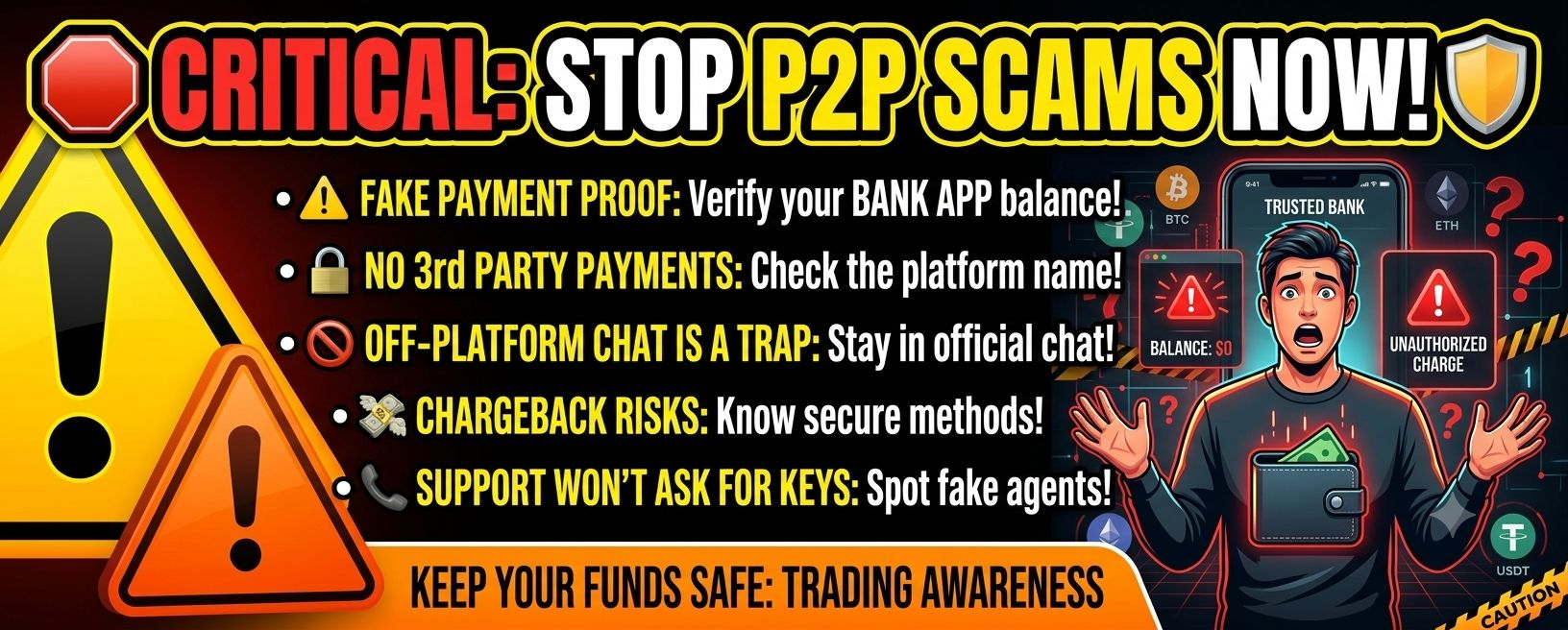

1. The Fake Payment Proof / Fake SMS Scam
How it works: A buyer marks the trade as "Paid" and attaches a convincing, edited payment receipt or sends a fake SMS text that looks like a bank/e-wallet alert.
The Trap: Unwary sellers assume funds have arrived and hit "Release Crypto".
Rule: Never rely on screenshots or SMS notifications. Always log into your mobile banking app or e-wallet directly to verify the real balance.
2. Third-Party Account Transfer (The Account Freeze Trap)
How it works: You receive funds from a bank account that does not match the buyer's verified exchange profile name.
The Danger: Scammers often use stolen bank credentials or trick an innocent third party into paying you. When the original bank account owner files a police complaint (e.g., cybercrime reporting), your bank account gets frozen along with all funds.
Rule: Reject any payment where the sender’s bank account name doesn't match the exchange KYC name 100%.
3. Payment Reversal & Chargeback Fraud
How it works: The scammer pays you, receives the crypto, and immediately contacts their bank claiming the payment was unauthorized or fraudulent.
The Result: The bank initiates a clawback or freezes your account, leaving you without your crypto or your fiat.
Rule: Avoid taking payments from payment methods known for easy chargebacks or unverified personal transfers.
4. Off-Platform / WhatsApp Lure
How it works: The scammer offers better rates or asks you to complete the trade off-exchange via WhatsApp, Telegram, or social media to "save fees".
The Catch: Once you transfer funds outside the platform, you lose exchange escrow protection entirely.
Rule: Never take a transaction off the platform. Keep all communications within the official chat box.
5. Fake Customer Support & Impersonation
How it works: Fraudsters contact you inside the chat or via external apps posing as platform customer service agents, claiming an escrow error or demanding immediate asset release.
Rule: Support personnel will never message you asking to release crypto or share passcodes.
🔒 Golden Rules for Secure P2P Trading
Verify Official KYC Names: Always match the buyer's/seller's name on the platform with the incoming bank account name.
Log In to Confirm Balances: Never release assets based on a receipt, email, or SMS notification alone.
Trade with Verified Merchants: Look for verified merchant badges with high order completion rates (>98%) and established trade histories.
Utilize Escrow Properly: Never mark an order as paid until funds are sent, and never release crypto until cash is in hand.
Keep Proof of Everything: Maintain clean transaction histories, bank statements, and chat logs.
🚨 What to Do If You've Been Targeted
Open an Appeal: Immediately file an official dispute on the platform before the order auto-completes.
Submit Documentation: Provide unedited screen recordings of your bank/e-wallet app history showing non-receipt or third-party details.
Contact Your Bank: If an unauthorized chargeback or account freeze occurs, notify your bank immediately with official P2P trade proofs.