

I have spent time researching Binance Options RFQ, and what I started to know is that it is built for people who want to trade options in a cleaner and more controlled way. RFQ means Request for Quote. Instead of placing orders into a public order book, they ask for a quote directly and get prices from liquidity providers. This becomes very useful when trades are large or when strategies are more complex.
In my search, I noticed that Binance Options RFQ is not only for big institutions. Experienced retail traders can also use it to manage risk better and avoid unnecessary price slippage. The platform supports different option strategies so traders can match their market view with their risk comfort.
How Options Trading Works Here
Options are contracts. They give you a right but not a requirement to buy or sell an asset at a fixed price before a certain time. What I like about RFQ is that it makes these trades simpler and faster, especially when multiple contracts are involved.
As I researched more, I found that Binance grouped common option setups into ready strategies. These help traders express ideas like price going up, going down, or moving a lot.
Single Call Strategy
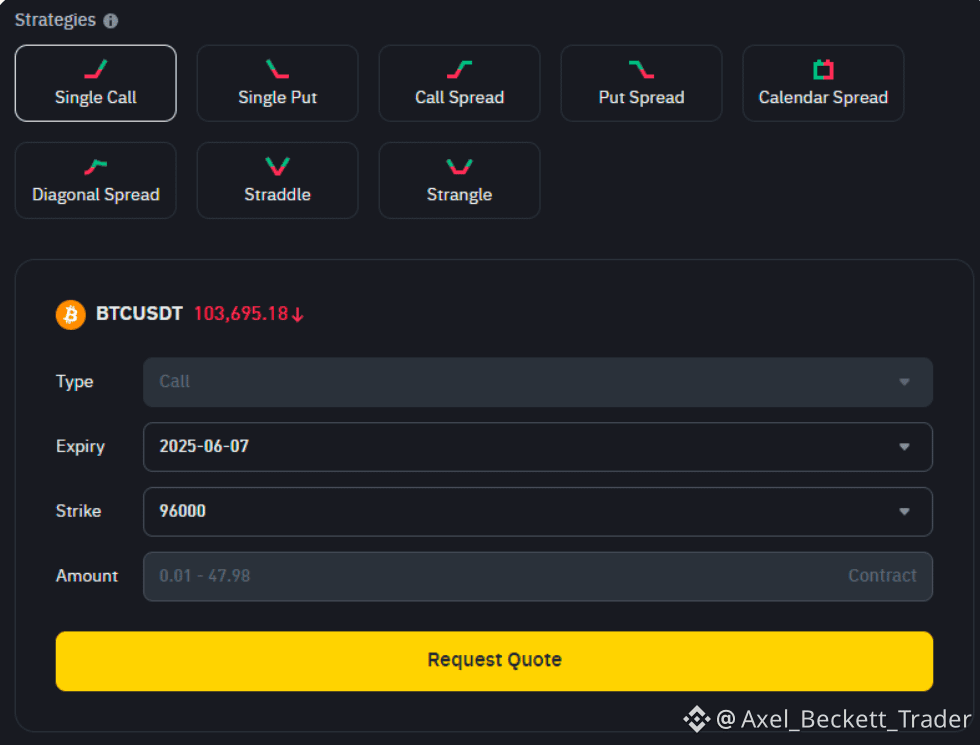
A single call is the most basic strategy. I start to know that this is used when someone believes the price will go up. You pay a small amount called a premium. If the price goes higher than the agreed level, you profit. If it does not, the loss is limited to what you paid.
This is often used when someone feels confident about an upward move but wants controlled risk.
Single Put Strategy
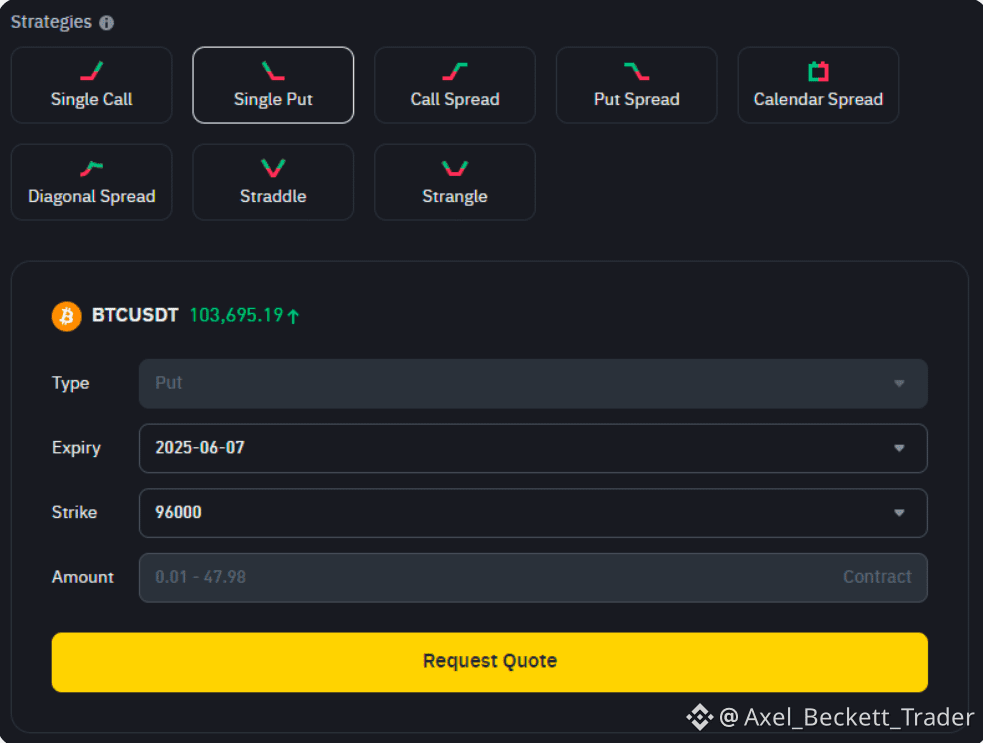
A single put works in the opposite way. In my research, this strategy is used when someone believes the price will fall. You gain value as the market drops below the strike price.
It becomes useful when protecting value or when expecting a downside move without short selling the asset directly.
Call Spread Strategy
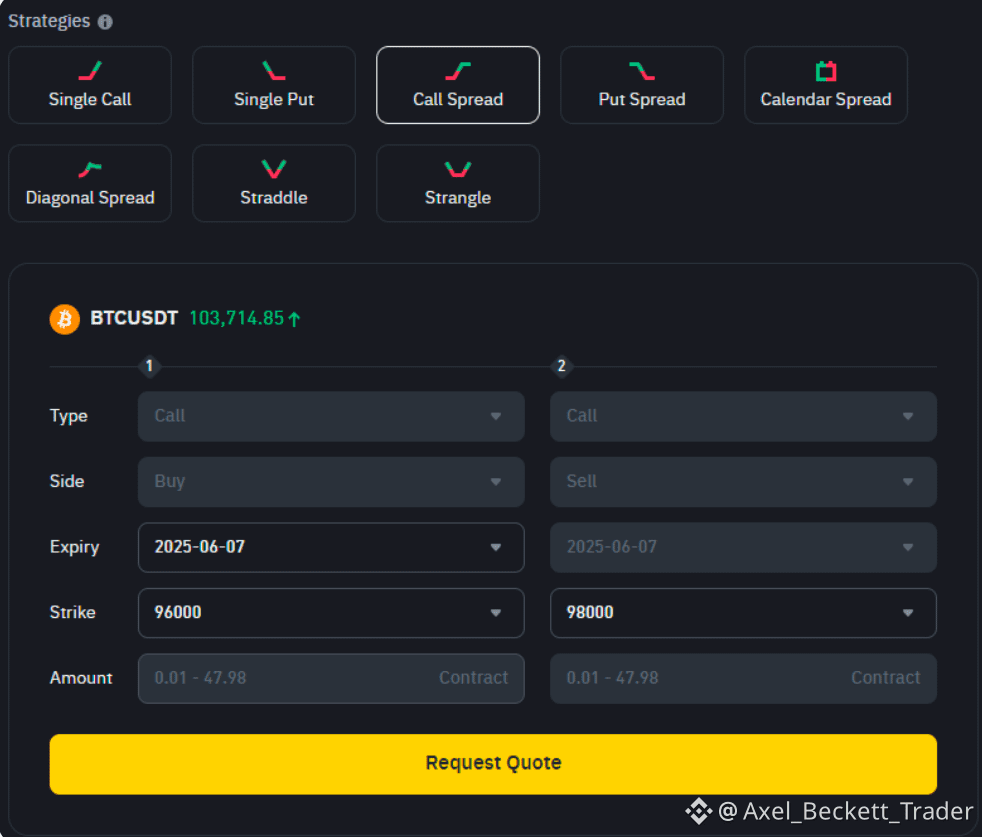
Call spreads combine two call options. I have seen that this strategy reduces cost. One call is bought and another is sold at a higher price. This limits profit but also lowers risk.
It is helpful when the expectation is a moderate price increase, not a massive rally.
Put Spread Strategy
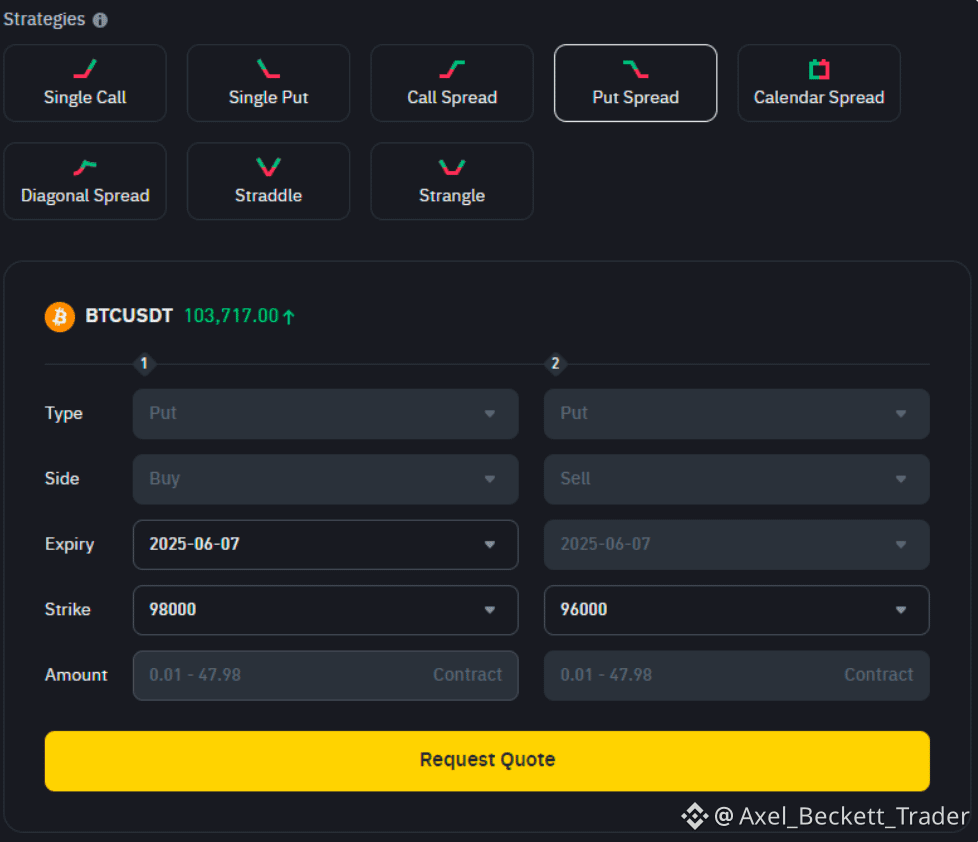
Put spreads work the same way but on the downside. You buy one put and sell another at a lower level. In my search, I noticed this is used when expecting a controlled price drop.
It lowers upfront cost and keeps risk defined.
Calendar Spread Strategy
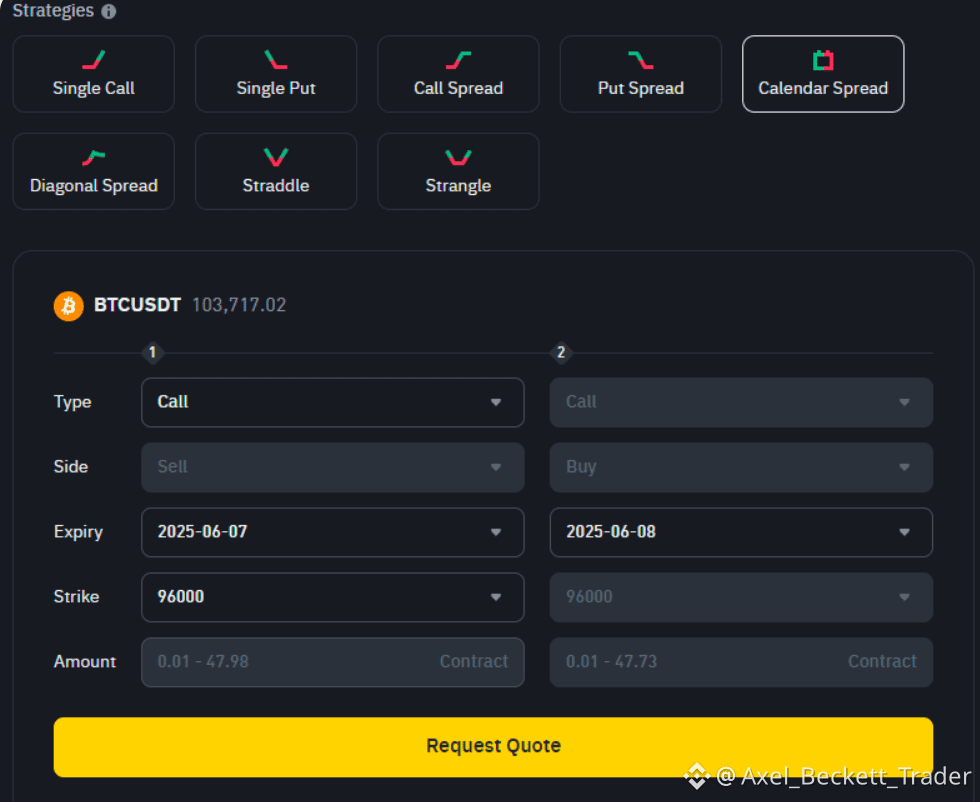
Calendar spreads focus on time. I researched that this strategy uses the same price level but different expiry dates. The short term option loses value faster, which can work in your favor.
This becomes useful when the price is expected to stay calm in the short term but move later.
Diagonal Spread Strategy
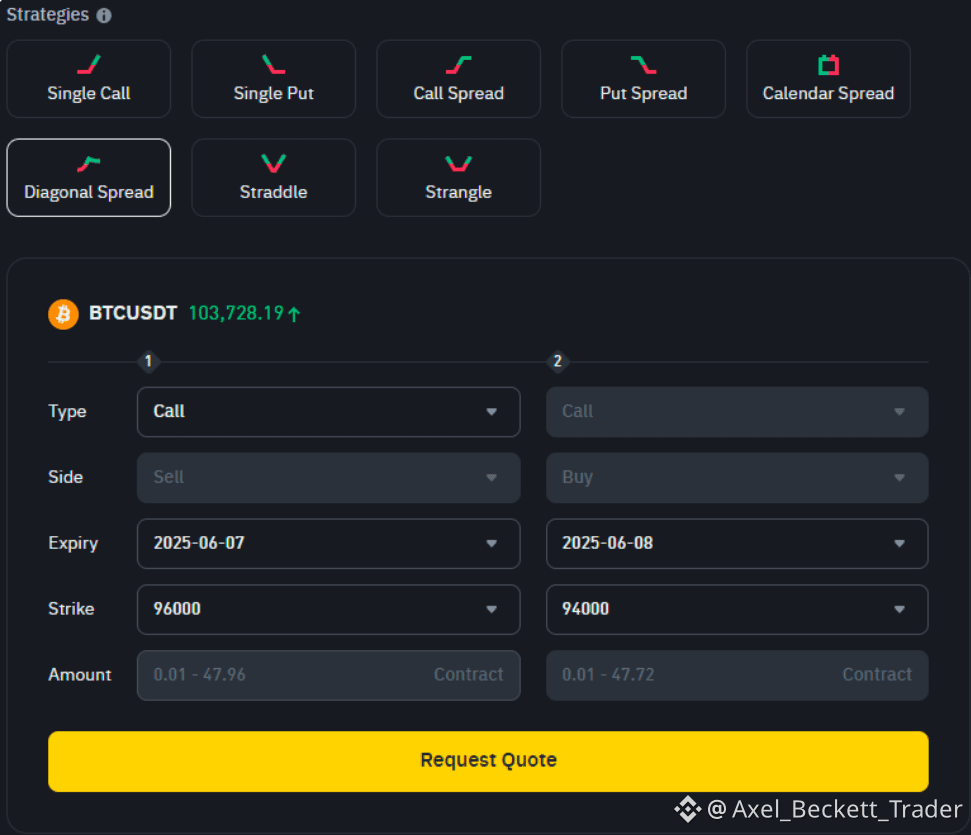
Diagonal spreads mix both price and time. I start to know that this gives more flexibility. Different prices and different expiry dates are used together.
It allows traders to balance time decay and price movement while reducing overall cost.
Straddle Strategy
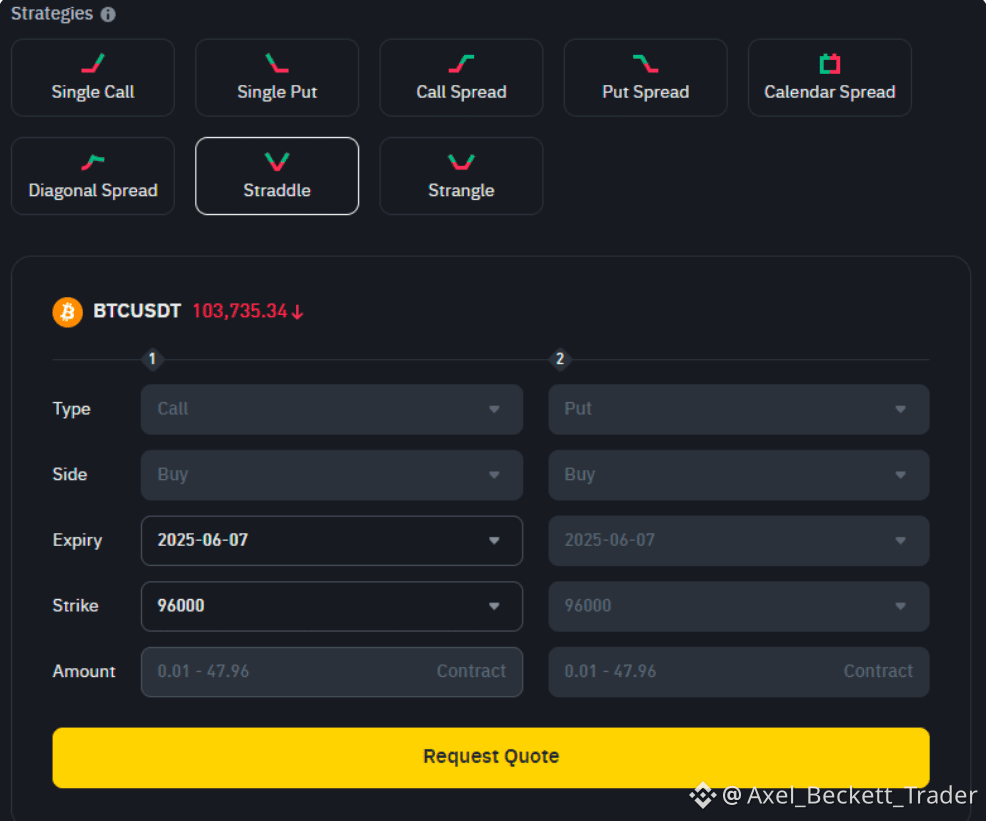
A straddle means buying both a call and a put at the same price. In my research, this is used when a big move is expected but direction is unclear.
If the market moves strongly, one side gains enough to cover the cost of both options.
Strangle Strategy
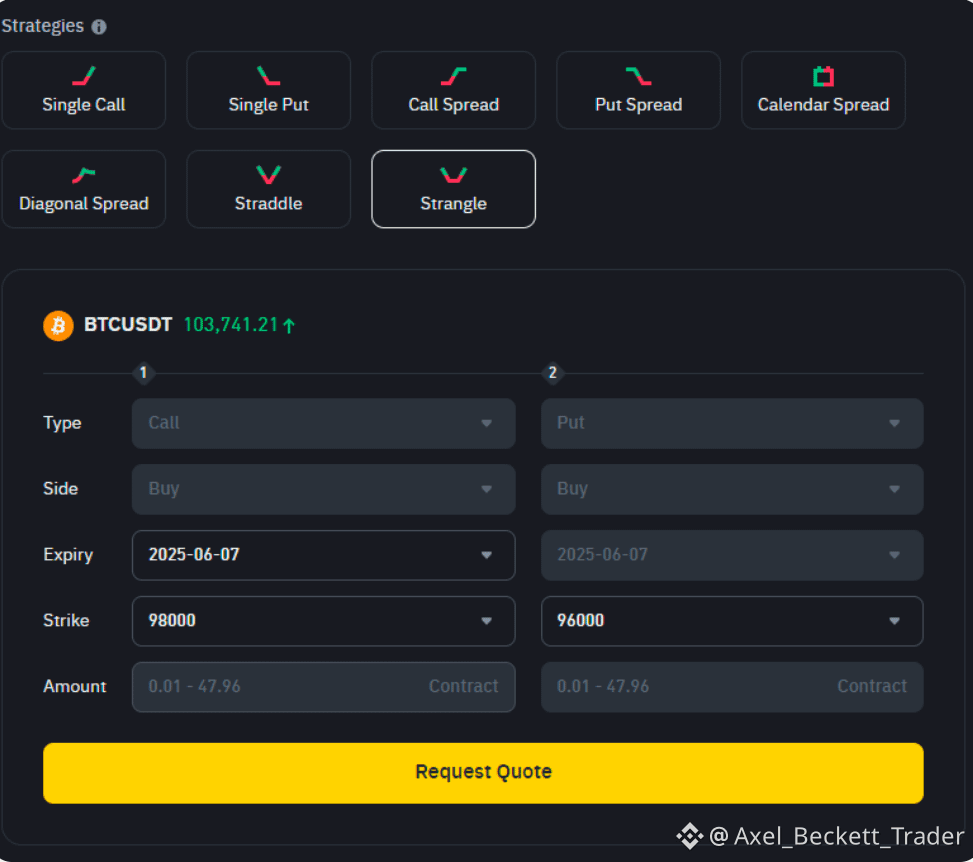
A strangle is similar but cheaper. The call and put are placed at different prices. I found that this needs a bigger move to profit but costs less to enter.
It is often used when volatility is expected to rise sharply.
Final Thoughts
After researching Binance Options RFQ, I understand that it is built for smart risk control. These strategies help traders shape their ideas clearly without guessing. Whether someone expects growth, decline, or strong movement, the platform gives structured ways to trade.
They become tools for planning, not gambling. With the right understanding, options trading here can feel more organized and less stressful, even for someone who is not a professional trader.
#BinanceSquareTalks #BinanceOptions
