#bstockscis @BinanceCIS The user data is probably more interesting to me than another explanation of what tokenization is.
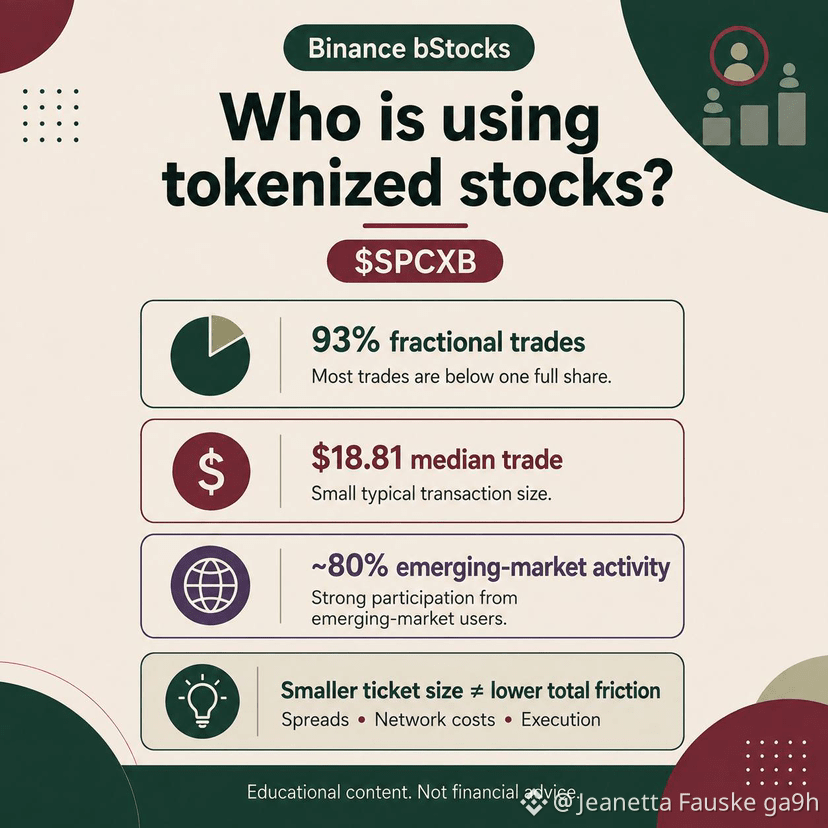
Binance Research reported that 93% of bStock trades were fractional, with a median transaction size of just $18.81. It also found that around 80% of tokenized-stock trading activity came from emerging-market users.
That changes the question.
Maybe one of tokenization’s first practical advantages is not simply “putting stocks on blockchain.” Maybe it is changing the minimum practical unit of access — financially and geographically.
But lower ticket size does not automatically mean lower total friction.
For something like $SPCXB, I’d still separate trade size from spreads, network costs and execution conditions.
Binance Research reported that 93% of bStock trades were fractional, with a median transaction size of just $18.81. It also found that around 80% of tokenized-stock trading activity came from emerging-market users.
That changes the question.
Maybe one of tokenization’s first practical advantages is not simply “putting stocks on blockchain.” Maybe it is changing the minimum practical unit of access — financially and geographically.
But lower ticket size does not automatically mean lower total friction.
For something like $SPCXB, I’d still separate trade size from spreads, network costs and execution conditions.