🔥 TRADE WAR BLAME GAME: When You Light the Fire, Don’t Act Shocked by the Smoke
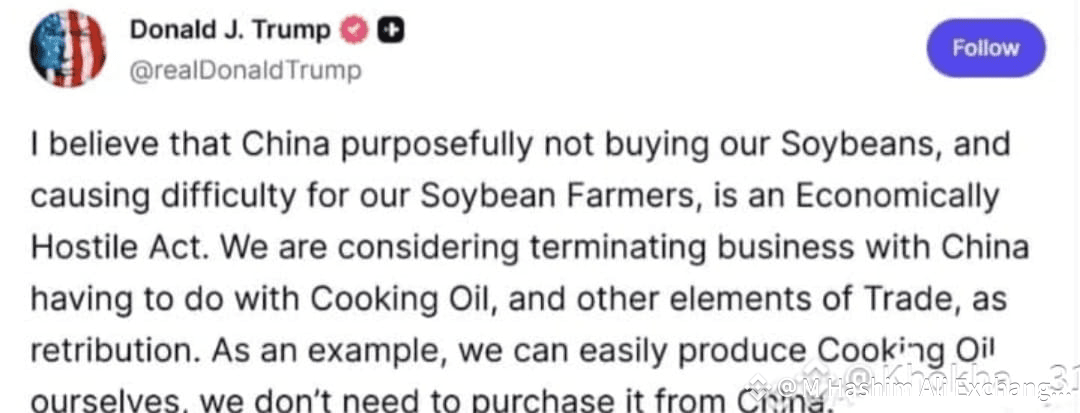
Donald $TRUMP accused China of “economic hostility” for not buying U.S. soybeans — but let’s set the record straight.
1️⃣ Who Started It?
China’s pivot away from U.S. soybeans didn’t come out of nowhere. The U.S. imposed tariffs first, and China simply adjusted its supply chain. No country buys goods at higher cost while being threatened with penalties.
2️⃣ Price Never Lies
U.S. soybeans: $520/ton
Brazil & Argentina: $430/ton
👉 That’s a $90 gap.
U.S. cooking oil: $1.45–$1.60/liter
Asian suppliers: $0.90–$1.10/liter
👉 Global buyers don’t pay for “loyalty,” they pay for efficiency.
3️⃣ Threats ≠ Trade Deals
Saying “we can produce our own cooking oil” ignores global economics. Trade isn’t about self-praise — it’s about cost-effectiveness and stability. Every time the U.S. escalates tariffs, Brazil, Argentina, or Indonesia quietly win the contracts.
4️⃣ Who Pays the Price?
China once bought 60% of U.S. soybean exports. Losing that market means unsold crops, lower farm incomes, and bigger government subsidies. Farmers bleed, taxpayers cover. That’s not victory — that’s recycling losses.
5️⃣ Crypto Stays Neutral 🌍
Tariff wars, trade bans, supply chain shocks — all push investors toward borderless assets: Bitcoin, Ethereum, stablecoins, and tokenized commodities. While politicians U-turn, crypto remains steady.
💡 Bottom Line: Trade isn’t about “friendship” or “loyalty.” It’s pure arithmetic. If your goods cost $90 more per ton, the market isn’t hostile — it just moves on.$BTC $ETH