
#oilfallsbelow$80
oilfallsbelow$80
24,774 views
118 ກຳລັງສົນທະນາ
ມາແຮງ
ຫຼ້າສຸດ


·
--
ເບິ່ງການແປ
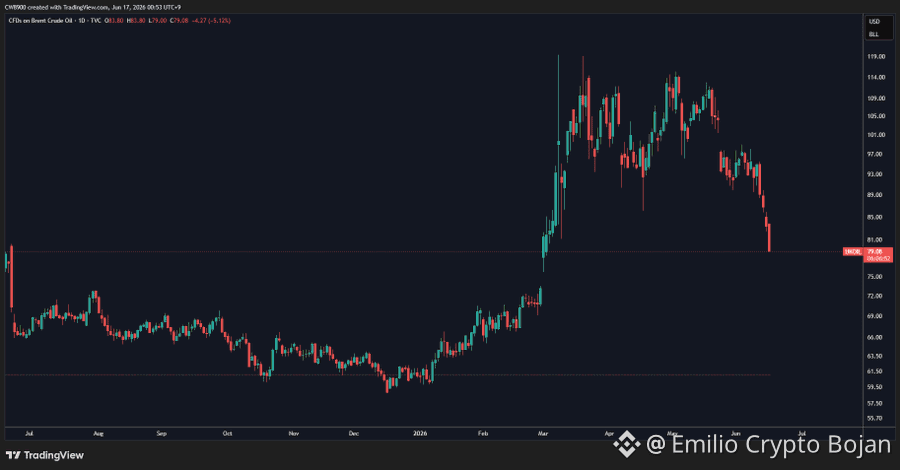
Oil Drops Below $80 a Barrel on US-Iran Strait of Hormuz DealOil fell below $80 a barrel for the first time since early March. In a US-Iran deal to reopen the Strait of Hormuz, according to Bloomberg, traders boosted expectations for a revival in supply.
Oil Drops Below $80 a Barrel on US-Iran Strait of Hormuz Deal
Oil fell below $80 a barrel for the first time since early March. In a US-Iran deal to reopen the Strait of Hormuz, according to Bloomberg, traders boosted expectations for a revival in supply.
2
3
4.7k


·
--
ບົດຄວາມ
ເບິ່ງການແປ
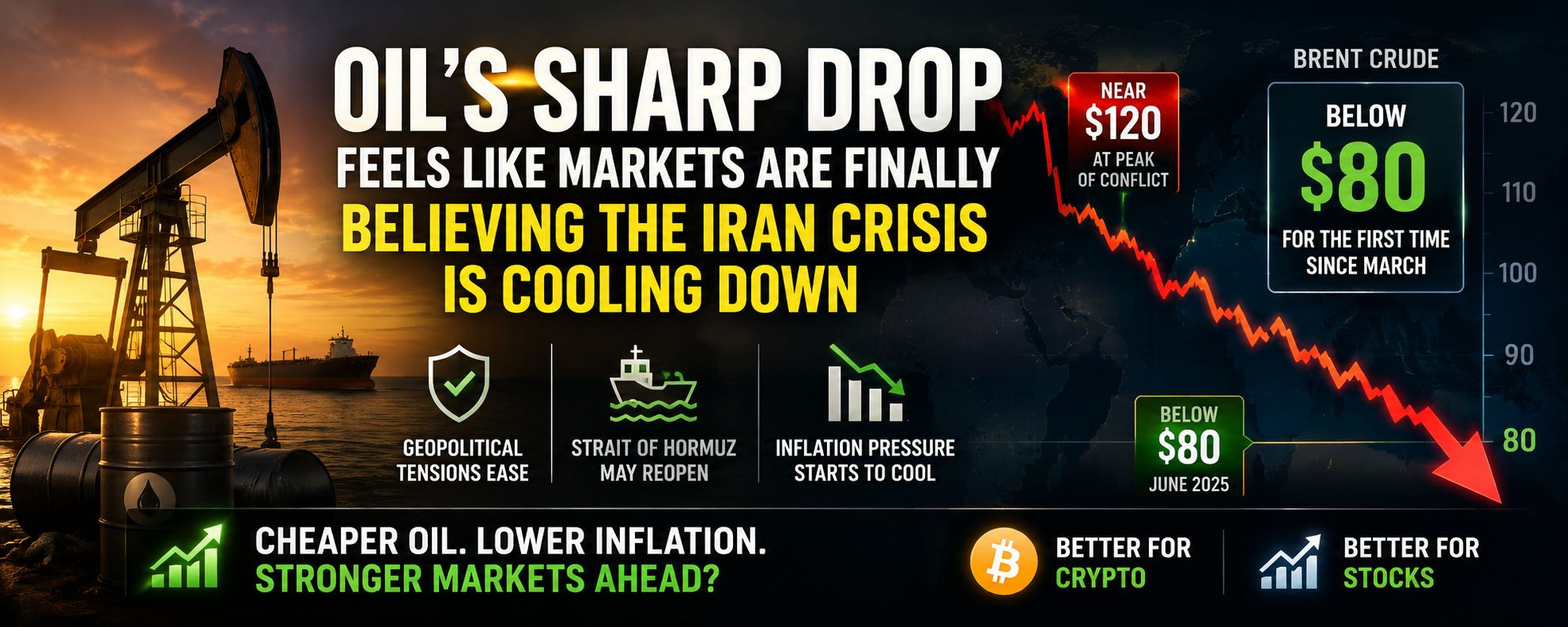
Oil’s Sharp Drop Feels Like Markets Are Finally Believing the Iran Crisis Is Cooling DownWhen I look at oil prices falling this quickly, I honestly feel like the market is sending a very clear message: traders are starting to believe that the worst-case geopolitical scenarios are becoming less likely. Seeing Brent crude break below $80 for the first time since March feels like a major shift in sentiment.
What stands out to me the most is the speed of the move. Just a few months ago, oil was trading near $120 during the peak of the conflict involving , the , and . Now, a huge portion of that war premium has disappeared in a matter of days. I think markets are rapidly pricing in the reopening of the and the possibility that global energy supplies will normalize.
Personally, I think the most important part of this story isn't oil itself — it's what cheaper oil means for the broader economy. Lower energy prices can reduce inflation pressure, which has been one of the biggest concerns for investors over the past year. If oil continues falling, central banks may feel less pressure to keep interest rates elevated.
That’s why I think this move matters for crypto and stocks too. Lower inflation expectations often improve sentiment toward risk assets like and growth stocks. In many ways, falling oil prices can act like a form of economic relief for markets.
I also find it interesting that the decline has been so aggressive. Usually, markets adjust gradually, but a 3%–5% drop across multiple sessions suggests traders are rushing to remove the geopolitical risk premium that had built up over more than three months.
Personally, this feels like one of the clearest signs yet that investors are becoming more optimistic about the geopolitical outlook. Of course, peace negotiations can still face setbacks, but right now the market seems to be betting that energy disruptions are becoming less likely.
And honestly, if oil keeps moving lower from here, it could end up being one of the most important bullish developments for global markets this summer.
#OilFallsBelow$80 #TAORises31.9% #TradebStocks #WLDRises21PctOnEightcoDisclosure #SpaceXStockOptionsBeginTrading
$LAB
{future}(LABUSDT)
$BSB
{future}(BSBUSDT)
Oil’s Sharp Drop Feels Like Markets Are Finally Believing the Iran Crisis Is Cooling Down
When I look at oil prices falling this quickly, I honestly feel like the market is sending a very clear message: traders are starting to believe that the worst-case geopolitical scenarios are becoming less likely. Seeing Brent crude break below $80 for the first time since March feels like a major shift in sentiment.
What stands out to me the most is the speed of the move. Just a few months ago, oil was trading near $120 during the peak of the conflict involving , the , and . Now, a huge portion of that war premium has disappeared in a matter of days. I think markets are rapidly pricing in the reopening of the and the possibility that global energy supplies will normalize.
Personally, I think the most important part of this story isn't oil itself — it's what cheaper oil means for the broader economy. Lower energy prices can reduce inflation pressure, which has been one of the biggest concerns for investors over the past year. If oil continues falling, central banks may feel less pressure to keep interest rates elevated.
That’s why I think this move matters for crypto and stocks too. Lower inflation expectations often improve sentiment toward risk assets like and growth stocks. In many ways, falling oil prices can act like a form of economic relief for markets.
I also find it interesting that the decline has been so aggressive. Usually, markets adjust gradually, but a 3%–5% drop across multiple sessions suggests traders are rushing to remove the geopolitical risk premium that had built up over more than three months.
Personally, this feels like one of the clearest signs yet that investors are becoming more optimistic about the geopolitical outlook. Of course, peace negotiations can still face setbacks, but right now the market seems to be betting that energy disruptions are becoming less likely.
And honestly, if oil keeps moving lower from here, it could end up being one of the most important bullish developments for global markets this summer.
#OilFallsBelow$80 #TAORises31.9% #TradebStocks #WLDRises21PctOnEightcoDisclosure #SpaceXStockOptionsBeginTrading
$LAB
$BSB
What stands out to me the most is the speed of the move. Just a few months ago, oil was trading near $120 during the peak of the conflict involving , the , and . Now, a huge portion of that war premium has disappeared in a matter of days. I think markets are rapidly pricing in the reopening of the and the possibility that global energy supplies will normalize.
Personally, I think the most important part of this story isn't oil itself — it's what cheaper oil means for the broader economy. Lower energy prices can reduce inflation pressure, which has been one of the biggest concerns for investors over the past year. If oil continues falling, central banks may feel less pressure to keep interest rates elevated.
That’s why I think this move matters for crypto and stocks too. Lower inflation expectations often improve sentiment toward risk assets like and growth stocks. In many ways, falling oil prices can act like a form of economic relief for markets.
I also find it interesting that the decline has been so aggressive. Usually, markets adjust gradually, but a 3%–5% drop across multiple sessions suggests traders are rushing to remove the geopolitical risk premium that had built up over more than three months.
Personally, this feels like one of the clearest signs yet that investors are becoming more optimistic about the geopolitical outlook. Of course, peace negotiations can still face setbacks, but right now the market seems to be betting that energy disruptions are becoming less likely.
And honestly, if oil keeps moving lower from here, it could end up being one of the most important bullish developments for global markets this summer.
#OilFallsBelow$80 #TAORises31.9% #TradebStocks #WLDRises21PctOnEightcoDisclosure #SpaceXStockOptionsBeginTrading
$LAB
$BSB
3
6
447

·
--
ບົດຄວາມ
Yiziphi Izinto Eziqhubela Ukwehla Emakethe Kawoyela Ongahluziwe?Amanani kawoyela seyehla ngaphansi kwezinga elibalulekile lama-$80 ngamabarele, okuphakamisa imibuzo mayelana nempilo yomnotho womhlaba nendlela esizayo yezimakethe zamandla. Amanani kawoyela ongahluziwe athonywa yizici eziningi, okuhlanganisa ukuhlinzekwa nesidingo, intuthuko yezepolitiki, izibikezelo zokukhula komnotho, kanye nenqubomgomo yezimali (monetary policy). Ukwehla kwakamuva kubonisa inhlanganisela yale mihlaba yamandla, okuholela abatshalizimali ekutheni baphinde bahlaziye ukubuka phambili kwesidingo samandla emhlabeni.$BTC
Esinye sezizathu eziyinhloko zokwehla kwamanani kawoyela ukukhathazeka ngokuncipha kokukhula komnotho womhlaba. Amazwe amakhulu, okuhlanganisa i-United States, iYurophu neChina, abonise izimpawu zomsebenzi wezomnotho obuthaka kunalokho obekulindelwe. Uma ukukhula komnotho kuncipha, izinkampani zikhiqiza kancane, abathengi bachitha kancane, futhi isidingo samandla okuthutha nawomkhakha wehla. Ngenxa yalokho, abahwebi balindela ukusetshenziswa okuphansi kukawoyela esikhathini esizayo, okubeka ukucindezeleka phansi kumaphrayisi kawoyela ongahluziwe.
Yiziphi Izinto Eziqhubela Ukwehla Emakethe Kawoyela Ongahluziwe?
Amanani kawoyela seyehla ngaphansi kwezinga elibalulekile lama-$80 ngamabarele, okuphakamisa imibuzo mayelana nempilo yomnotho womhlaba nendlela esizayo yezimakethe zamandla. Amanani kawoyela ongahluziwe athonywa yizici eziningi, okuhlanganisa ukuhlinzekwa nesidingo, intuthuko yezepolitiki, izibikezelo zokukhula komnotho, kanye nenqubomgomo yezimali (monetary policy). Ukwehla kwakamuva kubonisa inhlanganisela yale mihlaba yamandla, okuholela abatshalizimali ekutheni baphinde bahlaziye ukubuka phambili kwesidingo samandla emhlabeni.$BTC
Esinye sezizathu eziyinhloko zokwehla kwamanani kawoyela ukukhathazeka ngokuncipha kokukhula komnotho womhlaba. Amazwe amakhulu, okuhlanganisa i-United States, iYurophu neChina, abonise izimpawu zomsebenzi wezomnotho obuthaka kunalokho obekulindelwe. Uma ukukhula komnotho kuncipha, izinkampani zikhiqiza kancane, abathengi bachitha kancane, futhi isidingo samandla okuthutha nawomkhakha wehla. Ngenxa yalokho, abahwebi balindela ukusetshenziswa okuphansi kukawoyela esikhathini esizayo, okubeka ukucindezeleka phansi kumaphrayisi kawoyela ongahluziwe.
Esinye sezizathu eziyinhloko zokwehla kwamanani kawoyela ukukhathazeka ngokuncipha kokukhula komnotho womhlaba. Amazwe amakhulu, okuhlanganisa i-United States, iYurophu neChina, abonise izimpawu zomsebenzi wezomnotho obuthaka kunalokho obekulindelwe. Uma ukukhula komnotho kuncipha, izinkampani zikhiqiza kancane, abathengi bachitha kancane, futhi isidingo samandla okuthutha nawomkhakha wehla. Ngenxa yalokho, abahwebi balindela ukusetshenziswa okuphansi kukawoyela esikhathini esizayo, okubeka ukucindezeleka phansi kumaphrayisi kawoyela ongahluziwe.
1
211

ເບິ່ງການແປ
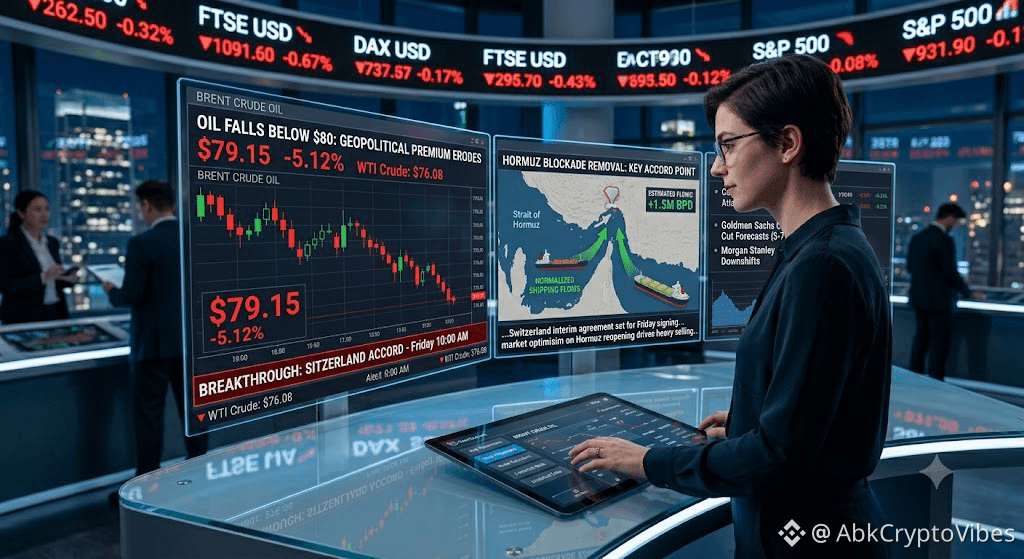
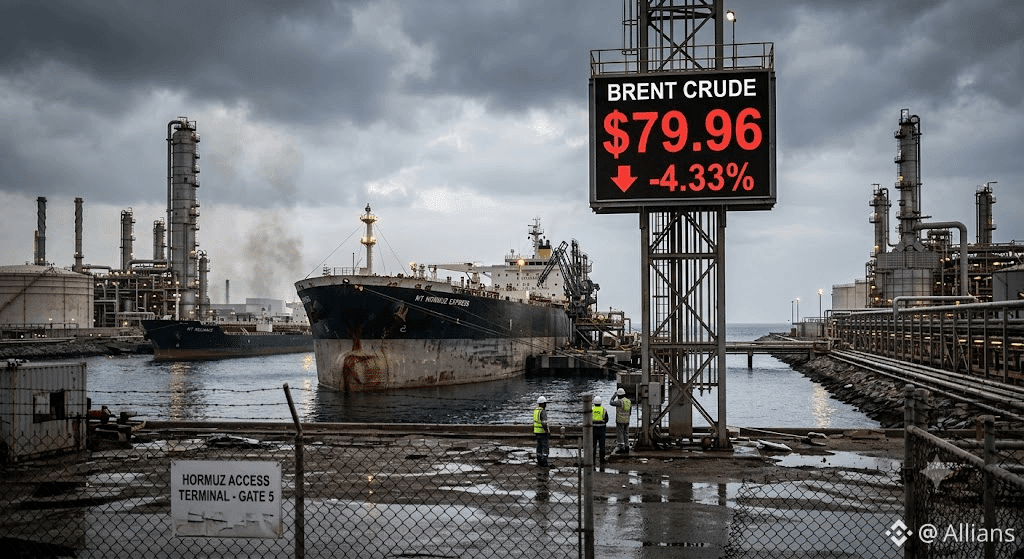
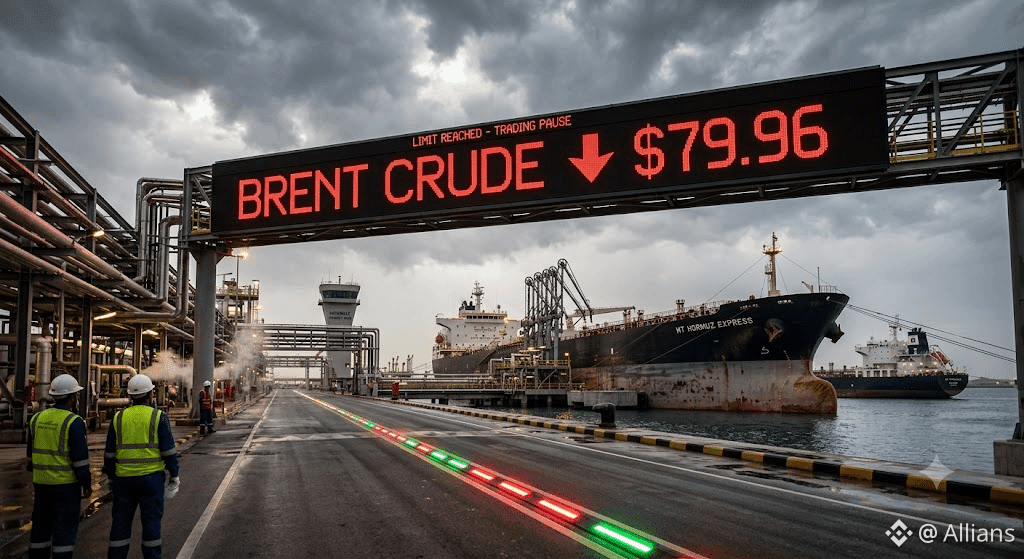
The geopolitical premium holding up the energy markets has just faced a major correction. For the first time since early March, international benchmark Brent crude has slipped below the psychological **$80 per barrel** threshold, crashing over 5% in a single day.
The driver behind this sharp sell-off isn't a sudden drop in global demand, but a major breakthrough in international diplomacy. Speculation surrounding an upcoming US-Iran interim agreement—scheduled to be signed in Switzerland this Friday—has fueled market optimism that the blockaded **Strait of Hormuz** will soon reopen to global shipping.
### What the Interface is Tracking
* **Market Shift:** Brent crude futures plummeted to around **$79.00**, while West Texas Intermediate (WTI) followed suit, dropping nearly 6% to test the **$76.00** mark.
* **The Hormuz Effect:** Roughly one-fifth of the world’s oil passes through this critical chokepoint. The mere prospect of restored supply flows has prompted institutional giants like Goldman Sachs and Morgan Stanley to immediately slash their price forecasts for the remainder of the year.
* **The Reality Check:** While the market is pricing in optimism, the technical interface reminds us that "agreement" does not equal "immediate flow." Shipping enclaves, security protocols, and operational backlogs mean physical barrels will take time to normalize.
For businesses and consumers tracking inflation, this downside momentum offers some long-awaited relief. However, with volatility expected to spike ahead of Friday’s official signing, the market remains highly sensitive to any sudden diplomatic friction. Keep your risk parameters tight.
#OilFallsBelow$80 $BTC $ETH
{spot}(BTCUSDT)
{spot}(ETHUSDT)
{spot}(BNBUSDT)
The geopolitical premium holding up the energy markets has just faced a major correction. For the first time since early March, international benchmark Brent crude has slipped below the psychological **$80 per barrel** threshold, crashing over 5% in a single day.
The driver behind this sharp sell-off isn't a sudden drop in global demand, but a major breakthrough in international diplomacy. Speculation surrounding an upcoming US-Iran interim agreement—scheduled to be signed in Switzerland this Friday—has fueled market optimism that the blockaded **Strait of Hormuz** will soon reopen to global shipping.
### What the Interface is Tracking
* **Market Shift:** Brent crude futures plummeted to around **$79.00**, while West Texas Intermediate (WTI) followed suit, dropping nearly 6% to test the **$76.00** mark.
* **The Hormuz Effect:** Roughly one-fifth of the world’s oil passes through this critical chokepoint. The mere prospect of restored supply flows has prompted institutional giants like Goldman Sachs and Morgan Stanley to immediately slash their price forecasts for the remainder of the year.
* **The Reality Check:** While the market is pricing in optimism, the technical interface reminds us that "agreement" does not equal "immediate flow." Shipping enclaves, security protocols, and operational backlogs mean physical barrels will take time to normalize.
For businesses and consumers tracking inflation, this downside momentum offers some long-awaited relief. However, with volatility expected to spike ahead of Friday’s official signing, the market remains highly sensitive to any sudden diplomatic friction. Keep your risk parameters tight.
#OilFallsBelow$80 $BTC $ETH
The driver behind this sharp sell-off isn't a sudden drop in global demand, but a major breakthrough in international diplomacy. Speculation surrounding an upcoming US-Iran interim agreement—scheduled to be signed in Switzerland this Friday—has fueled market optimism that the blockaded **Strait of Hormuz** will soon reopen to global shipping.
### What the Interface is Tracking
* **Market Shift:** Brent crude futures plummeted to around **$79.00**, while West Texas Intermediate (WTI) followed suit, dropping nearly 6% to test the **$76.00** mark.
* **The Hormuz Effect:** Roughly one-fifth of the world’s oil passes through this critical chokepoint. The mere prospect of restored supply flows has prompted institutional giants like Goldman Sachs and Morgan Stanley to immediately slash their price forecasts for the remainder of the year.
* **The Reality Check:** While the market is pricing in optimism, the technical interface reminds us that "agreement" does not equal "immediate flow." Shipping enclaves, security protocols, and operational backlogs mean physical barrels will take time to normalize.
For businesses and consumers tracking inflation, this downside momentum offers some long-awaited relief. However, with volatility expected to spike ahead of Friday’s official signing, the market remains highly sensitive to any sudden diplomatic friction. Keep your risk parameters tight.
#OilFallsBelow$80 $BTC $ETH
173

·
--
ສັນຍານໝີ
ເບິ່ງການແປ
#OilFallsBelow$80
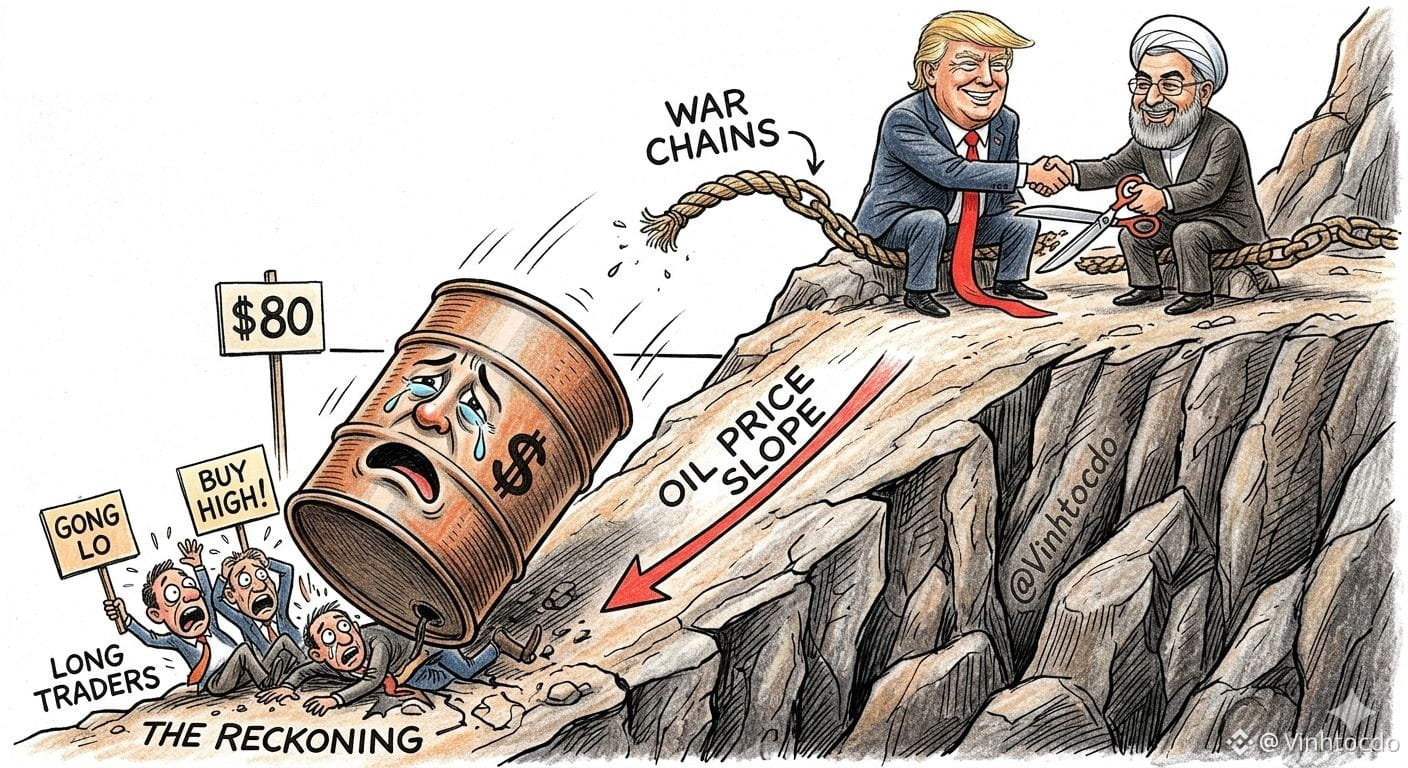
Thời oanh liệt nay còn đâu! Sau chuỗi ngày cậy thế chiến sự eo biển Hormuz để làm mưa làm gió, dọa dẫm leo lên mốc $150/thùng, em người yêu cũ đỏng đảnh #CrudeOil vừa có pha trượt dốc ê chề.
Ngay khi lệnh ngừng bắn Mỹ - Iran được kích hoạt, eo biển mở toang cửa, giá dầu lập tức "tuột xích" lao dốc thủng đáy $80/thùng 📉.
Phe Long dầu lúc này chỉ biết khóc thét nhìn quả nến đỏ chọc thủng mọi nỗ lực gồng lỗ trước đó.
Dòng tiền đang luân chuyển cực căng sang các tài sản khác, nhanh tay nhập mã VINHTOCDO để lên thuyền cùng anh em bắt trend lật kèo ngay lúc này nào!
Lưu ý: Bài viết mang tính chất giải trí vui vẻ, không phải lời khuyên đầu tư tài chính.
#HormuzPeace #MiddleEast #VINHTOCDO $CL $BZ $BR
{future}(BZUSDT)
{future}(CLUSDT)
#OilFallsBelow$80
Thời oanh liệt nay còn đâu! Sau chuỗi ngày cậy thế chiến sự eo biển Hormuz để làm mưa làm gió, dọa dẫm leo lên mốc $150/thùng, em người yêu cũ đỏng đảnh #CrudeOil vừa có pha trượt dốc ê chề.
Ngay khi lệnh ngừng bắn Mỹ - Iran được kích hoạt, eo biển mở toang cửa, giá dầu lập tức "tuột xích" lao dốc thủng đáy $80/thùng 📉.
Phe Long dầu lúc này chỉ biết khóc thét nhìn quả nến đỏ chọc thủng mọi nỗ lực gồng lỗ trước đó.
Dòng tiền đang luân chuyển cực căng sang các tài sản khác, nhanh tay nhập mã VINHTOCDO để lên thuyền cùng anh em bắt trend lật kèo ngay lúc này nào!
Lưu ý: Bài viết mang tính chất giải trí vui vẻ, không phải lời khuyên đầu tư tài chính.
#HormuzPeace #MiddleEast #VINHTOCDO $CL $BZ $BR
Thời oanh liệt nay còn đâu! Sau chuỗi ngày cậy thế chiến sự eo biển Hormuz để làm mưa làm gió, dọa dẫm leo lên mốc $150/thùng, em người yêu cũ đỏng đảnh #CrudeOil vừa có pha trượt dốc ê chề.
Ngay khi lệnh ngừng bắn Mỹ - Iran được kích hoạt, eo biển mở toang cửa, giá dầu lập tức "tuột xích" lao dốc thủng đáy $80/thùng 📉.
Phe Long dầu lúc này chỉ biết khóc thét nhìn quả nến đỏ chọc thủng mọi nỗ lực gồng lỗ trước đó.
Dòng tiền đang luân chuyển cực căng sang các tài sản khác, nhanh tay nhập mã VINHTOCDO để lên thuyền cùng anh em bắt trend lật kèo ngay lúc này nào!
Lưu ý: Bài viết mang tính chất giải trí vui vẻ, không phải lời khuyên đầu tư tài chính.
#HormuzPeace #MiddleEast #VINHTOCDO $CL $BZ $BR
1
348

·
--
ເບິ່ງການແປ
As of June 17, 2026, global $CL prices have fallen below $80 per barrel for the first time since early March 2026, driven by an initial U.S.-Iran peace deal aimed at ending the 15-week conflict and reopening the Strait of Hormuz.
Market Impact and Current StatusPrice Drop:
Brent crude fell below $80 (reaching approximately $79.96 on June 16), representing a decline of roughly $15 per barrel since June 11, just before optimism regarding the deal began.
Supply Concerns: The Strait of Hormuz, a critical chokepoint through which about 20% of the world's oil and LNG passes, has been effectively closed since the conflict began in late February. While the deal is intended to reopen this route, actual shipping traffic remains limited, with only five vessels transiting the strait on June 15, according to Kpler data.
Economic Relief: Investors are interpreting the de-escalation as a "macro fuel" for global markets, anticipating that reduced energy costs will alleviate inflationary pressures and provide central banks—particularly the Federal Reserve—with greater flexibility regarding interest rate policies.
The Peace Deal FrameworkImplementation: A formal memorandum of understanding (MoU) is scheduled to be signed in Switzerland on Friday, June 19, 2026.
Negotiations: The deal triggers a 60-day window for intensive technical talks, including discussions on Iran’s nuclear program, sanctions relief, and the release of frozen Iranian assets.
Regional Role: The mediation process has involved several nations, including Pakistan, Qatar, Egypt, Saudi Arabia, and Türkiye. Uncertainty: Despite the optimism, analysts remain cautious. Key operational details—such as shipping safety, toll-free passage, and the logistical clearing of potential mines—remain under negotiation, and market experts warn that a return to pre-war supply levels will likely take months.
#BrentCrudeBreaksBelow$80
#USADPEmploymentChangeSlipsTo25500
#OilFallsBelow$80
As of June 17, 2026, global $CL prices have fallen below $80 per barrel for the first time since early March 2026, driven by an initial U.S.-Iran peace deal aimed at ending the 15-week conflict and reopening the Strait of Hormuz.
Market Impact and Current StatusPrice Drop:
Brent crude fell below $80 (reaching approximately $79.96 on June 16), representing a decline of roughly $15 per barrel since June 11, just before optimism regarding the deal began.
Supply Concerns: The Strait of Hormuz, a critical chokepoint through which about 20% of the world's oil and LNG passes, has been effectively closed since the conflict began in late February. While the deal is intended to reopen this route, actual shipping traffic remains limited, with only five vessels transiting the strait on June 15, according to Kpler data.
Economic Relief: Investors are interpreting the de-escalation as a "macro fuel" for global markets, anticipating that reduced energy costs will alleviate inflationary pressures and provide central banks—particularly the Federal Reserve—with greater flexibility regarding interest rate policies.
The Peace Deal FrameworkImplementation: A formal memorandum of understanding (MoU) is scheduled to be signed in Switzerland on Friday, June 19, 2026.
Negotiations: The deal triggers a 60-day window for intensive technical talks, including discussions on Iran’s nuclear program, sanctions relief, and the release of frozen Iranian assets.
Regional Role: The mediation process has involved several nations, including Pakistan, Qatar, Egypt, Saudi Arabia, and Türkiye. Uncertainty: Despite the optimism, analysts remain cautious. Key operational details—such as shipping safety, toll-free passage, and the logistical clearing of potential mines—remain under negotiation, and market experts warn that a return to pre-war supply levels will likely take months.
#BrentCrudeBreaksBelow$80
#USADPEmploymentChangeSlipsTo25500
#OilFallsBelow$80
Market Impact and Current StatusPrice Drop:
Brent crude fell below $80 (reaching approximately $79.96 on June 16), representing a decline of roughly $15 per barrel since June 11, just before optimism regarding the deal began.
Supply Concerns: The Strait of Hormuz, a critical chokepoint through which about 20% of the world's oil and LNG passes, has been effectively closed since the conflict began in late February. While the deal is intended to reopen this route, actual shipping traffic remains limited, with only five vessels transiting the strait on June 15, according to Kpler data.
Economic Relief: Investors are interpreting the de-escalation as a "macro fuel" for global markets, anticipating that reduced energy costs will alleviate inflationary pressures and provide central banks—particularly the Federal Reserve—with greater flexibility regarding interest rate policies.
The Peace Deal FrameworkImplementation: A formal memorandum of understanding (MoU) is scheduled to be signed in Switzerland on Friday, June 19, 2026.
Negotiations: The deal triggers a 60-day window for intensive technical talks, including discussions on Iran’s nuclear program, sanctions relief, and the release of frozen Iranian assets.
Regional Role: The mediation process has involved several nations, including Pakistan, Qatar, Egypt, Saudi Arabia, and Türkiye. Uncertainty: Despite the optimism, analysts remain cautious. Key operational details—such as shipping safety, toll-free passage, and the logistical clearing of potential mines—remain under negotiation, and market experts warn that a return to pre-war supply levels will likely take months.
#BrentCrudeBreaksBelow$80
#USADPEmploymentChangeSlipsTo25500
#OilFallsBelow$80
215

ເບິ່ງການແປ
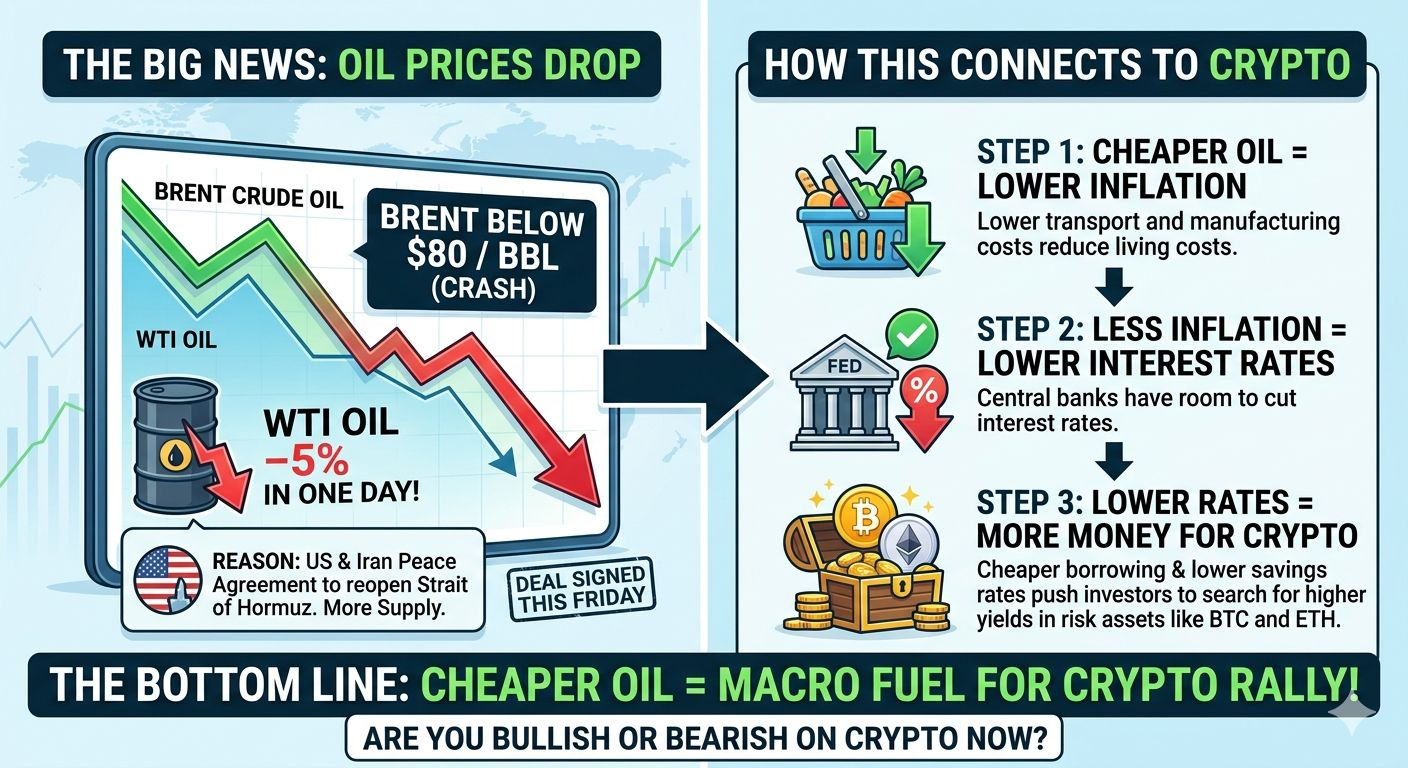
The Big News
Oil Prices Are Dropping: Brent crude oil fell below $80 a barrel for the first time since early March.
The Reason: The US and Iran made a peace agreement to reopen a major shipping route called the Strait of Hormuz. This means more oil can flow safely around the world, removing the supply shortage that was making prices soar.
The Market Reaction: WTI oil crashed by over 5% in just one day, hitting a two-month low. An official deal is expected to be signed in Switzerland this Friday.
How This Connects to Crypto
It might seem strange that oil prices affect Bitcoin or Ethereum, but here is how the chain reaction works:
Step 1: Cheaper Oil = Lower Inflation When oil costs less, it becomes cheaper to transport goods, heat homes, and run factories. This helps bring down overall inflation (the rising cost of living).
Step 2: Less Inflation = Lower Interest Rates Central banks (like the US Federal Reserve) raise interest rates to fight high inflation. Now that inflation is cooling down, they have room to cut interest rates.
Step 3: Lower Rates = More Money for Crypto When interest rates drop, borrowing money becomes cheaper, and traditional bank accounts pay less profit. Investors look for better returns and pour their cash into "risk assets" like Bitcoin (BTC) and Ethereum (ETH).
The Bottom Line
Lower oil prices act as macro fuel for the crypto market. By clearing the path for interest rate cuts, this crash could trigger a major crypto rally.
Are you bullish (expecting prices to go up) or bearish (expecting prices to go down) after this big change?
{future}(BTCUSDT)
$BTC
#OilFallsBelow$80
The Big News
Oil Prices Are Dropping: Brent crude oil fell below $80 a barrel for the first time since early March.
The Reason: The US and Iran made a peace agreement to reopen a major shipping route called the Strait of Hormuz. This means more oil can flow safely around the world, removing the supply shortage that was making prices soar.
The Market Reaction: WTI oil crashed by over 5% in just one day, hitting a two-month low. An official deal is expected to be signed in Switzerland this Friday.
How This Connects to Crypto
It might seem strange that oil prices affect Bitcoin or Ethereum, but here is how the chain reaction works:
Step 1: Cheaper Oil = Lower Inflation When oil costs less, it becomes cheaper to transport goods, heat homes, and run factories. This helps bring down overall inflation (the rising cost of living).
Step 2: Less Inflation = Lower Interest Rates Central banks (like the US Federal Reserve) raise interest rates to fight high inflation. Now that inflation is cooling down, they have room to cut interest rates.
Step 3: Lower Rates = More Money for Crypto When interest rates drop, borrowing money becomes cheaper, and traditional bank accounts pay less profit. Investors look for better returns and pour their cash into "risk assets" like Bitcoin (BTC) and Ethereum (ETH).
The Bottom Line
Lower oil prices act as macro fuel for the crypto market. By clearing the path for interest rate cuts, this crash could trigger a major crypto rally.
Are you bullish (expecting prices to go up) or bearish (expecting prices to go down) after this big change?
$BTC
#OilFallsBelow$80
Oil Prices Are Dropping: Brent crude oil fell below $80 a barrel for the first time since early March.
The Reason: The US and Iran made a peace agreement to reopen a major shipping route called the Strait of Hormuz. This means more oil can flow safely around the world, removing the supply shortage that was making prices soar.
The Market Reaction: WTI oil crashed by over 5% in just one day, hitting a two-month low. An official deal is expected to be signed in Switzerland this Friday.
How This Connects to Crypto
It might seem strange that oil prices affect Bitcoin or Ethereum, but here is how the chain reaction works:
Step 1: Cheaper Oil = Lower Inflation When oil costs less, it becomes cheaper to transport goods, heat homes, and run factories. This helps bring down overall inflation (the rising cost of living).
Step 2: Less Inflation = Lower Interest Rates Central banks (like the US Federal Reserve) raise interest rates to fight high inflation. Now that inflation is cooling down, they have room to cut interest rates.
Step 3: Lower Rates = More Money for Crypto When interest rates drop, borrowing money becomes cheaper, and traditional bank accounts pay less profit. Investors look for better returns and pour their cash into "risk assets" like Bitcoin (BTC) and Ethereum (ETH).
The Bottom Line
Lower oil prices act as macro fuel for the crypto market. By clearing the path for interest rate cuts, this crash could trigger a major crypto rally.
Are you bullish (expecting prices to go up) or bearish (expecting prices to go down) after this big change?
$BTC
#OilFallsBelow$80
1
199

·
--
#OilFallsBelow$80
🌍 ລາຄານ້ຳມັນຕົກລົງຕ່ຳກວ່າ $80 ອາດມີຜົນກະທົບໃຫຍ່ຫຼວງຕໍ່ຕະຫຼາດໂລກ.
📉 ນ້ຳມັນໄດ້ລົງຕ່ຳກວ່າ $80 ແລ້ວ! ເຈົ້າຄິດວ່າມັນຈະຟື້ນຂຶ້ນສູ່ $80 ອີກໄວໆ ຫຼື ຈະສືບຕົກລົງຕໍ່? ແບ່ງປັນຄຳຄິດຂອງເຈົ້າຢູ່ຂ້າງລຸ່ມນີ້! 👇🔥
#OilFallsBelow$80
🌍 ລາຄານ້ຳມັນຕົກລົງຕ່ຳກວ່າ $80 ອາດມີຜົນກະທົບໃຫຍ່ຫຼວງຕໍ່ຕະຫຼາດໂລກ.
📉 ນ້ຳມັນໄດ້ລົງຕ່ຳກວ່າ $80 ແລ້ວ! ເຈົ້າຄິດວ່າມັນຈະຟື້ນຂຶ້ນສູ່ $80 ອີກໄວໆ ຫຼື ຈະສືບຕົກລົງຕໍ່? ແບ່ງປັນຄຳຄິດຂອງເຈົ້າຢູ່ຂ້າງລຸ່ມນີ້! 👇🔥
🌍 ລາຄານ້ຳມັນຕົກລົງຕ່ຳກວ່າ $80 ອາດມີຜົນກະທົບໃຫຍ່ຫຼວງຕໍ່ຕະຫຼາດໂລກ.
📉 ນ້ຳມັນໄດ້ລົງຕ່ຳກວ່າ $80 ແລ້ວ! ເຈົ້າຄິດວ່າມັນຈະຟື້ນຂຶ້ນສູ່ $80 ອີກໄວໆ ຫຼື ຈະສືບຕົກລົງຕໍ່? ແບ່ງປັນຄຳຄິດຂອງເຈົ້າຢູ່ຂ້າງລຸ່ມນີ້! 👇🔥
2
197

·
--
ສັນຍານໝີ
ເບິ່ງການແປ
Oil is dropping fast as new Iran deal details emerge.
According to reports, the agreement would allow Iran to immediately resume oil and fuel sales, with sanctions waivers covering banking, transportation, and insurance services needed to support exports.
Markets are reacting quickly.
More Iranian oil supply could mean lower energy prices, which is why oil traders are hitting the sell button today. 📉
#OilFallsBelow$80 #BrentCrudeBreaksBelow$80 $CL
Oil is dropping fast as new Iran deal details emerge.
According to reports, the agreement would allow Iran to immediately resume oil and fuel sales, with sanctions waivers covering banking, transportation, and insurance services needed to support exports.
Markets are reacting quickly.
More Iranian oil supply could mean lower energy prices, which is why oil traders are hitting the sell button today. 📉
#OilFallsBelow$80 #BrentCrudeBreaksBelow$80 $CL
According to reports, the agreement would allow Iran to immediately resume oil and fuel sales, with sanctions waivers covering banking, transportation, and insurance services needed to support exports.
Markets are reacting quickly.
More Iranian oil supply could mean lower energy prices, which is why oil traders are hitting the sell button today. 📉
#OilFallsBelow$80 #BrentCrudeBreaksBelow$80 $CL
155

·
--
ເບິ່ງການແປ
#BrentCrudeBreaksBelow$80
so don't miss this great opportunity to invest on BrentCrudeBreaksBelow$80
#BrentCrudeBreaksBelow$80
so don't miss this great opportunity to invest on BrentCrudeBreaksBelow$80
so don't miss this great opportunity to invest on BrentCrudeBreaksBelow$80
1
49


·
--
ສັນຍານກະທິງ
ເບິ່ງການແປ
Oil has dropped below the $80 level, showing renewed weakness in energy markets.
#WTIFallsBelow$80 #USADPEmploymentChangeSlipsTo25500 #OilFallsBelow$80 #SpaceXStockOptionsBeginTrading
Oil has dropped below the $80 level, showing renewed weakness in energy markets.
#WTIFallsBelow$80 #USADPEmploymentChangeSlipsTo25500 #OilFallsBelow$80 #SpaceXStockOptionsBeginTrading
#WTIFallsBelow$80 #USADPEmploymentChangeSlipsTo25500 #OilFallsBelow$80 #SpaceXStockOptionsBeginTrading
201

·
--
ເບິ່ງການແປ
This is a pretty big development for markets
The market is reacting to reports that Iran could immediately resume selling oil under the proposed deal, with sanctions relief covering oil exports, banking, shipping, and insurance.
For oil, the reaction is straightforward:
📉 Oil bearish — More Iranian oil entering global markets means more supply. When supply increases, prices usually come under pressure, which is why oil is already selling off on the news.
For gold ($XAU ):
📉 Gold bearish — The deal reduces geopolitical risk in the Middle East. As tensions ease, investors typically need less safe-haven protection, which can weaken demand for gold.
For the broader market:
📈 Stocks bullish — Lower oil prices can reduce inflation pressure, while easing geopolitical tensions improves investor confidence. Both are generally positive for equities.
In simple terms:
📉 Oil → More supply, lower prices
📉 Gold → Less fear, lower safe-haven demand
📈 Stocks → Better sentiment, lower inflation concerns
This is why you're seeing money rotate out of oil and defensive assets and back into risk assets as the market prices in a more stable outlook.
#OilFallsBelow$80
This is a pretty big development for markets
The market is reacting to reports that Iran could immediately resume selling oil under the proposed deal, with sanctions relief covering oil exports, banking, shipping, and insurance.
For oil, the reaction is straightforward:
📉 Oil bearish — More Iranian oil entering global markets means more supply. When supply increases, prices usually come under pressure, which is why oil is already selling off on the news.
For gold ($XAU ):
📉 Gold bearish — The deal reduces geopolitical risk in the Middle East. As tensions ease, investors typically need less safe-haven protection, which can weaken demand for gold.
For the broader market:
📈 Stocks bullish — Lower oil prices can reduce inflation pressure, while easing geopolitical tensions improves investor confidence. Both are generally positive for equities.
In simple terms:
📉 Oil → More supply, lower prices
📉 Gold → Less fear, lower safe-haven demand
📈 Stocks → Better sentiment, lower inflation concerns
This is why you're seeing money rotate out of oil and defensive assets and back into risk assets as the market prices in a more stable outlook.
#OilFallsBelow$80
The market is reacting to reports that Iran could immediately resume selling oil under the proposed deal, with sanctions relief covering oil exports, banking, shipping, and insurance.
For oil, the reaction is straightforward:
📉 Oil bearish — More Iranian oil entering global markets means more supply. When supply increases, prices usually come under pressure, which is why oil is already selling off on the news.
For gold ($XAU ):
📉 Gold bearish — The deal reduces geopolitical risk in the Middle East. As tensions ease, investors typically need less safe-haven protection, which can weaken demand for gold.
For the broader market:
📈 Stocks bullish — Lower oil prices can reduce inflation pressure, while easing geopolitical tensions improves investor confidence. Both are generally positive for equities.
In simple terms:
📉 Oil → More supply, lower prices
📉 Gold → Less fear, lower safe-haven demand
📈 Stocks → Better sentiment, lower inflation concerns
This is why you're seeing money rotate out of oil and defensive assets and back into risk assets as the market prices in a more stable outlook.
#OilFallsBelow$80
4
5.3k

ເບິ່ງການແປ
🛢️ OIL CRASHES BELOW $80 — What This Means for Crypto!
Brent crude dropped below $80 a barrel for the first time since early March, after the US and Iran reached a peace agreement aimed at reopening the Strait of Hormuz — removing a major supply disruption that had been shaking global energy markets for months.
WTI plunged more than 5% in a single session, touching a two-month low. 📉
What does this mean for crypto? 📊
⚡ Lower oil = lower inflation pressure
⚡ Less inflation = more room for rate cuts
⚡ Rate cuts = MORE liquidity for risk assets like BTC & ETH
This is macro fuel for a crypto rally. The dots are connecting. 🔗
The interim deal is set to be signed in Switzerland this Friday — once the Strait of Hormuz reopens, expect even more supply to hit the market.
Are you bullish or bearish on crypto given this oil dump? Drop it below! 👇
#Oil #Bitcoin #BTC #Ethereum #MacroNews #CryptoMarket #BinanceSquare #OilFallsBelow$80
#USADPEmploymentChangeSlipsTo25500
$BTC $ETH $SOL
🛢️ OIL CRASHES BELOW $80 — What This Means for Crypto!
Brent crude dropped below $80 a barrel for the first time since early March, after the US and Iran reached a peace agreement aimed at reopening the Strait of Hormuz — removing a major supply disruption that had been shaking global energy markets for months.
WTI plunged more than 5% in a single session, touching a two-month low. 📉
What does this mean for crypto? 📊
⚡ Lower oil = lower inflation pressure
⚡ Less inflation = more room for rate cuts
⚡ Rate cuts = MORE liquidity for risk assets like BTC & ETH
This is macro fuel for a crypto rally. The dots are connecting. 🔗
The interim deal is set to be signed in Switzerland this Friday — once the Strait of Hormuz reopens, expect even more supply to hit the market.
Are you bullish or bearish on crypto given this oil dump? Drop it below! 👇
#Oil #Bitcoin #BTC #Ethereum #MacroNews #CryptoMarket #BinanceSquare #OilFallsBelow$80
#USADPEmploymentChangeSlipsTo25500
$BTC $ETH $SOL
Brent crude dropped below $80 a barrel for the first time since early March, after the US and Iran reached a peace agreement aimed at reopening the Strait of Hormuz — removing a major supply disruption that had been shaking global energy markets for months.
WTI plunged more than 5% in a single session, touching a two-month low. 📉
What does this mean for crypto? 📊
⚡ Lower oil = lower inflation pressure
⚡ Less inflation = more room for rate cuts
⚡ Rate cuts = MORE liquidity for risk assets like BTC & ETH
This is macro fuel for a crypto rally. The dots are connecting. 🔗
The interim deal is set to be signed in Switzerland this Friday — once the Strait of Hormuz reopens, expect even more supply to hit the market.
Are you bullish or bearish on crypto given this oil dump? Drop it below! 👇
#Oil #Bitcoin #BTC #Ethereum #MacroNews #CryptoMarket #BinanceSquare #OilFallsBelow$80
#USADPEmploymentChangeSlipsTo25500
$BTC $ETH $SOL
86
·
--
ສັນຍານກະທິງ
ເບິ່ງການແປ
#OilFallsBelow$80
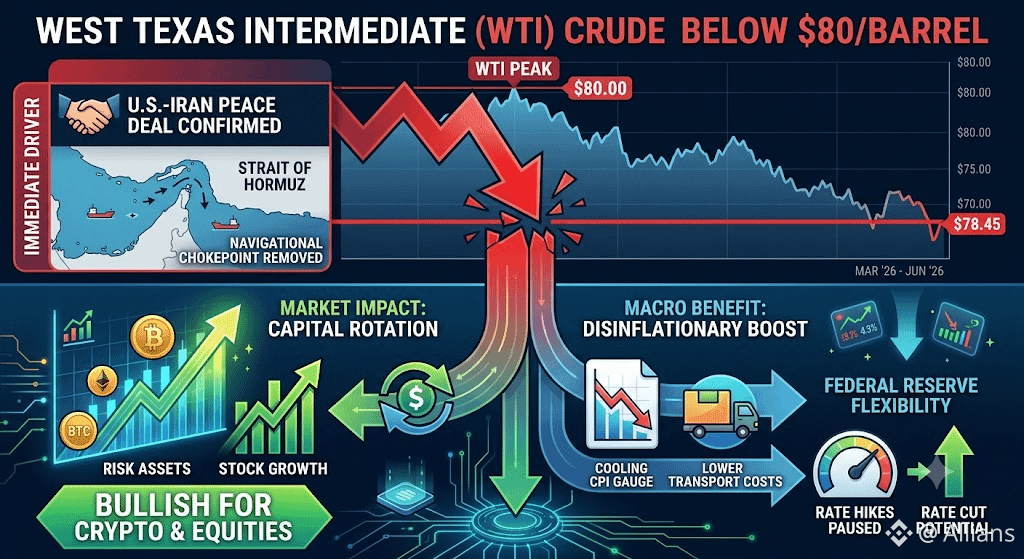
The decline of $CL prices below the $80 per barrel mark—a level not seen since early March 2026—is a major development stemming from a U.S.-Iran peace deal aimed at reopening the strategic Strait of Hormuz.
This agreement, which signals an end to significant maritime blockades, has rapidly dismantled the "war premium" that previously inflated energy costs.
Investors view this as a transformative macro event. By increasing global oil supply and reducing geopolitical risk, the move is expected to alleviate inflationary pressures and grant central banks, particularly the Federal Reserve, greater flexibility regarding interest rate policy.
Consequently, market sentiment has shifted, with capital rotating away from defensive commodities toward risk-on assets like equities and cryptocurrencies. While challenges such as the logistical clearing of the strait and the final signing of the deal on June 19 remain, the market is currently pricing in a more stable, utility-driven economic outlook.
This cooling in energy costs is widely interpreted by traders as "macro fuel" for a potential broader rally in crypto and growth stocks.
#USADPEmploymentChangeSlipsTo25500
#SpaceXStockOptionsBeginTrading
#OilFallsBelow$80
The decline of $CL prices below the $80 per barrel mark—a level not seen since early March 2026—is a major development stemming from a U.S.-Iran peace deal aimed at reopening the strategic Strait of Hormuz.
This agreement, which signals an end to significant maritime blockades, has rapidly dismantled the "war premium" that previously inflated energy costs.
Investors view this as a transformative macro event. By increasing global oil supply and reducing geopolitical risk, the move is expected to alleviate inflationary pressures and grant central banks, particularly the Federal Reserve, greater flexibility regarding interest rate policy.
Consequently, market sentiment has shifted, with capital rotating away from defensive commodities toward risk-on assets like equities and cryptocurrencies. While challenges such as the logistical clearing of the strait and the final signing of the deal on June 19 remain, the market is currently pricing in a more stable, utility-driven economic outlook.
This cooling in energy costs is widely interpreted by traders as "macro fuel" for a potential broader rally in crypto and growth stocks.
#USADPEmploymentChangeSlipsTo25500
#SpaceXStockOptionsBeginTrading
The decline of $CL prices below the $80 per barrel mark—a level not seen since early March 2026—is a major development stemming from a U.S.-Iran peace deal aimed at reopening the strategic Strait of Hormuz.
This agreement, which signals an end to significant maritime blockades, has rapidly dismantled the "war premium" that previously inflated energy costs.
Investors view this as a transformative macro event. By increasing global oil supply and reducing geopolitical risk, the move is expected to alleviate inflationary pressures and grant central banks, particularly the Federal Reserve, greater flexibility regarding interest rate policy.
Consequently, market sentiment has shifted, with capital rotating away from defensive commodities toward risk-on assets like equities and cryptocurrencies. While challenges such as the logistical clearing of the strait and the final signing of the deal on June 19 remain, the market is currently pricing in a more stable, utility-driven economic outlook.
This cooling in energy costs is widely interpreted by traders as "macro fuel" for a potential broader rally in crypto and growth stocks.
#USADPEmploymentChangeSlipsTo25500
#SpaceXStockOptionsBeginTrading
121


·
--
ເບິ່ງການແປ
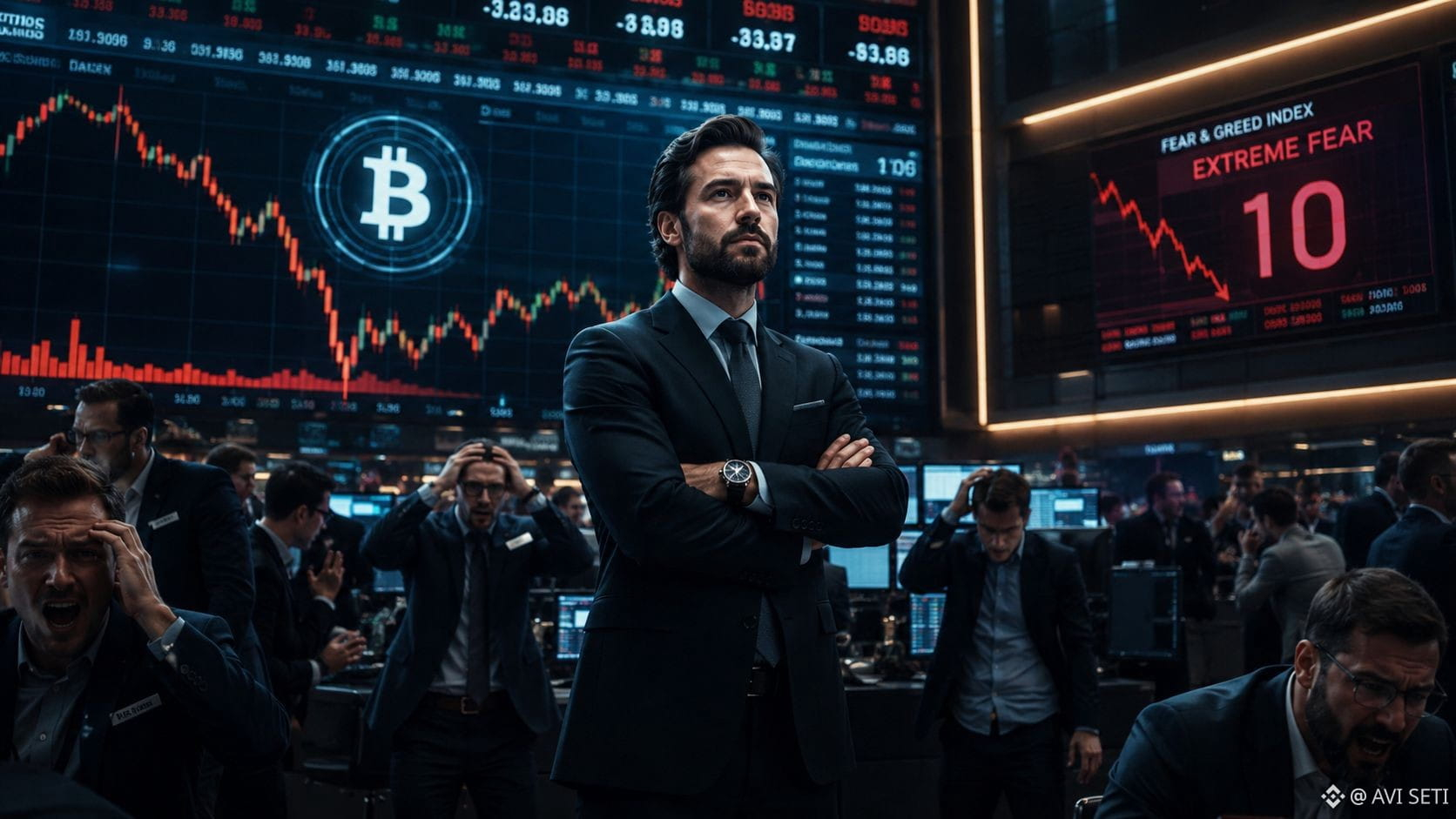
🧠 EXTREME FEAR CREATES STRANGE OPPORTUNITIES
When markets become fearful, most people focus on protecting themselves.
Professionals focus on preparation.
The crowd asks:
"What if prices fall?"
Smart money asks:
"What if everyone else is wrong?"
Every major market cycle has rewarded patience.
Not panic.
$BTC $ETH $SOL
#USADPEmploymentChangeSlipsTo25500 #OilFallsBelow$80 #SpaceXStockOptionsBeginTrading #RobinhoodCuts10%Workforce #TAORises31.9%
🧠 EXTREME FEAR CREATES STRANGE OPPORTUNITIES
When markets become fearful, most people focus on protecting themselves.
Professionals focus on preparation.
The crowd asks:
"What if prices fall?"
Smart money asks:
"What if everyone else is wrong?"
Every major market cycle has rewarded patience.
Not panic.
$BTC $ETH $SOL
#USADPEmploymentChangeSlipsTo25500 #OilFallsBelow$80 #SpaceXStockOptionsBeginTrading #RobinhoodCuts10%Workforce #TAORises31.9%
When markets become fearful, most people focus on protecting themselves.
Professionals focus on preparation.
The crowd asks:
"What if prices fall?"
Smart money asks:
"What if everyone else is wrong?"
Every major market cycle has rewarded patience.
Not panic.
$BTC $ETH $SOL
#USADPEmploymentChangeSlipsTo25500 #OilFallsBelow$80 #SpaceXStockOptionsBeginTrading #RobinhoodCuts10%Workforce #TAORises31.9%
55

ເບິ່ງການແປ
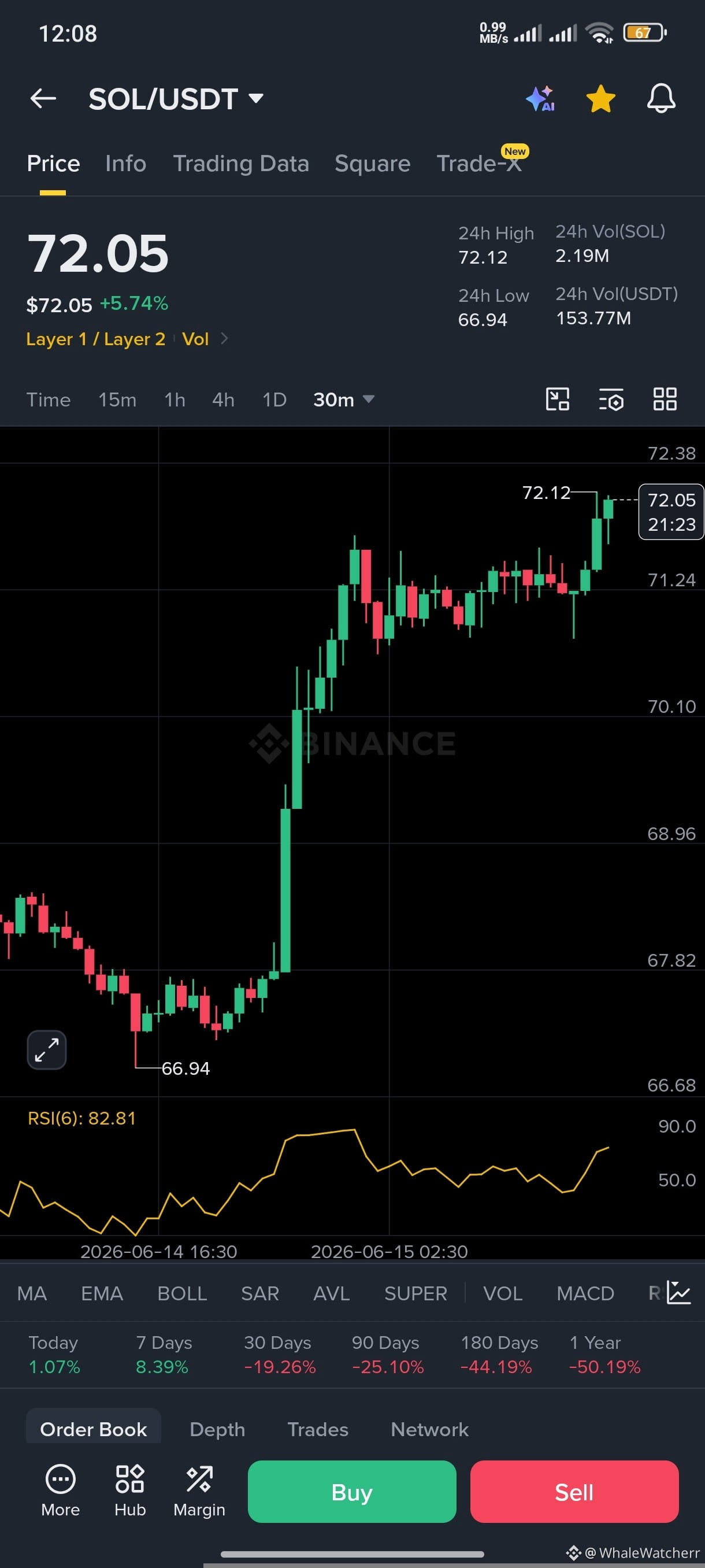
$SOL DOOM OR OPPORTUNITY?
Many traders are expecting $SOL to get rejected here and pull back toward $68–$69 after this sharp move.
I see it differently.
The breakout from $66.94 was explosive and held above $70 on retest — strength like that doesn't usually fade immediately. Even if SOL cools off, the $70–$71 area looks like a healthy zone to watch for continuation.
If momentum carries through, a move toward $80+ is far more interesting to watch than worrying about a pullback.
$SOL
{spot}(SOLUSDT)
$SOL DOOM OR OPPORTUNITY?
Many traders are expecting $SOL to get rejected here and pull back toward $68–$69 after this sharp move.
I see it differently.
The breakout from $66.94 was explosive and held above $70 on retest — strength like that doesn't usually fade immediately. Even if SOL cools off, the $70–$71 area looks like a healthy zone to watch for continuation.
If momentum carries through, a move toward $80+ is far more interesting to watch than worrying about a pullback.
$SOL
Many traders are expecting $SOL to get rejected here and pull back toward $68–$69 after this sharp move.
I see it differently.
The breakout from $66.94 was explosive and held above $70 on retest — strength like that doesn't usually fade immediately. Even if SOL cools off, the $70–$71 area looks like a healthy zone to watch for continuation.
If momentum carries through, a move toward $80+ is far more interesting to watch than worrying about a pullback.
$SOL
1
415

·
--
ສັນຍານກະທິງ
ເບິ່ງການແປ
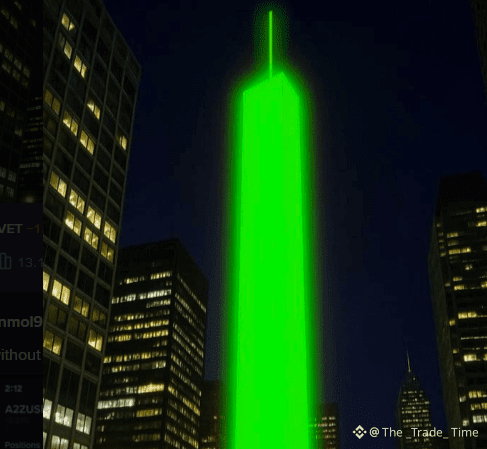
Trade Plan:
🟢#solana - LONG
{spot}(SOLUSDT)
Entry: $71 - $75
SL: $65
TP 1: $80
TP 2: $85
TP 3: $90
$SOL Trade Open Long Now.
Trade Plan:
🟢#solana - LONG
Entry: $71 - $75
SL: $65
TP 1: $80
TP 2: $85
TP 3: $90
$SOL Trade Open Long Now.
🟢#solana - LONG
Entry: $71 - $75
SL: $65
TP 1: $80
TP 2: $85
TP 3: $90
$SOL Trade Open Long Now.
2
321

·
--
ສັນຍານກະທິງ
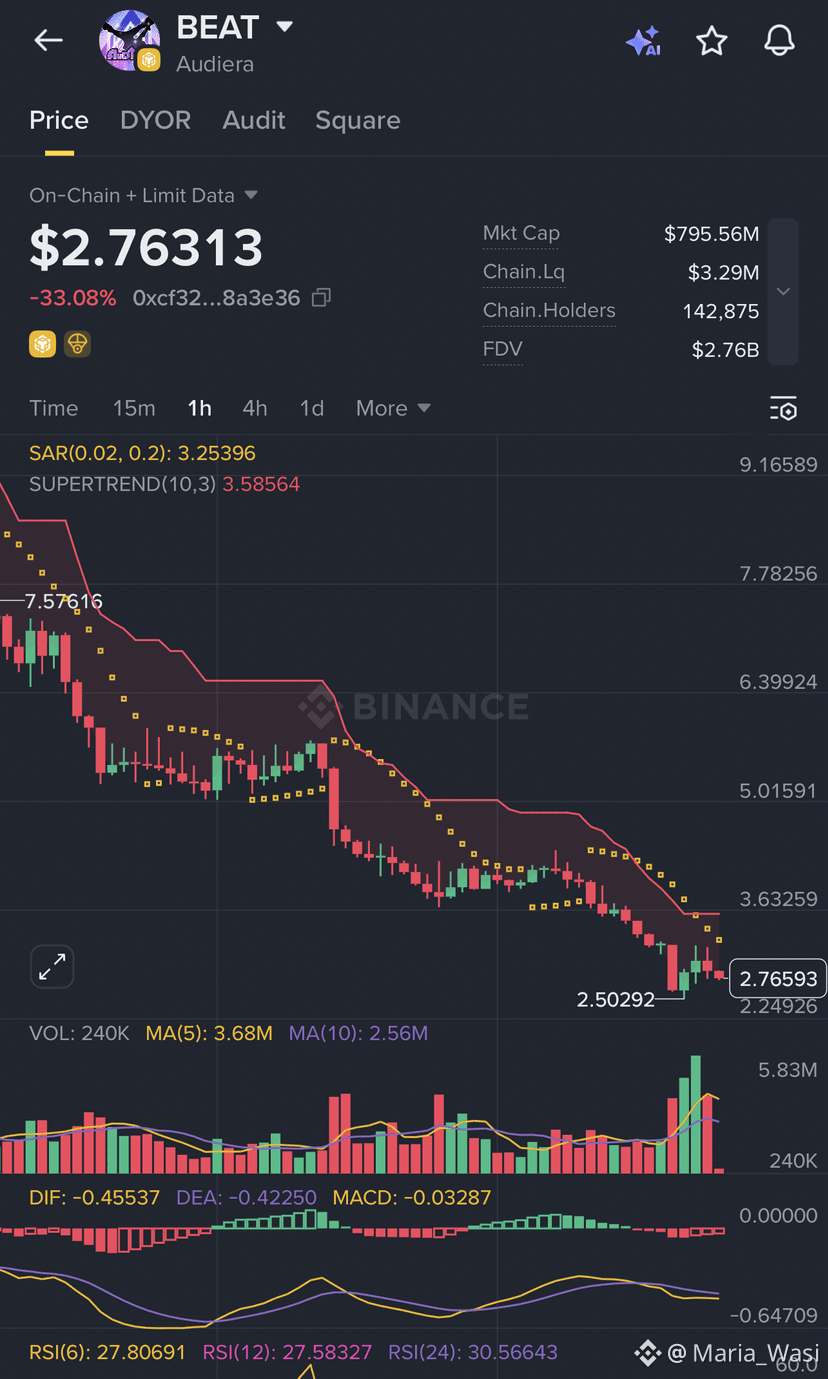
$BEAT Maraaming retail traders ang inaasahan na ang matinding presyon sa pagbebenta ay mapipilit ang $BEAT na pumasok sa walang katapusang capitulation hanggang sa zero, pero ang asset ay matatag na kumakapit sa demand (catching a bid) sa isang solid na double-bottom na istruktura para simulan ang isang matalim na bullish reversal.
Entry: 2.5200 - 2.7600
Targets: 3.6000 | 4.3500 | 5.0000
Stop Loss: 2.3500
I-trade ang $BEAT dito.👇🏻
#beat #WTIFallsBelow$80 #USADPEmploymentChangeSlipsTo25500 #OilFallsBelow$80 #SpaceXStockOptionsBeginTrading
{future}(BEATUSDT)
$BEAT Maraaming retail traders ang inaasahan na ang matinding presyon sa pagbebenta ay mapipilit ang $BEAT na pumasok sa walang katapusang capitulation hanggang sa zero, pero ang asset ay matatag na kumakapit sa demand (catching a bid) sa isang solid na double-bottom na istruktura para simulan ang isang matalim na bullish reversal.
Entry: 2.5200 - 2.7600
Targets: 3.6000 | 4.3500 | 5.0000
Stop Loss: 2.3500
I-trade ang $BEAT dito.👇🏻
#beat #WTIFallsBelow$80 #USADPEmploymentChangeSlipsTo25500 #OilFallsBelow$80 #SpaceXStockOptionsBeginTrading
Entry: 2.5200 - 2.7600
Targets: 3.6000 | 4.3500 | 5.0000
Stop Loss: 2.3500
I-trade ang $BEAT dito.👇🏻
#beat #WTIFallsBelow$80 #USADPEmploymentChangeSlipsTo25500 #OilFallsBelow$80 #SpaceXStockOptionsBeginTrading
17
2
1.3k
ເຂົ້າສູ່ລະບົບເພື່ອສຳຫຼວດເນື້ອຫາເພີ່ມເຕີມ
ເຂົ້າຮ່ວມກຸ່ມຜູ້ໃຊ້ຄຣິບໂຕທົ່ວໂລກໃນ Binance Square.
⚡️ ໄດ້ຮັບຂໍ້ມູນຫຼ້າສຸດ ແລະ ທີ່ມີປະໂຫຍດກ່ຽວກັບຄຣິບໂຕ.
💬 ໄດ້ຮັບຄວາມໄວ້ວາງໃຈຈາກຕະຫຼາດແລກປ່ຽນຄຣິບໂຕທີ່ໃຫຍ່ທີ່ສຸດໃນໂລກ.
👍 ຄົ້ນຫາຂໍ້ມູນເຊີງເລິກທີ່ແທ້ຈາກນັກສ້າງທີ່ໄດ້ຮັບການຢືນຢັນ.
ອີເມວ / ເບີໂທລະສັບ
ຫົວຂໍ້ທີ່ກໍາລັງນິຍົມ
1
#BitcoinReboundsTo$79K
17,121 views
149 ກຳລັງສົນທະນາ
2
#SouthKoreaCryptoTaxDelayPetitionTops50000
2,713 views
109 ກຳລັງສົນທະນາ
3
#SolanaTransactionV1GoesLiveOnMainnet
1,647 views
81 ກຳລັງສົນທະນາ
4
#RussianCentralBankFlagsCryptoAsFinancialRisk
3,166 views
138 ກຳລັງສົນທະນາ
5
#GrayscalePutsXRPAt26.11%InAdvisorPortfolio
9,198 views
218 ກຳລັງສົນທະນາ
6
#PhiladelphiaSemiconductorIndexFalls5.9%
3,755 views
147 ກຳລັງສົນທະນາ
7
#SECChairUrgesCongressToAdvanceClarityAct
9,921 views
143 ກຳລັງສົນທະນາ
8
#FedHikeOddsRiseTo89%
96,822 views
1,149 ກຳລັງສົນທະນາ
9
#RLUSDSupplyHitsRecord$2.442B
7,150 views
66 ກຳລັງສົນທະນາ
10
#AvalancheIntegratesIntoUAEPassDigitalVault
83,399 views
1,056 ກຳລັງສົນທະນາ