
#nucleardeterrence
nucleardeterrence
4,435 ຄັ້ງທີ່ເບິ່ງ
9 ກຳລັງສົນທະນາ
ມາແຮງ
ຫຼ້າສຸດ
·
--
法国总统马克龙近日正式推进“前沿核预警”计划,联合英国、德国、波兰等10个欧洲盟友,扩大法国核力量在前线的威慑与预警部署。该计划拟在欧洲多地部署具备核打击能力的阵风战机,并建立全新的情报共享与预警通信网络。不过,意大利明确拒绝加入,波罗的海三国也未被纳入,凸显欧洲内部防务分歧依然严重。
这一战略举措表明欧洲正试图摆脱单一依赖美国的传统安全伞,地缘战略格局进入高风险的自主威慑阶段。然而,多国在核战略上的立场脱节,不仅难以形成真正的统一防线,反而极易加剧与俄罗斯的直接对峙风险,推高欧洲大陆误判摩擦的概率。
地缘核威慑层面的升级直接冲击传统金融市场的风险偏好。欧洲地缘溢价的持续上升将压制欧洲经济复苏预期,推动避险资金进一步流向美元及黄金等硬通货资产,全球资本市场的波动中枢可能显著上移。
对于加密资产而言,地缘局势长期化与复杂化通常会挤压市场的投机流动性。在避险情绪主导的环境下,$BTC 等风险资产更容易受到流动性回流传统避险资产的压力,投资者需警惕地缘黑天鹅事件引发的阶段性流动性踩踏风险。
#Geopolitics #NuclearDeterrence #MacroEconomy
258

ບົດຄວາມ
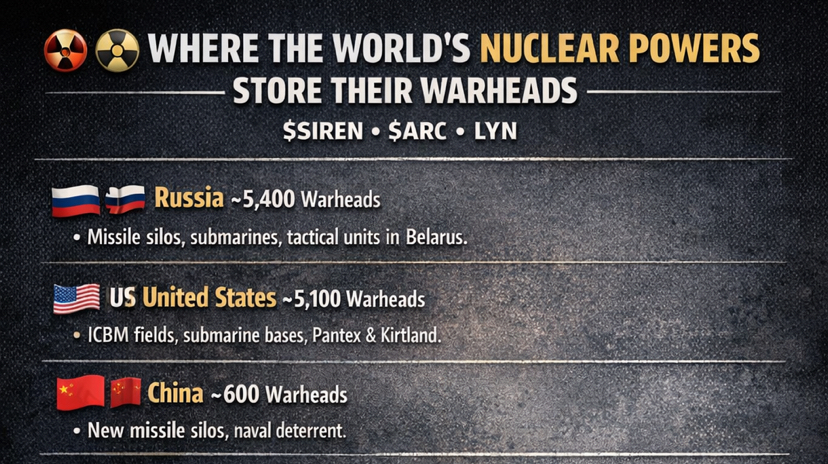
💣☢️ WHERE THE WORLD’S NUCLEAR POWERS STORE THEIR WARHEADS$SIREN $arc $LYN
Below is a strategic overview of how nuclear-armed states manage and position their arsenals. Figures are approximate estimates based on open-source global security assessments.
🇷🇺 Russia (~5,400 warheads)
The largest stockpile globally. Warheads are distributed across numerous high-security facilities.
• Strategic missile silos and mobile launchers
• Submarine-based deterrent forces
• Air-delivered systems
Some tactical systems have reportedly been positioned in Belarus, reinforcing regional deterrence posture.
🇺🇸 United States (~5,100 warheads)
Stored across multiple secure sites nationwide. Key elements include:
• Intercontinental missile fields in the central U.S.
• Ballistic missile submarines
• Strategic bomber bases
• Maintenance and storage facilities such as Pantex (Texas) and Kirtland (New Mexico)
Additionally, a limited number of gravity bombs are stationed in Europe under NATO nuclear-sharing arrangements.
🇨🇳 China (~600 warheads)
China’s arsenal is expanding and modernizing.
• Newly constructed missile silo fields
• Centralized storage infrastructure
• Growing sea-based deterrent capability
Open-source intelligence indicates continued long-term buildup.
🇫🇷 France (~290 warheads)
France relies primarily on submarine-based deterrence.
• Ballistic missile submarines
• Air-delivered nuclear capability
All systems remain under strict national command.
🇬🇧 United Kingdom (~225 warheads)
The UK maintains a continuous at-sea deterrent.
• Warheads stored at Coulport
• Deployed via Trident missiles on submarines based in Scotland
🇮🇳 India (~180 warheads)
India operates a developing nuclear triad.
• Land-based ballistic missiles
• Aircraft delivery platforms
• Expanding submarine-based systems
Warheads are generally believed to be stored separately from launch systems during peacetime.
🇵🇰 Pakistan (~170 warheads)
Pakistan maintains a land-focused deterrent.
• Ballistic missile systems
• Mobile launch platforms
• Warheads reportedly separated from delivery systems outside crisis periods
🇮🇱 Israel (~90 warheads, undeclared)
Israel maintains a long-standing policy of strategic ambiguity.
Open-source analysis associates its capability with secure desert facilities and possible sea-based options.
🇰🇵 North Korea (~50 warheads)
North Korea continues developing its nuclear and missile programs.
• Centralized storage locations
• Missile integration facilities
• Expanding long-range strike capability
⚠️ Nuclear forces are structured around deterrence doctrine. Despite heightened rhetoric during geopolitical tensions, these arsenals are primarily intended to prevent large-scale war through strategic balance.
#GlobalSecurity #NuclearDeterrence #Geopolitics #DefenseAnalysis
{future}(ARCUSDT)
{future}(SIRENUSDT)
{alpha}(560x302dfaf2cdbe51a18d97186a7384e87cf599877d)
💣☢️ WHERE THE WORLD’S NUCLEAR POWERS STORE THEIR WARHEADS
$SIREN $arc $LYN
Below is a strategic overview of how nuclear-armed states manage and position their arsenals. Figures are approximate estimates based on open-source global security assessments.
🇷🇺 Russia (~5,400 warheads)
The largest stockpile globally. Warheads are distributed across numerous high-security facilities.
• Strategic missile silos and mobile launchers
• Submarine-based deterrent forces
• Air-delivered systems
Some tactical systems have reportedly been positioned in Belarus, reinforcing regional deterrence posture.
🇺🇸 United States (~5,100 warheads)
Stored across multiple secure sites nationwide. Key elements include:
• Intercontinental missile fields in the central U.S.
• Ballistic missile submarines
• Strategic bomber bases
• Maintenance and storage facilities such as Pantex (Texas) and Kirtland (New Mexico)
Additionally, a limited number of gravity bombs are stationed in Europe under NATO nuclear-sharing arrangements.
🇨🇳 China (~600 warheads)
China’s arsenal is expanding and modernizing.
• Newly constructed missile silo fields
• Centralized storage infrastructure
• Growing sea-based deterrent capability
Open-source intelligence indicates continued long-term buildup.
🇫🇷 France (~290 warheads)
France relies primarily on submarine-based deterrence.
• Ballistic missile submarines
• Air-delivered nuclear capability
All systems remain under strict national command.
🇬🇧 United Kingdom (~225 warheads)
The UK maintains a continuous at-sea deterrent.
• Warheads stored at Coulport
• Deployed via Trident missiles on submarines based in Scotland
🇮🇳 India (~180 warheads)
India operates a developing nuclear triad.
• Land-based ballistic missiles
• Aircraft delivery platforms
• Expanding submarine-based systems
Warheads are generally believed to be stored separately from launch systems during peacetime.
🇵🇰 Pakistan (~170 warheads)
Pakistan maintains a land-focused deterrent.
• Ballistic missile systems
• Mobile launch platforms
• Warheads reportedly separated from delivery systems outside crisis periods
🇮🇱 Israel (~90 warheads, undeclared)
Israel maintains a long-standing policy of strategic ambiguity.
Open-source analysis associates its capability with secure desert facilities and possible sea-based options.
🇰🇵 North Korea (~50 warheads)
North Korea continues developing its nuclear and missile programs.
• Centralized storage locations
• Missile integration facilities
• Expanding long-range strike capability
⚠️ Nuclear forces are structured around deterrence doctrine. Despite heightened rhetoric during geopolitical tensions, these arsenals are primarily intended to prevent large-scale war through strategic balance.
#GlobalSecurity #NuclearDeterrence #Geopolitics #DefenseAnalysis
2
289
ເຂົ້າສູ່ລະບົບເພື່ອສຳຫຼວດເນື້ອຫາເພີ່ມເຕີມ
ເຂົ້າຮ່ວມກຸ່ມຜູ້ໃຊ້ຄຣິບໂຕທົ່ວໂລກໃນ Binance Square.
⚡️ ໄດ້ຮັບຂໍ້ມູນຫຼ້າສຸດ ແລະ ທີ່ມີປະໂຫຍດກ່ຽວກັບຄຣິບໂຕ.
💬 ໄດ້ຮັບຄວາມໄວ້ວາງໃຈຈາກຕະຫຼາດແລກປ່ຽນຄຣິບໂຕທີ່ໃຫຍ່ທີ່ສຸດໃນໂລກ.
👍 ຄົ້ນຫາຂໍ້ມູນເຊີງເລິກທີ່ແທ້ຈາກນັກສ້າງທີ່ໄດ້ຮັບການຢືນຢັນ.
ອີເມວ / ເບີໂທລະສັບ
ຫົວຂໍ້ທີ່ກໍາລັງນິຍົມ
1
#BitcoinAndStocksSlipAgainAmidTrump’sTariffPlans
17,314 ຄັ້ງທີ່ເບິ່ງ
324 ກຳລັງສົນທະນາ
2
#WillOctCorePCEShiftFedHikeExpectations?
304,709 ຄັ້ງທີ່ເບິ່ງ
2,007 ກຳລັງສົນທະນາ
3
#JensenHuangSaysNvidiaDoesn’tNeedASuccessionPlan
14,692 ຄັ້ງທີ່ເບິ່ງ
231 ກຳລັງສົນທະນາ
4
#AnthropicBreaksBelowIPOPriceAmidAISlump
108,629 ຄັ້ງທີ່ເບິ່ງ
1,010 ກຳລັງສົນທະນາ
5
#FidelityCryptoAddsAAVELINKAndUNITrading
3,552 ຄັ້ງທີ່ເບິ່ງ
85 ກຳລັງສົນທະນາ
6
#UKToBanExchangesMakingMarketsOnOwnPlatforms
2,617 ຄັ້ງທີ່ເບິ່ງ
71 ກຳລັງສົນທະນາ
7
#CFTCApprovesTradeReportingRuleForPredictionMarkets
10,554 ຄັ້ງທີ່ເບິ່ງ
146 ກຳລັງສົນທະນາ
8
#Bitcoin'sReboundFadesBelow$60K
169,418 ຄັ້ງທີ່ເບິ່ງ
453 ກຳລັງສົນທະນາ
9
#WillMarketsStageAThanksgivingReliefRally?
708,130 ຄັ້ງທີ່ເບິ່ງ
3,778 ກຳລັງສົນທະນາ
10
#EthereumFoundationPlansShiftToHashBasedSignaturesBy2028
7,592 ຄັ້ງທີ່ເບິ່ງ
149 ກຳລັງສົນທະນາ