
#cryptotech
cryptotech
89,112 views
778 ກຳລັງສົນທະນາ
ມາແຮງ
ຫຼ້າສຸດ
ເບິ່ງການແປ
🚀 $ZKVM UNVEILS QUANTUM‑RESISTANT LATTICE JOLT – SPEEDS SKYROCKET 3X! 💥
📊 The a16z crypto team just dropped Lattice Jolt, a zero‑knowledge VM that swaps elliptic curves for lattice‑based crypto, delivering native quantum resistance and a 2‑3× speed uplift for both prover and verifier.
⚡ Proofs now sit under 100 KB – the leanest post‑quantum zkVM on record – while the new Akita polynomial commitment slashes memory per cycle from ~300 B to 200 B, unlocking million‑cycle proofs on mobile CPUs.
🦈 GPU‑fuelled throughput rockets past 10 M RISC‑V cycles per second on a MacBook, positioning Lattice Jolt as the go‑to engine for high‑frequency on‑chain privacy and future zero‑knowledge extensions.
💬 How will this quantum‑ready stack reshape your zk‑app roadmap? 👇
⚠️ Not financial advice. Always manage your risk. 🛡️
🏷️ #ZKVM #QuantumResistance #ZeroKnowledge #CryptoTech
🚀 🔥
🚀 $ZKVM UNVEILS QUANTUM‑RESISTANT LATTICE JOLT – SPEEDS SKYROCKET 3X! 💥
📊 The a16z crypto team just dropped Lattice Jolt, a zero‑knowledge VM that swaps elliptic curves for lattice‑based crypto, delivering native quantum resistance and a 2‑3× speed uplift for both prover and verifier.
⚡ Proofs now sit under 100 KB – the leanest post‑quantum zkVM on record – while the new Akita polynomial commitment slashes memory per cycle from ~300 B to 200 B, unlocking million‑cycle proofs on mobile CPUs.
🦈 GPU‑fuelled throughput rockets past 10 M RISC‑V cycles per second on a MacBook, positioning Lattice Jolt as the go‑to engine for high‑frequency on‑chain privacy and future zero‑knowledge extensions.
💬 How will this quantum‑ready stack reshape your zk‑app roadmap? 👇
⚠️ Not financial advice. Always manage your risk. 🛡️
🏷️ #ZKVM #QuantumResistance #ZeroKnowledge #CryptoTech
🚀 🔥
📊 The a16z crypto team just dropped Lattice Jolt, a zero‑knowledge VM that swaps elliptic curves for lattice‑based crypto, delivering native quantum resistance and a 2‑3× speed uplift for both prover and verifier.
⚡ Proofs now sit under 100 KB – the leanest post‑quantum zkVM on record – while the new Akita polynomial commitment slashes memory per cycle from ~300 B to 200 B, unlocking million‑cycle proofs on mobile CPUs.
🦈 GPU‑fuelled throughput rockets past 10 M RISC‑V cycles per second on a MacBook, positioning Lattice Jolt as the go‑to engine for high‑frequency on‑chain privacy and future zero‑knowledge extensions.
💬 How will this quantum‑ready stack reshape your zk‑app roadmap? 👇
⚠️ Not financial advice. Always manage your risk. 🛡️
🏷️ #ZKVM #QuantumResistance #ZeroKnowledge #CryptoTech
🚀 🔥
5

ເບິ່ງການແປ
Innovation Crypto : Qu'est-ce que le Model Context Protocol (MCP) ?
🧠 MCP : Le pont entre l'Intelligence Artificielle et le Web3
Avec le développement de Binance Agent OS, un terme revient en force : le MCP (Model Context Protocol).
🌐 Pourquoi est-ce une révolution ?
Le MCP permet aux grands modèles de langage (LLM) de lire en temps réel des données de marché complexes.
Il permet à l'IA d'interagir directement avec la blockchain via des sous-comptes sécurisés.
L'utilisateur conserve un contrôle strict : retraits bloqués, limites d'exposition et validation d'ordres.
L'exécution d'analyses et de stratégies Spot assistée par IA devient accessible à tous.
Pensez-vous que l'IA va surpasser le trading manuel dans les prochaines années ?
#BinanceAgentOS #MCP #AI #CryptoTech #Web3
Innovation Crypto : Qu'est-ce que le Model Context Protocol (MCP) ?
🧠 MCP : Le pont entre l'Intelligence Artificielle et le Web3
Avec le développement de Binance Agent OS, un terme revient en force : le MCP (Model Context Protocol).
🌐 Pourquoi est-ce une révolution ?
Le MCP permet aux grands modèles de langage (LLM) de lire en temps réel des données de marché complexes.
Il permet à l'IA d'interagir directement avec la blockchain via des sous-comptes sécurisés.
L'utilisateur conserve un contrôle strict : retraits bloqués, limites d'exposition et validation d'ordres.
L'exécution d'analyses et de stratégies Spot assistée par IA devient accessible à tous.
Pensez-vous que l'IA va surpasser le trading manuel dans les prochaines années ?
#BinanceAgentOS #MCP #AI #CryptoTech #Web3
🧠 MCP : Le pont entre l'Intelligence Artificielle et le Web3
Avec le développement de Binance Agent OS, un terme revient en force : le MCP (Model Context Protocol).
🌐 Pourquoi est-ce une révolution ?
Le MCP permet aux grands modèles de langage (LLM) de lire en temps réel des données de marché complexes.
Il permet à l'IA d'interagir directement avec la blockchain via des sous-comptes sécurisés.
L'utilisateur conserve un contrôle strict : retraits bloqués, limites d'exposition et validation d'ordres.
L'exécution d'analyses et de stratégies Spot assistée par IA devient accessible à tous.
Pensez-vous que l'IA va surpasser le trading manuel dans les prochaines années ?
#BinanceAgentOS #MCP #AI #CryptoTech #Web3
24

Quantum-proof $BTC mainnet transaction: ການພັດທະນາທີ່ມີຂໍ້ພິສູດ ຫຼື ພຽງແຕ່ເລື່ອງນິຍາຍອີກອັນ? 🤔
StarkWare ຫາກໍສຳເລັດການທຳລາຍສະຖິຕິຂອງໂລກດ້ວຍການສົ່ງ $BTC mainnet ທີ່ປອດໄພຈາກພະລະມະນຸດ (quantum-safe) ຄັ້ງທຳອິດ ຜ່ານ MARA Pool ໂດຍບໍ່ຕ້ອງການປັບແຕ່ງໂປຣໂທຄໍ (protocol fork). ການ “ຂັດລະບົບ” ລາຍເຊັນນອກຊາຍ (off-chain signature grinding) ແທນທີ່ຄຣິບໂທກສະແດງ ກະດັບປ້ອງກັນທີ່ບໍ່ໃຫ້ຖືກແຮັກ ກ່ອນທີ່ mempool ຈະເຫັນດ້ວຍຊ້ຳ.
ກ່ອນທີ່ທ່ານຈະເຂົ້າໄປໃນກັບດັກ fomo, ໃຫ້ເບິ່ງຕົວເລກ. ຄ່າໃຊ້ GPU compute ທີ່ຫນັກຢູ່ປະມານ $200 ຕໍ່ການສົ່ງ—ສະນັ້ນໃນຕອນນີ້ນີ້ ມັນເປັນ “ບ່ອນປ້ອງກັນ” ທີ່ມີມູນຄ່າສູງ, ບໍ່ໃຊ້ສຳລັບທຸລະກຳ micro-txs. ແຕ່ຍັງມີເງິນ legacy ປະມານ 7 ລ້ານຫຼຽນ ທີ່ອ່ອນໄຫວຕໍ່ຊ່ອງໂຕ້ຄວາມຄຸກຄາມໃນອະນາຄົດ, ການພິສູດຄວາມປອດໄພລະດັບໂປຣໂທຄໍໃນມື້ນີ້ ຍ່ອມປ່ຽນແປງ “ໂຄງສ້າງເລື່ອງ” ຢ່າງແນ່ນອນ.
ຄວາມທົນທານຕໍ່ພະລະມະນຸດ (quantum resilience) ແມ່ນຕົວກະຕຸ້ນສຸດທ້າຍສຳລັບການນຳໃຊ້ຄວາມຮັ່ງຄັ່ງອຳນາດອະທິປະໄຕຢ່າງຍາວນານ, ຫຼື ມັນໄກເກີນໄປຈົນບໍ່ຄວນຊື້/ຂາຍໃນມື້ນີ້? ລອງຄົ້ນຫາດ້ວຍຕົວເອງ.
ບໍ່ແມ່ນຄຳແນະນຳດ້ານການເງິນ. ຈົ່ງຈັດການຄວາມສ່ຽງຂອງທ່ານສະເໝີ.
#BTC #QuantumCrypto #Bitcoin #CryptoTech
ເມື່ອທຸກຄົນເຫັນດີ, ຂ້ອຍຈະກວດສອບຊ້ຳ.
Quantum-proof $BTC mainnet transaction: ການພັດທະນາທີ່ມີຂໍ້ພິສູດ ຫຼື ພຽງແຕ່ເລື່ອງນິຍາຍອີກອັນ? 🤔
StarkWare ຫາກໍສຳເລັດການທຳລາຍສະຖິຕິຂອງໂລກດ້ວຍການສົ່ງ $BTC mainnet ທີ່ປອດໄພຈາກພະລະມະນຸດ (quantum-safe) ຄັ້ງທຳອິດ ຜ່ານ MARA Pool ໂດຍບໍ່ຕ້ອງການປັບແຕ່ງໂປຣໂທຄໍ (protocol fork). ການ “ຂັດລະບົບ” ລາຍເຊັນນອກຊາຍ (off-chain signature grinding) ແທນທີ່ຄຣິບໂທກສະແດງ ກະດັບປ້ອງກັນທີ່ບໍ່ໃຫ້ຖືກແຮັກ ກ່ອນທີ່ mempool ຈະເຫັນດ້ວຍຊ້ຳ.
ກ່ອນທີ່ທ່ານຈະເຂົ້າໄປໃນກັບດັກ fomo, ໃຫ້ເບິ່ງຕົວເລກ. ຄ່າໃຊ້ GPU compute ທີ່ຫນັກຢູ່ປະມານ $200 ຕໍ່ການສົ່ງ—ສະນັ້ນໃນຕອນນີ້ນີ້ ມັນເປັນ “ບ່ອນປ້ອງກັນ” ທີ່ມີມູນຄ່າສູງ, ບໍ່ໃຊ້ສຳລັບທຸລະກຳ micro-txs. ແຕ່ຍັງມີເງິນ legacy ປະມານ 7 ລ້ານຫຼຽນ ທີ່ອ່ອນໄຫວຕໍ່ຊ່ອງໂຕ້ຄວາມຄຸກຄາມໃນອະນາຄົດ, ການພິສູດຄວາມປອດໄພລະດັບໂປຣໂທຄໍໃນມື້ນີ້ ຍ່ອມປ່ຽນແປງ “ໂຄງສ້າງເລື່ອງ” ຢ່າງແນ່ນອນ.
ຄວາມທົນທານຕໍ່ພະລະມະນຸດ (quantum resilience) ແມ່ນຕົວກະຕຸ້ນສຸດທ້າຍສຳລັບການນຳໃຊ້ຄວາມຮັ່ງຄັ່ງອຳນາດອະທິປະໄຕຢ່າງຍາວນານ, ຫຼື ມັນໄກເກີນໄປຈົນບໍ່ຄວນຊື້/ຂາຍໃນມື້ນີ້? ລອງຄົ້ນຫາດ້ວຍຕົວເອງ.
ບໍ່ແມ່ນຄຳແນະນຳດ້ານການເງິນ. ຈົ່ງຈັດການຄວາມສ່ຽງຂອງທ່ານສະເໝີ.
#BTC #QuantumCrypto #Bitcoin #CryptoTech
ເມື່ອທຸກຄົນເຫັນດີ, ຂ້ອຍຈະກວດສອບຊ້ຳ.
StarkWare ຫາກໍສຳເລັດການທຳລາຍສະຖິຕິຂອງໂລກດ້ວຍການສົ່ງ $BTC mainnet ທີ່ປອດໄພຈາກພະລະມະນຸດ (quantum-safe) ຄັ້ງທຳອິດ ຜ່ານ MARA Pool ໂດຍບໍ່ຕ້ອງການປັບແຕ່ງໂປຣໂທຄໍ (protocol fork). ການ “ຂັດລະບົບ” ລາຍເຊັນນອກຊາຍ (off-chain signature grinding) ແທນທີ່ຄຣິບໂທກສະແດງ ກະດັບປ້ອງກັນທີ່ບໍ່ໃຫ້ຖືກແຮັກ ກ່ອນທີ່ mempool ຈະເຫັນດ້ວຍຊ້ຳ.
ກ່ອນທີ່ທ່ານຈະເຂົ້າໄປໃນກັບດັກ fomo, ໃຫ້ເບິ່ງຕົວເລກ. ຄ່າໃຊ້ GPU compute ທີ່ຫນັກຢູ່ປະມານ $200 ຕໍ່ການສົ່ງ—ສະນັ້ນໃນຕອນນີ້ນີ້ ມັນເປັນ “ບ່ອນປ້ອງກັນ” ທີ່ມີມູນຄ່າສູງ, ບໍ່ໃຊ້ສຳລັບທຸລະກຳ micro-txs. ແຕ່ຍັງມີເງິນ legacy ປະມານ 7 ລ້ານຫຼຽນ ທີ່ອ່ອນໄຫວຕໍ່ຊ່ອງໂຕ້ຄວາມຄຸກຄາມໃນອະນາຄົດ, ການພິສູດຄວາມປອດໄພລະດັບໂປຣໂທຄໍໃນມື້ນີ້ ຍ່ອມປ່ຽນແປງ “ໂຄງສ້າງເລື່ອງ” ຢ່າງແນ່ນອນ.
ຄວາມທົນທານຕໍ່ພະລະມະນຸດ (quantum resilience) ແມ່ນຕົວກະຕຸ້ນສຸດທ້າຍສຳລັບການນຳໃຊ້ຄວາມຮັ່ງຄັ່ງອຳນາດອະທິປະໄຕຢ່າງຍາວນານ, ຫຼື ມັນໄກເກີນໄປຈົນບໍ່ຄວນຊື້/ຂາຍໃນມື້ນີ້? ລອງຄົ້ນຫາດ້ວຍຕົວເອງ.
ບໍ່ແມ່ນຄຳແນະນຳດ້ານການເງິນ. ຈົ່ງຈັດການຄວາມສ່ຽງຂອງທ່ານສະເໝີ.
#BTC #QuantumCrypto #Bitcoin #CryptoTech
ເມື່ອທຸກຄົນເຫັນດີ, ຂ້ອຍຈະກວດສອບຊ້ຳ.
18
·
--
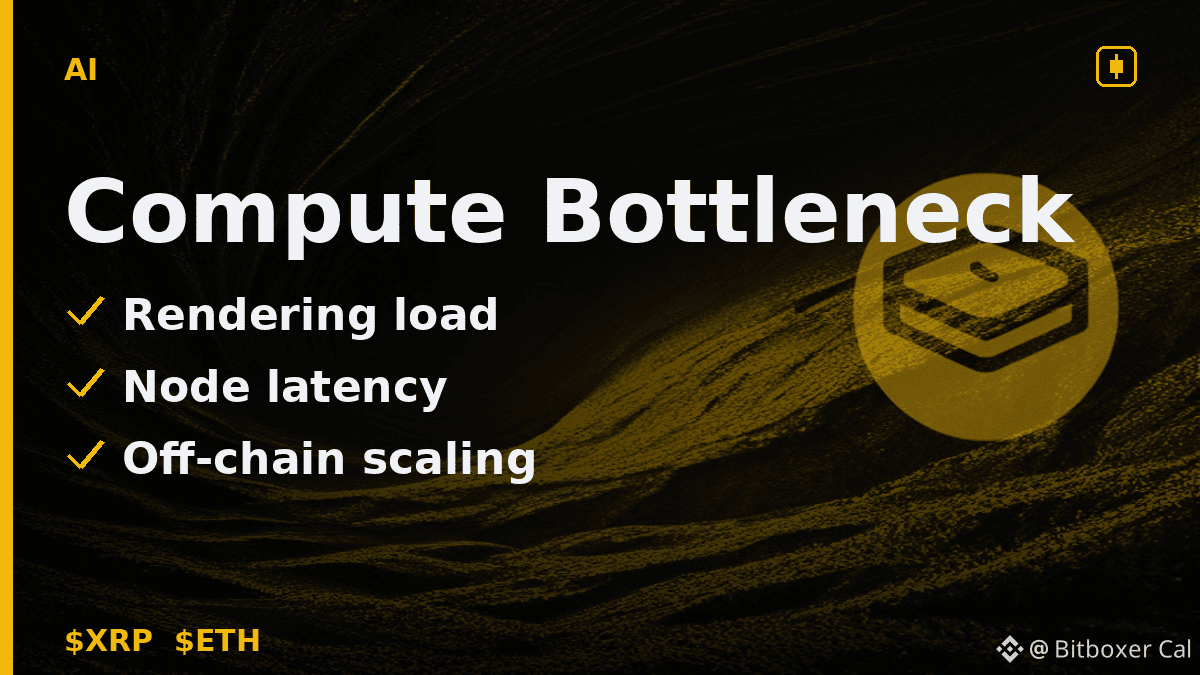
ລືມການຮົງໂຮ່ $ETH gaming; alpha ທີ່ແທ້ແມ່ນການຍ້າຍຢ່າງງຽບໆໄປສູ່ການຄຳນວນແບບແຈກສ່ວນ.
ໃນຂະນະທີ່ຄົນອື່ນມົວແຕ່ກັບກຣາຟິກ, ການປະດິດໃໝ່ແມ່ນການ render ຢູ່ນອກຊ່ອງຂອບ (off-chain rendering) ທີ່ຕັດຄວາມຄໍ້າຄັງອອກ. ຄ້າຍຄື $XRP using ກັບ nodes ເພື່ອປັບປຸງການກວດສອບ, ໂປຣໂຕຄອນເຫຼົ່ານີ້ຍ້າຍພາລະໜັກໜ່ວງໄປສູ່ລະບົບນອກເພື່ອຂະຫຍາຍ. ເບິ່ງຕົວຊີ້ວັດ latency; ນັ້ນແມ່ນບ່ອນທີ່ເຕັກໂນໂລຍີຊະນະ ຫຼື ພັງ.
$ETH #AI #CryptoTech #Web3
ລືມການຮົງໂຮ່ $ETH gaming; alpha ທີ່ແທ້ແມ່ນການຍ້າຍຢ່າງງຽບໆໄປສູ່ການຄຳນວນແບບແຈກສ່ວນ.
ໃນຂະນະທີ່ຄົນອື່ນມົວແຕ່ກັບກຣາຟິກ, ການປະດິດໃໝ່ແມ່ນການ render ຢູ່ນອກຊ່ອງຂອບ (off-chain rendering) ທີ່ຕັດຄວາມຄໍ້າຄັງອອກ. ຄ້າຍຄື $XRP using ກັບ nodes ເພື່ອປັບປຸງການກວດສອບ, ໂປຣໂຕຄອນເຫຼົ່ານີ້ຍ້າຍພາລະໜັກໜ່ວງໄປສູ່ລະບົບນອກເພື່ອຂະຫຍາຍ. ເບິ່ງຕົວຊີ້ວັດ latency; ນັ້ນແມ່ນບ່ອນທີ່ເຕັກໂນໂລຍີຊະນະ ຫຼື ພັງ.
$ETH #AI #CryptoTech #Web3
ໃນຂະນະທີ່ຄົນອື່ນມົວແຕ່ກັບກຣາຟິກ, ການປະດິດໃໝ່ແມ່ນການ render ຢູ່ນອກຊ່ອງຂອບ (off-chain rendering) ທີ່ຕັດຄວາມຄໍ້າຄັງອອກ. ຄ້າຍຄື $XRP using ກັບ nodes ເພື່ອປັບປຸງການກວດສອບ, ໂປຣໂຕຄອນເຫຼົ່ານີ້ຍ້າຍພາລະໜັກໜ່ວງໄປສູ່ລະບົບນອກເພື່ອຂະຫຍາຍ. ເບິ່ງຕົວຊີ້ວັດ latency; ນັ້ນແມ່ນບ່ອນທີ່ເຕັກໂນໂລຍີຊະນະ ຫຼື ພັງ.
$ETH #AI #CryptoTech #Web3
79

·
--
ເບິ່ງການແປ
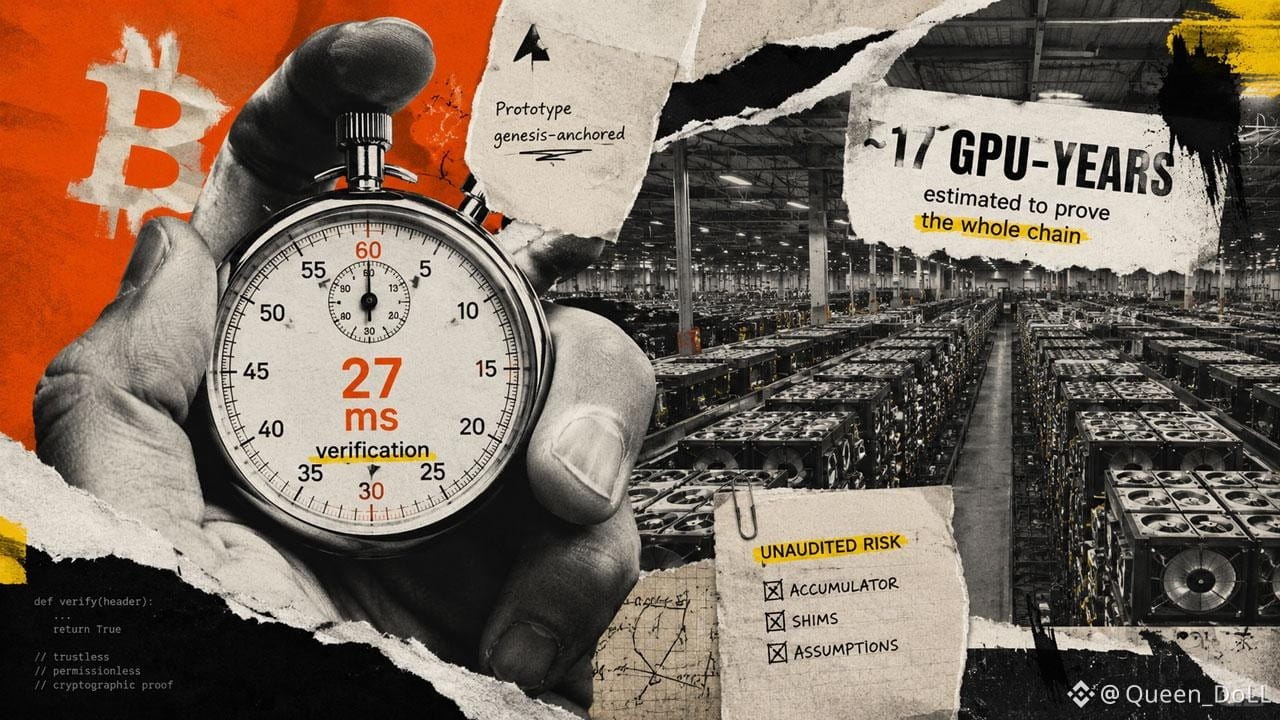
⚡ 27MS BITCOIN VALIDATION SOUNDS CRAZY — BUT THERE’S A CATCH
Hazync reportedly verified a proof covering 1,789 Bitcoin blocks in just 27 milliseconds.
That sounds almost instant.
But the heavy computation didn’t disappear — it was shifted upstream. A full genesis-to-tip backfill is estimated at roughly 17 GPU-years, and that work is still unfinished.
This is the part I find interesting.
In crypto, “fast verification” doesn’t always mean “cheap computation.”
Sometimes the real breakthrough is simply moving the expensive work to a place where verification can become almost instant.
Bitcoin may be slow to prove.
But it could become incredibly fast to verify. 👀
{future}(BTCUSDT)
#bitcoin #BTC #CryptoTech #Blockchain #Binance
⚡ 27MS BITCOIN VALIDATION SOUNDS CRAZY — BUT THERE’S A CATCH
Hazync reportedly verified a proof covering 1,789 Bitcoin blocks in just 27 milliseconds.
That sounds almost instant.
But the heavy computation didn’t disappear — it was shifted upstream. A full genesis-to-tip backfill is estimated at roughly 17 GPU-years, and that work is still unfinished.
This is the part I find interesting.
In crypto, “fast verification” doesn’t always mean “cheap computation.”
Sometimes the real breakthrough is simply moving the expensive work to a place where verification can become almost instant.
Bitcoin may be slow to prove.
But it could become incredibly fast to verify. 👀
#bitcoin #BTC #CryptoTech #Blockchain #Binance
Hazync reportedly verified a proof covering 1,789 Bitcoin blocks in just 27 milliseconds.
That sounds almost instant.
But the heavy computation didn’t disappear — it was shifted upstream. A full genesis-to-tip backfill is estimated at roughly 17 GPU-years, and that work is still unfinished.
This is the part I find interesting.
In crypto, “fast verification” doesn’t always mean “cheap computation.”
Sometimes the real breakthrough is simply moving the expensive work to a place where verification can become almost instant.
Bitcoin may be slow to prove.
But it could become incredibly fast to verify. 👀
#bitcoin #BTC #CryptoTech #Blockchain #Binance
1
43

·
--
ເບິ່ງການແປ
Why the ERC-x402 Standard Matters for AI 💳
Traditional payment rails can't handle millions of micro-transactions per second generated by AI agents.
That's why specialized token standards like x402 are revolutionary enabling seamless, ultra-low-cost micro-payments for autonomous AI networks.
#ERCx402 #TokenStandards #CryptoTech #AI .
Why the ERC-x402 Standard Matters for AI 💳
Traditional payment rails can't handle millions of micro-transactions per second generated by AI agents.
That's why specialized token standards like x402 are revolutionary enabling seamless, ultra-low-cost micro-payments for autonomous AI networks.
#ERCx402 #TokenStandards #CryptoTech #AI .
Traditional payment rails can't handle millions of micro-transactions per second generated by AI agents.
That's why specialized token standards like x402 are revolutionary enabling seamless, ultra-low-cost micro-payments for autonomous AI networks.
#ERCx402 #TokenStandards #CryptoTech #AI .
34

·
--

ບົດຄວາມ
ເບິ່ງການແປ
BitVM Innovation and Lightning Network Scale ⚡
The technical infrastructure of $BTC
{spot}(BTCUSDT)
is breaking new ground by merging complex smart contract capabilities with rapid layer-two transaction speeds. Historically, running complex computations directly on the base layer was impossible. Now, the introduction of BitVM changes this paradigm completely. 🛠️ This innovation allows developers to execute intricate Turing-complete smart contracts off-chain while verifying the cryptographic proofs directly on the secure network championed by @Bitcoinworld , without requiring a single hard fork. $BNB
{spot}(BNBUSDT)
Simultaneously, the physical routing capacity of the Lightning Network is reaching unprecedented efficiency. The constant setup of new enterprise Lightning nodes and payment channels ensures that global liquidity moves instantaneously. 📊 This growth drastically slashes transaction settlement times to milliseconds, turning the digital asset into a highly practical global medium of exchange for everyday merchant payments. $USDC
{spot}(USDCUSDT)
As BitVM unlocks decentralized computing and the Lightning infrastructure secures instant retail transactions, the ecosystem achieves complete technical versatility. 🌐
#ChinaSupremeCourtVirtualCurrencyRules #BitVM #lightningnetwork #CryptoTech #SmartContracts
BitVM Innovation and Lightning Network Scale
⚡
The technical infrastructure of $BTC
is breaking new ground by merging complex smart contract capabilities with rapid layer-two transaction speeds. Historically, running complex computations directly on the base layer was impossible. Now, the introduction of BitVM changes this paradigm completely. 🛠️ This innovation allows developers to execute intricate Turing-complete smart contracts off-chain while verifying the cryptographic proofs directly on the secure network championed by @Bitcoinworld , without requiring a single hard fork. $BNB
Simultaneously, the physical routing capacity of the Lightning Network is reaching unprecedented efficiency. The constant setup of new enterprise Lightning nodes and payment channels ensures that global liquidity moves instantaneously. 📊 This growth drastically slashes transaction settlement times to milliseconds, turning the digital asset into a highly practical global medium of exchange for everyday merchant payments. $USDC
As BitVM unlocks decentralized computing and the Lightning infrastructure secures instant retail transactions, the ecosystem achieves complete technical versatility. 🌐
#ChinaSupremeCourtVirtualCurrencyRules #BitVM #lightningnetwork #CryptoTech #SmartContracts
The technical infrastructure of $BTC
is breaking new ground by merging complex smart contract capabilities with rapid layer-two transaction speeds. Historically, running complex computations directly on the base layer was impossible. Now, the introduction of BitVM changes this paradigm completely. 🛠️ This innovation allows developers to execute intricate Turing-complete smart contracts off-chain while verifying the cryptographic proofs directly on the secure network championed by @Bitcoinworld , without requiring a single hard fork. $BNB
Simultaneously, the physical routing capacity of the Lightning Network is reaching unprecedented efficiency. The constant setup of new enterprise Lightning nodes and payment channels ensures that global liquidity moves instantaneously. 📊 This growth drastically slashes transaction settlement times to milliseconds, turning the digital asset into a highly practical global medium of exchange for everyday merchant payments. $USDC
As BitVM unlocks decentralized computing and the Lightning infrastructure secures instant retail transactions, the ecosystem achieves complete technical versatility. 🌐
#ChinaSupremeCourtVirtualCurrencyRules #BitVM #lightningnetwork #CryptoTech #SmartContracts
41

·
--
ເບິ່ງການແປ
🔥 **Unleashing Privacy and Scalability with Zero-Knowledge Proofs!** 🛡️
How ZK proofs are transforming the blockchain landscape:$
• Ensuring private transactions and verifiable computation without revealing data
• Solving Layer 1 scalability bottlenecks with ZK rollup technology $
• Expanding enterprise and decentralized application adoption securely
Share your insights on this cutting-edge cryptographic tech on Binance Square! 💡📉
#Binance #WriteToEarn #ZeroKnowledgeProofs #zkProofs #BlockchainPrivacy #CryptoTech
🔥 **Unleashing Privacy and Scalability with Zero-Knowledge Proofs!** 🛡️
How ZK proofs are transforming the blockchain landscape:$
• Ensuring private transactions and verifiable computation without revealing data
• Solving Layer 1 scalability bottlenecks with ZK rollup technology $
• Expanding enterprise and decentralized application adoption securely
Share your insights on this cutting-edge cryptographic tech on Binance Square! 💡📉
#Binance #WriteToEarn #ZeroKnowledgeProofs #zkProofs #BlockchainPrivacy #CryptoTech
How ZK proofs are transforming the blockchain landscape:$
• Ensuring private transactions and verifiable computation without revealing data
• Solving Layer 1 scalability bottlenecks with ZK rollup technology $
• Expanding enterprise and decentralized application adoption securely
Share your insights on this cutting-edge cryptographic tech on Binance Square! 💡📉
#Binance #WriteToEarn #ZeroKnowledgeProofs #zkProofs #BlockchainPrivacy #CryptoTech
1
117
·
--
ZK-Rollups: Isiphelo se-Blockchain Scaling 🎯
I-Optimistic rollups isebenze kahle kithi, kodwa i-ZK-Rollups isifikile esikhathini esifanele. Ubufakazi bokusebenza bokuvikeleka (cryptographic validity proofs) obusheshayo busho ukuthi abasebenzisi abayilindi isikhathi esiyizinsuku ezingu-7 ukuze bakhiphe imali.
#ZKRollups #Layer2Scaling #CryptoTech #ZeroKnowledge .
ZK-Rollups: Isiphelo se-Blockchain Scaling 🎯
I-Optimistic rollups isebenze kahle kithi, kodwa i-ZK-Rollups isifikile esikhathini esifanele. Ubufakazi bokusebenza bokuvikeleka (cryptographic validity proofs) obusheshayo busho ukuthi abasebenzisi abayilindi isikhathi esiyizinsuku ezingu-7 ukuze bakhiphe imali.
#ZKRollups #Layer2Scaling #CryptoTech #ZeroKnowledge .
I-Optimistic rollups isebenze kahle kithi, kodwa i-ZK-Rollups isifikile esikhathini esifanele. Ubufakazi bokusebenza bokuvikeleka (cryptographic validity proofs) obusheshayo busho ukuthi abasebenzisi abayilindi isikhathi esiyizinsuku ezingu-7 ukuze bakhiphe imali.
#ZKRollups #Layer2Scaling #CryptoTech #ZeroKnowledge .
155

·
--
ເບິ່ງການແປ
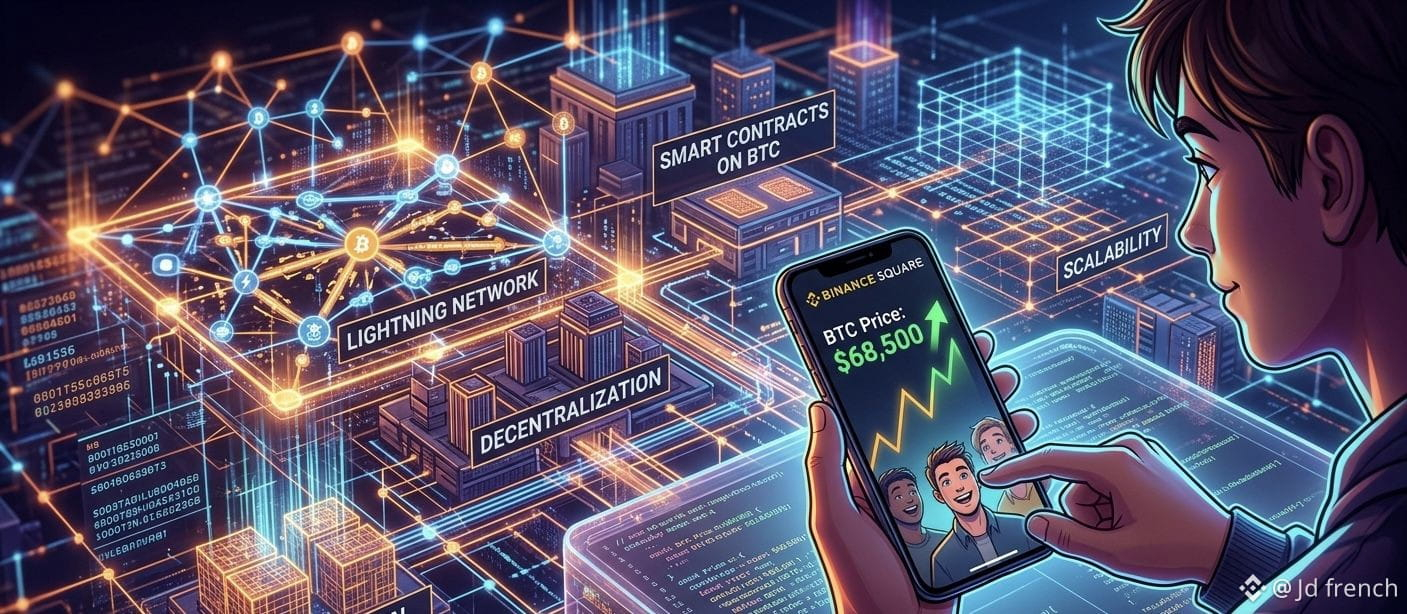
🚀 ¿$68,500 es el final o solo el principio? (Pista: Deja de mirar solo el gráfico)
Si estás viendo esto en tu teléfono mientras navegas por Binance Square, ¡felicidades por el precio actual! Pero la mayoría se está perdiendo la VERDADERA historia.
Mientras el mercado se centra en el FOMO del precio de $68k, la verdadera magia está sucediendo detrás de escena, en la infraestructura técnica.
Mucha gente solo ve la línea verde alcista. Pero lo que realmente impulsa el valor a largo plazo no es el precio de hoy, sino la tecnología de escalabilidad que se está construyendo.
Fíjate en lo que está en juego:
⚡️ La Lightning Network está escalando los pagos a una velocidad increíble.
📝 Se están construyendo Contratos Inteligentes directamente sobre Bitcoin.
🏗️ La Descentralización se mantiene inquebrantable en la base del código.
El precio de $68k es solo la punta del iceberg. El verdadero potencial está en la construcción técnica subyacente.
¿Cuál es la innovación técnica de Bitcoin que crees que tendrá el mayor impacto en la adopción masiva en los próximos 2 años? ¿DeFi en Bitcoin o pagos ultra rápidos por Lightning?
👇 ¡Dinos por qué estás aquí: el precio de hoy o la tecnología del mañana! 👇
#bitcoin #BinanceSquare #lightningnetwork #DeFiOnBTC #CryptoTech
🚀 ¿$68,500 es el final o solo el principio? (Pista: Deja de mirar solo el gráfico)
Si estás viendo esto en tu teléfono mientras navegas por Binance Square, ¡felicidades por el precio actual! Pero la mayoría se está perdiendo la VERDADERA historia.
Mientras el mercado se centra en el FOMO del precio de $68k, la verdadera magia está sucediendo detrás de escena, en la infraestructura técnica.
Mucha gente solo ve la línea verde alcista. Pero lo que realmente impulsa el valor a largo plazo no es el precio de hoy, sino la tecnología de escalabilidad que se está construyendo.
Fíjate en lo que está en juego:
⚡️ La Lightning Network está escalando los pagos a una velocidad increíble.
📝 Se están construyendo Contratos Inteligentes directamente sobre Bitcoin.
🏗️ La Descentralización se mantiene inquebrantable en la base del código.
El precio de $68k es solo la punta del iceberg. El verdadero potencial está en la construcción técnica subyacente.
¿Cuál es la innovación técnica de Bitcoin que crees que tendrá el mayor impacto en la adopción masiva en los próximos 2 años? ¿DeFi en Bitcoin o pagos ultra rápidos por Lightning?
👇 ¡Dinos por qué estás aquí: el precio de hoy o la tecnología del mañana! 👇
#bitcoin #BinanceSquare #lightningnetwork #DeFiOnBTC #CryptoTech
Si estás viendo esto en tu teléfono mientras navegas por Binance Square, ¡felicidades por el precio actual! Pero la mayoría se está perdiendo la VERDADERA historia.
Mientras el mercado se centra en el FOMO del precio de $68k, la verdadera magia está sucediendo detrás de escena, en la infraestructura técnica.
Mucha gente solo ve la línea verde alcista. Pero lo que realmente impulsa el valor a largo plazo no es el precio de hoy, sino la tecnología de escalabilidad que se está construyendo.
Fíjate en lo que está en juego:
⚡️ La Lightning Network está escalando los pagos a una velocidad increíble.
📝 Se están construyendo Contratos Inteligentes directamente sobre Bitcoin.
🏗️ La Descentralización se mantiene inquebrantable en la base del código.
El precio de $68k es solo la punta del iceberg. El verdadero potencial está en la construcción técnica subyacente.
¿Cuál es la innovación técnica de Bitcoin que crees que tendrá el mayor impacto en la adopción masiva en los próximos 2 años? ¿DeFi en Bitcoin o pagos ultra rápidos por Lightning?
👇 ¡Dinos por qué estás aquí: el precio de hoy o la tecnología del mañana! 👇
#bitcoin #BinanceSquare #lightningnetwork #DeFiOnBTC #CryptoTech
91

ເບິ່ງການແປ
Solana just activated its speed upgrade on testnet. Slot times dropped from 400ms to 350ms with three more cuts planned toward 200ms. For context Ethereum processes a block every 12 seconds.
Let those numbers sit together for a moment.
Ethereum: 12,000 milliseconds per slot.
Solana target: 200 milliseconds per slot.
That is 60 times faster. Not incrementally faster. Not marginally faster.
60 times.
The gap between what Solana is building toward and where Ethereum currently operates is not a technical nuance. It is a different category of blockchain entirely.
Speed in blockchain is not just about transactions per second. It is about what becomes possible when latency approaches real-time.
High frequency trading on-chain. Real-time settlement for institutional finance. Gaming and consumer applications that require instant feedback. Payment infrastructure that competes with Visa and Mastercard on user experience rather than just ideology.
None of that is fully possible at 12 second block times. All of it becomes viable at 200 milliseconds.
The race to build the financial infrastructure of the future is not just about regulation. The Clarity Act can pass tomorrow and the technical limitations of current blockchains still determine what gets built on them.
Solana just announced it is removing one of the most significant technical limitations in the space.
Ethereum has its own roadmap. Its own scaling solutions. Its own institutional backing from the SEC 5 year plan and the Clarity Act infrastructure.
But while Ethereum is working toward scale through layers, Solana is going directly at the base layer speed problem.
200 milliseconds versus 12 seconds.
The fastest blockchain wins the applications that require speed.
And Solana just got significantly faster.
#Solana #SOL #Ethereum #Blockchain #CryptoTech
Solana just activated its speed upgrade on testnet. Slot times dropped from 400ms to 350ms with three more cuts planned toward 200ms. For context Ethereum processes a block every 12 seconds.
Let those numbers sit together for a moment.
Ethereum: 12,000 milliseconds per slot.
Solana target: 200 milliseconds per slot.
That is 60 times faster. Not incrementally faster. Not marginally faster.
60 times.
The gap between what Solana is building toward and where Ethereum currently operates is not a technical nuance. It is a different category of blockchain entirely.
Speed in blockchain is not just about transactions per second. It is about what becomes possible when latency approaches real-time.
High frequency trading on-chain. Real-time settlement for institutional finance. Gaming and consumer applications that require instant feedback. Payment infrastructure that competes with Visa and Mastercard on user experience rather than just ideology.
None of that is fully possible at 12 second block times. All of it becomes viable at 200 milliseconds.
The race to build the financial infrastructure of the future is not just about regulation. The Clarity Act can pass tomorrow and the technical limitations of current blockchains still determine what gets built on them.
Solana just announced it is removing one of the most significant technical limitations in the space.
Ethereum has its own roadmap. Its own scaling solutions. Its own institutional backing from the SEC 5 year plan and the Clarity Act infrastructure.
But while Ethereum is working toward scale through layers, Solana is going directly at the base layer speed problem.
200 milliseconds versus 12 seconds.
The fastest blockchain wins the applications that require speed.
And Solana just got significantly faster.
#Solana #SOL #Ethereum #Blockchain #CryptoTech
Let those numbers sit together for a moment.
Ethereum: 12,000 milliseconds per slot.
Solana target: 200 milliseconds per slot.
That is 60 times faster. Not incrementally faster. Not marginally faster.
60 times.
The gap between what Solana is building toward and where Ethereum currently operates is not a technical nuance. It is a different category of blockchain entirely.
Speed in blockchain is not just about transactions per second. It is about what becomes possible when latency approaches real-time.
High frequency trading on-chain. Real-time settlement for institutional finance. Gaming and consumer applications that require instant feedback. Payment infrastructure that competes with Visa and Mastercard on user experience rather than just ideology.
None of that is fully possible at 12 second block times. All of it becomes viable at 200 milliseconds.
The race to build the financial infrastructure of the future is not just about regulation. The Clarity Act can pass tomorrow and the technical limitations of current blockchains still determine what gets built on them.
Solana just announced it is removing one of the most significant technical limitations in the space.
Ethereum has its own roadmap. Its own scaling solutions. Its own institutional backing from the SEC 5 year plan and the Clarity Act infrastructure.
But while Ethereum is working toward scale through layers, Solana is going directly at the base layer speed problem.
200 milliseconds versus 12 seconds.
The fastest blockchain wins the applications that require speed.
And Solana just got significantly faster.
#Solana #SOL #Ethereum #Blockchain #CryptoTech

1
11

·
--
څنګه کولی شي پراختیا ورکوونکي د Web3 راتلونکي کې مرسته وکړي؟
د پوسټ متن:
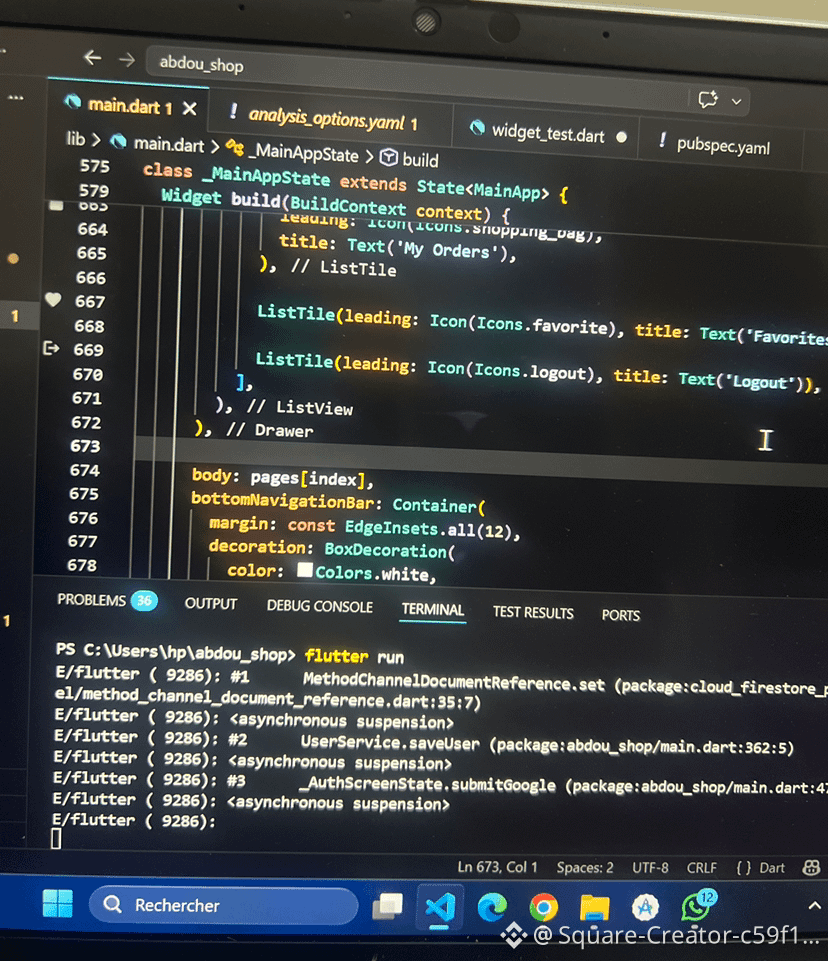
"د اپلیکیشنونو د پراختیا ورکوونکي په توګه، زه ګورم چې د ډیجیټل اسعارو نړۍ یوازې تجارت نه دی، بلکې د تخنیکي نوښت لپاره حاصلخیزه ځمکه ده. له $BTC څخه د $BNB په شبکه کې نوښتونو پورې، فرصتونه بې شمېره دي.
اوس مهال، زه د هغو وسیلو په جوړولو کې د 'عقلاني ډیزاین' (Rational Design) فلسفه مدغم کوم چې زه یې د والټونو د تعقیب لپاره رامنځته کوم، څو مالي معلومات د کاروونکي لپاره لا روښانه او لا اسانه شي.
زموږ د پراختیا ورکوونکو او پانګوالو لپاره پوښتنه: په تجارت نړۍ کې کوم تخنیکي خلا ته د حل د لید هیله لرئ؟ خپل نظرونه په تبصرو کې له موږ سره شریک کړئ! 👇
#BinanceSquare #BuildInPublic #CryptoTech #Flutterwave
څنګه کولی شي پراختیا ورکوونکي د Web3 راتلونکي کې مرسته وکړي؟
د پوسټ متن:
"د اپلیکیشنونو د پراختیا ورکوونکي په توګه، زه ګورم چې د ډیجیټل اسعارو نړۍ یوازې تجارت نه دی، بلکې د تخنیکي نوښت لپاره حاصلخیزه ځمکه ده. له $BTC څخه د $BNB په شبکه کې نوښتونو پورې، فرصتونه بې شمېره دي.
اوس مهال، زه د هغو وسیلو په جوړولو کې د 'عقلاني ډیزاین' (Rational Design) فلسفه مدغم کوم چې زه یې د والټونو د تعقیب لپاره رامنځته کوم، څو مالي معلومات د کاروونکي لپاره لا روښانه او لا اسانه شي.
زموږ د پراختیا ورکوونکو او پانګوالو لپاره پوښتنه: په تجارت نړۍ کې کوم تخنیکي خلا ته د حل د لید هیله لرئ؟ خپل نظرونه په تبصرو کې له موږ سره شریک کړئ! 👇
#BinanceSquare #BuildInPublic #CryptoTech #Flutterwave
د پوسټ متن:
"د اپلیکیشنونو د پراختیا ورکوونکي په توګه، زه ګورم چې د ډیجیټل اسعارو نړۍ یوازې تجارت نه دی، بلکې د تخنیکي نوښت لپاره حاصلخیزه ځمکه ده. له $BTC څخه د $BNB په شبکه کې نوښتونو پورې، فرصتونه بې شمېره دي.
اوس مهال، زه د هغو وسیلو په جوړولو کې د 'عقلاني ډیزاین' (Rational Design) فلسفه مدغم کوم چې زه یې د والټونو د تعقیب لپاره رامنځته کوم، څو مالي معلومات د کاروونکي لپاره لا روښانه او لا اسانه شي.
زموږ د پراختیا ورکوونکو او پانګوالو لپاره پوښتنه: په تجارت نړۍ کې کوم تخنیکي خلا ته د حل د لید هیله لرئ؟ خپل نظرونه په تبصرو کې له موږ سره شریک کړئ! 👇
#BinanceSquare #BuildInPublic #CryptoTech #Flutterwave
1
101

ເບິ່ງການແປ
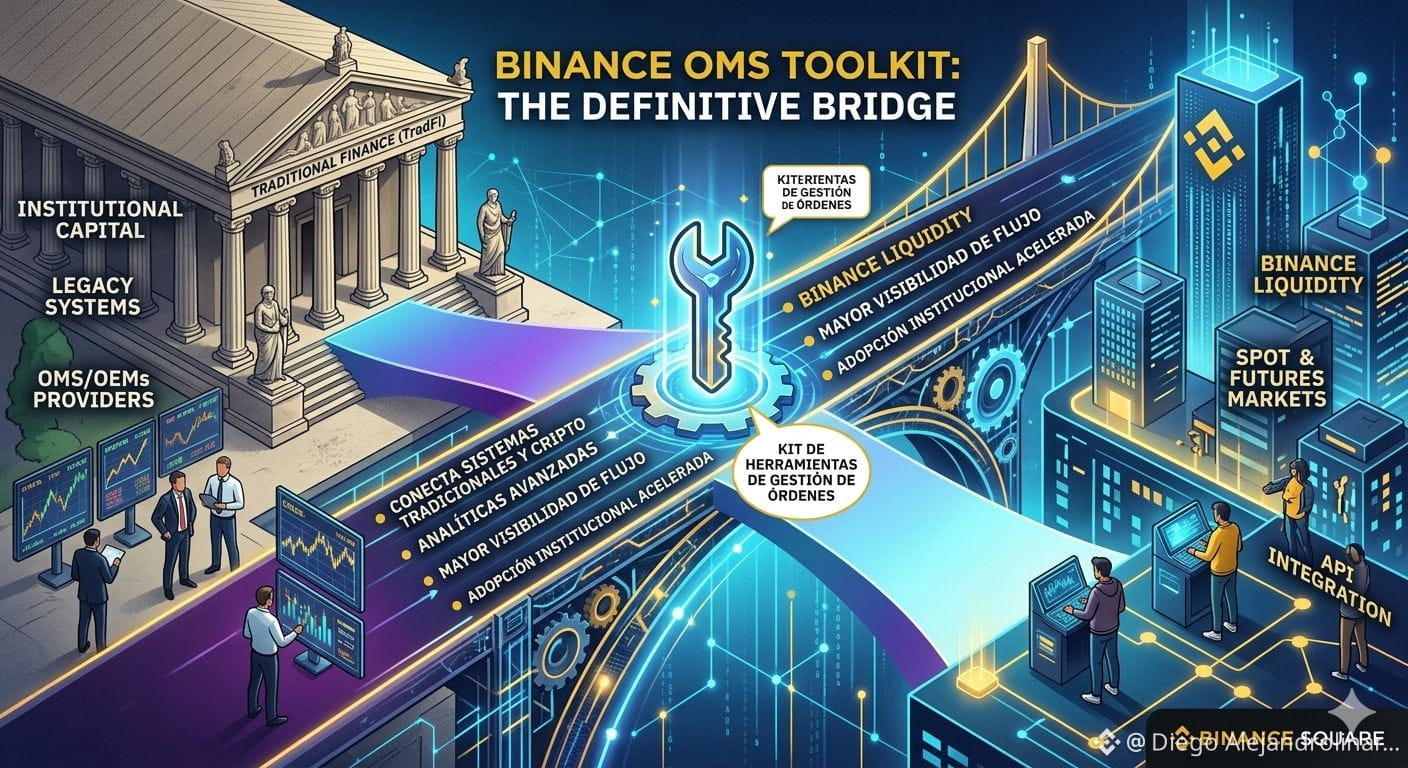
🛠️ ¡Binance lanza "OMS Toolkit"! El puente definitivo entre TradFi y Crypto
¡Atentos, traders y desarrolladores! 🚨 Binance acaba de dar un golpe sobre la mesa en el sector institucional hoy, 25 de mayo.
La plataforma ha presentado oficialmente el Binance OMS Toolkit, la primera solución de intercambio institucional diseñada específicamente para Sistemas de Gestión de Órdenes (OMS y OEMS) y proveedores de tecnología de trading.
¿Por qué esto nos importa a todos?
Este kit de herramientas permite a las grandes plataformas financieras y fondos de inversión (tanto del ecosistema cripto como de las finanzas tradicionales o TradFi) conectarse directamente a la liquidez de Binance con analíticas de nivel empresarial.
Características clave:
Mayor visibilidad: Análisis precisos sobre el flujo de órdenes y la actividad operativa.
Integración simplificada: Expande lo que ya hacía el sistema de seguimiento de API "Link and Trade".
Adopción masiva: Atrae a más capital institucional al ecosistema, lo que a largo plazo se traduce en mayor volumen y estabilidad para los mercados de Spot y Futuros.
Paso a paso, la infraestructura cripto se vuelve más madura y atractiva para los grandes capitales del mundo.
👇 ¿Cómo ven el ecosistema institucional para este año? ¿Creen que este flujo de herramientas acelere la adopción?
#Binance #Trading #TradFi #Institutional #CryptoTech
🛠️ ¡Binance lanza "OMS Toolkit"! El puente definitivo entre TradFi y Crypto
¡Atentos, traders y desarrolladores! 🚨 Binance acaba de dar un golpe sobre la mesa en el sector institucional hoy, 25 de mayo.
La plataforma ha presentado oficialmente el Binance OMS Toolkit, la primera solución de intercambio institucional diseñada específicamente para Sistemas de Gestión de Órdenes (OMS y OEMS) y proveedores de tecnología de trading.
¿Por qué esto nos importa a todos?
Este kit de herramientas permite a las grandes plataformas financieras y fondos de inversión (tanto del ecosistema cripto como de las finanzas tradicionales o TradFi) conectarse directamente a la liquidez de Binance con analíticas de nivel empresarial.
Características clave:
Mayor visibilidad: Análisis precisos sobre el flujo de órdenes y la actividad operativa.
Integración simplificada: Expande lo que ya hacía el sistema de seguimiento de API "Link and Trade".
Adopción masiva: Atrae a más capital institucional al ecosistema, lo que a largo plazo se traduce en mayor volumen y estabilidad para los mercados de Spot y Futuros.
Paso a paso, la infraestructura cripto se vuelve más madura y atractiva para los grandes capitales del mundo.
👇 ¿Cómo ven el ecosistema institucional para este año? ¿Creen que este flujo de herramientas acelere la adopción?
#Binance #Trading #TradFi #Institutional #CryptoTech
¡Atentos, traders y desarrolladores! 🚨 Binance acaba de dar un golpe sobre la mesa en el sector institucional hoy, 25 de mayo.
La plataforma ha presentado oficialmente el Binance OMS Toolkit, la primera solución de intercambio institucional diseñada específicamente para Sistemas de Gestión de Órdenes (OMS y OEMS) y proveedores de tecnología de trading.
¿Por qué esto nos importa a todos?
Este kit de herramientas permite a las grandes plataformas financieras y fondos de inversión (tanto del ecosistema cripto como de las finanzas tradicionales o TradFi) conectarse directamente a la liquidez de Binance con analíticas de nivel empresarial.
Características clave:
Mayor visibilidad: Análisis precisos sobre el flujo de órdenes y la actividad operativa.
Integración simplificada: Expande lo que ya hacía el sistema de seguimiento de API "Link and Trade".
Adopción masiva: Atrae a más capital institucional al ecosistema, lo que a largo plazo se traduce en mayor volumen y estabilidad para los mercados de Spot y Futuros.
Paso a paso, la infraestructura cripto se vuelve más madura y atractiva para los grandes capitales del mundo.
👇 ¿Cómo ven el ecosistema institucional para este año? ¿Creen que este flujo de herramientas acelere la adopción?
#Binance #Trading #TradFi #Institutional #CryptoTech
211

ເບິ່ງການແປ
#newt $NEWT @NewtonProtocol
The Future of Onchain Automation is Here with Newton Protocol! 🚀
Are you tired of manually managing your DeFi positions, rebalancing portfolios, or worrying about execution risks? It’s time to move beyond simple "bots" and embrace the power of Newton Protocol.
Newton is building the decentralized infrastructure layer for verifiable onchain automation. By combining Trusted Execution Environments (TEEs) and Zero-Knowledge Proofs (ZKPs), it allows users and DAOs to execute complex, AI-driven financial strategies with cryptographic guarantees.
Whether it's automated risk management, compliant cross-chain transactions, or autonomous agents acting on your behalf, Newton ensures every action is secure, transparent, and fully verifiable. No more blind trust—just programmable, self-operating finance.
The $NEWT token powers this ecosystem, providing security, gas for automation, and governance for the future of decentralized policy.
Ready to level up your crypto automation? Explore the next generation of trustless finance! 🌐
#NEWT #DeFi #Web3 AI Automation Blockchai #CryptoTech
$NVDAB
{spot}(NVDABUSDT)
#newt $NEWT @NewtonProtocol
The Future of Onchain Automation is Here with Newton Protocol! 🚀
Are you tired of manually managing your DeFi positions, rebalancing portfolios, or worrying about execution risks? It’s time to move beyond simple "bots" and embrace the power of Newton Protocol.
Newton is building the decentralized infrastructure layer for verifiable onchain automation. By combining Trusted Execution Environments (TEEs) and Zero-Knowledge Proofs (ZKPs), it allows users and DAOs to execute complex, AI-driven financial strategies with cryptographic guarantees.
Whether it's automated risk management, compliant cross-chain transactions, or autonomous agents acting on your behalf, Newton ensures every action is secure, transparent, and fully verifiable. No more blind trust—just programmable, self-operating finance.
The $NEWT token powers this ecosystem, providing security, gas for automation, and governance for the future of decentralized policy.
Ready to level up your crypto automation? Explore the next generation of trustless finance! 🌐
#NEWT #DeFi #Web3 AI Automation Blockchai #CryptoTech
$NVDAB
The Future of Onchain Automation is Here with Newton Protocol! 🚀
Are you tired of manually managing your DeFi positions, rebalancing portfolios, or worrying about execution risks? It’s time to move beyond simple "bots" and embrace the power of Newton Protocol.
Newton is building the decentralized infrastructure layer for verifiable onchain automation. By combining Trusted Execution Environments (TEEs) and Zero-Knowledge Proofs (ZKPs), it allows users and DAOs to execute complex, AI-driven financial strategies with cryptographic guarantees.
Whether it's automated risk management, compliant cross-chain transactions, or autonomous agents acting on your behalf, Newton ensures every action is secure, transparent, and fully verifiable. No more blind trust—just programmable, self-operating finance.
The $NEWT token powers this ecosystem, providing security, gas for automation, and governance for the future of decentralized policy.
Ready to level up your crypto automation? Explore the next generation of trustless finance! 🌐
#NEWT #DeFi #Web3 AI Automation Blockchai #CryptoTech
$NVDAB
78

·
--
ເບິ່ງການແປ
Gas fees are the tax nobody voted for but everybody pays. Layer 2s exist because someone got tired of paying it too. #CryptoTech
Gas fees are the tax nobody voted for but everybody pays. Layer 2s exist because someone got tired of paying it too. #CryptoTech

ເບິ່ງການແປ
$MARSCOIN
بيع على المكشوف
شبكات الأوراكل و Chainlink:
لا يمكن لقطاع التمويل اللامركزي العمل بدون البيانات الدقيقة التي توفرها $LINK. القيمة الحقيقية للعملة تكمن في بنيتها التحتية. #Chainlink #DeFi #CryptoTech
$MARSCOIN
بيع على المكشوف
شبكات الأوراكل و Chainlink:
لا يمكن لقطاع التمويل اللامركزي العمل بدون البيانات الدقيقة التي توفرها $LINK. القيمة الحقيقية للعملة تكمن في بنيتها التحتية. #Chainlink #DeFi #CryptoTech
بيع على المكشوف
شبكات الأوراكل و Chainlink:
لا يمكن لقطاع التمويل اللامركزي العمل بدون البيانات الدقيقة التي توفرها $LINK. القيمة الحقيقية للعملة تكمن في بنيتها التحتية. #Chainlink #DeFi #CryptoTech
101
🚨 TAILSCALE IBHENKULA I-TAILCAT NJENGENGQABO YENHLANGANO YE-AD-HOC P2P OKWANDISA UMBONAKALISO WE-$TAO AI WOMSEBENZI WE-AI! ⚡
Izingqimba zengqalasizinda zihamba buthule zibeka isisekelo se-meta entsha ezimele ye-AI. I-Tailscale isanda kuvulela umphakathi iTailcat, ivumela uxhumano lwe-P2P oluqondile, olubethelwe nge-WireGuard phakathi kwamadivayisi ngaphandle kokusetha ama-akhawunti noma izinhlelo zokulawula. ⚡
Kwakuthiwa kuhlalwa ngonyaka ka-2023, uBrad Fitzpatrick wavuselela le nqubo ngokukhethekile ngoba ama-Agent e-AI azimele adinga izixhumanisi ezisheshayo ze-ad-hoc ezixhumanisa amabhakede esandbox, ama-VM akude, nezesekeli ze-edge. 💡 Ukulandelela imali okuhlakaniphile kubheka ukuthi izinsiza zohlelo lomthuthukisi zivalwa kuphi kuqala ngaphambi kokuba intengo (price) iqale ukushisa. 🔍
💬 Ingabe ukuxhumana okungenazihibe phakathi kwe-agent ne-umshini kuzoba yisibasa esidala igagasi elilandelayo le-DePIN nokulinganiswa kwamanethiwekhi e-AI? 👇
⚠️ Akusona iseluleko sezezimali. Hlala uphathe ubungozi bakho. 🛡️
🏷️ #TAO #AIAgents #DePIN #CryptoTech
🔥 ⚡
🚨 TAILSCALE IBHENKULA I-TAILCAT NJENGENGQABO YENHLANGANO YE-AD-HOC P2P OKWANDISA UMBONAKALISO WE-$TAO AI WOMSEBENZI WE-AI! ⚡
Izingqimba zengqalasizinda zihamba buthule zibeka isisekelo se-meta entsha ezimele ye-AI. I-Tailscale isanda kuvulela umphakathi iTailcat, ivumela uxhumano lwe-P2P oluqondile, olubethelwe nge-WireGuard phakathi kwamadivayisi ngaphandle kokusetha ama-akhawunti noma izinhlelo zokulawula. ⚡
Kwakuthiwa kuhlalwa ngonyaka ka-2023, uBrad Fitzpatrick wavuselela le nqubo ngokukhethekile ngoba ama-Agent e-AI azimele adinga izixhumanisi ezisheshayo ze-ad-hoc ezixhumanisa amabhakede esandbox, ama-VM akude, nezesekeli ze-edge. 💡 Ukulandelela imali okuhlakaniphile kubheka ukuthi izinsiza zohlelo lomthuthukisi zivalwa kuphi kuqala ngaphambi kokuba intengo (price) iqale ukushisa. 🔍
💬 Ingabe ukuxhumana okungenazihibe phakathi kwe-agent ne-umshini kuzoba yisibasa esidala igagasi elilandelayo le-DePIN nokulinganiswa kwamanethiwekhi e-AI? 👇
⚠️ Akusona iseluleko sezezimali. Hlala uphathe ubungozi bakho. 🛡️
🏷️ #TAO #AIAgents #DePIN #CryptoTech
🔥 ⚡
Izingqimba zengqalasizinda zihamba buthule zibeka isisekelo se-meta entsha ezimele ye-AI. I-Tailscale isanda kuvulela umphakathi iTailcat, ivumela uxhumano lwe-P2P oluqondile, olubethelwe nge-WireGuard phakathi kwamadivayisi ngaphandle kokusetha ama-akhawunti noma izinhlelo zokulawula. ⚡
Kwakuthiwa kuhlalwa ngonyaka ka-2023, uBrad Fitzpatrick wavuselela le nqubo ngokukhethekile ngoba ama-Agent e-AI azimele adinga izixhumanisi ezisheshayo ze-ad-hoc ezixhumanisa amabhakede esandbox, ama-VM akude, nezesekeli ze-edge. 💡 Ukulandelela imali okuhlakaniphile kubheka ukuthi izinsiza zohlelo lomthuthukisi zivalwa kuphi kuqala ngaphambi kokuba intengo (price) iqale ukushisa. 🔍
💬 Ingabe ukuxhumana okungenazihibe phakathi kwe-agent ne-umshini kuzoba yisibasa esidala igagasi elilandelayo le-DePIN nokulinganiswa kwamanethiwekhi e-AI? 👇
⚠️ Akusona iseluleko sezezimali. Hlala uphathe ubungozi bakho. 🛡️
🏷️ #TAO #AIAgents #DePIN #CryptoTech
🔥 ⚡
66
·
--
ບົດຄວາມ
⚡ Gemini 3.5 Flash Google: Imọ̀-ìmọ̀ Awárí Iwaju ní Iyara Flash Ati Iṣúná Tẹ̀lẹ̀ Nṣiṣẹ́ Pẹ̀lú Rẹ̀#GoogleLaunchesGemini3.5Flash
Google ṣe ifilọlẹ Gemini 3.5 Flash ni ọjọ́ 19 Oṣù Karun ọjọ́ 2026 ni Google I/O, n ṣàpèjúwe rẹ̀ gẹ́gẹ́ bí awoṣe alágbára jù lọ ti ilé-iṣẹ naa fún ìkọ̀wé kóòdù àti AI onínọmbà aládàáṣiṣẹ́ tí ó lè ṣàkóso lọ́nà ti ara rẹ̀ nípa ìṣiṣẹ́ ominira ti àwọn pipeline ìkọ̀wé kóòdù, ṣàkóso àwọn iṣẹ́ àwádìí, àti nínú àwọn ìdánwò inú, lílòó dá OS kan sílẹ̀ pátápátá láti ìbẹ̀rẹ̀.
Àwọn àkọsílẹ̀ ìṣàwárí (benchmark) yàtọ̀ síra gan. Gemini 3.5 Flash kọjá Gemini 3.1 Pro lori Terminal Bench 2.1 (76.2%), MCP Atlas (83.6%), àti GDPval AA (1,656 Elo), nígbà tí ó ń ṣiṣẹ́ fẹrẹ̀ẹ́ tó 4x sánra kíákíá àti ó ń ná owó díẹ̀ nípa bíbọ́wọ́ API ní ayéga $1.50 fún million input tokens àti $9.00 fún million output tokens.
⚡ Gemini 3.5 Flash Google: Imọ̀-ìmọ̀ Awárí Iwaju ní Iyara Flash Ati Iṣúná Tẹ̀lẹ̀ Nṣiṣẹ́ Pẹ̀lú Rẹ̀
#GoogleLaunchesGemini3.5Flash
Google ṣe ifilọlẹ Gemini 3.5 Flash ni ọjọ́ 19 Oṣù Karun ọjọ́ 2026 ni Google I/O, n ṣàpèjúwe rẹ̀ gẹ́gẹ́ bí awoṣe alágbára jù lọ ti ilé-iṣẹ naa fún ìkọ̀wé kóòdù àti AI onínọmbà aládàáṣiṣẹ́ tí ó lè ṣàkóso lọ́nà ti ara rẹ̀ nípa ìṣiṣẹ́ ominira ti àwọn pipeline ìkọ̀wé kóòdù, ṣàkóso àwọn iṣẹ́ àwádìí, àti nínú àwọn ìdánwò inú, lílòó dá OS kan sílẹ̀ pátápátá láti ìbẹ̀rẹ̀.
Àwọn àkọsílẹ̀ ìṣàwárí (benchmark) yàtọ̀ síra gan. Gemini 3.5 Flash kọjá Gemini 3.1 Pro lori Terminal Bench 2.1 (76.2%), MCP Atlas (83.6%), àti GDPval AA (1,656 Elo), nígbà tí ó ń ṣiṣẹ́ fẹrẹ̀ẹ́ tó 4x sánra kíákíá àti ó ń ná owó díẹ̀ nípa bíbọ́wọ́ API ní ayéga $1.50 fún million input tokens àti $9.00 fún million output tokens.
Google ṣe ifilọlẹ Gemini 3.5 Flash ni ọjọ́ 19 Oṣù Karun ọjọ́ 2026 ni Google I/O, n ṣàpèjúwe rẹ̀ gẹ́gẹ́ bí awoṣe alágbára jù lọ ti ilé-iṣẹ naa fún ìkọ̀wé kóòdù àti AI onínọmbà aládàáṣiṣẹ́ tí ó lè ṣàkóso lọ́nà ti ara rẹ̀ nípa ìṣiṣẹ́ ominira ti àwọn pipeline ìkọ̀wé kóòdù, ṣàkóso àwọn iṣẹ́ àwádìí, àti nínú àwọn ìdánwò inú, lílòó dá OS kan sílẹ̀ pátápátá láti ìbẹ̀rẹ̀.
Àwọn àkọsílẹ̀ ìṣàwárí (benchmark) yàtọ̀ síra gan. Gemini 3.5 Flash kọjá Gemini 3.1 Pro lori Terminal Bench 2.1 (76.2%), MCP Atlas (83.6%), àti GDPval AA (1,656 Elo), nígbà tí ó ń ṣiṣẹ́ fẹrẹ̀ẹ́ tó 4x sánra kíákíá àti ó ń ná owó díẹ̀ nípa bíbọ́wọ́ API ní ayéga $1.50 fún million input tokens àti $9.00 fún million output tokens.
1
2
202

·
--
ບົດຄວາມ
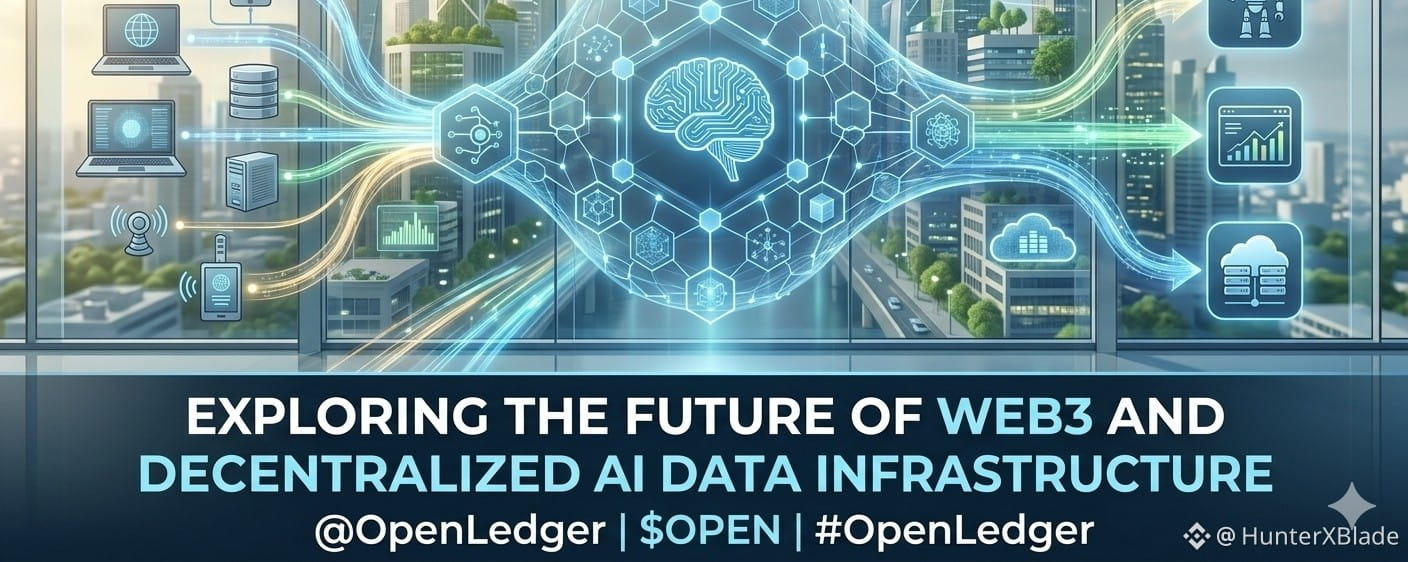
Ukuhlola Ikamva leWeb3 kunye neSiseko seDatha esiZimeleyo se-AIUgunzima yokudala okutsha kuhlala kwakhiwa phezu kwesiseko esivikelekileyo, esicacileyo, nesingelolawulo. Njengoko ihlabathi lisondela kubuchwephesha bobukrelekrele bokwenziwa, imfuno yesiseko sedatha esithembekileyo ayizange ibaluleke ngolu hlobo. Yiloo nto kanye @Openledger r eyibonisa ngayo ukuba ngumdlalo otshintsha ngokupheleleyo kwindawo yeWeb3.
Ngokubonelela ngomqolo osebenzayo kakhulu nongomeleleyo kwizinkqubo zedatha eziqhutywa yi-AI, @undefined @Openledger
iqinisekisa ubukhosi bedatha kunye nokunyuka okungenaqeleyo (seamless) kwesakhono sothungelwano. Batyhlela umsantsa phakathi kwamandla edatha ekrwada kunye nokusebenza kakuhle kwe-blockchain, bevumela abaphuhlisi nabadali ukuba bakhe ngaphandle kwemida.
Ukuhlola Ikamva leWeb3 kunye neSiseko seDatha esiZimeleyo se-AI
Ugunzima yokudala okutsha kuhlala kwakhiwa phezu kwesiseko esivikelekileyo, esicacileyo, nesingelolawulo. Njengoko ihlabathi lisondela kubuchwephesha bobukrelekrele bokwenziwa, imfuno yesiseko sedatha esithembekileyo ayizange ibaluleke ngolu hlobo. Yiloo nto kanye @OpenLedger r eyibonisa ngayo ukuba ngumdlalo otshintsha ngokupheleleyo kwindawo yeWeb3.
Ngokubonelela ngomqolo osebenzayo kakhulu nongomeleleyo kwizinkqubo zedatha eziqhutywa yi-AI, @undefined @OpenLedger
iqinisekisa ubukhosi bedatha kunye nokunyuka okungenaqeleyo (seamless) kwesakhono sothungelwano. Batyhlela umsantsa phakathi kwamandla edatha ekrwada kunye nokusebenza kakuhle kwe-blockchain, bevumela abaphuhlisi nabadali ukuba bakhe ngaphandle kwemida.
Ngokubonelela ngomqolo osebenzayo kakhulu nongomeleleyo kwizinkqubo zedatha eziqhutywa yi-AI, @undefined @OpenLedger
iqinisekisa ubukhosi bedatha kunye nokunyuka okungenaqeleyo (seamless) kwesakhono sothungelwano. Batyhlela umsantsa phakathi kwamandla edatha ekrwada kunye nokusebenza kakuhle kwe-blockchain, bevumela abaphuhlisi nabadali ukuba bakhe ngaphandle kwemida.
30
ເບິ່ງການແປ
#baby $BABY
Most people look at yield, but real traders look at the underlying mechanics.
What @BabylonLabs_io ($BABY) is building with native BTC staking fundamentally changes risk management in Web3. By locking Bitcoin in Trustless Vaults (TBV) directly on-chain, users earn staking rewards without giving up control of their keys or relying on risky third-party bridges.
It turns passive BTC into active security for Proof-of-Stake systems while maintaining pure self-custody.
In a market full of hyped tokens, structural utility is what actually survives long term.
Are you favoring raw self-custody protocols now, or still using traditional bridges? Let's discuss!
#baby #BTCStaking #SelfCustody #DeFiSecurity #CryptoTech $BTC #baby
#baby $BABY
Most people look at yield, but real traders look at the underlying mechanics.
What @BabylonLabs_io ($BABY ) is building with native BTC staking fundamentally changes risk management in Web3. By locking Bitcoin in Trustless Vaults (TBV) directly on-chain, users earn staking rewards without giving up control of their keys or relying on risky third-party bridges.
It turns passive BTC into active security for Proof-of-Stake systems while maintaining pure self-custody.
In a market full of hyped tokens, structural utility is what actually survives long term.
Are you favoring raw self-custody protocols now, or still using traditional bridges? Let's discuss!
#baby #BTCStaking #SelfCustody #DeFiSecurity #CryptoTech $BTC #baby
Most people look at yield, but real traders look at the underlying mechanics.
What @BabylonLabs_io ($BABY ) is building with native BTC staking fundamentally changes risk management in Web3. By locking Bitcoin in Trustless Vaults (TBV) directly on-chain, users earn staking rewards without giving up control of their keys or relying on risky third-party bridges.
It turns passive BTC into active security for Proof-of-Stake systems while maintaining pure self-custody.
In a market full of hyped tokens, structural utility is what actually survives long term.
Are you favoring raw self-custody protocols now, or still using traditional bridges? Let's discuss!
#baby #BTCStaking #SelfCustody #DeFiSecurity #CryptoTech $BTC #baby

91
ເຂົ້າສູ່ລະບົບເພື່ອສຳຫຼວດເນື້ອຫາເພີ່ມເຕີມ
ເຂົ້າຮ່ວມກຸ່ມຜູ້ໃຊ້ຄຣິບໂຕທົ່ວໂລກໃນ Binance Square.
⚡️ ໄດ້ຮັບຂໍ້ມູນຫຼ້າສຸດ ແລະ ທີ່ມີປະໂຫຍດກ່ຽວກັບຄຣິບໂຕ.
💬 ໄດ້ຮັບຄວາມໄວ້ວາງໃຈຈາກຕະຫຼາດແລກປ່ຽນຄຣິບໂຕທີ່ໃຫຍ່ທີ່ສຸດໃນໂລກ.
👍 ຄົ້ນຫາຂໍ້ມູນເຊີງເລິກທີ່ແທ້ຈາກນັກສ້າງທີ່ໄດ້ຮັບການຢືນຢັນ.
ອີເມວ / ເບີໂທລະສັບ
ຫົວຂໍ້ທີ່ກໍາລັງນິຍົມ
1
#USAugustPPIRisesLessThanExpected
35,078 views
663 ກຳລັງສົນທະນາ
2
#SECApprovesNasdaqTexasCommodityTrustRule
21,449 views
496 ກຳລັງສົນທະນາ
3
#ECBRaisesRatesSecondTimeTo2.5%
18,634 views
367 ກຳລັງສົນທະນາ
4
#USContinuingJoblessClaims1.774M
25,728 views
464 ກຳລັງສົນທະນາ
5
#USAugustPPIYoYRisesTo5.4%
25,666 views
356 ກຳລັງສົນທະນາ
6
#AppleDebutsFoldablePhone
100,326 views
1,483 ກຳລັງສົນທະນາ
7
#TSMCAugustRevenueUp53.3%YoY
24,647 views
539 ກຳລັງສົນທະນາ
8
#IranSaysReadyToEscalateWarWithUS
35,850 views
531 ກຳລັງສົນທະນາ
9
#EUExtendsCentralContactPointToCASPs
30,647 views
542 ກຳລັງສົນທະນາ
10
#US10YTreasuryYieldHitsHighestSinceNov2023
65,673 views
839 ກຳລັງສົນທະນາ