

#cryptoexecution
cryptoexecution
9,287 ຄັ້ງທີ່ເບິ່ງ
57 ກຳລັງສົນທະນາ
ມາແຮງ
ຫຼ້າສຸດ
Execution Matters: Sharing My Live Trading Setup
Theory is important, but execution defines a trader. Here is a look at managing open positions and risk parameters dynamically through live trading insights.
Do you prefer day trading or long-term holding? Share your style below!
#LiveTrading #TradingStrategy #BinanceSquare #CryptoExecution
Execution Matters: Sharing My Live Trading Setup
Theory is important, but execution defines a trader. Here is a look at managing open positions and risk parameters dynamically through live trading insights.
Do you prefer day trading or long-term holding? Share your style below!
#LiveTrading #TradingStrategy #BinanceSquare #CryptoExecution
Theory is important, but execution defines a trader. Here is a look at managing open positions and risk parameters dynamically through live trading insights.
Do you prefer day trading or long-term holding? Share your style below!
#LiveTrading #TradingStrategy #BinanceSquare #CryptoExecution
1

·
--
Order Execution & Precision Trading (High Quality)
Headline: ⚡ Precision Matters: Why Flawless Execution is Key in Agent Trading! 🎯
Body:
In fast-moving crypto markets, speed and timing can make or break a profitable trade. Automated trading agents excel at one critical task: executing orders without hesitation, emotional bias, or delay.
3 Advantages of Automated Order Execution:
1️⃣ Zero Emotional Lag: Bots execute trades strictly according to predefined rules, avoiding panic or greedy over-holding.
2️⃣ Slippage Control: Smart agents use limit orders to enter and exit positions at exact target prices.
3️⃣ Instant Risk Management: Stop-loss and take-profit targets are triggered automatically the moment market conditions are met.
💡 My Strategy:
I combine automated Binance Spot Grid Bots with clear risk parameters so my portfolio executes trades 24/7 without requiring constant screen time.
👉 Question for traders: Do you prefer setting fixed limit entries or letting automated bots manage your executions? Let's discuss in the comments below! 👇
BinanceAgentOS #BinanceSquare #writetoearn #CryptoExecution $GOOGL.US
{spot}(BTCUSDT)
#tradingStrategy
Order Execution & Precision Trading (High Quality)
Headline: ⚡ Precision Matters: Why Flawless Execution is Key in Agent Trading! 🎯
Body:
In fast-moving crypto markets, speed and timing can make or break a profitable trade. Automated trading agents excel at one critical task: executing orders without hesitation, emotional bias, or delay.
3 Advantages of Automated Order Execution:
1️⃣ Zero Emotional Lag: Bots execute trades strictly according to predefined rules, avoiding panic or greedy over-holding.
2️⃣ Slippage Control: Smart agents use limit orders to enter and exit positions at exact target prices.
3️⃣ Instant Risk Management: Stop-loss and take-profit targets are triggered automatically the moment market conditions are met.
💡 My Strategy:
I combine automated Binance Spot Grid Bots with clear risk parameters so my portfolio executes trades 24/7 without requiring constant screen time.
👉 Question for traders: Do you prefer setting fixed limit entries or letting automated bots manage your executions? Let's discuss in the comments below! 👇
BinanceAgentOS #BinanceSquare #writetoearn #CryptoExecution $GOOGL.US
#tradingStrategy
Headline: ⚡ Precision Matters: Why Flawless Execution is Key in Agent Trading! 🎯
Body:
In fast-moving crypto markets, speed and timing can make or break a profitable trade. Automated trading agents excel at one critical task: executing orders without hesitation, emotional bias, or delay.
3 Advantages of Automated Order Execution:
1️⃣ Zero Emotional Lag: Bots execute trades strictly according to predefined rules, avoiding panic or greedy over-holding.
2️⃣ Slippage Control: Smart agents use limit orders to enter and exit positions at exact target prices.
3️⃣ Instant Risk Management: Stop-loss and take-profit targets are triggered automatically the moment market conditions are met.
💡 My Strategy:
I combine automated Binance Spot Grid Bots with clear risk parameters so my portfolio executes trades 24/7 without requiring constant screen time.
👉 Question for traders: Do you prefer setting fixed limit entries or letting automated bots manage your executions? Let's discuss in the comments below! 👇
BinanceAgentOS #BinanceSquare #writetoearn #CryptoExecution $GOOGL.US
#tradingStrategy
72

·
--
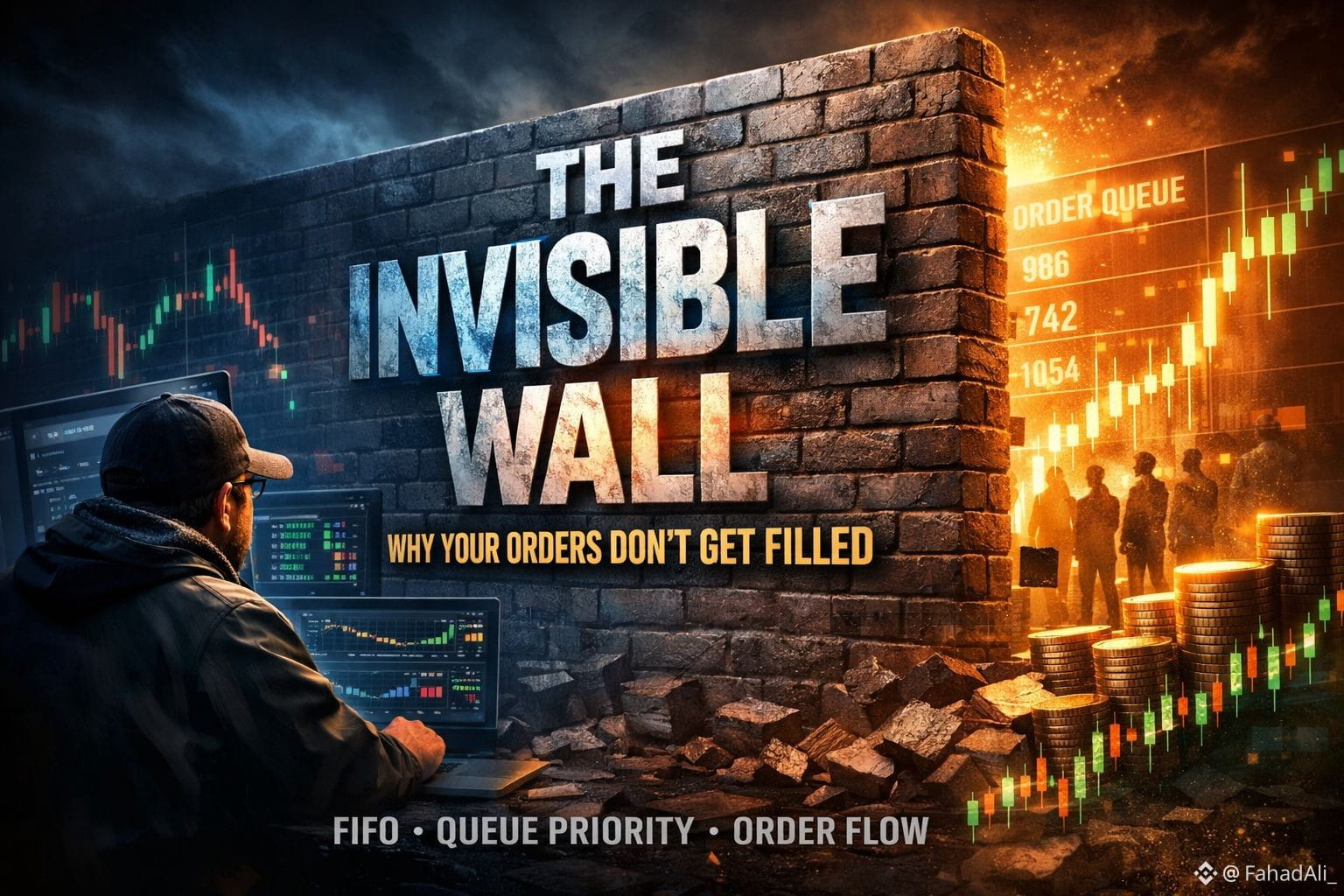
The Invisible Wall
Why Your Orders Don’t Get Filled 🧱📉
Ever seen the price touch your limit order perfectly, only for the market to reverse without filling your position?
It’s frustrating, right?
Most retail traders think if the price hits the level, the trade is active. Wrong.
The real game happens inside the Exchange Matching Engine, and it’s governed by a rule called FIFO (First-In-First-Out).
The Secret Sauce: Queue Priority Trading isn't just about being right on the direction; it’s about your place in the line. If there are 1,000 orders at the same price before yours, you’re stuck at the back of the queue. This is why "Ghost Fills" happen—the price touches your entry, but the liquidity is snatched by those ahead of you.
How the Pros Win:
Advanced platforms like Sertexity are gaining massive traction because they don't just look at the chart—they analyze the order queue. By understanding how orders are stacked, you can:
✅ Minimize slippage.
✅ Improve fill rates in high-volatility moves.
✅ Stop being "exit liquidity" for the faster players.
In a market where milliseconds and queue positions determine your PnL, sticking to basic charts is like bringing a knife to a gunfight.
Are you tracking your queue position, or just hoping for a fill? Let’s discuss below! 👇
#TradingStrategy #OrderFlow #SmartMoneyStrategy #CryptoExecution #TradingTips #LiquidityAnalysis #Crypto_Jobs🎯
$BTC $ETH $USDC
The Invisible Wall
Why Your Orders Don’t Get Filled 🧱📉
Ever seen the price touch your limit order perfectly, only for the market to reverse without filling your position?
It’s frustrating, right?
Most retail traders think if the price hits the level, the trade is active. Wrong.
The real game happens inside the Exchange Matching Engine, and it’s governed by a rule called FIFO (First-In-First-Out).
The Secret Sauce: Queue Priority Trading isn't just about being right on the direction; it’s about your place in the line. If there are 1,000 orders at the same price before yours, you’re stuck at the back of the queue. This is why "Ghost Fills" happen—the price touches your entry, but the liquidity is snatched by those ahead of you.
How the Pros Win:
Advanced platforms like Sertexity are gaining massive traction because they don't just look at the chart—they analyze the order queue. By understanding how orders are stacked, you can:
✅ Minimize slippage.
✅ Improve fill rates in high-volatility moves.
✅ Stop being "exit liquidity" for the faster players.
In a market where milliseconds and queue positions determine your PnL, sticking to basic charts is like bringing a knife to a gunfight.
Are you tracking your queue position, or just hoping for a fill? Let’s discuss below! 👇
#TradingStrategy #OrderFlow #SmartMoneyStrategy #CryptoExecution #TradingTips #LiquidityAnalysis #Crypto_Jobs🎯
$BTC $ETH $USDC
Why Your Orders Don’t Get Filled 🧱📉
Ever seen the price touch your limit order perfectly, only for the market to reverse without filling your position?
It’s frustrating, right?
Most retail traders think if the price hits the level, the trade is active. Wrong.
The real game happens inside the Exchange Matching Engine, and it’s governed by a rule called FIFO (First-In-First-Out).
The Secret Sauce: Queue Priority Trading isn't just about being right on the direction; it’s about your place in the line. If there are 1,000 orders at the same price before yours, you’re stuck at the back of the queue. This is why "Ghost Fills" happen—the price touches your entry, but the liquidity is snatched by those ahead of you.
How the Pros Win:
Advanced platforms like Sertexity are gaining massive traction because they don't just look at the chart—they analyze the order queue. By understanding how orders are stacked, you can:
✅ Minimize slippage.
✅ Improve fill rates in high-volatility moves.
✅ Stop being "exit liquidity" for the faster players.
In a market where milliseconds and queue positions determine your PnL, sticking to basic charts is like bringing a knife to a gunfight.
Are you tracking your queue position, or just hoping for a fill? Let’s discuss below! 👇
#TradingStrategy #OrderFlow #SmartMoneyStrategy #CryptoExecution #TradingTips #LiquidityAnalysis #Crypto_Jobs🎯
$BTC $ETH $USDC
1
111


·
--
The Invisible Tax: Why MEV Resistance is the New Standard for Professional Trading 🛡️
In the current DeFi landscape, the price you see on the chart is only half the story. The real battle is happening in the Mempool. Sophisticated MEV (Maximal Extractable Value) bots are constantly scanning for liquidity gaps to front-run transactions, turning your slippage into their profit.
For serious builders and traders, "Standard Execution" is no longer enough. We are moving toward a "Dark Fi" era where protecting transaction privacy and using private RPC relays is mandatory to prevent being sandwiched.
Key Engineering Pillars:
• MEV Shielding: Routing orders through private builders to bypass the public mempool.
• On-Chain Forensics: Identifying bot-heavy liquidity pools before committing capital.
• Latency Optimization: Minimizing the hop between data retrieval and transaction broadcast.
If you aren't factoring in MEV protection, you aren't trading; you're being harvested. Speed is great, but execution privacy is the ultimate edge.
#MEV #DeFi #SmartMoney #BlockchainTechnology
#CryptoExecution
The Invisible Tax: Why MEV Resistance is the New Standard for Professional Trading 🛡️
In the current DeFi landscape, the price you see on the chart is only half the story. The real battle is happening in the Mempool. Sophisticated MEV (Maximal Extractable Value) bots are constantly scanning for liquidity gaps to front-run transactions, turning your slippage into their profit.
For serious builders and traders, "Standard Execution" is no longer enough. We are moving toward a "Dark Fi" era where protecting transaction privacy and using private RPC relays is mandatory to prevent being sandwiched.
Key Engineering Pillars:
• MEV Shielding: Routing orders through private builders to bypass the public mempool.
• On-Chain Forensics: Identifying bot-heavy liquidity pools before committing capital.
• Latency Optimization: Minimizing the hop between data retrieval and transaction broadcast.
If you aren't factoring in MEV protection, you aren't trading; you're being harvested. Speed is great, but execution privacy is the ultimate edge.
#MEV #DeFi #SmartMoney #BlockchainTechnology
#CryptoExecution
In the current DeFi landscape, the price you see on the chart is only half the story. The real battle is happening in the Mempool. Sophisticated MEV (Maximal Extractable Value) bots are constantly scanning for liquidity gaps to front-run transactions, turning your slippage into their profit.
For serious builders and traders, "Standard Execution" is no longer enough. We are moving toward a "Dark Fi" era where protecting transaction privacy and using private RPC relays is mandatory to prevent being sandwiched.
Key Engineering Pillars:
• MEV Shielding: Routing orders through private builders to bypass the public mempool.
• On-Chain Forensics: Identifying bot-heavy liquidity pools before committing capital.
• Latency Optimization: Minimizing the hop between data retrieval and transaction broadcast.
If you aren't factoring in MEV protection, you aren't trading; you're being harvested. Speed is great, but execution privacy is the ultimate edge.
#MEV #DeFi #SmartMoney #BlockchainTechnology
#CryptoExecution

153

·
--
📈 First Long — $37 profit
📈 Saw another setup, Second Long — $14 profit
📉 Then came the short — $29 profit
No fear, no FOMO — just straight execution. 🎯
📊 Total: $80 sniped
ZKJ may be in a coma, but my trades were wide awake.
Bag holders still hoping… I’m already counting. 💸
#ZKJ #CryptoExecution #BinanceMoves #TradeToWin #NoLuckJustSkill
📈 First Long — $37 profit
📈 Saw another setup, Second Long — $14 profit
📉 Then came the short — $29 profit
No fear, no FOMO — just straight execution. 🎯
📊 Total: $80 sniped
ZKJ may be in a coma, but my trades were wide awake.
Bag holders still hoping… I’m already counting. 💸
#ZKJ #CryptoExecution #BinanceMoves #TradeToWin #NoLuckJustSkill
📈 Saw another setup, Second Long — $14 profit
📉 Then came the short — $29 profit
No fear, no FOMO — just straight execution. 🎯
📊 Total: $80 sniped
ZKJ may be in a coma, but my trades were wide awake.
Bag holders still hoping… I’m already counting. 💸
#ZKJ #CryptoExecution #BinanceMoves #TradeToWin #NoLuckJustSkill
3
4.2k

💥 $USDT P2P EXECUTION SECRET: 200M VND ORDER — DO YOU LET THE ALGORITHM LEAD OR TRUST YOUR OWN EYES? 🔍
📊 At 200M VND (~$8K), we're past the "click and pray" zone. Quick Trade's auto-match prioritizes speed over spread — it finds A match, not necessarily THE match. The difference between 0.2% and 0.35% merchant markup on this size? That's 300K VND left on the table. 💡
🦈 Smart P2P traders treat merchant selection like scanning the order book — completion rate above 98%, recent trade volume, and a price within 0.1% of the mid. The algorithm won't show you the merchant who's been dormant for 3 days or the one with 40% rejected orders. That's your edge to manually harvest. ⚡
⚖️ The real question isn't speed — it's counterparty risk. A 200M order that gets stuck in a dispute kills your momentum worse than a bad spread ever could. Quick Trade is a scalpel, but your judgment is the surgeon's hand. 💬 Do you trust the machine's convenience or do you still grind through the merchant list for that extra 0.05%? 👇
⚠️ Not financial advice. Always manage your risk. 🛡️
🏷️ #USDT #P2PTrading #CryptoExecution #TradingSecrets #BinanceSquare
🔥 🦈
💥 $USDT P2P EXECUTION SECRET: 200M VND ORDER — DO YOU LET THE ALGORITHM LEAD OR TRUST YOUR OWN EYES? 🔍
📊 At 200M VND (~$8K), we're past the "click and pray" zone. Quick Trade's auto-match prioritizes speed over spread — it finds A match, not necessarily THE match. The difference between 0.2% and 0.35% merchant markup on this size? That's 300K VND left on the table. 💡
🦈 Smart P2P traders treat merchant selection like scanning the order book — completion rate above 98%, recent trade volume, and a price within 0.1% of the mid. The algorithm won't show you the merchant who's been dormant for 3 days or the one with 40% rejected orders. That's your edge to manually harvest. ⚡
⚖️ The real question isn't speed — it's counterparty risk. A 200M order that gets stuck in a dispute kills your momentum worse than a bad spread ever could. Quick Trade is a scalpel, but your judgment is the surgeon's hand. 💬 Do you trust the machine's convenience or do you still grind through the merchant list for that extra 0.05%? 👇
⚠️ Not financial advice. Always manage your risk. 🛡️
🏷️ #USDT #P2PTrading #CryptoExecution #TradingSecrets #BinanceSquare
🔥 🦈
📊 At 200M VND (~$8K), we're past the "click and pray" zone. Quick Trade's auto-match prioritizes speed over spread — it finds A match, not necessarily THE match. The difference between 0.2% and 0.35% merchant markup on this size? That's 300K VND left on the table. 💡
🦈 Smart P2P traders treat merchant selection like scanning the order book — completion rate above 98%, recent trade volume, and a price within 0.1% of the mid. The algorithm won't show you the merchant who's been dormant for 3 days or the one with 40% rejected orders. That's your edge to manually harvest. ⚡
⚖️ The real question isn't speed — it's counterparty risk. A 200M order that gets stuck in a dispute kills your momentum worse than a bad spread ever could. Quick Trade is a scalpel, but your judgment is the surgeon's hand. 💬 Do you trust the machine's convenience or do you still grind through the merchant list for that extra 0.05%? 👇
⚠️ Not financial advice. Always manage your risk. 🛡️
🏷️ #USDT #P2PTrading #CryptoExecution #TradingSecrets #BinanceSquare
🔥 🦈
32

·
--
Scalping Liquidity & Execution Protocol
⚡️ BTC Intra-Day Scalp Plan: Liquidity Sweeps & Execution Rules
Bitcoin is testing tight range boundaries around $75.8k–$76.2k. When scalping 1m to 15m charts in this environment, don't trade mid-range chop. Focus strictly on order flow and liquidity levels:
1️⃣ Fade the Range Edge Sweeps: Look for 5-minute wicks sweeping local Highs/Lows that fail to close outside the range. Enter on the Delta divergence confirmation back into the value area.
2️⃣ Identify Invalidation via VWAP: Use Daily Session VWAP as your intraday bias anchor. Longs are valid only when holding above VWAP; flip short when price accepts below with high aggressive sell volume.
3️⃣ Tight Risk & Fixed R:R: Scalping isn't about hope. Set a fixed 1:1.5 or 1:2 Risk-to-Reward ratio max, clamp your stop tight behind the swing wick, and take partials at the local point of control (POC).
Drop your bias below! 👇
#BTCScalping #DayTrading #CryptoExecution #OrderFlow #BTCUSD
Scalping Liquidity & Execution Protocol
⚡️ BTC Intra-Day Scalp Plan: Liquidity Sweeps & Execution Rules
Bitcoin is testing tight range boundaries around $75.8k–$76.2k. When scalping 1m to 15m charts in this environment, don't trade mid-range chop. Focus strictly on order flow and liquidity levels:
1️⃣ Fade the Range Edge Sweeps: Look for 5-minute wicks sweeping local Highs/Lows that fail to close outside the range. Enter on the Delta divergence confirmation back into the value area.
2️⃣ Identify Invalidation via VWAP: Use Daily Session VWAP as your intraday bias anchor. Longs are valid only when holding above VWAP; flip short when price accepts below with high aggressive sell volume.
3️⃣ Tight Risk & Fixed R:R: Scalping isn't about hope. Set a fixed 1:1.5 or 1:2 Risk-to-Reward ratio max, clamp your stop tight behind the swing wick, and take partials at the local point of control (POC).
Drop your bias below! 👇
#BTCScalping #DayTrading #CryptoExecution #OrderFlow #BTCUSD
⚡️ BTC Intra-Day Scalp Plan: Liquidity Sweeps & Execution Rules
Bitcoin is testing tight range boundaries around $75.8k–$76.2k. When scalping 1m to 15m charts in this environment, don't trade mid-range chop. Focus strictly on order flow and liquidity levels:
1️⃣ Fade the Range Edge Sweeps: Look for 5-minute wicks sweeping local Highs/Lows that fail to close outside the range. Enter on the Delta divergence confirmation back into the value area.
2️⃣ Identify Invalidation via VWAP: Use Daily Session VWAP as your intraday bias anchor. Longs are valid only when holding above VWAP; flip short when price accepts below with high aggressive sell volume.
3️⃣ Tight Risk & Fixed R:R: Scalping isn't about hope. Set a fixed 1:1.5 or 1:2 Risk-to-Reward ratio max, clamp your stop tight behind the swing wick, and take partials at the local point of control (POC).
Drop your bias below! 👇
#BTCScalping #DayTrading #CryptoExecution #OrderFlow #BTCUSD
125
ເຂົ້າສູ່ລະບົບເພື່ອສຳຫຼວດເນື້ອຫາເພີ່ມເຕີມ
ເຂົ້າຮ່ວມກຸ່ມຜູ້ໃຊ້ຄຣິບໂຕທົ່ວໂລກໃນ Binance Square.
⚡️ ໄດ້ຮັບຂໍ້ມູນຫຼ້າສຸດ ແລະ ທີ່ມີປະໂຫຍດກ່ຽວກັບຄຣິບໂຕ.
💬 ໄດ້ຮັບຄວາມໄວ້ວາງໃຈຈາກຕະຫຼາດແລກປ່ຽນຄຣິບໂຕທີ່ໃຫຍ່ທີ່ສຸດໃນໂລກ.
👍 ຄົ້ນຫາຂໍ້ມູນເຊີງເລິກທີ່ແທ້ຈາກນັກສ້າງທີ່ໄດ້ຮັບການຢືນຢັນ.
ອີເມວ / ເບີໂທລະສັບ
ຫົວຂໍ້ທີ່ກໍາລັງນິຍົມ
1
#CanMicrosoftDeliverOnAI
87,710 ຄັ້ງທີ່ເບິ່ງ
785 ກຳລັງສົນທະນາ
2
#CanGoogleDefindItsCore
43,343 ຄັ້ງທີ່ເບິ່ງ
571 ກຳລັງສົນທະນາ
3
#FOMCWatch
9.1M ຄັ້ງທີ່ເບິ່ງ
27,995 ກຳລັງສົນທະນາ
4
#EthereumDropsBelow$2300
11,161 ຄັ້ງທີ່ເບິ່ງ
160 ກຳລັງສົນທະນາ
5
#BitcoinSlipsBelow$80KAgain
31,231 ຄັ້ງທີ່ເບິ່ງ
123 ກຳລັງສົນທະນາ
6
#ThailandLaunchesWORPTStablecoinToQRPaymentApp
64,076 ຄັ້ງທີ່ເບິ່ງ
807 ກຳລັງສົນທະນາ
7
#StrategySkipsBitcoinPurchasesSpends$205MOnSTRCBuybacks
12,071 ຄັ້ງທີ່ເບິ່ງ
99 ກຳລັງສົນທະນາ
8
#BitmineAdds10452ETH
110,501 ຄັ້ງທີ່ເບິ່ງ
1,219 ກຳລັງສົນທະນາ
9
#SouthKoreaConsidersEducationTaxOnCryptoExchanges
67,071 ຄັ້ງທີ່ເບິ່ງ
855 ກຳລັງສົນທະນາ
10
#OCCUrgesCommunityBanksToEnterStablecoinPayments
44,757 ຄັ້ງທີ່ເບິ່ງ
608 ກຳລັງສົນທະນາ