
#bitcoinquantumrisk
bitcoinquantumrisk
0 ຄັ້ງທີ່ເບິ່ງ
2 ກຳລັງສົນທະນາ
ມາແຮງ
ຫຼ້າສຸດ

·
--
Bitcoin's next big test may not come from the market — it may come from a physics lab.
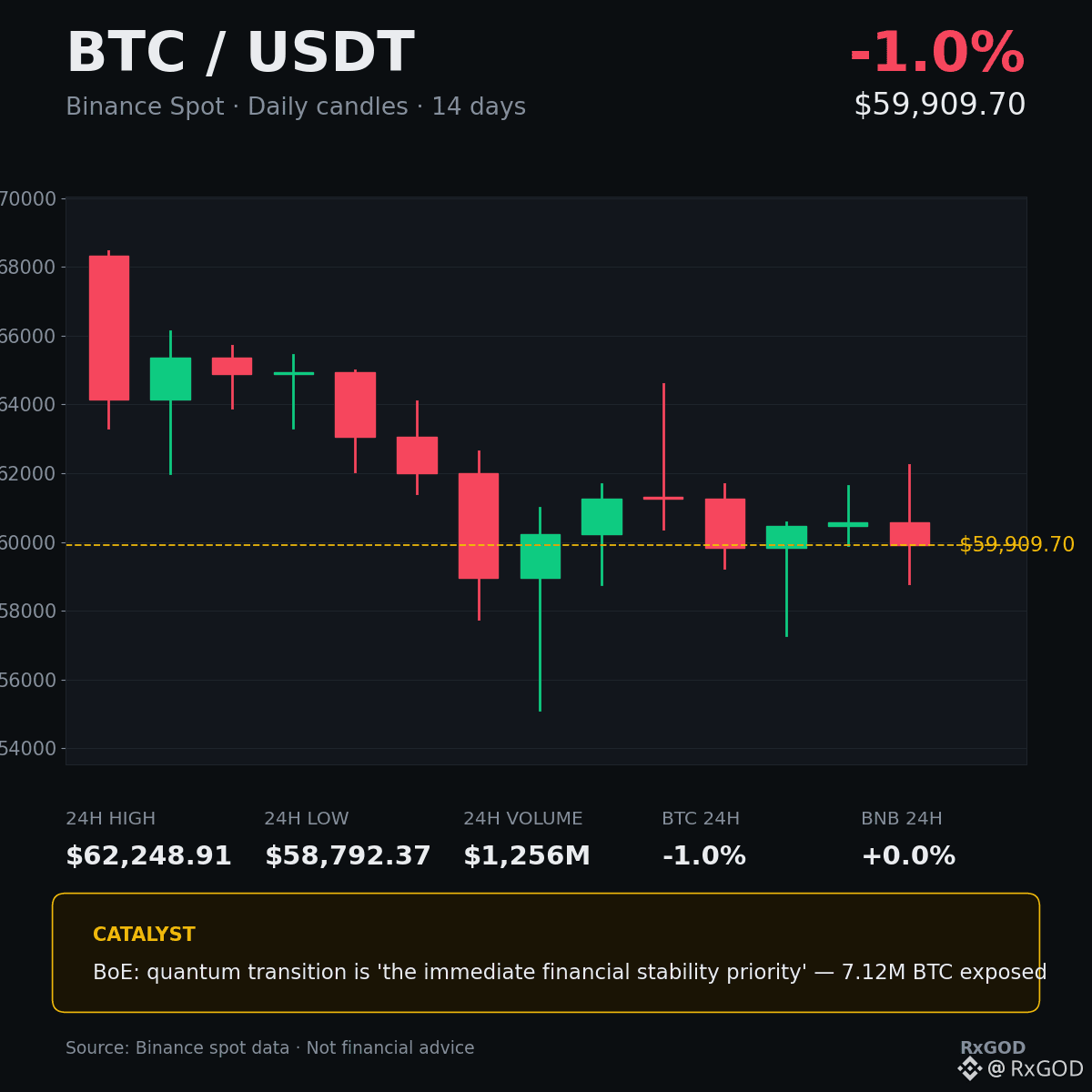
The Bank of England's Financial Stability Report called the shift to quantum-resistant cryptography "the immediate financial stability priority," with migration plans due by 2028 and the rest by 2035. Why it matters: Glassnode estimates a record 7.12 million $BTC — 35.4% of all bitcoin ever issued — now sits behind publicly visible keys, up from 6.04 million in May. A strong enough quantum computer could in theory crack those keys, and address reuse drives most of the exposure.
Before anyone panics: exposure is not access. No quantum computer today can break Bitcoin's signatures, no reliable date exists for one that could, and draft fixes BIP-360 and BIP-361 already exist. On $ETH's side, developers say AI is the bigger near-term threat, targeting a post-quantum transition by December 2028, while Fidelity calls the threat "largely solved," with adoption the hard part.
$BTC trades at $59,910, down 1.03% in 24 hours and back below $60,000, near the lower third of its 14-day range and roughly 52% below October's ~$126,200 high. The market is pricing ETF outflows and a hawkish Fed, not a quantum deadline — but the clock the Bank of England just set runs to 2035, and migrating millions of coins takes years, not weeks.
Is 2035 plenty of time, or should Bitcoin move sooner? Would you switch to a fresh address, or is this a non-issue for a decade?
Not financial advice — DYOR.
#BitcoinQuantumRisk #QuantumComputing #ExtremeFear #CryptoNews
Bitcoin's next big test may not come from the market — it may come from a physics lab.
The Bank of England's Financial Stability Report called the shift to quantum-resistant cryptography "the immediate financial stability priority," with migration plans due by 2028 and the rest by 2035. Why it matters: Glassnode estimates a record 7.12 million $BTC — 35.4% of all bitcoin ever issued — now sits behind publicly visible keys, up from 6.04 million in May. A strong enough quantum computer could in theory crack those keys, and address reuse drives most of the exposure.
Before anyone panics: exposure is not access. No quantum computer today can break Bitcoin's signatures, no reliable date exists for one that could, and draft fixes BIP-360 and BIP-361 already exist. On $ETH 's side, developers say AI is the bigger near-term threat, targeting a post-quantum transition by December 2028, while Fidelity calls the threat "largely solved," with adoption the hard part.
$BTC trades at $59,910, down 1.03% in 24 hours and back below $60,000, near the lower third of its 14-day range and roughly 52% below October's ~$126,200 high. The market is pricing ETF outflows and a hawkish Fed, not a quantum deadline — but the clock the Bank of England just set runs to 2035, and migrating millions of coins takes years, not weeks.
Is 2035 plenty of time, or should Bitcoin move sooner? Would you switch to a fresh address, or is this a non-issue for a decade?
Not financial advice — DYOR.
#BitcoinQuantumRisk #QuantumComputing #ExtremeFear #CryptoNews
ເຂົ້າສູ່ລະບົບເພື່ອສຳຫຼວດເນື້ອຫາເພີ່ມເຕີມ
ເຂົ້າຮ່ວມກຸ່ມຜູ້ໃຊ້ຄຣິບໂຕທົ່ວໂລກໃນ Binance Square.
⚡️ ໄດ້ຮັບຂໍ້ມູນຫຼ້າສຸດ ແລະ ທີ່ມີປະໂຫຍດກ່ຽວກັບຄຣິບໂຕ.
💬 ໄດ້ຮັບຄວາມໄວ້ວາງໃຈຈາກຕະຫຼາດແລກປ່ຽນຄຣິບໂຕທີ່ໃຫຍ່ທີ່ສຸດໃນໂລກ.
👍 ຄົ້ນຫາຂໍ້ມູນເຊີງເລິກທີ່ແທ້ຈາກນັກສ້າງທີ່ໄດ້ຮັບການຢືນຢັນ.
ອີເມວ / ເບີໂທລະສັບ
ຫົວຂໍ້ທີ່ກໍາລັງນິຍົມ
1
#EvolveAtBinanceBlockchainWeek
1.4M ຄັ້ງທີ່ເບິ່ງ
15,599 ກຳລັງສົນທະນາ
2
#VitalikWantsWalletChipDesignsOpened
5,932 ຄັ້ງທີ່ເບິ່ງ
99 ກຳລັງສົນທະນາ
3
#ChainflipVaultTheftHaltsProtocol
282 ຄັ້ງທີ່ເບິ່ງ
19 ກຳລັງສົນທະນາ
4
#AnzaUrgesSolanaNodesUpgradeAgave
1,804 ຄັ້ງທີ່ເບິ່ງ
54 ກຳລັງສົນທະນາ
5
#ChinaBlockchainIDRulesEffectMarch2027
11,737 ຄັ້ງທີ່ເບິ່ງ
167 ກຳລັງສົນທະນາ
6
#ClaudeAccusedOfDroppingUserPreferences
1,338 ຄັ້ງທີ່ເບິ່ງ
30 ກຳລັງສົນທະນາ
7
#EthereumGlamsterdamKeepsStorageFeeChange
41,372 ຄັ້ງທີ່ເບິ່ງ
417 ກຳລັງສົນທະນາ
8
#MoneroFalls13%OnDelistings
92,696 ຄັ້ງທີ່ເບິ່ງ
672 ກຳລັງສົນທະນາ
9
#ECBOfficialsHintAtMoreTightening
88 ຄັ້ງທີ່ເບິ່ງ
18 ກຳລັງສົນທະນາ
10
#DowJonesAdds591.99Points
142 ຄັ້ງທີ່ເບິ່ງ
3 ກຳລັງສົນທະນາ