Binance Square

Virat BNB

image
Расталған автор
Crypto lover Living the crypto journey tracking trends, and delivering insights from the fast-moving digital asset space. No hype. Just setups.
Ашық сауда
Жиі сауда жасайтын трейдер
1 жыл
286 Жазылым
30.9K+ Жазылушылар
24.4K+ лайк басылған
3.8K+ Бөлісу
Жазбалар
Портфолио
·
--
Жоғары (өспелі)
$ZAMA /USDT is moving inside a tight pressure zone, and the chart is telling a story most traders are missing. After a clear downtrend under Supertrend resistance, price attempted a weak recovery but failed to break above the dynamic resistance near 0.0223. $ZAMA Sellers are still in control, and the recent rejection shows liquidity is being taken before the next move. Trade Setup: Short below 0.0221 Target: 0.0215 → 0.0210 Stop Loss: 0.0225 If bulls flip 0.0223 into support, this setup gets invalidated fast. This isn’t a calm chart… it’s compression before expansion. The next move won’t be small. #MarchFedMeeting BitcoinHits$75K#GTC2026 #MetaPlansLayoffs #BTCReclaims70k #UseAIforCryptoTrading $ZAMA {future}(ZAMAUSDT)
$ZAMA /USDT is moving inside a tight pressure zone, and the chart is telling a story most traders are missing.

After a clear downtrend under Supertrend resistance, price attempted a weak recovery but failed to break above the dynamic resistance near 0.0223. $ZAMA Sellers are still in control, and the recent rejection shows liquidity is being taken before the next move.

Trade Setup:
Short below 0.0221
Target: 0.0215 → 0.0210
Stop Loss: 0.0225

If bulls flip 0.0223 into support, this setup gets invalidated fast.

This isn’t a calm chart… it’s compression before expansion. The next move won’t be small.
#MarchFedMeeting BitcoinHits$75K#GTC2026 #MetaPlansLayoffs #BTCReclaims70k #UseAIforCryptoTrading
$ZAMA
·
--
Төмен (кемімелі)
$SENT /USDT is moving under clear bearish pressure, respecting the Supertrend resistance while forming lower lows on the 15m chart. Price is currently hovering around 0.0213–0.0215, sitting on a critical support zone where buyers are trying to step in. The structure still favors sellers, but a short-term bounce setup is building as momentum slows. Trade Setup: Break above 0.0218 → bullish momentum shift → targets 0.0223–0.0230 🚀 Break below 0.0213 → continuation dump → targets 0.0208–0.0200 ⚠️ This is a reaction zone, not a blind entry. Let the market confirm direction first. $SENT Smart traders wait here… then strike with precision when volatility expands. #MarchFedMeeting BitcoinHits$75K#GTC2026 #MetaPlansLayoffs #BTCReclaims70k #UseAIforCryptoTrading $SENT {spot}(SENTUSDT)
$SENT /USDT is moving under clear bearish pressure, respecting the Supertrend resistance while forming lower lows on the 15m chart. Price is currently hovering around 0.0213–0.0215, sitting on a critical support zone where buyers are trying to step in. The structure still favors sellers, but a short-term bounce setup is building as momentum slows.

Trade Setup:
Break above 0.0218 → bullish momentum shift → targets 0.0223–0.0230 🚀
Break below 0.0213 → continuation dump → targets 0.0208–0.0200 ⚠️

This is a reaction zone, not a blind entry. Let the market confirm direction first. $SENT Smart traders wait here… then strike with precision when volatility expands.
#MarchFedMeeting BitcoinHits$75K#GTC2026 #MetaPlansLayoffs #BTCReclaims70k #UseAIforCryptoTrading
$SENT
·
--
Төмен (кемімелі)
$ESP /USDT is showing clear bearish pressure, drifting into a strong support zone near 0.1005 after a consistent downtrend under Supertrend resistance. Sellers remain in control, but the pace of the drop is slowing, hinting at a possible shift in momentum. Trade Setup: A clean breakout above 0.1032 could trigger a reversal move targeting 0.1060–0.1100. $ESP On the downside, losing 0.1000 support may lead to further weakness toward 0.0970. This is not a market to chase impulsively. Wait for confirmation, follow the breakout, and manage risk carefully—because the next move could be sharp and decisive. #MarchFedMeeting BitcoinHits$75K#YZiLabsInvestsInRoboForce #MetaPlansLayoffs #BTCReclaims70k #UseAIforCryptoTrading $ESP {spot}(ESPUSDT)
$ESP /USDT is showing clear bearish pressure, drifting into a strong support zone near 0.1005 after a consistent downtrend under Supertrend resistance. Sellers remain in control, but the pace of the drop is slowing, hinting at a possible shift in momentum.

Trade Setup:
A clean breakout above 0.1032 could trigger a reversal move targeting 0.1060–0.1100. $ESP On the downside, losing 0.1000 support may lead to further weakness toward 0.0970.

This is not a market to chase impulsively. Wait for confirmation, follow the breakout, and manage risk carefully—because the next move could be sharp and decisive.
#MarchFedMeeting BitcoinHits$75K#YZiLabsInvestsInRoboForce #MetaPlansLayoffs #BTCReclaims70k #UseAIforCryptoTrading
$ESP
·
--
Жоғары (өспелі)
$SOL /USDT — Pressure Building Below Resistance ⚡️ Price is pushing back into the Supertrend zone (~94.7), reclaiming momentum after a clean bounce from 93.15. Buyers are stepping in… but this is where it gets interesting. A breakout here isn’t just a move — it’s a shift. Trade Setup: Entry: Above 94.80 (confirmed breakout) Target: 96.50 → 98.00 Stop Loss: 93.70 As long as price holds above 94, bulls stay in control$SOL Lose that… and this turns into a fakeout fast. Eyes on this level. This is where moves are born. 🔥 #MarchFedMeeting BitcoinHits$75K#YZiLabsInvestsInRoboForce #MetaPlansLayoffs #AaveSwapIncident #UseAIforCryptoTrading $SOL {spot}(SOLUSDT)
$SOL /USDT — Pressure Building Below Resistance ⚡️

Price is pushing back into the Supertrend zone (~94.7), reclaiming momentum after a clean bounce from 93.15. Buyers are stepping in… but this is where it gets interesting.

A breakout here isn’t just a move — it’s a shift.

Trade Setup: Entry: Above 94.80 (confirmed breakout)
Target: 96.50 → 98.00
Stop Loss: 93.70

As long as price holds above 94, bulls stay in control$SOL
Lose that… and this turns into a fakeout fast.

Eyes on this level. This is where moves are born. 🔥
#MarchFedMeeting BitcoinHits$75K#YZiLabsInvestsInRoboForce #MetaPlansLayoffs #AaveSwapIncident #UseAIforCryptoTrading
$SOL
·
--
Төмен (кемімелі)
$DOGE /USDT Trade Setup ⚡️ DOGE just got flushed… panic candles printed, weak hands wiped. Now sitting near 0.0985 support — this is where games begin. Market is quiet… but this silence? It usually comes before a move. Setup: • Entry: 0.0985 – 0.0995 • Breakout Entry: Above 0.1005 • Target: 0.1030 → 0.1050 • Stop Loss: 0.0975 Right now it’s a bounce or breakdown zone. Reclaim 0.100 = momentum shift 🚀 Lose 0.098 = another sharp leg down. $DOGE moves fast… either you’re early, or you’re chasing. #MarchFedMeeting BitcoinHits$75K#GTC2026 #MetaPlansLayoffs #AaveSwapIncident #UseAIforCryptoTrading $DOGE {spot}(DOGEUSDT)
$DOGE /USDT Trade Setup ⚡️

DOGE just got flushed… panic candles printed, weak hands wiped.

Now sitting near 0.0985 support — this is where games begin.

Market is quiet… but this silence? It usually comes before a move.

Setup: • Entry: 0.0985 – 0.0995
• Breakout Entry: Above 0.1005
• Target: 0.1030 → 0.1050
• Stop Loss: 0.0975

Right now it’s a bounce or breakdown zone.

Reclaim 0.100 = momentum shift 🚀
Lose 0.098 = another sharp leg down.

$DOGE moves fast… either you’re early, or you’re chasing.
#MarchFedMeeting BitcoinHits$75K#GTC2026 #MetaPlansLayoffs #AaveSwapIncident #UseAIforCryptoTrading
$DOGE
·
--
Жоғары (өспелі)
$ETH /USDT Trade Setup ⚡️ ETH is knocking… again and again at 2,346 resistance — pressure is building. Every rejection is getting weaker. Buyers aren’t leaving. This isn’t just consolidation… this is energy loading before a move. Setup: • Entry: 2,320 – 2,335 • Breakout Entry: Above 2,350 • Target: 2,420 → 2,500 • Stop Loss: 2,285 Right now $ETH is sitting at a decision point. Break 2,350 = expansion phase begins 🚀 Fail here = quick flush to grab liquidity below. This is where moves are born. Don’t blink. #MarchFedMeeting BitcoinHits$75K#GTC2026 #KATBinancePre-TGE #BTCReclaims70k #AaveSwapIncident $ETH {spot}(ETHUSDT)
$ETH /USDT Trade Setup ⚡️

ETH is knocking… again and again at 2,346 resistance — pressure is building.

Every rejection is getting weaker. Buyers aren’t leaving.

This isn’t just consolidation… this is energy loading before a move.

Setup: • Entry: 2,320 – 2,335
• Breakout Entry: Above 2,350
• Target: 2,420 → 2,500
• Stop Loss: 2,285

Right now $ETH is sitting at a decision point.

Break 2,350 = expansion phase begins 🚀
Fail here = quick flush to grab liquidity below.

This is where moves are born. Don’t blink.
#MarchFedMeeting BitcoinHits$75K#GTC2026 #KATBinancePre-TGE #BTCReclaims70k #AaveSwapIncident
$ETH
·
--
Жоғары (өспелі)
$BTC /USDT Trade Setup ⚡️ Market just gave a clean shakeout… weak hands out, smart money watching. $BTC tapped 73,560 support and instantly reacted — now pushing back above 73.8K with momentum building. But here’s the catch… price is still under Supertrend resistance (~74.5K). Setup: • Entry: 73,700 – 73,900 • Breakout Entry: Above 74,500 (confirmation) • Target: 75,200 → 76,000 • Stop Loss: 73,300 Right now this is a reclaim or reject zone. Flip 74.5K = momentum ignition 🚀 Fail here = another liquidity sweep below. Smart traders wait. Sharp traders execute. #MarchFedMeeting BitcoinHits$75K#GTC2026 #MetaPlansLayoffs #PCEMarketWatch #UseAIforCryptoTrading $BTC {spot}(BTCUSDT)
$BTC /USDT Trade Setup ⚡️

Market just gave a clean shakeout… weak hands out, smart money watching.

$BTC tapped 73,560 support and instantly reacted — now pushing back above 73.8K with momentum building. But here’s the catch… price is still under Supertrend resistance (~74.5K).

Setup: • Entry: 73,700 – 73,900
• Breakout Entry: Above 74,500 (confirmation)
• Target: 75,200 → 76,000
• Stop Loss: 73,300

Right now this is a reclaim or reject zone.

Flip 74.5K = momentum ignition 🚀
Fail here = another liquidity sweep below.

Smart traders wait. Sharp traders execute.
#MarchFedMeeting BitcoinHits$75K#GTC2026 #MetaPlansLayoffs #PCEMarketWatch #UseAIforCryptoTrading
$BTC
·
--
Төмен (кемімелі)
Bitcoin Surges Past $75K as Institutional Accumulation Accelerates $BTC {spot}(BTCUSDT) has pushed beyond the $75,000 level, driven by a powerful wave of institutional demand and aggressive accumulation from large holders. The move reflects a market that is no longer just retail-driven—but increasingly shaped by capital flows from major financial players and long-term strategic buyers. One of the clearest signals comes from whale activity. Wallets holding between 10 and 10,000 BTC now control approximately 68.17% of the total supply, marking the highest concentration since 2020. This level of accumulation suggests that large investors are positioning with conviction rather than preparing to exit. Adding to this trend, (formerly MicroStrategy) recently acquired 22,337 BTC worth $1.57 billion, pushing its total holdings to over 761,000 BTC—a clear indication of continued corporate confidence in Bitcoin as a long-term asset. At the same time, ETF flows remain a dominant force behind price momentum. Spot Bitcoin ETFs have recorded five consecutive days of net inflows, with leading the charge after purchasing nearly $600 million worth of BTC in a single week. These inflows are steadily absorbing available supply, tightening market liquidity and supporting upward price pressure. On-chain data further reinforces this bullish structure. Significant exchange outflows—alongside movements in other assets like SHIB—suggest that capital is increasingly being moved into long-term storage rather than prepared for selling. This behavior typically aligns with accumulation phases rather than distribution. Taken together, these signals point toward a market where institutional conviction is strengthening while available supply is gradually shrinking. If this trend continues and macro conditions remain supportive, Bitcoin could begin targeting the $80K–$84K range in the near term. For now, the breakout above $75K feels less like a short-term spike—and more like the result of a slow, deliberate build-up of institutional pressure that’s finally starting to show on price.
Bitcoin Surges Past $75K as Institutional Accumulation Accelerates

$BTC
has pushed beyond the $75,000 level, driven by a powerful wave of institutional demand and aggressive accumulation from large holders. The move reflects a market that is no longer just retail-driven—but increasingly shaped by capital flows from major financial players and long-term strategic buyers.

One of the clearest signals comes from whale activity. Wallets holding between 10 and 10,000 BTC now control approximately 68.17% of the total supply, marking the highest concentration since 2020. This level of accumulation suggests that large investors are positioning with conviction rather than preparing to exit. Adding to this trend, (formerly MicroStrategy) recently acquired 22,337 BTC worth $1.57 billion, pushing its total holdings to over 761,000 BTC—a clear indication of continued corporate confidence in Bitcoin as a long-term asset.

At the same time, ETF flows remain a dominant force behind price momentum. Spot Bitcoin ETFs have recorded five consecutive days of net inflows, with leading the charge after purchasing nearly $600 million worth of BTC in a single week. These inflows are steadily absorbing available supply, tightening market liquidity and supporting upward price pressure.

On-chain data further reinforces this bullish structure. Significant exchange outflows—alongside movements in other assets like SHIB—suggest that capital is increasingly being moved into long-term storage rather than prepared for selling. This behavior typically aligns with accumulation phases rather than distribution.

Taken together, these signals point toward a market where institutional conviction is strengthening while available supply is gradually shrinking. If this trend continues and macro conditions remain supportive, Bitcoin could begin targeting the $80K–$84K range in the near term.

For now, the breakout above $75K feels less like a short-term spike—and more like the result of a slow, deliberate build-up of institutional pressure that’s finally starting to show on price.
The Idea Behind Midnight Network: Privacy Without Breaking Transparency@MidnightNetwork One evening I was scrolling through a blockchain explorer, just watching transactions move across the network. Wallet addresses sending coins. Blocks filling up. Everything visible. Everything permanent. And suddenly a strange thought hit me. If this were a bank account… I would never use it. Think about it for a second. Every payment you make, every transfer, every financial move quietly sitting on a public ledger for anyone curious enough to look. Maybe today it feels harmless. But zoom out. Weeks turn into years. That single wallet address slowly becomes a story about your life. Where you spend. Who you interact with. What you value. Blockchain promised transparency, and it delivered. But standing there staring at that explorer page, it felt like the industry had quietly accepted something extreme without questioning it. Total visibility. At the beginning that radical openness felt like freedom. No hidden ledgers. No opaque institutions. Just math, code, and a shared record everyone could verify. It was the antidote to systems that relied too heavily on trust. But here’s the uncomfortable part. The real world doesn’t run entirely in public. Imagine a company running its entire financial system on a ledger where competitors can see supplier payments and operational costs. Imagine hospitals publishing patient billing data. Imagine individuals revealing every financial move they make to the internet forever. That’s where the elegance of blockchain suddenly starts to feel… messy. I started thinking about this tension. Not the ideological debate about privacy, but the practical one. Because eventually blockchain wants to do more than move tokens. It wants to power businesses, institutions, entire digital economies. And those systems need privacy. That’s roughly where the idea behind Midnight Network begins. Not from a desire to hide things, but from a realization that transparency alone can’t support every kind of system we want to build. Midnight approaches the problem with a quiet but powerful tool: zero-knowledge proofs. Now that phrase sounds intimidating, almost academic. But the concept is surprisingly simple once you picture it in everyday terms. Imagine walking up to a secure building. Normally you’d show an ID card that reveals your name, maybe your employee number, maybe other details. But what if instead you could prove you’re authorized to enter… without revealing who you are? The guard knows the rule is satisfied. The door opens. Your private information stays yours. That tiny shift changes everything. Because suddenly verification and privacy don’t have to fight each other anymore. A network can confirm that transactions follow the rules without exposing the sensitive information inside them. Smart contracts can execute logic without broadcasting internal data to the world. And here’s where it gets interesting. Crypto already experimented with privacy before. Entire networks built around anonymity. Transactions disappearing behind layers of cryptography. But those systems often drifted so far into secrecy that institutions and regulators couldn’t trust them. Too much darkness creates its own problems. Midnight takes a different path. It tries to keep the accountability of blockchain while protecting the information that never needed to be public in the first place. The project calls this idea “rational privacy,” which honestly sounds a bit philosophical, but the concept is grounded in reality. Not everything should be visible. But the system still needs to prove it’s working honestly. And if you think about it long enough, this balance starts to feel less like a feature and more like a requirement. Because the next phase of blockchain won’t just be crypto trading or experimental apps. It will involve supply chains, financial infrastructure, identity systems, healthcare platforms, and businesses that simply cannot operate with their internal data exposed. Transparency built the foundation. Privacy might be what makes the structure usable. So Midnight isn’t trying to erase the transparency that made blockchain powerful in the first place. It’s doing something subtler than that. It’s exploring whether cryptography can give us a middle ground where systems remain verifiable without forcing everyone to live in a financial glass house. And maybe that’s the real story here. Blockchain spent its first decade proving that trust could exist without institutions. The next decade might be about something harder. Proving that privacy and trust don’t have to be enemies. $NIGHT #night

The Idea Behind Midnight Network: Privacy Without Breaking Transparency

@MidnightNetwork One evening I was scrolling through a blockchain explorer, just watching transactions move across the network. Wallet addresses sending coins. Blocks filling up. Everything visible. Everything permanent.
And suddenly a strange thought hit me.
If this were a bank account… I would never use it.
Think about it for a second. Every payment you make, every transfer, every financial move quietly sitting on a public ledger for anyone curious enough to look. Maybe today it feels harmless. But zoom out. Weeks turn into years. That single wallet address slowly becomes a story about your life.

Where you spend.
Who you interact with.
What you value.

Blockchain promised transparency, and it delivered. But standing there staring at that explorer page, it felt like the industry had quietly accepted something extreme without questioning it.

Total visibility.

At the beginning that radical openness felt like freedom. No hidden ledgers. No opaque institutions. Just math, code, and a shared record everyone could verify. It was the antidote to systems that relied too heavily on trust.

But here’s the uncomfortable part.
The real world doesn’t run entirely in public.
Imagine a company running its entire financial system on a ledger where competitors can see supplier payments and operational costs. Imagine hospitals publishing patient billing data. Imagine individuals revealing every financial move they make to the internet forever.

That’s where the elegance of blockchain suddenly starts to feel… messy.

I started thinking about this tension. Not the ideological debate about privacy, but the practical one. Because eventually blockchain wants to do more than move tokens. It wants to power businesses, institutions, entire digital economies.

And those systems need privacy.

That’s roughly where the idea behind Midnight Network begins. Not from a desire to hide things, but from a realization that transparency alone can’t support every kind of system we want to build.

Midnight approaches the problem with a quiet but powerful tool: zero-knowledge proofs.

Now that phrase sounds intimidating, almost academic. But the concept is surprisingly simple once you picture it in everyday terms. Imagine walking up to a secure building. Normally you’d show an ID card that reveals your name, maybe your employee number, maybe other details.

But what if instead you could prove you’re authorized to enter… without revealing who you are?

The guard knows the rule is satisfied. The door opens. Your private information stays yours.

That tiny shift changes everything.

Because suddenly verification and privacy don’t have to fight each other anymore. A network can confirm that transactions follow the rules without exposing the sensitive information inside them. Smart contracts can execute logic without broadcasting internal data to the world.

And here’s where it gets interesting.

Crypto already experimented with privacy before. Entire networks built around anonymity. Transactions disappearing behind layers of cryptography. But those systems often drifted so far into secrecy that institutions and regulators couldn’t trust them.

Too much darkness creates its own problems.

Midnight takes a different path. It tries to keep the accountability of blockchain while protecting the information that never needed to be public in the first place. The project calls this idea “rational privacy,” which honestly sounds a bit philosophical, but the concept is grounded in reality.

Not everything should be visible.
But the system still needs to prove it’s working honestly.

And if you think about it long enough, this balance starts to feel less like a feature and more like a requirement. Because the next phase of blockchain won’t just be crypto trading or experimental apps. It will involve supply chains, financial infrastructure, identity systems, healthcare platforms, and businesses that simply cannot operate with their internal data exposed.

Transparency built the foundation.
Privacy might be what makes the structure usable.

So Midnight isn’t trying to erase the transparency that made blockchain powerful in the first place. It’s doing something subtler than that. It’s exploring whether cryptography can give us a middle ground where systems remain verifiable without forcing everyone to live in a financial glass house.

And maybe that’s the real story here.
Blockchain spent its first decade proving that trust could exist without institutions. The next decade might be about something harder.

Proving that privacy and trust don’t have to be enemies.

$NIGHT #night
·
--
Жоғары (өспелі)
@MidnightNetwork For a long time, Web3 has treated transparency as the ultimate feature. Every transaction visible, every movement of value sitting on a public ledger for anyone to inspect. That openness helped build trust in early crypto systems, but it also created an uncomfortable reality real people and real businesses don’t always want their financial activity permanently exposed. That’s where Midnight Network starts asking a different question. What if a blockchain could prove something is valid without revealing the sensitive data behind it? By using zero-knowledge technology, Midnight is exploring a way for Web3 to keep its trustless verification while giving users something the space has often ignored: genuine privacy. $NIGHT {spot}(NIGHTUSDT) #night
@MidnightNetwork For a long time, Web3 has treated transparency as the ultimate feature. Every transaction visible, every movement of value sitting on a public ledger for anyone to inspect. That openness helped build trust in early crypto systems, but it also created an uncomfortable reality real people and real businesses don’t always want their financial activity permanently exposed.

That’s where Midnight Network starts asking a different question. What if a blockchain could prove something is valid without revealing the sensitive data behind it? By using zero-knowledge technology, Midnight is exploring a way for Web3 to keep its trustless verification while giving users something the space has often ignored: genuine privacy.
$NIGHT
#night
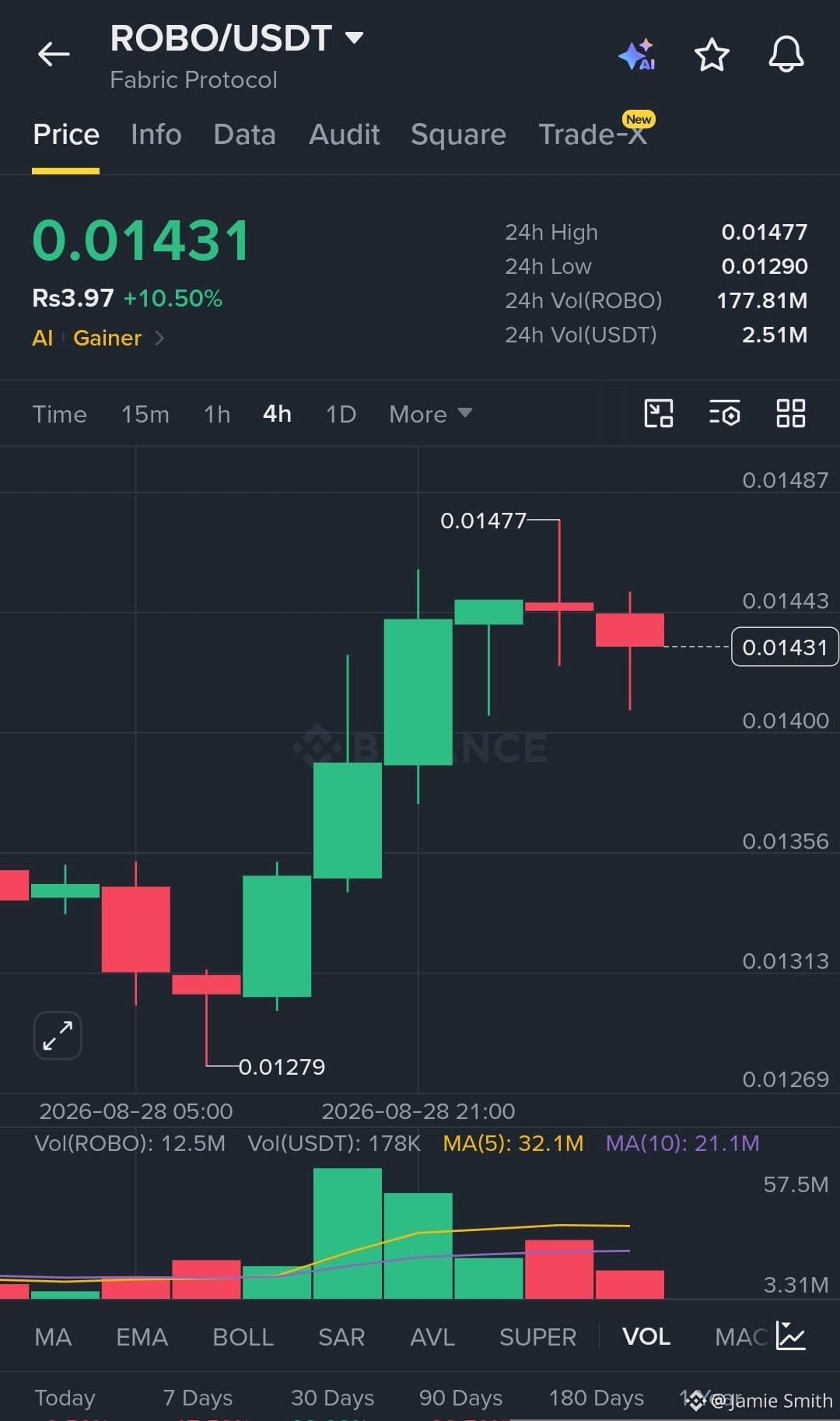
Autonomous machines are getting better and better every year. However the systems that control these machines are still much controlled from one place. Fabric Protocol is trying something. They want robots to work using decentralized systems. The idea is really simple. It could be very powerful. They want machines, the people who make them and the people who use them to be able to talk to each other through shared networks. They do not want to use platforms. If this idea actually happens robotics could become an open and collaborative field where machines work together. Fabric Protocol and their idea of a machine economy could be really big. Autonomous machines and Fabric Protocol could change the way we think about robots. @FabricFND #ROBO $ROBO {spot}(ROBOUSDT)
Autonomous machines are getting better and better every year. However the systems that control these machines are still much controlled from one place. Fabric Protocol is trying something. They want robots to work using decentralized systems.

The idea is really simple. It could be very powerful. They want machines, the people who make them and the people who use them to be able to talk to each other through shared networks. They do not want to use platforms. If this idea actually happens robotics could become an open and collaborative field where machines work together. Fabric Protocol and their idea of a machine economy could be really big. Autonomous machines and Fabric Protocol could change the way we think about robots.

@Fabric Foundation #ROBO $ROBO
Exploring Fabric Protocol’s Role in Decentralized Robotics InfrastructureWhen you walk into a warehouse today you will notice something. Robots are moving around lifting boxes scanning items and routing packages across the floor with a calm that looks almost mechanical. At glance it looks like a perfectly coordinated system.. If you look a little closer you will start to wonder who actually controls all of this. Usually behind that movement there is a tightly controlled platform. One company owns the machines writes the software collects the data and coordinates how everything operates. This structure has been the way robotics works for decades. It is good for reliability. Making sure everything runs smoothly. It also means that one company has all the control. Once you notice that the entire system starts to look a little different. Fabric Protocol is trying to change that. Of building another robotics platform it is exploring what happens if the infrastructure that coordinates robots becomes open. In this model machines, developers and operators interact through networks rather than proprietary software environments. The idea sounds big. The change itself is fairly simple. Robots already do work that generates value. They move goods collect data and assist people in routine tasks. The question is how that work gets coordinated. If you look at how robotics works today you will quickly see the limitations. Most robotic systems are controlled by one organization. They design the hardware develop the control software gather data and manage the machines through their own platform. That structure ensures performance and strict oversight. It also limits innovation. Developers outside those ecosystems rarely get to influence how machines evolve. Smaller organizations often face barriers when trying to deploy advanced automation. Robotics becomes powerful. It is also closed off. Fabric is approaching the problem from a direction. Of focusing on the machines themselves it is focusing on the infrastructure beneath them. If decentralized networks can coordinate systems across global markets. As blockchain systems already show. Then maybe similar infrastructure could coordinate machines performing work in the physical world. That idea immediately introduces a challenge. The moment robots start interacting inside networks identity becomes important. The system needs to know which machine performed a task, when it happened and whether the outcome can be trusted. Fabric introduces identities for both humans and machines. When a robot completes work. Transporting goods, collecting environmental data or executing a logistics task. It authenticates itself through that identity. The activity becomes part of the networks record. Identity alone does not solve the problem. Machines must also prove that the work actually happened. Fabric relies on distributed ledger infrastructure to document tasks, validation events and economic exchanges. The ledger itself is not the real innovation. Distributed ledgers exist in blockchain systems. What matters here is what the ledger allows machines to prove. Work can be verified. Developers, operators and validators can confirm events without relying on an authority to maintain the record. In a network where machines operate across environments there must be a neutral place where activity is documented. The ledger becomes that shared reference point. Fabric also treats robot capabilities differently from robotics platforms. Most robotic systems bundle. Software together tightly. Expanding a machines abilities often requires redesigning portions of the system. Fabric treats robot capabilities as components instead. Developers can create navigation algorithms, perception tools, coordination systems or other functional modules that expand what machines can do. Robots operating within the network can integrate modules depending on their tasks. A logistics robot might rely heavily on navigation and object recognition. A service robot might combine sensing with interaction tools. Innovation starts to come from contributors rather than a single engineering team. Open ecosystems rarely work without incentives. Fabric introduces a based economic layer designed to coordinate participation across the network. Developers who build modules, contributors who provide valuable data and validators who verify completed tasks can receive rewards through the protocol. The token also enables governance. Participants can help shape how the system evolves. Approving upgrades adjusting incentive structures or refining verification methods. Once machines start acting in real environments governance becomes important. Autonomous systems raise questions about oversight, accountability and protocol rules. Fabric attempts to embed these governance processes within the network. If this model works the implications will extend well beyond a technology platform. Logistics networks could coordinate operations across organizations rather than building isolated automation systems. Service robots in healthcare or hospitality might gain capabilities through modules developed by independent contributors. Researchers could experiment with systems inside shared infrastructure rather than constructing expensive standalone environments. In words Fabric treats robotic capability as shared infrastructure rather than proprietary hardware. Within the broader Web3 landscape this represents a shift. Many decentralized projects focus on coordination or digital asset ownership. Fabric pushes those ideas into a domain. Machines performing real work in the physical world. That transition raises questions. How should autonomous machines participate in economies? What governance structures make sense when both humans and AI agents interact within the system?. How can trust be maintained when machines operate independently across multiple environments? None of this will be simple. Integrating robotics, artificial intelligence, decentralized networks and governance systems introduces technical complexity. Adoption will depend on whether developers, hardware manufacturers and operators see advantages in participating. Incentive structures must reward contributions rather than short-term speculation. Still something important is changing. As Fabric Protocol and robots become more capable the infrastructure coordinating them may matter as much, as the robots themselves. The future of robotics may not simply depend on building robots. It may depend on building the networks that allow Fabric Protocol and robots to work together. @FabricFND $ROBO #ROBO

Exploring Fabric Protocol’s Role in Decentralized Robotics Infrastructure

When you walk into a warehouse today you will notice something. Robots are moving around lifting boxes scanning items and routing packages across the floor with a calm that looks almost mechanical. At glance it looks like a perfectly coordinated system.. If you look a little closer you will start to wonder who actually controls all of this.

Usually behind that movement there is a tightly controlled platform. One company owns the machines writes the software collects the data and coordinates how everything operates. This structure has been the way robotics works for decades. It is good for reliability. Making sure everything runs smoothly.

It also means that one company has all the control.

Once you notice that the entire system starts to look a little different.

Fabric Protocol is trying to change that. Of building another robotics platform it is exploring what happens if the infrastructure that coordinates robots becomes open. In this model machines, developers and operators interact through networks rather than proprietary software environments. The idea sounds big. The change itself is fairly simple. Robots already do work that generates value. They move goods collect data and assist people in routine tasks. The question is how that work gets coordinated.

If you look at how robotics works today you will quickly see the limitations. Most robotic systems are controlled by one organization. They design the hardware develop the control software gather data and manage the machines through their own platform. That structure ensures performance and strict oversight.

It also limits innovation.

Developers outside those ecosystems rarely get to influence how machines evolve. Smaller organizations often face barriers when trying to deploy advanced automation. Robotics becomes powerful. It is also closed off.

Fabric is approaching the problem from a direction. Of focusing on the machines themselves it is focusing on the infrastructure beneath them. If decentralized networks can coordinate systems across global markets. As blockchain systems already show. Then maybe similar infrastructure could coordinate machines performing work in the physical world.

That idea immediately introduces a challenge.

The moment robots start interacting inside networks identity becomes important. The system needs to know which machine performed a task, when it happened and whether the outcome can be trusted.

Fabric introduces identities for both humans and machines. When a robot completes work. Transporting goods, collecting environmental data or executing a logistics task. It authenticates itself through that identity. The activity becomes part of the networks record.

Identity alone does not solve the problem.

Machines must also prove that the work actually happened.

Fabric relies on distributed ledger infrastructure to document tasks, validation events and economic exchanges. The ledger itself is not the real innovation. Distributed ledgers exist in blockchain systems. What matters here is what the ledger allows machines to prove.

Work can be verified.

Developers, operators and validators can confirm events without relying on an authority to maintain the record. In a network where machines operate across environments there must be a neutral place where activity is documented. The ledger becomes that shared reference point.

Fabric also treats robot capabilities differently from robotics platforms. Most robotic systems bundle. Software together tightly. Expanding a machines abilities often requires redesigning portions of the system.

Fabric treats robot capabilities as components instead.

Developers can create navigation algorithms, perception tools, coordination systems or other functional modules that expand what machines can do. Robots operating within the network can integrate modules depending on their tasks. A logistics robot might rely heavily on navigation and object recognition. A service robot might combine sensing with interaction tools.

Innovation starts to come from contributors rather than a single engineering team.

Open ecosystems rarely work without incentives. Fabric introduces a based economic layer designed to coordinate participation across the network. Developers who build modules, contributors who provide valuable data and validators who verify completed tasks can receive rewards through the protocol.

The token also enables governance.

Participants can help shape how the system evolves. Approving upgrades adjusting incentive structures or refining verification methods. Once machines start acting in real environments governance becomes important. Autonomous systems raise questions about oversight, accountability and protocol rules.

Fabric attempts to embed these governance processes within the network.

If this model works the implications will extend well beyond a technology platform. Logistics networks could coordinate operations across organizations rather than building isolated automation systems. Service robots in healthcare or hospitality might gain capabilities through modules developed by independent contributors.

Researchers could experiment with systems inside shared infrastructure rather than constructing expensive standalone environments.

In words Fabric treats robotic capability as shared infrastructure rather than proprietary hardware.

Within the broader Web3 landscape this represents a shift. Many decentralized projects focus on coordination or digital asset ownership. Fabric pushes those ideas into a domain. Machines performing real work in the physical world.

That transition raises questions.

How should autonomous machines participate in economies? What governance structures make sense when both humans and AI agents interact within the system?. How can trust be maintained when machines operate independently across multiple environments?

None of this will be simple. Integrating robotics, artificial intelligence, decentralized networks and governance systems introduces technical complexity. Adoption will depend on whether developers, hardware manufacturers and operators see advantages in participating. Incentive structures must reward contributions rather than short-term speculation.

Still something important is changing.

As Fabric Protocol and robots become more capable the infrastructure coordinating them may matter as much, as the robots themselves.
The future of robotics may not simply depend on building robots.
It may depend on building the networks that allow Fabric Protocol and robots to work together.

@Fabric Foundation $ROBO #ROBO
·
--
Жоғары (өспелі)
Brent Oil Surges Past $106 as Strait of Hormuz Closure Sparks Global Supply Fears Global energy markets are facing renewed turbulence as Brent crude oil climbs above $106 per barrel, driven by the ongoing closure of the Strait of Hormuz, one of the world’s most critical oil transit routes. With the disruption now entering its third week, analysts warn that nearly 20% of global oil supply could be affected if the situation continues. According to the International Energy Agency, the disruption could become one of the largest supply shocks in modern energy history if shipping traffic through the strait does not resume soon. The Strait of Hormuz is a vital chokepoint for oil exports from major producers in the Middle East, meaning prolonged restrictions can rapidly tighten global supply. The surge in oil prices is already rippling through broader financial markets. Rising energy costs are reigniting inflation concerns, forcing traders to reconsider expectations for monetary policy from the Federal Reserve. Instead of anticipating interest rate cuts later this year, some investors are now beginning to price in the possibility that rates may remain higher for longer—or even rise again if inflation accelerates. This macro uncertainty has also triggered a risk-off sentiment across global markets, including crypto. Higher energy prices can strengthen inflation pressures and reduce liquidity in risk assets, which often leads investors to temporarily shift toward safer positions. For now, markets remain highly sensitive to developments around the Strait of Hormuz. If the disruption persists, oil volatility could intensify further, amplifying inflation fears and creating broader ripple effects across commodities, equities, and digital assets alike. #KATBinancePre-TGE #UseAIforCryptoTrading #OilPricesSlide #TrumpSaysIranWarWillEndVerySoon
Brent Oil Surges Past $106 as Strait of Hormuz Closure Sparks Global Supply Fears

Global energy markets are facing renewed turbulence as Brent crude oil climbs above $106 per barrel, driven by the ongoing closure of the Strait of Hormuz, one of the world’s most critical oil transit routes. With the disruption now entering its third week, analysts warn that nearly 20% of global oil supply could be affected if the situation continues.

According to the International Energy Agency, the disruption could become one of the largest supply shocks in modern energy history if shipping traffic through the strait does not resume soon. The Strait of Hormuz is a vital chokepoint for oil exports from major producers in the Middle East, meaning prolonged restrictions can rapidly tighten global supply.

The surge in oil prices is already rippling through broader financial markets. Rising energy costs are reigniting inflation concerns, forcing traders to reconsider expectations for monetary policy from the Federal Reserve. Instead of anticipating interest rate cuts later this year, some investors are now beginning to price in the possibility that rates may remain higher for longer—or even rise again if inflation accelerates.

This macro uncertainty has also triggered a risk-off sentiment across global markets, including crypto. Higher energy prices can strengthen inflation pressures and reduce liquidity in risk assets, which often leads investors to temporarily shift toward safer positions.

For now, markets remain highly sensitive to developments around the Strait of Hormuz. If the disruption persists, oil volatility could intensify further, amplifying inflation fears and creating broader ripple effects across commodities, equities, and digital assets alike.

#KATBinancePre-TGE #UseAIforCryptoTrading #OilPricesSlide #TrumpSaysIranWarWillEndVerySoon
·
--
Жоғары (өспелі)
$SOL just printed a strong breakout impulse, exploding from the $91 zone to $94 in a sharp bullish move. Buyers stepped in aggressively and flipped the short-term structure, pushing price above key intraday resistance. Right now $SOL is consolidating around $93, which often happens after a strong expansion. This pause usually decides whether the market reloads for another leg up or pulls back for liquidity. The key support sits around $91.5–$92, while $94 remains the immediate resistance that bulls need to break. Trade Setup Entry Zone: $92.80 – $93.40 Stop Loss: $91.20 Targets: • TP1: $94.20 • TP2: $96.00 • TP3: $98.50 If SOL breaks $94 with volume, the next expansion could be fast as liquidity sits above that level. Solana is showing momentum again — the next move could be violent. #MetaPlansLayoffs #BTCReclaims70k #PCEMarketWatch #BinanceTGEUP #CFTCChairCryptoPlan $SOL {spot}(SOLUSDT)
$SOL just printed a strong breakout impulse, exploding from the $91 zone to $94 in a sharp bullish move. Buyers stepped in aggressively and flipped the short-term structure, pushing price above key intraday resistance.

Right now $SOL is consolidating around $93, which often happens after a strong expansion. This pause usually decides whether the market reloads for another leg up or pulls back for liquidity.

The key support sits around $91.5–$92, while $94 remains the immediate resistance that bulls need to break.

Trade Setup

Entry Zone: $92.80 – $93.40
Stop Loss: $91.20

Targets:
• TP1: $94.20
• TP2: $96.00
• TP3: $98.50

If SOL breaks $94 with volume, the next expansion could be fast as liquidity sits above that level.

Solana is showing momentum again — the next move could be violent.
#MetaPlansLayoffs #BTCReclaims70k #PCEMarketWatch #BinanceTGEUP #CFTCChairCryptoPlan
$SOL
·
--
Жоғары (өспелі)
$ETH just delivered a strong impulse move from $2,160 to $2,288, showing clear bullish momentum across the market. After the breakout, price is now cooling off and consolidating around the $2,250 zone, while buyers defend the trend above the rising Supertrend support. The key battlefield right now sits between $2,230 – $2,240. As long as ETH holds this support, the structure of higher highs and higher lows remains intact. If bulls step back in, the market could quickly push toward the $2,300 liquidity zone and potentially extend higher. Trade Setup Entry Zone: $2,235 – $2,255 Stop Loss: $2,210 Targets: • TP1: $2,285 • TP2: $2,320 • TP3: $2,380 Ethereum is consolidating after a strong move — and these pauses often come right before the next expansion. If $ETH reclaims $2,290, momentum could accelerate fast. ⚡ #MetaPlansLayoffs #BTCReclaims70k #AaveSwapIncident #CFTCChairCryptoPlan #AIBinance $ETH {spot}(ETHUSDT)
$ETH just delivered a strong impulse move from $2,160 to $2,288, showing clear bullish momentum across the market. After the breakout, price is now cooling off and consolidating around the $2,250 zone, while buyers defend the trend above the rising Supertrend support.

The key battlefield right now sits between $2,230 – $2,240. As long as ETH holds this support, the structure of higher highs and higher lows remains intact.

If bulls step back in, the market could quickly push toward the $2,300 liquidity zone and potentially extend higher.

Trade Setup

Entry Zone: $2,235 – $2,255
Stop Loss: $2,210

Targets:
• TP1: $2,285
• TP2: $2,320
• TP3: $2,380

Ethereum is consolidating after a strong move — and these pauses often come right before the next expansion. If $ETH reclaims $2,290, momentum could accelerate fast. ⚡
#MetaPlansLayoffs #BTCReclaims70k #AaveSwapIncident #CFTCChairCryptoPlan #AIBinance
$ETH
·
--
Жоғары (өспелі)
$BITCOIN just tested the $74.4K resistance and the market immediately showed rejection. After the sharp impulse from $72.2K, price is now cooling off and consolidating around the $73.4K zone while bulls try to defend momentum. The key level to watch right now is $73K. This zone aligns with the rising Supertrend support and has become the short-term battlefield between buyers and sellers. If bulls defend this level, Bitcoin could reload for another push toward $74K–$75K liquidity. But losing this support may trigger a quick flush toward the $72.5K demand area. Trade Setup Entry: $73,200 – $73,500 Stop Loss: $72,800 Targets: • TP1: $74,200 • TP2: $74,900 • TP3: $76,000 Momentum is building again — if $BTC reclaims $74.5K, the breakout could be explosive. 🚀 #MetaPlansLayoffs #BTCReclaims70k #AaveSwapIncident #TrumpSaysIranWarWillEndVerySoon #JobsDataShock $BTC {spot}(BTCUSDT)
$BITCOIN just tested the $74.4K resistance and the market immediately showed rejection. After the sharp impulse from $72.2K, price is now cooling off and consolidating around the $73.4K zone while bulls try to defend momentum.

The key level to watch right now is $73K. This zone aligns with the rising Supertrend support and has become the short-term battlefield between buyers and sellers.

If bulls defend this level, Bitcoin could reload for another push toward $74K–$75K liquidity. But losing this support may trigger a quick flush toward the $72.5K demand area.

Trade Setup

Entry: $73,200 – $73,500
Stop Loss: $72,800

Targets:
• TP1: $74,200
• TP2: $74,900
• TP3: $76,000

Momentum is building again — if $BTC reclaims $74.5K, the breakout could be explosive. 🚀
#MetaPlansLayoffs #BTCReclaims70k #AaveSwapIncident #TrumpSaysIranWarWillEndVerySoon #JobsDataShock
$BTC
·
--
Жоғары (өспелі)
$BNB is heating up again. After bouncing from the $670 zone, buyers stepped in aggressively and pushed price toward the $687 resistance. The structure still shows higher lows, suggesting bulls are trying to keep control while the market consolidates. Right now $675–$676 is acting as the key support area. As long as BNB holds above this level, the upside structure remains intact. A clean push above $685–$688 could trigger the next momentum leg. Trade Setup Entry Zone: $676 – $679 Stop Loss: $671 Target 1: $688 Target 2: $695 Target 3: $705 If bulls reclaim $688, momentum could accelerate quickly. But if price loses $675, expect a short-term pullback toward $670 liquidity before the next move. $BNB is sitting at a decision point — the next breakout could define the next trend. 🔥 #MetaPlansLayoffs #BTCReclaims70k #BinanceTGEUP #UseAIforCryptoTrading #OilPricesSlide $BNB {spot}(BNBUSDT)
$BNB is heating up again. After bouncing from the $670 zone, buyers stepped in aggressively and pushed price toward the $687 resistance. The structure still shows higher lows, suggesting bulls are trying to keep control while the market consolidates.

Right now $675–$676 is acting as the key support area. As long as BNB holds above this level, the upside structure remains intact. A clean push above $685–$688 could trigger the next momentum leg.

Trade Setup

Entry Zone: $676 – $679
Stop Loss: $671
Target 1: $688
Target 2: $695
Target 3: $705

If bulls reclaim $688, momentum could accelerate quickly. But if price loses $675, expect a short-term pullback toward $670 liquidity before the next move.

$BNB is sitting at a decision point — the next breakout could define the next trend. 🔥
#MetaPlansLayoffs #BTCReclaims70k #BinanceTGEUP #UseAIforCryptoTrading #OilPricesSlide
$BNB
Bitcoin Nears $73K as $767M ETF Inflows Signal Growing Institutional DemandBitcoin is once again approaching a critical technical zone as it trades around $72,900, posting a 2.5% gain in the last 24 hours and nearly 6.5% growth over the past week. Trading activity has also intensified, with $28 billion in daily volume, while the asset’s market capitalization has climbed above $1.46 trillion, allowing Bitcoin to maintain roughly 59% dominance across the crypto market. A major driver behind this momentum is the continued surge in capital flowing through spot Bitcoin ETFs. Over the period between March 9 and March 13, ETFs recorded approximately $767 million in net inflows, marking the first five-day inflow streak of 2026. The largest contribution came from BlackRock’s iShares Bitcoin Trust (IBIT), which alone attracted close to $600 million during the period. These flows highlight how traditional finance continues to play an increasingly influential role in Bitcoin’s price discovery. Institutional investors appear to be treating recent market dips as strategic entry opportunities rather than signs of weakness. ETF inflows have effectively become one of the strongest incremental demand engines in the Bitcoin market, adding consistent buying pressure that complements on-chain demand and broader macro liquidity. At the same time, discussions around potential regulatory adjustments—particularly regarding Basel banking rules—could eventually lower the capital risk weight for Bitcoin holdings held by banks, a change that could further expand institutional participation if implemented. From a technical perspective, Bitcoin currently shows neutral but constructive momentum. The Relative Strength Index (RSI) sits near 62, indicating the market is approaching bullish territory without being overheated. The next major challenge lies in the $73,000–$75,000 resistance zone, which has historically acted as a strong supply area. A decisive breakout above this range, especially if accompanied by trading volume exceeding $35 billion, could open the door for a move toward $75,000–$78,000. Whale positioning offers additional insight into market sentiment. Data suggests that large traders holding long positions entered the market at an average price around $74,200, indicating confidence that prices could eventually move higher. Meanwhile, the long/short ratio currently sits above 2.0, showing a clear bias toward bullish positioning among larger participants. Interestingly, exchange flow data shows around 333 BTC leaving exchanges, which typically signals reduced immediate selling pressure as coins move into long-term storage. Combined with ETF demand, this trend may gradually tighten available supply within the market. However, traders should still remain cautious in the short term. The Fear & Greed Index currently sits near 37, indicating lingering fear across the broader market. While this sentiment historically aligns with accumulation phases, volatility can still emerge around key levels. For now, the $70,000 level remains a critical support zone. As long as Bitcoin holds above this area, the broader market structure continues to favor a gradual upward trend driven by institutional inflows, tightening supply dynamics, and growing integration with traditional financial markets. $BTC {spot}(BTCUSDT)

Bitcoin Nears $73K as $767M ETF Inflows Signal Growing Institutional Demand

Bitcoin is once again approaching a critical technical zone as it trades around $72,900, posting a 2.5% gain in the last 24 hours and nearly 6.5% growth over the past week. Trading activity has also intensified, with $28 billion in daily volume, while the asset’s market capitalization has climbed above $1.46 trillion, allowing Bitcoin to maintain roughly 59% dominance across the crypto market.

A major driver behind this momentum is the continued surge in capital flowing through spot Bitcoin ETFs. Over the period between March 9 and March 13, ETFs recorded approximately $767 million in net inflows, marking the first five-day inflow streak of 2026. The largest contribution came from BlackRock’s iShares Bitcoin Trust (IBIT), which alone attracted close to $600 million during the period. These flows highlight how traditional finance continues to play an increasingly influential role in Bitcoin’s price discovery.

Institutional investors appear to be treating recent market dips as strategic entry opportunities rather than signs of weakness. ETF inflows have effectively become one of the strongest incremental demand engines in the Bitcoin market, adding consistent buying pressure that complements on-chain demand and broader macro liquidity. At the same time, discussions around potential regulatory adjustments—particularly regarding Basel banking rules—could eventually lower the capital risk weight for Bitcoin holdings held by banks, a change that could further expand institutional participation if implemented.

From a technical perspective, Bitcoin currently shows neutral but constructive momentum. The Relative Strength Index (RSI) sits near 62, indicating the market is approaching bullish territory without being overheated. The next major challenge lies in the $73,000–$75,000 resistance zone, which has historically acted as a strong supply area. A decisive breakout above this range, especially if accompanied by trading volume exceeding $35 billion, could open the door for a move toward $75,000–$78,000.

Whale positioning offers additional insight into market sentiment. Data suggests that large traders holding long positions entered the market at an average price around $74,200, indicating confidence that prices could eventually move higher. Meanwhile, the long/short ratio currently sits above 2.0, showing a clear bias toward bullish positioning among larger participants.

Interestingly, exchange flow data shows around 333 BTC leaving exchanges, which typically signals reduced immediate selling pressure as coins move into long-term storage. Combined with ETF demand, this trend may gradually tighten available supply within the market.

However, traders should still remain cautious in the short term. The Fear & Greed Index currently sits near 37, indicating lingering fear across the broader market. While this sentiment historically aligns with accumulation phases, volatility can still emerge around key levels.

For now, the $70,000 level remains a critical support zone. As long as Bitcoin holds above this area, the broader market structure continues to favor a gradual upward trend driven by institutional inflows, tightening supply dynamics, and growing integration with traditional financial markets.

$BTC
Rethinking Blockchain Transparency: How Midnight Network Approaches Privacy@MidnightNetwork For more than a decade, blockchain has carried a simple promise: everything is visible. Every transaction can be traced, every smart contract inspected, every movement of value recorded on a public ledger. In the early years, that radical transparency felt like the breakthrough. Trust without institutions. Verification without permission. But the longer blockchain has existed, the more that same transparency has started to feel… complicated. It works beautifully for open financial systems like cryptocurrencies. Yet once blockchain begins drifting closer to real economic infrastructure, the model starts showing friction. Businesses cannot expose operational data to competitors. Financial institutions cannot publish customer activity on public ledgers. Even individuals sometimes discover that a single wallet address, once tied to their identity, quietly reveals years of financial behavior. Transparency built trust in early blockchain systems. Trust built on exposure, however, has limits. This tension sits quietly behind much of Web3 today. The industry still celebrates openness, but the practical reality is that many real-world systems require a more careful balance between verification and confidentiality. Midnight Network emerges from that unresolved question. The project was developed by Input Output Global (IOG), the research and engineering organization responsible for the Cardano ecosystem. Instead of treating privacy as a feature that might be added later, Midnight approaches the problem from the opposite direction. If blockchain infrastructure is going to support real economic coordination—finance, identity systems, supply chains—then privacy cannot remain an afterthought. But solving that problem requires something delicate. A private system that cannot be verified would defeat the entire purpose of blockchain. Midnight is trying to navigate the narrow space between those two extremes. The approach relies on a field of cryptography known as zero-knowledge proofs. At first glance the idea sounds almost contradictory. It allows one party to prove that something is true without revealing the information that makes it true. In blockchain terms, that changes the structure of verification itself. A network can confirm that a transaction follows the correct rules without exposing the transaction details. Identity credentials can be validated without publishing personal information. And complex computations—sometimes surprisingly complex ones—can be proven correct without revealing how they were executed in the first place. What sounds like a mathematical trick is actually a structural shift in how blockchains handle truth. Midnight relies on a specific form of this cryptography called zk-SNARKs, which produce compact proofs that the network can verify quickly. Instead of placing sensitive data directly on-chain, the system records evidence that the data satisfies certain conditions. The blockchain verifies the outcome. The underlying data stays private. It’s a subtle change, but an important one. The ledger becomes less like an open database and more like a verification machine—confirming that rules were followed without necessarily exposing everything behind them. Of course, cryptography alone does not make a usable network. Developers still need tools, and most smart contract platforms were originally designed around the assumption that all data is visible. That assumption breaks down in privacy-focused systems. Midnight addresses this by introducing its own smart contract language called Compact. Rather than forcing developers to bolt privacy onto existing frameworks, Compact treats confidentiality as part of the programming model itself. Developers can define which data remains private, which conditions must be publicly verifiable, and how proofs are generated inside an application. This detail often gets overlooked, but it matters. Privacy systems become far easier to build when the programming environment understands privacy from the beginning. Midnight also isn’t meant to exist in isolation. The network is designed to operate alongside Cardano, creating a structure where transparent and confidential systems can interact rather than compete. In practice, this could allow applications to split their operations across multiple environments. Public actions—token transfers, governance votes, ecosystem coordination—might occur on transparent chains. Sensitive operations could move to privacy-preserving layers like Midnight. This layered architecture is becoming increasingly common across Web3. Instead of one blockchain trying to handle every task, specialized networks are starting to work together. Some prioritize scalability. Others focus on interoperability. Midnight, at least for now, is clearly focused on privacy. Where that infrastructure might matter most becomes clearer when looking beyond cryptocurrency markets. Financial institutions exploring decentralized settlement systems face obvious privacy constraints. Customer transactions cannot be broadcast publicly. Healthcare systems present another case—patient records and medical data require strict confidentiality, yet institutions still need verifiable systems for sharing information. Supply chains may end up being an even quieter but larger opportunity. Companies often need to prove regulatory compliance or product authenticity without exposing operational strategies to competitors. In each of these situations, the goal is not secrecy for its own sake. The goal is verifiable coordination between participants who cannot fully trust each other but still need shared infrastructure. That is the environment Midnight is trying to prepare for. Whether it ultimately becomes a widely used platform is still uncertain. Blockchain ecosystems evolve in unpredictable ways, and developer adoption tends to determine which technologies actually gain traction. But the questions Midnight raises are increasingly difficult for the industry to ignore. The first generation of blockchains asked how systems could be transparent enough to remove centralized trust. The next generation may be asking a more complicated question how decentralized systems can remain trustworthy even when not everything is visible. And the industry hasn’t fully solved that problem yet. What Midnight suggests, however, is that the future of Web3 may not be defined by radical transparency alone, but by something more nuanced: systems capable of proving truth without exposing everything behind it. $NIGHT #night

Rethinking Blockchain Transparency: How Midnight Network Approaches Privacy

@MidnightNetwork For more than a decade, blockchain has carried a simple promise: everything is visible. Every transaction can be traced, every smart contract inspected, every movement of value recorded on a public ledger. In the early years, that radical transparency felt like the breakthrough. Trust without institutions. Verification without permission.

But the longer blockchain has existed, the more that same transparency has started to feel… complicated.

It works beautifully for open financial systems like cryptocurrencies. Yet once blockchain begins drifting closer to real economic infrastructure, the model starts showing friction. Businesses cannot expose operational data to competitors. Financial institutions cannot publish customer activity on public ledgers. Even individuals sometimes discover that a single wallet address, once tied to their identity, quietly reveals years of financial behavior.

Transparency built trust in early blockchain systems. Trust built on exposure, however, has limits.

This tension sits quietly behind much of Web3 today. The industry still celebrates openness, but the practical reality is that many real-world systems require a more careful balance between verification and confidentiality. Midnight Network emerges from that unresolved question.

The project was developed by Input Output Global (IOG), the research and engineering organization responsible for the Cardano ecosystem. Instead of treating privacy as a feature that might be added later, Midnight approaches the problem from the opposite direction. If blockchain infrastructure is going to support real economic coordination—finance, identity systems, supply chains—then privacy cannot remain an afterthought.

But solving that problem requires something delicate. A private system that cannot be verified would defeat the entire purpose of blockchain. Midnight is trying to navigate the narrow space between those two extremes.

The approach relies on a field of cryptography known as zero-knowledge proofs. At first glance the idea sounds almost contradictory. It allows one party to prove that something is true without revealing the information that makes it true.

In blockchain terms, that changes the structure of verification itself.

A network can confirm that a transaction follows the correct rules without exposing the transaction details. Identity credentials can be validated without publishing personal information. And complex computations—sometimes surprisingly complex ones—can be proven correct without revealing how they were executed in the first place.

What sounds like a mathematical trick is actually a structural shift in how blockchains handle truth.

Midnight relies on a specific form of this cryptography called zk-SNARKs, which produce compact proofs that the network can verify quickly. Instead of placing sensitive data directly on-chain, the system records evidence that the data satisfies certain conditions.

The blockchain verifies the outcome. The underlying data stays private.

It’s a subtle change, but an important one. The ledger becomes less like an open database and more like a verification machine—confirming that rules were followed without necessarily exposing everything behind them.

Of course, cryptography alone does not make a usable network. Developers still need tools, and most smart contract platforms were originally designed around the assumption that all data is visible.

That assumption breaks down in privacy-focused systems.

Midnight addresses this by introducing its own smart contract language called Compact. Rather than forcing developers to bolt privacy onto existing frameworks, Compact treats confidentiality as part of the programming model itself. Developers can define which data remains private, which conditions must be publicly verifiable, and how proofs are generated inside an application.

This detail often gets overlooked, but it matters. Privacy systems become far easier to build when the programming environment understands privacy from the beginning.

Midnight also isn’t meant to exist in isolation. The network is designed to operate alongside Cardano, creating a structure where transparent and confidential systems can interact rather than compete.

In practice, this could allow applications to split their operations across multiple environments. Public actions—token transfers, governance votes, ecosystem coordination—might occur on transparent chains. Sensitive operations could move to privacy-preserving layers like Midnight.

This layered architecture is becoming increasingly common across Web3. Instead of one blockchain trying to handle every task, specialized networks are starting to work together. Some prioritize scalability. Others focus on interoperability. Midnight, at least for now, is clearly focused on privacy.

Where that infrastructure might matter most becomes clearer when looking beyond cryptocurrency markets.

Financial institutions exploring decentralized settlement systems face obvious privacy constraints. Customer transactions cannot be broadcast publicly. Healthcare systems present another case—patient records and medical data require strict confidentiality, yet institutions still need verifiable systems for sharing information.

Supply chains may end up being an even quieter but larger opportunity. Companies often need to prove regulatory compliance or product authenticity without exposing operational strategies to competitors.

In each of these situations, the goal is not secrecy for its own sake. The goal is verifiable coordination between participants who cannot fully trust each other but still need shared infrastructure.

That is the environment Midnight is trying to prepare for.

Whether it ultimately becomes a widely used platform is still uncertain. Blockchain ecosystems evolve in unpredictable ways, and developer adoption tends to determine which technologies actually gain traction.

But the questions Midnight raises are increasingly difficult for the industry to ignore.

The first generation of blockchains asked how systems could be transparent enough to remove centralized trust. The next generation may be asking a more complicated question how decentralized systems can remain trustworthy even when not everything is visible.

And the industry hasn’t fully solved that problem yet.

What Midnight suggests, however, is that the future of Web3 may not be defined by radical transparency alone, but by something more nuanced: systems capable of proving truth without exposing everything behind it.
$NIGHT #night
Басқа контенттерді шолу үшін жүйеге кіріңіз
Криптоәлемдегі соңғы жаңалықтармен танысыңыз
⚡️ Криптовалюта тақырыбындағы соңғы талқылауларға қатысыңыз
💬 Таңдаулы авторларыңызбен әрекеттесіңіз
👍 Өзіңізге қызық контентті тамашалаңыз
Электрондық пошта/телефон нөмірі
Сайт картасы
Cookie параметрлері
Платформаның шарттары мен талаптары