
周周1688
1.5k Жариялаулар
 LIVE
LIVE周周1688
 «Square расталған+» белгісі
1688品牌创始人 ‖ BNB布道者 ‖ 晚上19:00-22:00直播 ‖ KOL宣发&项目推广‖ 💗推特X:zzhou1688
Жоғары жиілікті трейдер
9.1 жыл
1.3K+ Жазылым
99.2K+ Жазылушылар
152.0K+ лайк басылған
Жазбалар
Барлығы
Баға ұсыныстары
Видеолар
Тікелей эфир


PINNED


币圈淘金小旋风
·
--
$ETH 我操行情来了,直接情绪价值拉满。今晚这波以太拉升,核心不是凭空拉盘,是好几股力量凑一块儿了。大饼稳住大盘之后,资金开始轮动,很多人觉得以太前期滞涨,估值偏低,就从BTC分流过来布局。
🔥🔥🔥🔥🔥
机构ETF持续有资金进,加上大量以太质押锁仓,市面上能砸盘的现货变少,卖压减轻。价格一突破关键压力位,合约市场空头直接被强平,空头平仓又变成买盘,越涨越加速。🔥🔥🔥🔥
再加上宏观预期转暖,市场风险偏好上来,Layer2和RWA生态也有预期加持,给行情添了一把火。但要记住,这属于情绪+资金共振的行情,不是单边永远涨。一旦资金撤退,回撤会很猛,千万别高位重仓追,杠杆更要慎之又慎。🔥🔥🔥#CPI数据来袭能否触发9月加息
🔥🔥🔥🔥🔥
机构ETF持续有资金进,加上大量以太质押锁仓,市面上能砸盘的现货变少,卖压减轻。价格一突破关键压力位,合约市场空头直接被强平,空头平仓又变成买盘,越涨越加速。🔥🔥🔥🔥
再加上宏观预期转暖,市场风险偏好上来,Layer2和RWA生态也有预期加持,给行情添了一把火。但要记住,这属于情绪+资金共振的行情,不是单边永远涨。一旦资金撤退,回撤会很猛,千万别高位重仓追,杠杆更要慎之又慎。🔥🔥🔥#CPI数据来袭能否触发9月加息

DIJA BNB
·
--
🎁 $DOGE Reward Alert! 🧧
Your $DOGE reward may be waiting for you!
Check your reward now and make sure to claim it before the opportunity ends. Don’t miss out!
Good luck & enjoy your $DOGE reward! 🚀
Your $DOGE reward may be waiting for you!
Check your reward now and make sure to claim it before the opportunity ends. Don’t miss out!
Good luck & enjoy your $DOGE reward! 🚀


Tapu13
·
--
Click & Claim Exclusive Today Reward 🎁❤️💫
Click & Claim Today Big Reward 🎁🎁❤️❤️💫
Click & Claim Today Big Reward 🎁🎁❤️❤️💫


Ahmed Ali Nizamani
·
--
Can you solve this 4+7=🎁🎁🎁 smiple math


灰s1688
·
--
🧧关注转发点赞加入群聊领取🧧
🎁$SOL 🎁
🎁$SOL 🎁


Z O N E P R I M E
·
--
Жоғары (өспелі)🎁 ZONE PRIME BNB SURPRISE DROP! 🎁
✨ The Red Packet is full and ready to open! ✨
👇 Simple Steps to Participate 👇
❤️ Follow ZONE PRIME
🔁 Like & Share
💬 Comment “BNB”
🔔 Stay connected and active for upcoming surprise drops!
#bnb #Crypto #ZONEPRIME #RedPacket #Binance $BNB
✨ The Red Packet is full and ready to open! ✨
👇 Simple Steps to Participate 👇
❤️ Follow ZONE PRIME
🔁 Like & Share
💬 Comment “BNB”
🔔 Stay connected and active for upcoming surprise drops!
#bnb #Crypto #ZONEPRIME #RedPacket #Binance $BNB


AbdullRauf
·
--
GIVEAWAY ALERT for our Square Family! 🧧
As a huge thank you, we're giving away gifts to our amazing community.
To Enter:
✅ Follow us
✅ Share this post
✅ Comment "222"
Winners chosen randomly. Good luck & thanks for being part of our journey!
As a huge thank you, we're giving away gifts to our amazing community.
To Enter:
✅ Follow us
✅ Share this post
✅ Comment "222"
Winners chosen randomly. Good luck & thanks for being part of our journey!


Muzamil Abbas⁷⁵ 穆扎米尔_阿巴斯
·
--
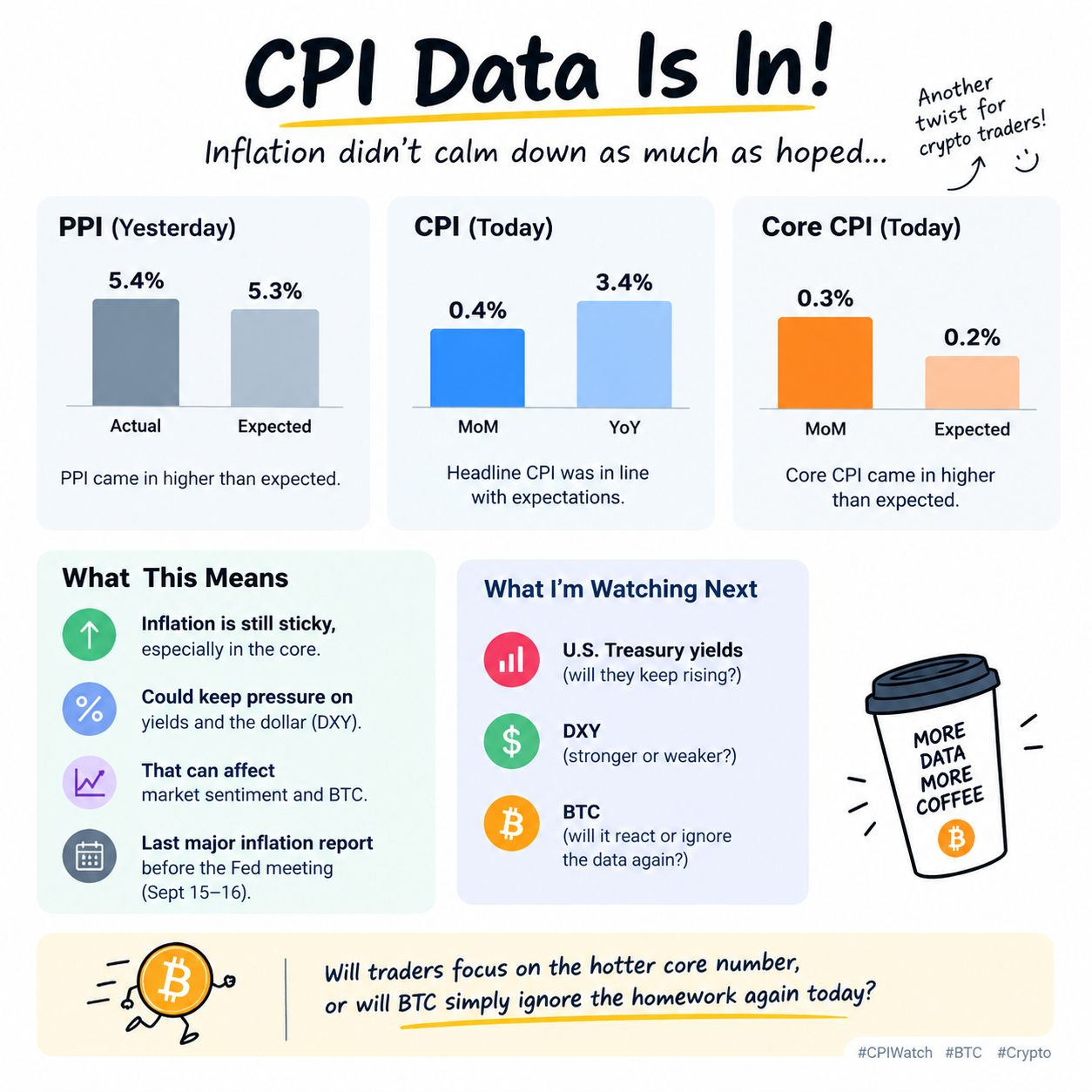
Жоғары (өспелі)I’ve been watching the CPI reaction today, and honestly, inflation decided to give crypto traders another small headache. Yesterday’s PPI was already uncomfortable at 5.4% versus 5.3% expected, so I was curious whether CPI would calm things down. It didn’t exactly.
Headline CPI came in at 0.4% month-on-month and 3.4% year-on-year, roughly around expectations. The part I’m paying more attention to is core CPI. It printed 0.3% m/m against 0.2% expected, which suggests underlying inflation is still refusing to cool as quickly as everyone would like. That matters for Bitcoin because inflation data can influence Treasury yields, the dollar, and ultimately expectations around the Fed. Basically, one percentage point can make the market behave like it just drank three coffees.
I’m not jumping straight into a bearish BTC call, though. Data can look negative while price reacts completely differently. For me, the next useful signal is the reaction in yields, DXY, and BTC rather than the headline itself. This is also the last major inflation report before the September 15–16 Fed meeting, so the market has plenty to chew on.
Now I’m wondering: will traders focus on the hotter core number, or will BTC simply ignore the homework again today?
#cpiwatch #CPIWatch
Headline CPI came in at 0.4% month-on-month and 3.4% year-on-year, roughly around expectations. The part I’m paying more attention to is core CPI. It printed 0.3% m/m against 0.2% expected, which suggests underlying inflation is still refusing to cool as quickly as everyone would like. That matters for Bitcoin because inflation data can influence Treasury yields, the dollar, and ultimately expectations around the Fed. Basically, one percentage point can make the market behave like it just drank three coffees.
I’m not jumping straight into a bearish BTC call, though. Data can look negative while price reacts completely differently. For me, the next useful signal is the reaction in yields, DXY, and BTC rather than the headline itself. This is also the last major inflation report before the September 15–16 Fed meeting, so the market has plenty to chew on.
Now I’m wondering: will traders focus on the hotter core number, or will BTC simply ignore the homework again today?
#cpiwatch #CPIWatch

楠楠nannan势不可挡
·
--
🧧🧧🧧🧧🧧🧧🧧🧧🧧
一周的早餐口粮已完成$BNB
一周的早餐口粮已完成$BNB


PK Aima
·
--
Beyond the Hype: Analyzing PEPE’s Market Dynamics & Deflationary Mechanics
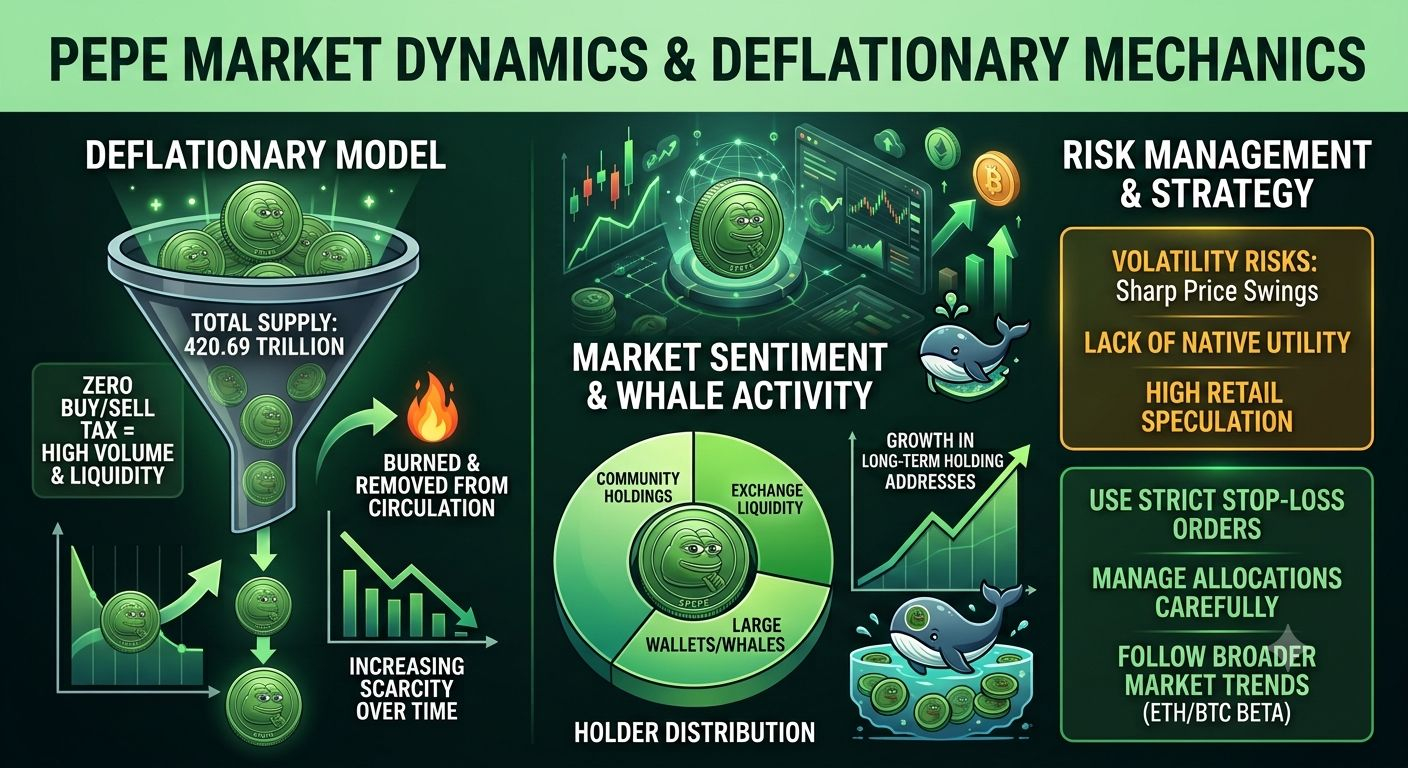
The meme coin sector often gets dismissed as pure speculative hype but PEPE has managed to cement itself alongside Dogecoin and Shiba Inu as a liquidity heavy meme asset. Understanding what drives PEPE's price action requires looking past social media noise and evaluating its core mechanics, holder distribution, and market placement.
PEPE operates on an ERC-20 framework with a maximum total supply of 420.69 trillion tokens. Unlike inflationary tokens that continuously emit new supply, PEPE utilizes a native burn mechanism designed to reduce circulating supply over time. Every transaction burns a small percentage, gradually reducing available supply while its zero buy and sell transaction tax structure keeps trading friction low, making it attractive for high volume traders and arbitrage liquidity.
PEPE also acts as a high-beta liquid proxy for overall market risk tolerance. When major assets like Ethereum experience bullish momentum, capital rapidly flows into PEPE due to its deep liquidity across exchanges. On chain metrics show steady growth in long term holding addresses, signaling a subtle transition from quick flipping toward structured portfolio allocation.
However, risk management remains essential. PEPE relies heavily on community mindshare rather than native DeFi utility, meaning high retail participation can cause sharp price swings during market pullbacks. Always maintain strict stop losses and manage risk carefully when navigating high-beta meme assets. What is your current target for PEPE this quarter?
#PEPE #creatorpad
The meme coin sector often gets dismissed as pure speculative hype but PEPE has managed to cement itself alongside Dogecoin and Shiba Inu as a liquidity heavy meme asset. Understanding what drives PEPE's price action requires looking past social media noise and evaluating its core mechanics, holder distribution, and market placement.
PEPE operates on an ERC-20 framework with a maximum total supply of 420.69 trillion tokens. Unlike inflationary tokens that continuously emit new supply, PEPE utilizes a native burn mechanism designed to reduce circulating supply over time. Every transaction burns a small percentage, gradually reducing available supply while its zero buy and sell transaction tax structure keeps trading friction low, making it attractive for high volume traders and arbitrage liquidity.
PEPE also acts as a high-beta liquid proxy for overall market risk tolerance. When major assets like Ethereum experience bullish momentum, capital rapidly flows into PEPE due to its deep liquidity across exchanges. On chain metrics show steady growth in long term holding addresses, signaling a subtle transition from quick flipping toward structured portfolio allocation.
However, risk management remains essential. PEPE relies heavily on community mindshare rather than native DeFi utility, meaning high retail participation can cause sharp price swings during market pullbacks. Always maintain strict stop losses and manage risk carefully when navigating high-beta meme assets. What is your current target for PEPE this quarter?
#PEPE #creatorpad

Hawk自由哥
·
--
[Қайта ойнату] 🎙️ 币圈行情交流;新人问题解答✅共建币安广场🦅传播自由理念!维护生态平衡!
03 сағ 11 а 35 с · 10k рет тыңдалды

好运来Hawk
·
--
Жоғары (өспелі)#Hawk 社区每天固定的三场直播,欢迎大家来直播间参与活动🉐老鹰🦅🦅,拥有老鹰未来可期🌈🌈




超人不会飞2020
·
--
[Қайта ойнату] 🎙️ 超人100U定投BTC的第29天
02 сағ 59 а 58 с · 10.1k рет тыңдалды

静心1688
·
--
💥上善若水。水善利万物而不争,处众人之所恶,故几于道。
💥释义:最高的善就像水,滋养万物却不争夺名利,安身在众人嫌弃的低处,这就接近大道的境界。做人要柔和、谦卑,懂得利他。
#CPI数据来袭能否触发9月加息 #CLARITY法案修订拟规范非DeFi控制方
💥释义:最高的善就像水,滋养万物却不争夺名利,安身在众人嫌弃的低处,这就接近大道的境界。做人要柔和、谦卑,懂得利他。
#CPI数据来袭能否触发9月加息 #CLARITY法案修订拟规范非DeFi控制方

白鲨观点
·
--
下周这个投票,可能比加息还重要——但 90% 的人都没搞懂
下周三(9月15日)有个投票,很多人没当回事。
CLARITY Act 的程序性投票,60 票门槛,过了继续走流程,不过就基本凉了。
目前通过概率多少?17%。
很低对吧?但这恰恰是最值得关注的地方——
当所有人都觉得没戏的时候,一旦超预期,行情爆发力最强。
先说说这个法案到底跟你有什么关系:
它会把加密货币分成"证券"和"商品"两类,分别由 SEC 和 CFTC 监管保护自托管钱包的合法性(你存自己钱包里的币,没人能管)给非托管软件开发者提供避风港(写代码不等于犯法)明确交易所的注册和信息披露标准
简单说:
通过了 = 加密行业在美国正式合法化,机构资金大规模进场的最后一道障碍没了。
没通过 = 继续靠 SEC 执法来监管,行业再等两年。
现在的情况:
共和党 53 席,但有 3-4 人可能反水需要至少 7-10 个民主党议员倒戈目前民主党只有 2 人明确支持,还有 7 个在观望
概率确实不高。但我要提醒大家:
17% 的概率不代表不会发生,只是发生了会很意外。
而市场最喜欢"意外"——
不管是意外的利好还是意外的利空,都会被放大。
我整理了一份《CLARITY Act 通过/失败影响对照表》,
包括哪些币会涨、哪些会跌、仓位怎么调。
来我聊天室发「法案」两个字就能领。
你觉得 CLARITY Act 能过吗?
评论区押个注,能过扣 1,不能过扣 2。
#BinanceSquare #CLARITY法案 #加密监管 #比特币
下周三(9月15日)有个投票,很多人没当回事。
CLARITY Act 的程序性投票,60 票门槛,过了继续走流程,不过就基本凉了。
目前通过概率多少?17%。
很低对吧?但这恰恰是最值得关注的地方——
当所有人都觉得没戏的时候,一旦超预期,行情爆发力最强。
先说说这个法案到底跟你有什么关系:
它会把加密货币分成"证券"和"商品"两类,分别由 SEC 和 CFTC 监管保护自托管钱包的合法性(你存自己钱包里的币,没人能管)给非托管软件开发者提供避风港(写代码不等于犯法)明确交易所的注册和信息披露标准
简单说:
通过了 = 加密行业在美国正式合法化,机构资金大规模进场的最后一道障碍没了。
没通过 = 继续靠 SEC 执法来监管,行业再等两年。
现在的情况:
共和党 53 席,但有 3-4 人可能反水需要至少 7-10 个民主党议员倒戈目前民主党只有 2 人明确支持,还有 7 个在观望
概率确实不高。但我要提醒大家:
17% 的概率不代表不会发生,只是发生了会很意外。
而市场最喜欢"意外"——
不管是意外的利好还是意外的利空,都会被放大。
我整理了一份《CLARITY Act 通过/失败影响对照表》,
包括哪些币会涨、哪些会跌、仓位怎么调。
来我聊天室发「法案」两个字就能领。
你觉得 CLARITY Act 能过吗?
评论区押个注,能过扣 1,不能过扣 2。
#BinanceSquare #CLARITY法案 #加密监管 #比特币

加密野狼
·
--
🚨 【局势更新】中东火药桶引爆,BTC 却在走独立行情?有🧧
过去72小时,地缘政治炸了锅:
🇮🇷🇺🇸 美伊在波斯湾正面交火——美军摧毁5艘伊朗油轮,伊朗导弹反击约旦美军基地。伊朗宣布将宣布霍尔木兹海峡“禁区”,日均通行量从130艘暴跌至10艘。布伦特原油已冲击100美元。
🇷🇺🇺🇦 俄乌短暂停火3天后战火重燃,基辅再遭多轮导弹和无人机袭击。
传统市场在瑟瑟发抖,但 BTC 这次不一样。
过去BTC和美股高度相关,但这轮地缘冲突中——油价破百、黄金拉升,BTC没有跟着美股砸,反而在 7.8万-8万美元 区间稳住了。市场正在定价一个新叙事:比特币正在从“风险资产”变成“数字黄金”。
技术面同步印证:9月8日BTC 50日均线上穿200日均线,形成“黄金交叉”——这是2025年11月以来首次。过去三周美国现货比特币ETF净流入高达 38亿美元,创2026年最强机构买盘纪录。
但别高兴太早,接下来48小时才是真正的战场:
📅 9月10日 PPI数据
📅 9月11日 8月CPI数据(关键!)
📅 9月15-16日 FOMC会议
目前CME对9月加息的定价已飙至 60-66%。CPI偏热 → 加息概率再升 → BTC可能杀到7.5万;CPI温和 → 加息预期回落 → BTC有望重测8.2万甚至8.5万。
多空对决,你站哪边?
🧧转发点赞评论:BTC
⚠️ 以上不构成投资建议,DYOR!
#BTC #加密货币 #地缘政治 #比特币 #美联储何时降息?
过去72小时,地缘政治炸了锅:
🇮🇷🇺🇸 美伊在波斯湾正面交火——美军摧毁5艘伊朗油轮,伊朗导弹反击约旦美军基地。伊朗宣布将宣布霍尔木兹海峡“禁区”,日均通行量从130艘暴跌至10艘。布伦特原油已冲击100美元。
🇷🇺🇺🇦 俄乌短暂停火3天后战火重燃,基辅再遭多轮导弹和无人机袭击。
传统市场在瑟瑟发抖,但 BTC 这次不一样。
过去BTC和美股高度相关,但这轮地缘冲突中——油价破百、黄金拉升,BTC没有跟着美股砸,反而在 7.8万-8万美元 区间稳住了。市场正在定价一个新叙事:比特币正在从“风险资产”变成“数字黄金”。
技术面同步印证:9月8日BTC 50日均线上穿200日均线,形成“黄金交叉”——这是2025年11月以来首次。过去三周美国现货比特币ETF净流入高达 38亿美元,创2026年最强机构买盘纪录。
但别高兴太早,接下来48小时才是真正的战场:
📅 9月10日 PPI数据
📅 9月11日 8月CPI数据(关键!)
📅 9月15-16日 FOMC会议
目前CME对9月加息的定价已飙至 60-66%。CPI偏热 → 加息概率再升 → BTC可能杀到7.5万;CPI温和 → 加息预期回落 → BTC有望重测8.2万甚至8.5万。
多空对决,你站哪边?
🧧转发点赞评论:BTC
⚠️ 以上不构成投资建议,DYOR!
#BTC #加密货币 #地缘政治 #比特币 #美联储何时降息?

黑皮不讲李
·
--
为什么苹果18比去年的17贵1000?



圣克斯Lucky1688
·
--
🧧🔥🧧🔥🧧🔥
核心通胀(Core CPI)主导机构判断:受近期油价上涨影响,总 CPI 易受能源价格扰动。机构资金更关注剔除食品和能源后的 Core CPI。若总 CPI 偏高但 Core CPI 呈现持续降温,盘面易出现“先下破后快速 V 型拉升”的走势。
警惕衍生品双向插针:数据公布瞬间(8:30 AM ET)极易引发链上与交易所合约清算,建议避免在数据公布前后开启高杠杆。
关注 ETF 资金后续承接:CPI 数据落地消除了短期宏观不确定性,数据公布后美国现货比特币 ETF 的每日净流入/流出情况将决定市场能否开启趋势性反弹。
关注我,回答答案1带走$SOL双倍红包!
🧧🔥🧧🔥🧧🔥
$BTC $BNB $ETH
核心通胀(Core CPI)主导机构判断:受近期油价上涨影响,总 CPI 易受能源价格扰动。机构资金更关注剔除食品和能源后的 Core CPI。若总 CPI 偏高但 Core CPI 呈现持续降温,盘面易出现“先下破后快速 V 型拉升”的走势。
警惕衍生品双向插针:数据公布瞬间(8:30 AM ET)极易引发链上与交易所合约清算,建议避免在数据公布前后开启高杠杆。
关注 ETF 资金后续承接:CPI 数据落地消除了短期宏观不确定性,数据公布后美国现货比特币 ETF 的每日净流入/流出情况将决定市场能否开启趋势性反弹。
关注我,回答答案1带走$SOL双倍红包!
🧧🔥🧧🔥🧧🔥
$BTC $BNB $ETH


Көбірек контент көру үшін кіріңіз