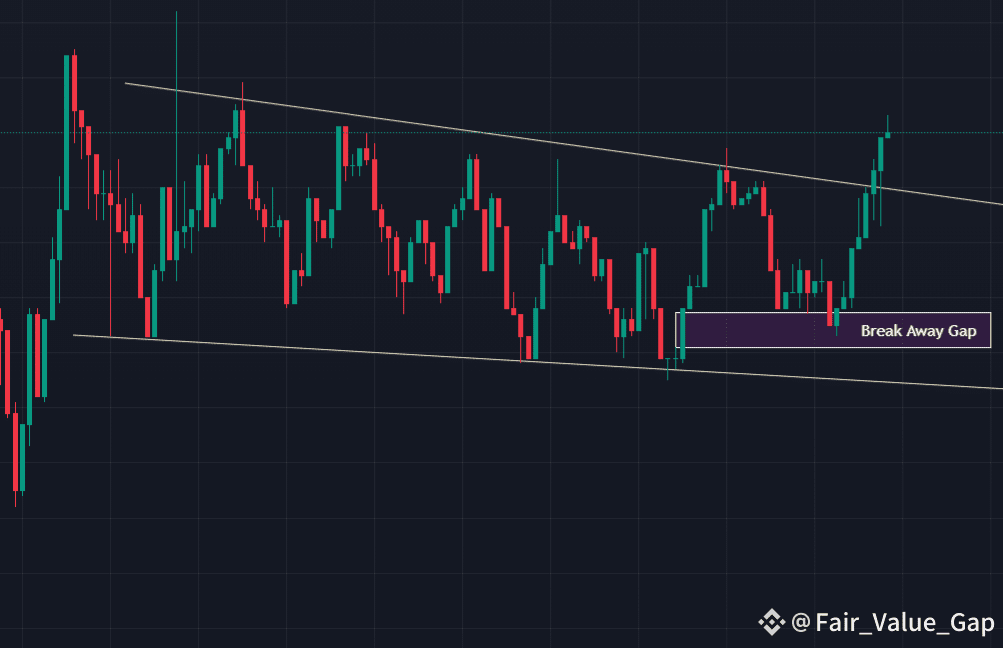
What is a Breakaway Gap?
A Breakaway Gap happens when price gaps up or down sharply from a consolidation or range, signaling the start of a new trend.
It usually forms after accumulation or distribution.
🔑Key Features of a Breakaway Gap:
Occurs at the end of a range or chart pattern (like a triangle or rectangle)
Comes with strong volume
Often not filled quickly—price keeps moving in the direction of the gap
Signals a major shift in market sentiment
💹How to Trade a Breakaway Gap:
1. Identify the range/consolidation zone
2. Watch for a strong gap above resistance or below support
3. Wait for a small retracement (if any), then
🟢Buy on bullish breakaway gaps
🔴Sell on bearish breakaway gaps
4. Place stop loss just inside the range
5. Target next major support/resistance or use measured move
$BCH
A Breakaway Gap happens when price gaps up or down sharply from a consolidation or range, signaling the start of a new trend.
It usually forms after accumulation or distribution.
🔑Key Features of a Breakaway Gap:
Occurs at the end of a range or chart pattern (like a triangle or rectangle)
Comes with strong volume
Often not filled quickly—price keeps moving in the direction of the gap
Signals a major shift in market sentiment
💹How to Trade a Breakaway Gap:
1. Identify the range/consolidation zone
2. Watch for a strong gap above resistance or below support
3. Wait for a small retracement (if any), then
🟢Buy on bullish breakaway gaps
🔴Sell on bearish breakaway gaps
4. Place stop loss just inside the range
5. Target next major support/resistance or use measured move
$BCH