How to track and report crypto transactions for tax purposes
Crypto assets are subject to tax and must be tracked and reported to the IRS. This comprehensive tax guide contains everything you need to know.
As cryptocurrencies and blockchain assets continue to grow in popularity and mainstream adoption, the United States Internal Revenue Service has taken an increasing interest in their taxation.
In the U.S., cryptocurrency is subject to crypto tax and is classified as transactions instead of property or assets. Needless to say, failure to accurately track and report these transactions can result in penalties and fines.
Here is a comprehensive crypto tax guide for tracking and reporting crypto transactions for tax purposes in the United States.
In the U.S., if you invest in crypto assets, such as nonfungible tokens (NFTs), and transact further for gains, you must be ready for crypto taxation.
Note that buying crypto alone — or its rise or fall in value while it is in your portfolio — isn’t taxable. Taxes are due when you sell, invest or dispose of the asset in any way for gains.
Cryptocurrency is subject to taxation in two ways: capital gains tax and income tax.
And again if crypto assets were held for less than a year, it is considered a short-term gain. If it was held for more than a year, it is regarded as a long-term gain.
Additionally, purchasing goods and services with cryptocurrency is also considered a capital gains taxable event. Trading or swapping one digital asset for another is also considered a capital gains event. This includes purchasing NFTs with cryptocurrency.
As such, it is crucial to accurately track all crypto transactions for tax purposes. That said, declaring your capital losses can offset capital gains tax.
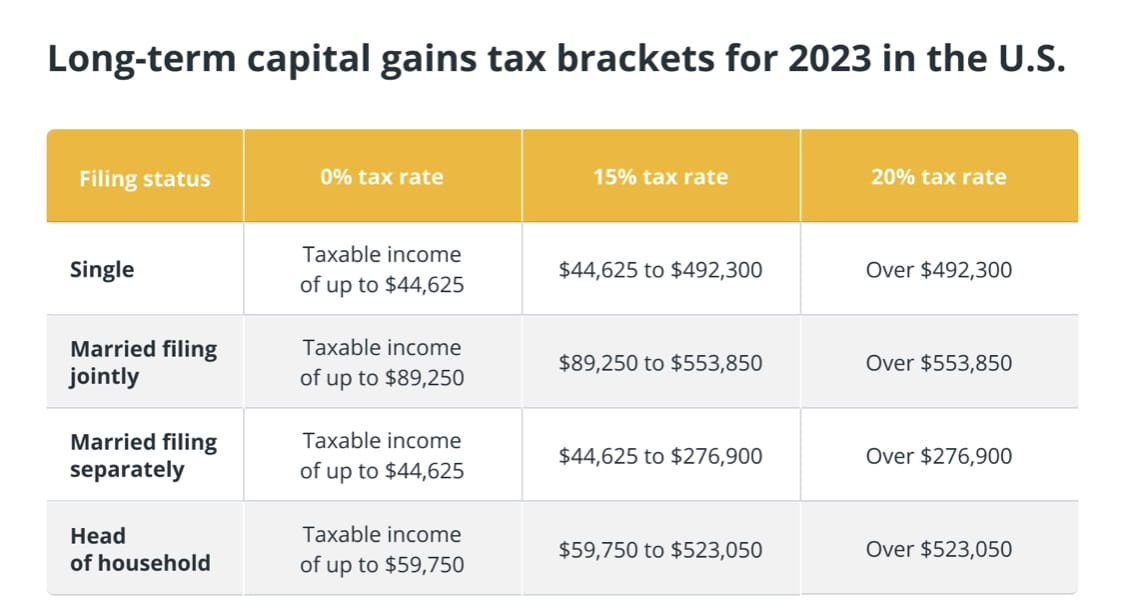
The IRS’ long-term cryptocurrency tax rates will apply to gains on cryptocurrencies that have been held for over a year.
For single individuals, no tax would be levied on crypto gains of up to $44,625. For individuals filing as heads of household or married people filing jointly, the rates range from 0% to 20%.
Crypto assets are subject to tax and must be tracked and reported to the IRS. This comprehensive tax guide contains everything you need to know.
As cryptocurrencies and blockchain assets continue to grow in popularity and mainstream adoption, the United States Internal Revenue Service has taken an increasing interest in their taxation.
In the U.S., cryptocurrency is subject to crypto tax and is classified as transactions instead of property or assets. Needless to say, failure to accurately track and report these transactions can result in penalties and fines.
Here is a comprehensive crypto tax guide for tracking and reporting crypto transactions for tax purposes in the United States.
In the U.S., if you invest in crypto assets, such as nonfungible tokens (NFTs), and transact further for gains, you must be ready for crypto taxation.
Note that buying crypto alone — or its rise or fall in value while it is in your portfolio — isn’t taxable. Taxes are due when you sell, invest or dispose of the asset in any way for gains.
Cryptocurrency is subject to taxation in two ways: capital gains tax and income tax.
And again if crypto assets were held for less than a year, it is considered a short-term gain. If it was held for more than a year, it is regarded as a long-term gain.
Additionally, purchasing goods and services with cryptocurrency is also considered a capital gains taxable event. Trading or swapping one digital asset for another is also considered a capital gains event. This includes purchasing NFTs with cryptocurrency.
As such, it is crucial to accurately track all crypto transactions for tax purposes. That said, declaring your capital losses can offset capital gains tax.
The IRS’ long-term cryptocurrency tax rates will apply to gains on cryptocurrencies that have been held for over a year.
For single individuals, no tax would be levied on crypto gains of up to $44,625. For individuals filing as heads of household or married people filing jointly, the rates range from 0% to 20%.