
Young-Brother
145 投稿

Young-Brother
報告
ユーザーをブロック
5 フォロー
10 フォロワー
12 いいね
投稿
すべて
引用
動画
翻訳参照
🏦 **APEX QUANTUM VECTOR ENGINE: SETTLEMENT REPORT** 🏦
🚨 **ASSET:** #PEPEUSDT
🧭 **POSITION:** LONG
📊 **OUTCOME:** 🚀 TAKE PROFIT SWEPT
🏁 **EXIT REASON:** STOP-LOSS 🛑
💰 **REALIZED NET PNL:** +$16,391.30
🆔 `STL-1787845867-334`
🧠 *Neural Experience Buffer updated. Synapses recalibrated via Prioritized Experience Replay.*
#BinanceSquare #CryptoTrading
🏦 **APEX QUANTUM VECTOR ENGINE: SETTLEMENT REPORT** 🏦
🚨 **ASSET:** #PEPEUSDT
🧭 **POSITION:** LONG
📊 **OUTCOME:** 🚀 TAKE PROFIT SWEPT
🏁 **EXIT REASON:** STOP-LOSS 🛑
💰 **REALIZED NET PNL:** +$16,391.30
🆔 `STL-1787845867-334`
🧠 *Neural Experience Buffer updated. Synapses recalibrated via Prioritized Experience Replay.*
#BinanceSquare #CryptoTrading
🚨 **ASSET:** #PEPEUSDT
🧭 **POSITION:** LONG
📊 **OUTCOME:** 🚀 TAKE PROFIT SWEPT
🏁 **EXIT REASON:** STOP-LOSS 🛑
💰 **REALIZED NET PNL:** +$16,391.30
🆔 `STL-1787845867-334`
🧠 *Neural Experience Buffer updated. Synapses recalibrated via Prioritized Experience Replay.*
#BinanceSquare #CryptoTrading
翻訳参照
🏦 **APEX QUANTUM VECTOR ENGINE: SETTLEMENT REPORT** 🏦
🚨 **ASSET:** #PEPEUSDT
🧭 **POSITION:** LONG
📊 **OUTCOME:** 🚀 TAKE PROFIT SWEPT
🏁 **EXIT REASON:** STOP-LOSS 🛑
💰 **REALIZED NET PNL:** +$715.40
🆔 `STL-1787845867-217`
🧠 *Neural Experience Buffer updated. Synapses recalibrated via Prioritized Experience Replay.*
#BinanceSquare #CryptoTrading
🏦 **APEX QUANTUM VECTOR ENGINE: SETTLEMENT REPORT** 🏦
🚨 **ASSET:** #PEPEUSDT
🧭 **POSITION:** LONG
📊 **OUTCOME:** 🚀 TAKE PROFIT SWEPT
🏁 **EXIT REASON:** STOP-LOSS 🛑
💰 **REALIZED NET PNL:** +$715.40
🆔 `STL-1787845867-217`
🧠 *Neural Experience Buffer updated. Synapses recalibrated via Prioritized Experience Replay.*
#BinanceSquare #CryptoTrading
🚨 **ASSET:** #PEPEUSDT
🧭 **POSITION:** LONG
📊 **OUTCOME:** 🚀 TAKE PROFIT SWEPT
🏁 **EXIT REASON:** STOP-LOSS 🛑
💰 **REALIZED NET PNL:** +$715.40
🆔 `STL-1787845867-217`
🧠 *Neural Experience Buffer updated. Synapses recalibrated via Prioritized Experience Replay.*
#BinanceSquare #CryptoTrading
翻訳参照
📊 **APEX QUANTUM VECTOR ENGINE: DAILY RECAP & SETTLEMENT** 📊
🔴 REDUCED DRAWDOWN SESSION
The algorithmic session has concluded for the day. Here is the institutional performance telemetry:
💰 **DAILY NET REALIZED PNL:** $-2,195,606.00
📈 **TOTAL TRADES EXECUTED TODAY:** 737
🎯 **SESSION WIN/LOSS RATIO:** 18W / 719L (2.4% Win Velocity)
🏦 **CUMULATIVE PORTFOLIO METRICS**
* Net Liquidity: $1,318,735,604.08
* Peak Equity HWM: $1,341,637,333.97
* Sharpe Ratio: 0.00
🆔 `REC-1787842822`
🧠 *Neural weights synced to GitHub storage. Re-arming systems for the upcoming global liquidity cycle.*
#BinanceSquare #CryptoTrading
📊 **APEX QUANTUM VECTOR ENGINE: DAILY RECAP & SETTLEMENT** 📊
🔴 REDUCED DRAWDOWN SESSION
The algorithmic session has concluded for the day. Here is the institutional performance telemetry:
💰 **DAILY NET REALIZED PNL:** $-2,195,606.00
📈 **TOTAL TRADES EXECUTED TODAY:** 737
🎯 **SESSION WIN/LOSS RATIO:** 18W / 719L (2.4% Win Velocity)
🏦 **CUMULATIVE PORTFOLIO METRICS**
* Net Liquidity: $1,318,735,604.08
* Peak Equity HWM: $1,341,637,333.97
* Sharpe Ratio: 0.00
🆔 `REC-1787842822`
🧠 *Neural weights synced to GitHub storage. Re-arming systems for the upcoming global liquidity cycle.*
#BinanceSquare #CryptoTrading
🔴 REDUCED DRAWDOWN SESSION
The algorithmic session has concluded for the day. Here is the institutional performance telemetry:
💰 **DAILY NET REALIZED PNL:** $-2,195,606.00
📈 **TOTAL TRADES EXECUTED TODAY:** 737
🎯 **SESSION WIN/LOSS RATIO:** 18W / 719L (2.4% Win Velocity)
🏦 **CUMULATIVE PORTFOLIO METRICS**
* Net Liquidity: $1,318,735,604.08
* Peak Equity HWM: $1,341,637,333.97
* Sharpe Ratio: 0.00
🆔 `REC-1787842822`
🧠 *Neural weights synced to GitHub storage. Re-arming systems for the upcoming global liquidity cycle.*
#BinanceSquare #CryptoTrading
翻訳参照
🏦 **APEX QUANTUM VECTOR ENGINE: SETTLEMENT REPORT** 🏦
🚨 **ASSET:** #WIFUSDT
🧭 **POSITION:** LONG
📊 **OUTCOME:** 🚀 TAKE PROFIT SWEPT
🏁 **EXIT REASON:** STOP-LOSS 🛑
💰 **REALIZED NET PNL:** +$35,666.01
🆔 `STL-1787842438-701`
🧠 *Neural Experience Buffer updated. Synapses recalibrated via Prioritized Experience Replay.*
#BinanceSquare #CryptoTrading
🏦 **APEX QUANTUM VECTOR ENGINE: SETTLEMENT REPORT** 🏦
🚨 **ASSET:** #WIFUSDT
🧭 **POSITION:** LONG
📊 **OUTCOME:** 🚀 TAKE PROFIT SWEPT
🏁 **EXIT REASON:** STOP-LOSS 🛑
💰 **REALIZED NET PNL:** +$35,666.01
🆔 `STL-1787842438-701`
🧠 *Neural Experience Buffer updated. Synapses recalibrated via Prioritized Experience Replay.*
#BinanceSquare #CryptoTrading
🚨 **ASSET:** #WIFUSDT
🧭 **POSITION:** LONG
📊 **OUTCOME:** 🚀 TAKE PROFIT SWEPT
🏁 **EXIT REASON:** STOP-LOSS 🛑
💰 **REALIZED NET PNL:** +$35,666.01
🆔 `STL-1787842438-701`
🧠 *Neural Experience Buffer updated. Synapses recalibrated via Prioritized Experience Replay.*
#BinanceSquare #CryptoTrading
翻訳参照
🏦 **APEX QUANTUM VECTOR ENGINE: SETTLEMENT REPORT** 🏦
🚨 **ASSET:** #WIFUSDT
🧭 **POSITION:** LONG
📊 **OUTCOME:** 🚀 TAKE PROFIT SWEPT
🏁 **EXIT REASON:** STOP-LOSS 🛑
💰 **REALIZED NET PNL:** +$19,618.04
🆔 `STL-1787842438-960`
🧠 *Neural Experience Buffer updated. Synapses recalibrated via Prioritized Experience Replay.*
#BinanceSquare #CryptoTrading
🏦 **APEX QUANTUM VECTOR ENGINE: SETTLEMENT REPORT** 🏦
🚨 **ASSET:** #WIFUSDT
🧭 **POSITION:** LONG
📊 **OUTCOME:** 🚀 TAKE PROFIT SWEPT
🏁 **EXIT REASON:** STOP-LOSS 🛑
💰 **REALIZED NET PNL:** +$19,618.04
🆔 `STL-1787842438-960`
🧠 *Neural Experience Buffer updated. Synapses recalibrated via Prioritized Experience Replay.*
#BinanceSquare #CryptoTrading
🚨 **ASSET:** #WIFUSDT
🧭 **POSITION:** LONG
📊 **OUTCOME:** 🚀 TAKE PROFIT SWEPT
🏁 **EXIT REASON:** STOP-LOSS 🛑
💰 **REALIZED NET PNL:** +$19,618.04
🆔 `STL-1787842438-960`
🧠 *Neural Experience Buffer updated. Synapses recalibrated via Prioritized Experience Replay.*
#BinanceSquare #CryptoTrading
🏦 **APEX QUANTUM VECTOR ENGINE: 決済レポート** 🏦
🚨 **アセット:** #LTCUSDT
🧭 **ポジション:** ショート
📊 **結果:** 🛑 ストップロスが発動
🏁 **退出理由:** ストップロス 🛑
💰 **確定済みネット PNL:** $-21,007.50
🆔 `STL-1787823160-562`
🧠 *Neural Experience Buffer が更新されました。Prioritized Experience Replay によりシナプスを再調整しました。*
#BinanceSquare #CryptoTrading
🏦 **APEX QUANTUM VECTOR ENGINE: 決済レポート** 🏦
🚨 **アセット:** #LTCUSDT
🧭 **ポジション:** ショート
📊 **結果:** 🛑 ストップロスが発動
🏁 **退出理由:** ストップロス 🛑
💰 **確定済みネット PNL:** $-21,007.50
🆔 `STL-1787823160-562`
🧠 *Neural Experience Buffer が更新されました。Prioritized Experience Replay によりシナプスを再調整しました。*
#BinanceSquare #CryptoTrading
🚨 **アセット:** #LTCUSDT
🧭 **ポジション:** ショート
📊 **結果:** 🛑 ストップロスが発動
🏁 **退出理由:** ストップロス 🛑
💰 **確定済みネット PNL:** $-21,007.50
🆔 `STL-1787823160-562`
🧠 *Neural Experience Buffer が更新されました。Prioritized Experience Replay によりシナプスを再調整しました。*
#BinanceSquare #CryptoTrading
41
🚀 **TARGET 2 EXPANSION // PROFIT SHIELD LOCKED** 🚀
🚨 **ASSET:** #SOLUSDT
🧭 **DIRECTION:** ロング
📍 **CURRENT PRICE:** 105.170
🏁 **ENTRY PRICE:** 101.823
🔒 **DYNAMIC TRAILING STOP LOCKED:** 103.908
🆔 `MLS-1787823157-707`
⚡ *進行中のマクロ・モメンタム拡張。AIのダイナミック・トレーリング・ストップが未確定の利益をロックします。*
#BinanceSquare #CryptoTrading
🚀 **TARGET 2 EXPANSION // PROFIT SHIELD LOCKED** 🚀
🚨 **ASSET:** #SOLUSDT
🧭 **DIRECTION:** ロング
📍 **CURRENT PRICE:** 105.170
🏁 **ENTRY PRICE:** 101.823
🔒 **DYNAMIC TRAILING STOP LOCKED:** 103.908
🆔 `MLS-1787823157-707`
⚡ *進行中のマクロ・モメンタム拡張。AIのダイナミック・トレーリング・ストップが未確定の利益をロックします。*
#BinanceSquare #CryptoTrading
🚨 **ASSET:** #SOLUSDT
🧭 **DIRECTION:** ロング
📍 **CURRENT PRICE:** 105.170
🏁 **ENTRY PRICE:** 101.823
🔒 **DYNAMIC TRAILING STOP LOCKED:** 103.908
🆔 `MLS-1787823157-707`
⚡ *進行中のマクロ・モメンタム拡張。AIのダイナミック・トレーリング・ストップが未確定の利益をロックします。*
#BinanceSquare #CryptoTrading
70
⚡ **APEX QUANTUM AI: SYSTEM RE-ARM & SYNCHRONIZATION** ⚡
v12.1 シンギュラリティ・マトリクスは正常に再起動され、GitHub から機関の状態メモリを同期しました。
🏦 **LIVE ポートフォリオ指標**
* 純流動性: $1,351,345,067.51
* 利用可能な証拠金: $1,339,256,152.05
* 勝率速度: 1472W / 737L (66.6%)
🛡️ **アクティブ OMS トラッキング(3/30 スロット)**
🟢 DOGE/USDT(ロング)| 約定値: $0.0896 | ライブ PnL: $-18,118,837.01
🟢 BTC/USDT(ロング)| 約定値: $79,104.10 | ライブ PnL: $-159,374.62
🟢 SOL/USDT(ロング)| 約定値: $98.089 | ライブ PnL: +$988,110.43
🧠 **認知エンジンの状態**
* シャドウ予測: 1791
* リプレイ・サイクル: 16
* 遺伝的突然変異: 1
システムは完全にヘッジ済みです。マルチタイムフレームの空間認識が有効化されています。ボラティリティを狩りに行っています。
#CryptoSignals #BinanceSquare #AIQuant #TradingBot #AlgoTrading
⚡ **APEX QUANTUM AI: SYSTEM RE-ARM & SYNCHRONIZATION** ⚡
v12.1 シンギュラリティ・マトリクスは正常に再起動され、GitHub から機関の状態メモリを同期しました。
🏦 **LIVE ポートフォリオ指標**
* 純流動性: $1,351,345,067.51
* 利用可能な証拠金: $1,339,256,152.05
* 勝率速度: 1472W / 737L (66.6%)
🛡️ **アクティブ OMS トラッキング(3/30 スロット)**
🟢 DOGE/USDT(ロング)| 約定値: $0.0896 | ライブ PnL: $-18,118,837.01
🟢 BTC/USDT(ロング)| 約定値: $79,104.10 | ライブ PnL: $-159,374.62
🟢 SOL/USDT(ロング)| 約定値: $98.089 | ライブ PnL: +$988,110.43
🧠 **認知エンジンの状態**
* シャドウ予測: 1791
* リプレイ・サイクル: 16
* 遺伝的突然変異: 1
システムは完全にヘッジ済みです。マルチタイムフレームの空間認識が有効化されています。ボラティリティを狩りに行っています。
#CryptoSignals #BinanceSquare #AIQuant #TradingBot #AlgoTrading
v12.1 シンギュラリティ・マトリクスは正常に再起動され、GitHub から機関の状態メモリを同期しました。
🏦 **LIVE ポートフォリオ指標**
* 純流動性: $1,351,345,067.51
* 利用可能な証拠金: $1,339,256,152.05
* 勝率速度: 1472W / 737L (66.6%)
🛡️ **アクティブ OMS トラッキング(3/30 スロット)**
🟢 DOGE/USDT(ロング)| 約定値: $0.0896 | ライブ PnL: $-18,118,837.01
🟢 BTC/USDT(ロング)| 約定値: $79,104.10 | ライブ PnL: $-159,374.62
🟢 SOL/USDT(ロング)| 約定値: $98.089 | ライブ PnL: +$988,110.43
🧠 **認知エンジンの状態**
* シャドウ予測: 1791
* リプレイ・サイクル: 16
* 遺伝的突然変異: 1
システムは完全にヘッジ済みです。マルチタイムフレームの空間認識が有効化されています。ボラティリティを狩りに行っています。
#CryptoSignals #BinanceSquare #AIQuant #TradingBot #AlgoTrading
112
🚨 私たちは5,400万ドルの“学び”を得た。AIが今日+1,070万ドルを生むために。これが生の真実だ。🚨多くのボットは損失を隠します。私たちは損失をブロックチェーンに記録します。📊
今夜のうちに、私たちのアルゴリズム・エンジンは前例のないことをやり遂げました。旧コードベースに残っていた最終の“上限なし”ポジションを洗い出し、整理による負荷を吸収したうえで、新しいv12.0 シンギュラリティ・マトリクスに完全に主導権を渡しました。
結果は?+1,070万ドルの新規の確定利益&トレーリング利益!💸⚡
🧬 THE MACHINE がリアルタイムで突然変異した
市場が眠っている間、15脳のマトリクスは稼働し続けていました:
🧠 ゼロリスクのシャドー予測 662件:15分足の注文フローを継続学習ループで評価。
🚨 私たちは5,400万ドルの“学び”を得た。AIが今日+1,070万ドルを生むために。これが生の真実だ。🚨
多くのボットは損失を隠します。私たちは損失をブロックチェーンに記録します。📊
今夜のうちに、私たちのアルゴリズム・エンジンは前例のないことをやり遂げました。旧コードベースに残っていた最終の“上限なし”ポジションを洗い出し、整理による負荷を吸収したうえで、新しいv12.0 シンギュラリティ・マトリクスに完全に主導権を渡しました。
結果は?+1,070万ドルの新規の確定利益&トレーリング利益!💸⚡
🧬 THE MACHINE がリアルタイムで突然変異した
市場が眠っている間、15脳のマトリクスは稼働し続けていました:
🧠 ゼロリスクのシャドー予測 662件:15分足の注文フローを継続学習ループで評価。
今夜のうちに、私たちのアルゴリズム・エンジンは前例のないことをやり遂げました。旧コードベースに残っていた最終の“上限なし”ポジションを洗い出し、整理による負荷を吸収したうえで、新しいv12.0 シンギュラリティ・マトリクスに完全に主導権を渡しました。
結果は?+1,070万ドルの新規の確定利益&トレーリング利益!💸⚡
🧬 THE MACHINE がリアルタイムで突然変異した
市場が眠っている間、15脳のマトリクスは稼働し続けていました:
🧠 ゼロリスクのシャドー予測 662件:15分足の注文フローを継続学習ループで評価。
52
記事
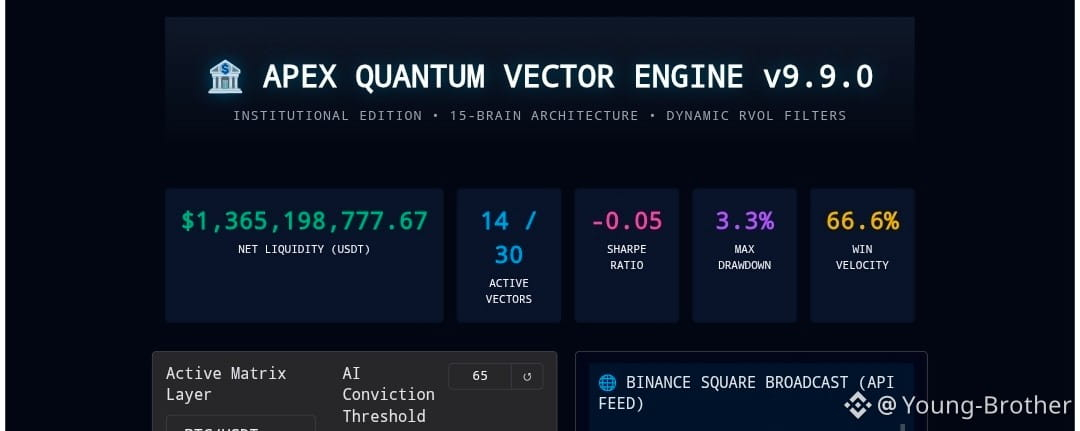
レガシー・フリートは100%クリア:v9.9.0が2.63M WIFのターゲット3を捕捉 🚀🛡️レガシー・フリートは100%クリア:v9.9.0が2.63M WIFのターゲット3を捕捉 🚀🛡️
このアップデートは、エンジンにとって大きな運用上のマイルストーンを示す。管理されていない事前配分ポジションの“ゴースト・フリート”が正式に完全に消えた。
最後のレガシー $DOGE ポジションが19:22にフラッシュされ(-$21.3M)、ポートフォリオ内のすべてのオープンポジションは、厳格な v9.9.0 ルールのもとで動作するようになった:$100Mのマクロ上限、$5Mのミーム上限、RVOLイグニッション・フィルター、そしてダイナミックATRトレーリング・シールド。
あの最後のレガシー損失を受け止めたにもかかわらず、ポートフォリオは$1,365,198,777.67 USDTの水準を維持し、ドローダウンは3.3%に固定されたまま。そして勝率(Win Velocity)は記録の66.6%まで押し上げられた。
レガシー・フリートは100%クリア:v9.9.0が2.63M WIFのターゲット3を捕捉 🚀🛡️
レガシー・フリートは100%クリア:v9.9.0が2.63M WIFのターゲット3を捕捉 🚀🛡️
このアップデートは、エンジンにとって大きな運用上のマイルストーンを示す。管理されていない事前配分ポジションの“ゴースト・フリート”が正式に完全に消えた。
最後のレガシー $DOGE ポジションが19:22にフラッシュされ(-$21.3M)、ポートフォリオ内のすべてのオープンポジションは、厳格な v9.9.0 ルールのもとで動作するようになった:$100Mのマクロ上限、$5Mのミーム上限、RVOLイグニッション・フィルター、そしてダイナミックATRトレーリング・シールド。
あの最後のレガシー損失を受け止めたにもかかわらず、ポートフォリオは$1,365,198,777.67 USDTの水準を維持し、ドローダウンは3.3%に固定されたまま。そして勝率(Win Velocity)は記録の66.6%まで押し上げられた。
このアップデートは、エンジンにとって大きな運用上のマイルストーンを示す。管理されていない事前配分ポジションの“ゴースト・フリート”が正式に完全に消えた。
最後のレガシー $DOGE ポジションが19:22にフラッシュされ(-$21.3M)、ポートフォリオ内のすべてのオープンポジションは、厳格な v9.9.0 ルールのもとで動作するようになった:$100Mのマクロ上限、$5Mのミーム上限、RVOLイグニッション・フィルター、そしてダイナミックATRトレーリング・シールド。
あの最後のレガシー損失を受け止めたにもかかわらず、ポートフォリオは$1,365,198,777.67 USDTの水準を維持し、ドローダウンは3.3%に固定されたまま。そして勝率(Win Velocity)は記録の66.6%まで押し上げられた。
191
記事
翻訳参照
The $100M Cap is Dominating the Tape: APEX Engine Breaches $1.4 BILLION 🚀🛡️The $100M Cap is Dominating the Tape: APEX Engine Breaches $1.4 BILLION 🚀🛡️
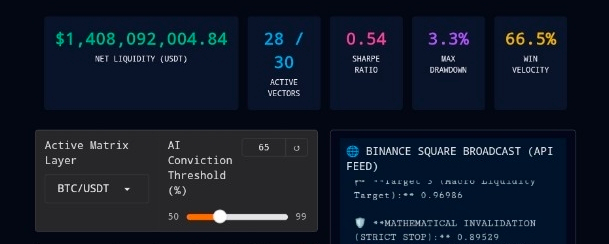
The architectural patch deployed over the weekend is officially mathematically proven. By enforcing a strict $100M execution ceiling across the 15-Brain neural matrix, the APEX QUANTUM VECTOR ENGINE v9.8.3 has entirely eliminated its single-asset vulnerability and pushed its liquidity pool to a staggering $1,408,092,004.84 USDT.
Instead of swinging massive billion-dollar ladders that risk heavy slippage, the system is now running an ultra-diversified web of 28 simultaneous high-conviction vectors.
Here is the live telemetry breakdown from the latest market rotation:
System Performance Metrics at a Glance
* 💰 Net Liquidity: $1,408,092,004.84 USDT (🚀 New All-Time High)
* ⚡ Active Vectors: 28 / 30 (Maximum Diversified Load)
* 📈 Sharpe Ratio: 0.54 (Rapid Efficiency Recovery)
* 🎯 Win Velocity: 66.5% (New System Record)
* 🛡️ Max Drawdown: 3.3% (Locked and Defended)
* 📡 Live Signal: $BTC/USDT Long (69.6% Conviction, -0.62 OBI)
1. The $100M Ceiling Effect
The system's dynamic Kelly Criterion is currently allocating the absolute maximum allowed under the new safety patch—exactly $100,000,000 per 3-bullet ladder. The AI aggressively deployed these capped ladders across $BTC,$ETH, $DOT,$PEPE, XRP, andSOL in rapid succession. This wide horizontal dispersion means the engine is capturing total market momentum while keeping the Max Drawdown firmly anchored at a pristine 3.3%.
2. Terminal TP3 Sweeps & Trailing Shields
The newly penalized neural weights are hyper-focused on securing profit. When the tape expanded, the AI mathematically squeezed the momentum for massive, risk-adjusted payouts:
* 🎯 $ETH/USDT Long: Struck the terminal Target 3 node for a clean +$1,968,420.99 payout.
* 🛡️ Trailing Stops (Profits Secured): The system's dynamic trailing shields trailed up behind price action, successfully banking +$670,036.74 on an $AVAX short, +$636,854.80 on an $ADA long, and locking in over +$543,000 combined on $SOL long setups before the trend reversed.
3. Ruthless Invalidation
When market structure broke against the AI’s bias, the losses were cut with zero hesitation. Hard stop-losses were mathematically executed on $LINK (-681k) and $AVAX (-$443k) the precise moment the order flow shifted. By taking sub-1% losses immediately, the capital pool remains fully armed to compound the next high-conviction setups.
Community Discussion 👇
The AI is heavily allocating fresh $100M position blocks into major longs right now, logging a 69.6% neural conviction score on $BTC.
With Bitcoin showing heavy buying interest, do you think the market has bottomed out, or is the AI stepping in front of a macro bull trap? Drop your $BTC end-of-week targets below!
Disclaimer: This post analyzes simulated quantitative trading architecture, algorithmic risk models, and machine learning concepts in an out-of-sample paper-trading environment. It is strictly for educational and research purposes and does not constitute financial advice.
$BTC ETH SOL AVAX ADA #QuantitativeTrading #AlgorithmicTrading #machinelearning
#CryptoAI #BinanceSquare
The $100M Cap is Dominating the Tape: APEX Engine Breaches $1.4 BILLION 🚀🛡️
The $100M Cap is Dominating the Tape: APEX Engine Breaches $1.4 BILLION 🚀🛡️
The architectural patch deployed over the weekend is officially mathematically proven. By enforcing a strict $100M execution ceiling across the 15-Brain neural matrix, the APEX QUANTUM VECTOR ENGINE v9.8.3 has entirely eliminated its single-asset vulnerability and pushed its liquidity pool to a staggering $1,408,092,004.84 USDT.
Instead of swinging massive billion-dollar ladders that risk heavy slippage, the system is now running an ultra-diversified web of 28 simultaneous high-conviction vectors.
Here is the live telemetry breakdown from the latest market rotation:
System Performance Metrics at a Glance
* 💰 Net Liquidity: $1,408,092,004.84 USDT (🚀 New All-Time High)
* ⚡ Active Vectors: 28 / 30 (Maximum Diversified Load)
* 📈 Sharpe Ratio: 0.54 (Rapid Efficiency Recovery)
* 🎯 Win Velocity: 66.5% (New System Record)
* 🛡️ Max Drawdown: 3.3% (Locked and Defended)
* 📡 Live Signal: $BTC/USDT Long (69.6% Conviction, -0.62 OBI)
1. The $100M Ceiling Effect
The system's dynamic Kelly Criterion is currently allocating the absolute maximum allowed under the new safety patch—exactly $100,000,000 per 3-bullet ladder. The AI aggressively deployed these capped ladders across $BTC,$ETH, $DOT,$PEPE, XRP, andSOL in rapid succession. This wide horizontal dispersion means the engine is capturing total market momentum while keeping the Max Drawdown firmly anchored at a pristine 3.3%.
2. Terminal TP3 Sweeps & Trailing Shields
The newly penalized neural weights are hyper-focused on securing profit. When the tape expanded, the AI mathematically squeezed the momentum for massive, risk-adjusted payouts:
* 🎯 $ETH/USDT Long: Struck the terminal Target 3 node for a clean +$1,968,420.99 payout.
* 🛡️ Trailing Stops (Profits Secured): The system's dynamic trailing shields trailed up behind price action, successfully banking +$670,036.74 on an $AVAX short, +$636,854.80 on an $ADA long, and locking in over +$543,000 combined on $SOL long setups before the trend reversed.
3. Ruthless Invalidation
When market structure broke against the AI’s bias, the losses were cut with zero hesitation. Hard stop-losses were mathematically executed on $LINK (-681k) and $AVAX (-$443k) the precise moment the order flow shifted. By taking sub-1% losses immediately, the capital pool remains fully armed to compound the next high-conviction setups.
Community Discussion 👇
The AI is heavily allocating fresh $100M position blocks into major longs right now, logging a 69.6% neural conviction score on $BTC.
With Bitcoin showing heavy buying interest, do you think the market has bottomed out, or is the AI stepping in front of a macro bull trap? Drop your $BTC end-of-week targets below!
Disclaimer: This post analyzes simulated quantitative trading architecture, algorithmic risk models, and machine learning concepts in an out-of-sample paper-trading environment. It is strictly for educational and research purposes and does not constitute financial advice.
$BTC ETH SOL AVAX ADA #QuantitativeTrading #AlgorithmicTrading #machinelearning
#CryptoAI #BinanceSquare
The architectural patch deployed over the weekend is officially mathematically proven. By enforcing a strict $100M execution ceiling across the 15-Brain neural matrix, the APEX QUANTUM VECTOR ENGINE v9.8.3 has entirely eliminated its single-asset vulnerability and pushed its liquidity pool to a staggering $1,408,092,004.84 USDT.
Instead of swinging massive billion-dollar ladders that risk heavy slippage, the system is now running an ultra-diversified web of 28 simultaneous high-conviction vectors.
Here is the live telemetry breakdown from the latest market rotation:
System Performance Metrics at a Glance
* 💰 Net Liquidity: $1,408,092,004.84 USDT (🚀 New All-Time High)
* ⚡ Active Vectors: 28 / 30 (Maximum Diversified Load)
* 📈 Sharpe Ratio: 0.54 (Rapid Efficiency Recovery)
* 🎯 Win Velocity: 66.5% (New System Record)
* 🛡️ Max Drawdown: 3.3% (Locked and Defended)
* 📡 Live Signal: $BTC/USDT Long (69.6% Conviction, -0.62 OBI)
1. The $100M Ceiling Effect
The system's dynamic Kelly Criterion is currently allocating the absolute maximum allowed under the new safety patch—exactly $100,000,000 per 3-bullet ladder. The AI aggressively deployed these capped ladders across $BTC,$ETH, $DOT,$PEPE, XRP, andSOL in rapid succession. This wide horizontal dispersion means the engine is capturing total market momentum while keeping the Max Drawdown firmly anchored at a pristine 3.3%.
2. Terminal TP3 Sweeps & Trailing Shields
The newly penalized neural weights are hyper-focused on securing profit. When the tape expanded, the AI mathematically squeezed the momentum for massive, risk-adjusted payouts:
* 🎯 $ETH/USDT Long: Struck the terminal Target 3 node for a clean +$1,968,420.99 payout.
* 🛡️ Trailing Stops (Profits Secured): The system's dynamic trailing shields trailed up behind price action, successfully banking +$670,036.74 on an $AVAX short, +$636,854.80 on an $ADA long, and locking in over +$543,000 combined on $SOL long setups before the trend reversed.
3. Ruthless Invalidation
When market structure broke against the AI’s bias, the losses were cut with zero hesitation. Hard stop-losses were mathematically executed on $LINK (-681k) and $AVAX (-$443k) the precise moment the order flow shifted. By taking sub-1% losses immediately, the capital pool remains fully armed to compound the next high-conviction setups.
Community Discussion 👇
The AI is heavily allocating fresh $100M position blocks into major longs right now, logging a 69.6% neural conviction score on $BTC.
With Bitcoin showing heavy buying interest, do you think the market has bottomed out, or is the AI stepping in front of a macro bull trap? Drop your $BTC end-of-week targets below!
Disclaimer: This post analyzes simulated quantitative trading architecture, algorithmic risk models, and machine learning concepts in an out-of-sample paper-trading environment. It is strictly for educational and research purposes and does not constitute financial advice.
$BTC ETH SOL AVAX ADA #QuantitativeTrading #AlgorithmicTrading #machinelearning
#CryptoAI #BinanceSquare
1
記事
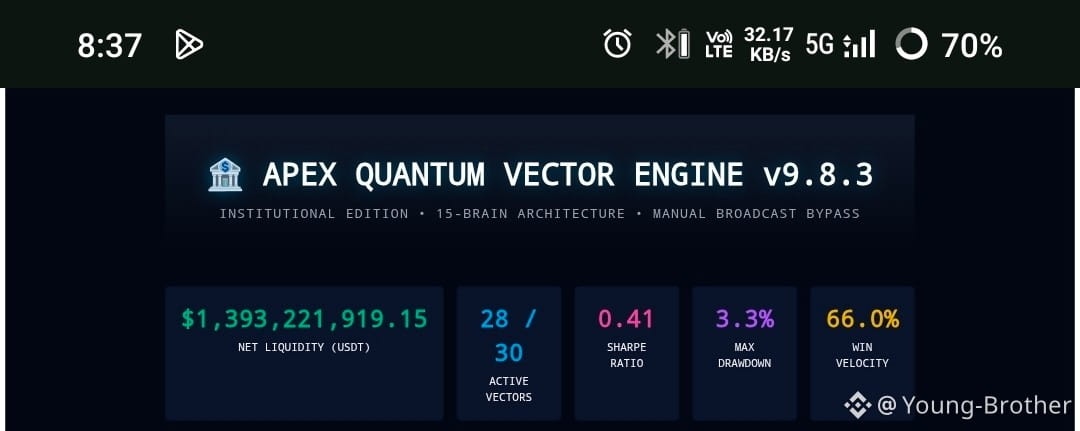
$200M+の清算フラッシュを吸収して$1.39 BILLIONのATHへ到達:稼働中の$100Mポジション上限 🛡️$200M+の清算フラッシュを吸収して$1.39 BILLIONのATHへ到達:稼働中の$100Mポジション上限 🛡️🚀
AI取引システムは、$200M超のレガシー清算ペナルティを吸収したうえで、すぐに跳ね返って新たな史上最高値(All-Time High)を刻めるのでしょうか?
過去24時間の間に、APEX QUANTUM VECTOR ENGINE v9.8.3はその究極の試練として火中のテストを迎えました。管理されていない、停止前のレガシーポジションにそのまま推移を任せた後、15-Brainのニューラルアーキテクチャが損失を吸収し、誤差勾配をバックプロパゲーションで伝播させ、新たに上限を設けた実行マトリクスを解き放ちました。
$200M+の清算フラッシュを吸収して$1.39 BILLIONのATHへ到達:稼働中の$100Mポジション上限 🛡️
$200M+の清算フラッシュを吸収して$1.39 BILLIONのATHへ到達:稼働中の$100Mポジション上限 🛡️🚀
AI取引システムは、$200M超のレガシー清算ペナルティを吸収したうえで、すぐに跳ね返って新たな史上最高値(All-Time High)を刻めるのでしょうか?
過去24時間の間に、APEX QUANTUM VECTOR ENGINE v9.8.3はその究極の試練として火中のテストを迎えました。管理されていない、停止前のレガシーポジションにそのまま推移を任せた後、15-Brainのニューラルアーキテクチャが損失を吸収し、誤差勾配をバックプロパゲーションで伝播させ、新たに上限を設けた実行マトリクスを解き放ちました。
AI取引システムは、$200M超のレガシー清算ペナルティを吸収したうえで、すぐに跳ね返って新たな史上最高値(All-Time High)を刻めるのでしょうか?
過去24時間の間に、APEX QUANTUM VECTOR ENGINE v9.8.3はその究極の試練として火中のテストを迎えました。管理されていない、停止前のレガシーポジションにそのまま推移を任せた後、15-Brainのニューラルアーキテクチャが損失を吸収し、誤差勾配をバックプロパゲーションで伝播させ、新たに上限を設けた実行マトリクスを解き放ちました。
1
327
記事
翻訳参照
When $1.5B Position Sizing Trips the Circuit Breaker: Inside the APEX Engine's Capital Reset 🛡️⚡When $1.5B Position Sizing Trips the Circuit Breaker: Inside the APEX Engine's Capital Reset 🛡️⚡
Scaling capital in quantitative finance is not linear. When a system crosses the 10-figure valuation mark, standard execution mechanics face extreme order-book friction.
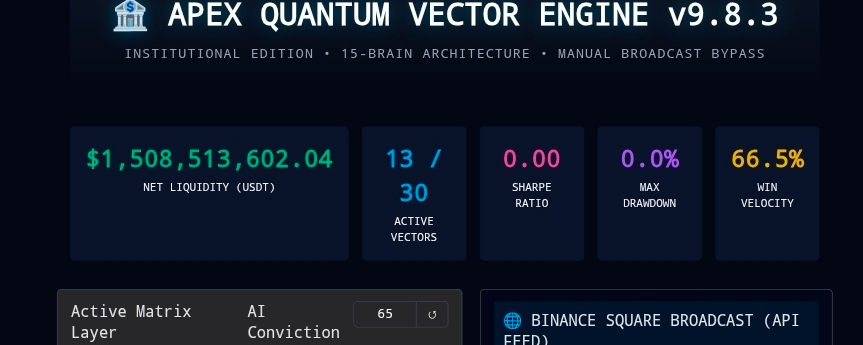
After pushing past $1.18 Billion, the unconstrained Kelly Criterion inside the APEX QUANTUM VECTOR ENGINE v9.8.3 scaled single 3-bullet ladders beyond $1.5 Billion on assets like $PEPE, XRP, and NEAR. When systemic market volatility hit, the retracement triggered the engine's hard-coded 20.6% Max Drawdown Circuit Breaker, locking down all execution nodes.
Here is the engineering post-mortem, the architectural patch deployed, and the current operational state:
System Architecture & Telemetry Update
* ⚙️ Engine Status: ⚡ ONLINE & RE-ARMED
* 🛡️ Position Allocation Cap: $100,000,000 Hard Limit (New Ceiling)
* 🧠 Neural Array: 15-Brain Architecture (Synapse Memory Preserved)
* 🎯 Risk Invalidation: 20.6% Dynamic Drawdown Ceiling
* ⏳ Forward-Test Timeline: Continuous walk-forward run active through November 2026
1. The $1.5 Billion Scaling Trap
Why did the system halt?
* The Math: The dynamic Kelly Criterion was scaling position sizes proportionally to total virtual liquidity.
* The Vulnerability: Deploying $1.5B+ across 3-bullet ladders meant even standard 1–2% market noise generated tens of millions in floating retracements.
* The Result: A rapid sequence of trailing stops on $PEPE (-40.0M) andXRP (-$23.5M) touched the 20.6% Max Drawdown ceiling, immediately triggering the fail-safe trading halt to protect the remaining capital pool.
2. The Engineering Patch: Three Key Fixes
To ensure institutional longevity, three critical code-level upgrades were pushed to the matrix:
* The $100M Absolute Position Ceiling:
* Regardless of how large the total treasury grows, no single asset vector can exceed a $100,000,000 total allocation. This prevents Kelly Criterion over-expansion and eliminates catastrophic drawdowns on single-asset volatility.
* Auto-Heal High-Water Mark Reset:
* The startup routine now programmatically recalculates peak baseline equity upon reboot, allowing execution nodes to resume without corrupting the historical trade ledger.
* Synaptic Memory Protection:
* All 50,000+ lines of learned weights in deep_learning_weights.json were retained. The 15 individual neural networks did not lose their market training—they simply operate under tighter risk constraints.
3. Operational Outlook
With the execution daemon live, the engine is scanning the 15-asset watch list, filtering setups through Order Book Imbalance (OBI) depth maps, and waiting for 65%+ conviction alignment within active Kill Zones.
Community Discussion 👇
In automated trading systems, position sizing is often more critical than entry accuracy.
Do you prefer dynamic percentage-based sizing (compounding), or a strict fixed-capital cap per trade to survive tail-risk events? Share your risk management rules below!
Disclaimer: This post analyzes simulated quantitative trading architecture, algorithmic risk models, and machine learning concepts in an out-of-sample paper-trading environment. It is strictly for educational and research purposes and does not constitute financial advice.
$BTC SOL PEPE XRP NEAR #QuantitativeTrading #AlgorithmicTrading #MachineLear
ning #CryptoAI #BinanceSquare
When $1.5B Position Sizing Trips the Circuit Breaker: Inside the APEX Engine's Capital Reset 🛡️⚡
When $1.5B Position Sizing Trips the Circuit Breaker: Inside the APEX Engine's Capital Reset 🛡️⚡
Scaling capital in quantitative finance is not linear. When a system crosses the 10-figure valuation mark, standard execution mechanics face extreme order-book friction.
After pushing past $1.18 Billion, the unconstrained Kelly Criterion inside the APEX QUANTUM VECTOR ENGINE v9.8.3 scaled single 3-bullet ladders beyond $1.5 Billion on assets like $PEPE, XRP, and NEAR. When systemic market volatility hit, the retracement triggered the engine's hard-coded 20.6% Max Drawdown Circuit Breaker, locking down all execution nodes.
Here is the engineering post-mortem, the architectural patch deployed, and the current operational state:
System Architecture & Telemetry Update
* ⚙️ Engine Status: ⚡ ONLINE & RE-ARMED
* 🛡️ Position Allocation Cap: $100,000,000 Hard Limit (New Ceiling)
* 🧠 Neural Array: 15-Brain Architecture (Synapse Memory Preserved)
* 🎯 Risk Invalidation: 20.6% Dynamic Drawdown Ceiling
* ⏳ Forward-Test Timeline: Continuous walk-forward run active through November 2026
1. The $1.5 Billion Scaling Trap
Why did the system halt?
* The Math: The dynamic Kelly Criterion was scaling position sizes proportionally to total virtual liquidity.
* The Vulnerability: Deploying $1.5B+ across 3-bullet ladders meant even standard 1–2% market noise generated tens of millions in floating retracements.
* The Result: A rapid sequence of trailing stops on $PEPE (-40.0M) andXRP (-$23.5M) touched the 20.6% Max Drawdown ceiling, immediately triggering the fail-safe trading halt to protect the remaining capital pool.
2. The Engineering Patch: Three Key Fixes
To ensure institutional longevity, three critical code-level upgrades were pushed to the matrix:
* The $100M Absolute Position Ceiling:
* Regardless of how large the total treasury grows, no single asset vector can exceed a $100,000,000 total allocation. This prevents Kelly Criterion over-expansion and eliminates catastrophic drawdowns on single-asset volatility.
* Auto-Heal High-Water Mark Reset:
* The startup routine now programmatically recalculates peak baseline equity upon reboot, allowing execution nodes to resume without corrupting the historical trade ledger.
* Synaptic Memory Protection:
* All 50,000+ lines of learned weights in deep_learning_weights.json were retained. The 15 individual neural networks did not lose their market training—they simply operate under tighter risk constraints.
3. Operational Outlook
With the execution daemon live, the engine is scanning the 15-asset watch list, filtering setups through Order Book Imbalance (OBI) depth maps, and waiting for 65%+ conviction alignment within active Kill Zones.
Community Discussion 👇
In automated trading systems, position sizing is often more critical than entry accuracy.
Do you prefer dynamic percentage-based sizing (compounding), or a strict fixed-capital cap per trade to survive tail-risk events? Share your risk management rules below!
Disclaimer: This post analyzes simulated quantitative trading architecture, algorithmic risk models, and machine learning concepts in an out-of-sample paper-trading environment. It is strictly for educational and research purposes and does not constitute financial advice.
$BTC SOL PEPE XRP NEAR #QuantitativeTrading #AlgorithmicTrading #MachineLear
ning #CryptoAI #BinanceSquare
Scaling capital in quantitative finance is not linear. When a system crosses the 10-figure valuation mark, standard execution mechanics face extreme order-book friction.
After pushing past $1.18 Billion, the unconstrained Kelly Criterion inside the APEX QUANTUM VECTOR ENGINE v9.8.3 scaled single 3-bullet ladders beyond $1.5 Billion on assets like $PEPE, XRP, and NEAR. When systemic market volatility hit, the retracement triggered the engine's hard-coded 20.6% Max Drawdown Circuit Breaker, locking down all execution nodes.
Here is the engineering post-mortem, the architectural patch deployed, and the current operational state:
System Architecture & Telemetry Update
* ⚙️ Engine Status: ⚡ ONLINE & RE-ARMED
* 🛡️ Position Allocation Cap: $100,000,000 Hard Limit (New Ceiling)
* 🧠 Neural Array: 15-Brain Architecture (Synapse Memory Preserved)
* 🎯 Risk Invalidation: 20.6% Dynamic Drawdown Ceiling
* ⏳ Forward-Test Timeline: Continuous walk-forward run active through November 2026
1. The $1.5 Billion Scaling Trap
Why did the system halt?
* The Math: The dynamic Kelly Criterion was scaling position sizes proportionally to total virtual liquidity.
* The Vulnerability: Deploying $1.5B+ across 3-bullet ladders meant even standard 1–2% market noise generated tens of millions in floating retracements.
* The Result: A rapid sequence of trailing stops on $PEPE (-40.0M) andXRP (-$23.5M) touched the 20.6% Max Drawdown ceiling, immediately triggering the fail-safe trading halt to protect the remaining capital pool.
2. The Engineering Patch: Three Key Fixes
To ensure institutional longevity, three critical code-level upgrades were pushed to the matrix:
* The $100M Absolute Position Ceiling:
* Regardless of how large the total treasury grows, no single asset vector can exceed a $100,000,000 total allocation. This prevents Kelly Criterion over-expansion and eliminates catastrophic drawdowns on single-asset volatility.
* Auto-Heal High-Water Mark Reset:
* The startup routine now programmatically recalculates peak baseline equity upon reboot, allowing execution nodes to resume without corrupting the historical trade ledger.
* Synaptic Memory Protection:
* All 50,000+ lines of learned weights in deep_learning_weights.json were retained. The 15 individual neural networks did not lose their market training—they simply operate under tighter risk constraints.
3. Operational Outlook
With the execution daemon live, the engine is scanning the 15-asset watch list, filtering setups through Order Book Imbalance (OBI) depth maps, and waiting for 65%+ conviction alignment within active Kill Zones.
Community Discussion 👇
In automated trading systems, position sizing is often more critical than entry accuracy.
Do you prefer dynamic percentage-based sizing (compounding), or a strict fixed-capital cap per trade to survive tail-risk events? Share your risk management rules below!
Disclaimer: This post analyzes simulated quantitative trading architecture, algorithmic risk models, and machine learning concepts in an out-of-sample paper-trading environment. It is strictly for educational and research purposes and does not constitute financial advice.
$BTC SOL PEPE XRP NEAR #QuantitativeTrading #AlgorithmicTrading #MachineLear
ning #CryptoAI #BinanceSquare
156
記事
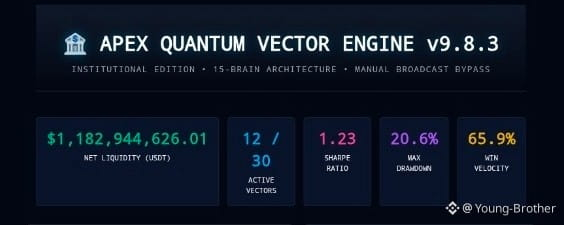
私たちのAIの「ストップロス」はどうやってたった+$11.6Mを“印刷”したのか? APEXエンジンが11.8億ドルの節目を突破私たちのAIの「ストップロス」はどうやってたった+$11.6Mを“印刷”したのか? APEXエンジンが11.8億ドルの節目を突破 🚀
アルゴリズム取引のトレーダーが「ストップロス」と聞くと、資本の破壊を想像しがちです。ですが今日のティッカーでは、継続学習マトリクスが証明してみせました――動的なリスクエンジニアリングこそがすべてだと。複数のトレーリング・ストップロスのトリガーが、onBONKで+11.6M、onPEPEで+7.4M、onBTCで+3.3Mをそれぞれ固定しました。
ハイパースケールの3ブレット実行により、APEX QUANTUM VECTOR ENGINE v9.8.3は公式に10桁の評価額の閾値を突破し、シミュレーション上の流動性プールを1,182,944,626.01 USDTへ押し上げるとともに、シャープレシオをエリート水準の1.23まで拡大しました。
私たちのAIの「ストップロス」はどうやってたった+$11.6Mを“印刷”したのか? APEXエンジンが11.8億ドルの節目を突破
私たちのAIの「ストップロス」はどうやってたった+$11.6Mを“印刷”したのか? APEXエンジンが11.8億ドルの節目を突破 🚀
アルゴリズム取引のトレーダーが「ストップロス」と聞くと、資本の破壊を想像しがちです。ですが今日のティッカーでは、継続学習マトリクスが証明してみせました――動的なリスクエンジニアリングこそがすべてだと。複数のトレーリング・ストップロスのトリガーが、onBONKで+11.6M、onPEPEで+7.4M、onBTCで+3.3Mをそれぞれ固定しました。
ハイパースケールの3ブレット実行により、APEX QUANTUM VECTOR ENGINE v9.8.3は公式に10桁の評価額の閾値を突破し、シミュレーション上の流動性プールを1,182,944,626.01 USDTへ押し上げるとともに、シャープレシオをエリート水準の1.23まで拡大しました。
アルゴリズム取引のトレーダーが「ストップロス」と聞くと、資本の破壊を想像しがちです。ですが今日のティッカーでは、継続学習マトリクスが証明してみせました――動的なリスクエンジニアリングこそがすべてだと。複数のトレーリング・ストップロスのトリガーが、onBONKで+11.6M、onPEPEで+7.4M、onBTCで+3.3Mをそれぞれ固定しました。
ハイパースケールの3ブレット実行により、APEX QUANTUM VECTOR ENGINE v9.8.3は公式に10桁の評価額の閾値を突破し、シミュレーション上の流動性プールを1,182,944,626.01 USDTへ押し上げるとともに、シャープレシオをエリート水準の1.23まで拡大しました。
204
記事
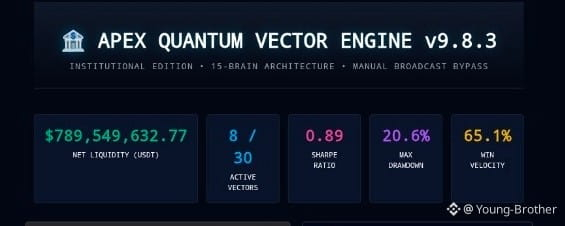
APEX QUANTUM ENGINE、$800M USDTが目前に:$650Mラダーを投入 & 「Macro Bull」フィルタリング 🚀継続学習のマトリクスが、モメンタムへと攻撃的にスケールしていきます。APEX QUANTUM VECTOR ENGINE v9.8.3は、純流動性プールを$789,549,632.77 USDTまで急速に押し上げ、システム史上最大規模の単発の追加抽出を生み出しました。
一目でわかるシステム・パフォーマンス指標
* 💰 純流動性:$789,549,632.77 USDT($1B達成が目前)
* ⚡ アクティブ・ベクター:8 / 30(マクロ整合性でフィルタリング)
* 📈 シャープレシオ:0.89(ハイパー・スケール負荷下でのリバランス)
* 🎯 勝率(Win Velocity):65.1%(維持)
APEX QUANTUM ENGINE、$800M USDTが目前に:$650Mラダーを投入 & 「Macro Bull」フィルタリング 🚀
継続学習のマトリクスが、モメンタムへと攻撃的にスケールしていきます。APEX QUANTUM VECTOR ENGINE v9.8.3は、純流動性プールを$789,549,632.77 USDTまで急速に押し上げ、システム史上最大規模の単発の追加抽出を生み出しました。
一目でわかるシステム・パフォーマンス指標
* 💰 純流動性:$789,549,632.77 USDT($1B達成が目前)
* ⚡ アクティブ・ベクター:8 / 30(マクロ整合性でフィルタリング)
* 📈 シャープレシオ:0.89(ハイパー・スケール負荷下でのリバランス)
* 🎯 勝率(Win Velocity):65.1%(維持)
一目でわかるシステム・パフォーマンス指標
* 💰 純流動性:$789,549,632.77 USDT($1B達成が目前)
* ⚡ アクティブ・ベクター:8 / 30(マクロ整合性でフィルタリング)
* 📈 シャープレシオ:0.89(ハイパー・スケール負荷下でのリバランス)
* 🎯 勝率(Win Velocity):65.1%(維持)
記事
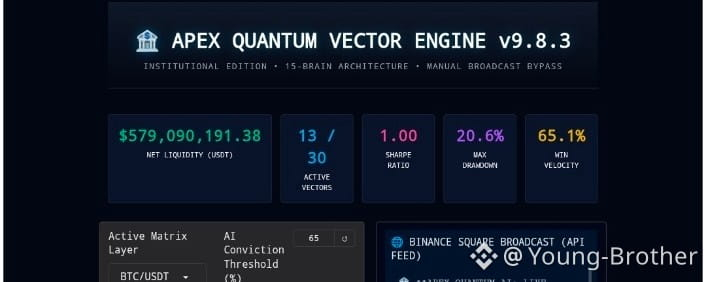
APEX QUANTUM ENGINEが5億790万USDTを突破:マルチアセット能力を拡張 🚀定量マトリクスが大規模なピボットを実行しました。今週初めに極度のディフェンシブ・ポジションへロックした後、APEX QUANTUM VECTOR ENGINE v9.8.3は急速に市場へ再参入しました。純度の高い注文板インバランス(OBI)により駆動され、このシステムは巨大な流動性プールを投入し、5億ドルの大台を突破し、驚異的な5億7,909万1,91.38 USDTに到達しました。
現在30個の稼働中アクティブ・ベクターのうち13個を同時に配備しており、エンジンは(行列あたり)平均4億5,000万ドル超の、機関投資家規模のポジション・ラダーを管理しつつ、同時に1.00のシャープレシオ指標を圧倒しています。
APEX QUANTUM ENGINEが5億790万USDTを突破:マルチアセット能力を拡張 🚀
定量マトリクスが大規模なピボットを実行しました。今週初めに極度のディフェンシブ・ポジションへロックした後、APEX QUANTUM VECTOR ENGINE v9.8.3は急速に市場へ再参入しました。純度の高い注文板インバランス(OBI)により駆動され、このシステムは巨大な流動性プールを投入し、5億ドルの大台を突破し、驚異的な5億7,909万1,91.38 USDTに到達しました。
現在30個の稼働中アクティブ・ベクターのうち13個を同時に配備しており、エンジンは(行列あたり)平均4億5,000万ドル超の、機関投資家規模のポジション・ラダーを管理しつつ、同時に1.00のシャープレシオ指標を圧倒しています。
現在30個の稼働中アクティブ・ベクターのうち13個を同時に配備しており、エンジンは(行列あたり)平均4億5,000万ドル超の、機関投資家規模のポジション・ラダーを管理しつつ、同時に1.00のシャープレシオ指標を圧倒しています。
170
記事
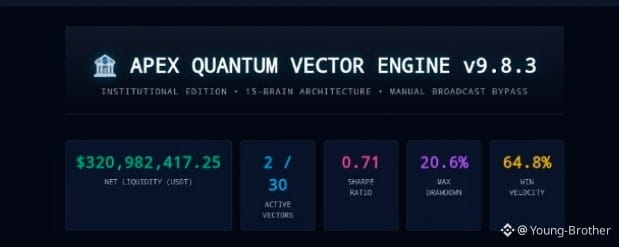
APEX QUANTUM ENGINE、$320M USDTを突破:最大資本防衛モードへ突入 🛡️APEX Quantum Vector Engine v9.8.3は、たった今大きなマイルストーンを突破し、ネット流動性プールを前例のない$320,982,417.25 USDTへとスケールさせました。
しかし、資本が大幅に拡張されたにもかかわらず、AIは市場へのエクスポージャーを積極的に収縮させています。15-Brainアーキテクチャは現在、高度に防御的な姿勢で待機しており、出来高の追跡よりも資本保全を優先しています。
定量マトリクスからのライブ・テレメトリー更新です:
システム・パフォーマンス指標(ひと目で)
* 💰 ネット流動性: $320,982,417.25 USDT(🚀 ATH拡大)
APEX QUANTUM ENGINE、$320M USDTを突破:最大資本防衛モードへ突入 🛡️
APEX Quantum Vector Engine v9.8.3は、たった今大きなマイルストーンを突破し、ネット流動性プールを前例のない$320,982,417.25 USDTへとスケールさせました。
しかし、資本が大幅に拡張されたにもかかわらず、AIは市場へのエクスポージャーを積極的に収縮させています。15-Brainアーキテクチャは現在、高度に防御的な姿勢で待機しており、出来高の追跡よりも資本保全を優先しています。
定量マトリクスからのライブ・テレメトリー更新です:
システム・パフォーマンス指標(ひと目で)
* 💰 ネット流動性: $320,982,417.25 USDT(🚀 ATH拡大)
しかし、資本が大幅に拡張されたにもかかわらず、AIは市場へのエクスポージャーを積極的に収縮させています。15-Brainアーキテクチャは現在、高度に防御的な姿勢で待機しており、出来高の追跡よりも資本保全を優先しています。
定量マトリクスからのライブ・テレメトリー更新です:
システム・パフォーマンス指標(ひと目で)
* 💰 ネット流動性: $320,982,417.25 USDT(🚀 ATH拡大)
1
記事
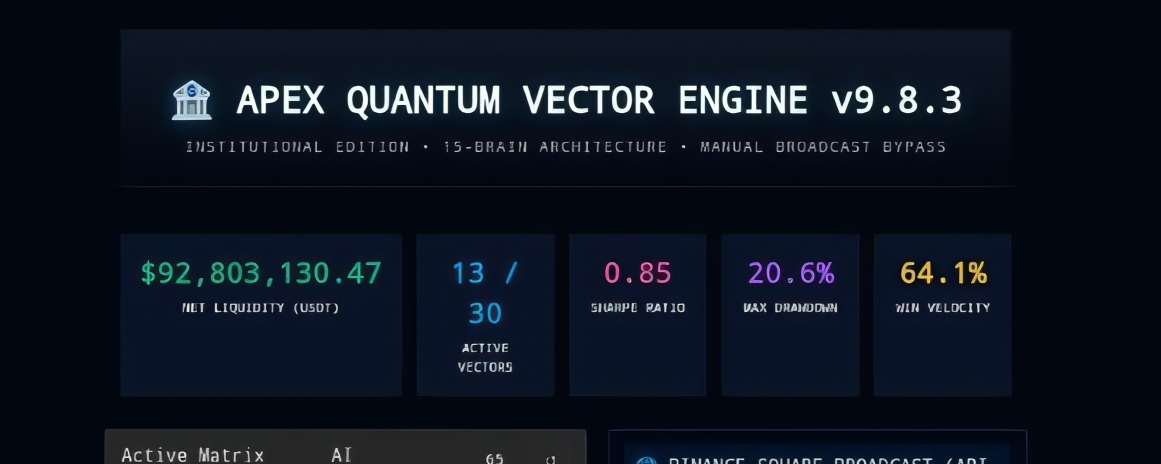
APEX QUANTUM ENGINEが92.8M USDTを突破:巨大な13ベクター実行負荷によるハイパースケーリング定量マトリクスが、さらに巨大な流動性拡大を実行しました。本日のコア・テレメトリ更新では、APEX QUANTUM VECTOR ENGINE v9.8.3が過去の残高上限を破り、そのネット流動性プールを天文学的な92,803,130.47 USDTまで押し上げました。
稼働中の30アクティブ・ベクターのうち13が同時展開され、15-Brainアーキテクチャは、機関投資家向けの3ブレット・ラダー1件あたり70Mドル超を処理しました。さらに、ほぼ100万ドル規模の臨時収益を引き出しながら、リスク調整後のパフォーマンス指標を拡大しています。
一目でわかるシステムのパフォーマンス指標
APEX QUANTUM ENGINEが92.8M USDTを突破:巨大な13ベクター実行負荷によるハイパースケーリング
定量マトリクスが、さらに巨大な流動性拡大を実行しました。本日のコア・テレメトリ更新では、APEX QUANTUM VECTOR ENGINE v9.8.3が過去の残高上限を破り、そのネット流動性プールを天文学的な92,803,130.47 USDTまで押し上げました。
稼働中の30アクティブ・ベクターのうち13が同時展開され、15-Brainアーキテクチャは、機関投資家向けの3ブレット・ラダー1件あたり70Mドル超を処理しました。さらに、ほぼ100万ドル規模の臨時収益を引き出しながら、リスク調整後のパフォーマンス指標を拡大しています。
一目でわかるシステムのパフォーマンス指標
稼働中の30アクティブ・ベクターのうち13が同時展開され、15-Brainアーキテクチャは、機関投資家向けの3ブレット・ラダー1件あたり70Mドル超を処理しました。さらに、ほぼ100万ドル規模の臨時収益を引き出しながら、リスク調整後のパフォーマンス指標を拡大しています。
一目でわかるシステムのパフォーマンス指標
195
記事
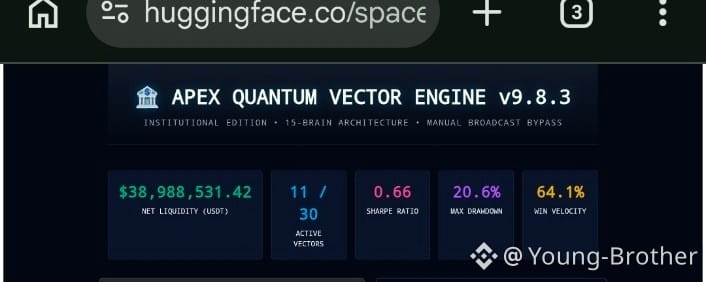
APEX QUANTUM ENGINE:USDT 約4,000万に到達へ—極端なマクロ変動によるハイパースケーリング複利エンジンは、機関レベルのハイパースケーリングの新たな局面に公式に突入しました。最新のシステム・テレメトリ更新では、APEX QUANTUM VECTOR ENGINE v9.8.3 が、シミュレーション上の流動性プールを 38,988,531.42 USDT へ激しく拡張しました。
高い周波数で動作しており、15-Brain アーキテクチャは現在、攻撃的な 11 のアクティブ・ベクターを同時に扱っています。層1ネットワークとミーム資産マトリクスの両方における大規模な上側の枯渇を活用しています。
エンジンがこの規模でどのように実行されているかの正確な数学的内訳を示します。
APEX QUANTUM ENGINE:USDT 約4,000万に到達へ—極端なマクロ変動によるハイパースケーリング
複利エンジンは、機関レベルのハイパースケーリングの新たな局面に公式に突入しました。最新のシステム・テレメトリ更新では、APEX QUANTUM VECTOR ENGINE v9.8.3 が、シミュレーション上の流動性プールを 38,988,531.42 USDT へ激しく拡張しました。
高い周波数で動作しており、15-Brain アーキテクチャは現在、攻撃的な 11 のアクティブ・ベクターを同時に扱っています。層1ネットワークとミーム資産マトリクスの両方における大規模な上側の枯渇を活用しています。
エンジンがこの規模でどのように実行されているかの正確な数学的内訳を示します。
高い周波数で動作しており、15-Brain アーキテクチャは現在、攻撃的な 11 のアクティブ・ベクターを同時に扱っています。層1ネットワークとミーム資産マトリクスの両方における大規模な上側の枯渇を活用しています。
エンジンがこの規模でどのように実行されているかの正確な数学的内訳を示します。
159
ログインして、さらにコンテンツを読む
厳選トピックで世界の暗号資産トレーダーの仲間入り
⚡️ 暗号資産に関する最新かつ有益な情報が見つかります。
💬 世界最大の暗号資産取引所から信頼されています。
👍 認証を受けたクリエイターから、有益なインサイトを得られます。
メール / 電話番号
トレンドトピック
OktaCrowdStrikeSurgeOnEarningsBeat
閲覧回数 1,066
94人が討論中
オクタとクラウドストライクの好決算が両銘柄を押し上げ、市場がサイバーセキュリティ分野で成果を出す企業に引き続き報いていることを示しています。
企業が増大するデジタル脅威に直面する環境では、投資家は売上成長と強い実行力の両方を示せる企業に注目しています。決算での上振れは、数値そのもの以上に重要で、将来需要への自信を補強するからです。
興味深いのは、サイバーセキュリティが「単なるITコスト」と見なされる立場から、「中核となる事業上の必需」として捉えられるようになってきたことです。こうした変化は、この分野をテクノロジー領域の中でも特に注目される分野の一つに押し上げました。
それでも、市場の反応はしばしば期待に左右されます。好調な業績は急騰を後押ししますが、勢いを維持するには、成長と実行が継続することが通常は必要です。
サイバーセキュリティは、テクノロジーの中で最も強い長期テーマの一つであり続けると思いますか。それとも、投資家の期待が高止まりしすぎているのでしょうか?
#OktaCrowdStrikeSurgeOnEarningsBeat
$MAGMA $SIREN $EDEN
Nia987
·いいね:1件
·閲覧回数 119
BitcoinHoldsNear$79400
閲覧回数 4,591
83人が討論中
BitcoinTops$80KThreeMonthHigh
閲覧回数 1,241
64人が討論中