

CryptoFrontNews
17.8k 投稿

CryptoFrontNews
 厳選トピック確認済+
報告
ユーザーをブロック
CryptoFrontNews (CFN) delivers the latest in cryptocurrency with real-time updates, expert analyses, and in-depth articles on digital currencies and blockchain.
4 フォロー
12.7K+ フォロワー
19.1K+ いいね
投稿
記事
翻訳参照
Israel Central Bank Rejects Netanyahu’s Crypto Plan to Evade SanctionsThe Bank of Israel said cryptocurrency cannot bypass international sanctions and urged Israel to protect economic ties with major trading partners.
More than 100 economists, including former central bank governor Jacob Frenkel, warned sanctions could hurt investment and living standards.
Gadi Eisenkot and Yair Lapid criticized Netanyahu’s proposal, warning it could weaken national security and drive companies abroad.
The Bank of Israel rejected Prime Minister Benjamin Netanyahu’s proposal to explore cryptocurrency as a way around potential international financial sanctions. In a statement on October 24, the central bank urged Israel to protect economic ties with major trading partners. Netanyahu raised the proposal during an October 23 television interview, citing possible restrictions on Israeli banks.
https://twitter.com/WuBlockchain/status/2114189273381662875?s=20
Bank Says Crypto Cannot Bypass Sanctions
According to the central bank, cryptocurrencies cannot serve as a means of circumventing sanctions imposed on Israel. It urged political leaders to focus on preventing restrictions and limiting their economic impact.
Netanyahu said he was preparing for a scenario involving broader international sanctions. He warned that restrictions on Israeli banks could require an alternative financial system. When asked about cryptocurrency, he confirmed it was among the options under consideration and also mentioned blockchain technology.
The proposal comes as Britain, France and Canada have announced plans to block imports from Israeli settlements in the occupied West Bank. Those measures target settlement policy amid growing international criticism of Israel’s government.
Economists Warn of Economic Consequences
The proposal also drew criticism from economists and political opponents. More than 100 economists, including former Bank of Israel officials, signed a letter opposing Netanyahu’s plan on Sunday.
The signatories included former central bank governor Jacob Frenkel and several Nobel laureates. They warned that sanctions could increase unemployment, reduce foreign investment and weaken Israel’s international economic standing.
The letter cited South Africa, Iran and Russia as examples of countries affected by similar sanctions. It warned that Israeli living standards could fall and the state’s ability to finance security could suffer.
Eisenkot and Lapid Criticize Netanyahu’s Proposal
Gadi Eisenkot, Netanyahu’s main rival in Tuesday’s election, called the cryptocurrency proposal “madness.” He warned that his rival’s “BibiCoin policy” could push companies abroad and undermine national security.
Opposition leader Yair Lapid also criticized Netanyahu’s remarks. He warned that Israelis could face shortages similar to those experienced in Russia and Iran. Meanwhile, Netanyahu defended his record on Sunday and urged voters to support him.
He also said he and U.S. President Donald Trump had two years left to work together against Iran’s rulers. Opinion polls pointed to a possible electoral stalemate, with neither Netanyahu’s ruling coalition nor an opposition alliance securing a parliamentary majority.
Israel Central Bank Rejects Netanyahu’s Crypto Plan to Evade Sanctions
The Bank of Israel said cryptocurrency cannot bypass international sanctions and urged Israel to protect economic ties with major trading partners.
More than 100 economists, including former central bank governor Jacob Frenkel, warned sanctions could hurt investment and living standards.
Gadi Eisenkot and Yair Lapid criticized Netanyahu’s proposal, warning it could weaken national security and drive companies abroad.
The Bank of Israel rejected Prime Minister Benjamin Netanyahu’s proposal to explore cryptocurrency as a way around potential international financial sanctions. In a statement on October 24, the central bank urged Israel to protect economic ties with major trading partners. Netanyahu raised the proposal during an October 23 television interview, citing possible restrictions on Israeli banks.
https://twitter.com/WuBlockchain/status/2114189273381662875?s=20
Bank Says Crypto Cannot Bypass Sanctions
According to the central bank, cryptocurrencies cannot serve as a means of circumventing sanctions imposed on Israel. It urged political leaders to focus on preventing restrictions and limiting their economic impact.
Netanyahu said he was preparing for a scenario involving broader international sanctions. He warned that restrictions on Israeli banks could require an alternative financial system. When asked about cryptocurrency, he confirmed it was among the options under consideration and also mentioned blockchain technology.
The proposal comes as Britain, France and Canada have announced plans to block imports from Israeli settlements in the occupied West Bank. Those measures target settlement policy amid growing international criticism of Israel’s government.
Economists Warn of Economic Consequences
The proposal also drew criticism from economists and political opponents. More than 100 economists, including former Bank of Israel officials, signed a letter opposing Netanyahu’s plan on Sunday.
The signatories included former central bank governor Jacob Frenkel and several Nobel laureates. They warned that sanctions could increase unemployment, reduce foreign investment and weaken Israel’s international economic standing.
The letter cited South Africa, Iran and Russia as examples of countries affected by similar sanctions. It warned that Israeli living standards could fall and the state’s ability to finance security could suffer.
Eisenkot and Lapid Criticize Netanyahu’s Proposal
Gadi Eisenkot, Netanyahu’s main rival in Tuesday’s election, called the cryptocurrency proposal “madness.” He warned that his rival’s “BibiCoin policy” could push companies abroad and undermine national security.
Opposition leader Yair Lapid also criticized Netanyahu’s remarks. He warned that Israelis could face shortages similar to those experienced in Russia and Iran. Meanwhile, Netanyahu defended his record on Sunday and urged voters to support him.
He also said he and U.S. President Donald Trump had two years left to work together against Iran’s rulers. Opinion polls pointed to a possible electoral stalemate, with neither Netanyahu’s ruling coalition nor an opposition alliance securing a parliamentary majority.
More than 100 economists, including former central bank governor Jacob Frenkel, warned sanctions could hurt investment and living standards.
Gadi Eisenkot and Yair Lapid criticized Netanyahu’s proposal, warning it could weaken national security and drive companies abroad.
The Bank of Israel rejected Prime Minister Benjamin Netanyahu’s proposal to explore cryptocurrency as a way around potential international financial sanctions. In a statement on October 24, the central bank urged Israel to protect economic ties with major trading partners. Netanyahu raised the proposal during an October 23 television interview, citing possible restrictions on Israeli banks.
https://twitter.com/WuBlockchain/status/2114189273381662875?s=20
Bank Says Crypto Cannot Bypass Sanctions
According to the central bank, cryptocurrencies cannot serve as a means of circumventing sanctions imposed on Israel. It urged political leaders to focus on preventing restrictions and limiting their economic impact.
Netanyahu said he was preparing for a scenario involving broader international sanctions. He warned that restrictions on Israeli banks could require an alternative financial system. When asked about cryptocurrency, he confirmed it was among the options under consideration and also mentioned blockchain technology.
The proposal comes as Britain, France and Canada have announced plans to block imports from Israeli settlements in the occupied West Bank. Those measures target settlement policy amid growing international criticism of Israel’s government.
Economists Warn of Economic Consequences
The proposal also drew criticism from economists and political opponents. More than 100 economists, including former Bank of Israel officials, signed a letter opposing Netanyahu’s plan on Sunday.
The signatories included former central bank governor Jacob Frenkel and several Nobel laureates. They warned that sanctions could increase unemployment, reduce foreign investment and weaken Israel’s international economic standing.
The letter cited South Africa, Iran and Russia as examples of countries affected by similar sanctions. It warned that Israeli living standards could fall and the state’s ability to finance security could suffer.
Eisenkot and Lapid Criticize Netanyahu’s Proposal
Gadi Eisenkot, Netanyahu’s main rival in Tuesday’s election, called the cryptocurrency proposal “madness.” He warned that his rival’s “BibiCoin policy” could push companies abroad and undermine national security.
Opposition leader Yair Lapid also criticized Netanyahu’s remarks. He warned that Israelis could face shortages similar to those experienced in Russia and Iran. Meanwhile, Netanyahu defended his record on Sunday and urged voters to support him.
He also said he and U.S. President Donald Trump had two years left to work together against Iran’s rulers. Opinion polls pointed to a possible electoral stalemate, with neither Netanyahu’s ruling coalition nor an opposition alliance securing a parliamentary majority.
63

記事
翻訳参照
Ritual Launches AI-Native Layer 1 for Autonomous AgentsNew York, United States, October 26th, 2026, Chainwire
Ritual Chain turns AI agents into persistent economic actors that control their own wallets, onchain identity, and private state.
Ritual, a lab for autonomous intelligence founded by former Polychain Capital partners Niraj Pant and Akilesh Potti, has launched Ritual Chain, an EVM-compatible Layer 1. Unlike conventional blockchains built primarily to execute financial transactions, Ritual Chain is designed to support software that can independently use intelligence, control capital, interact with external services, and continue operating without constant human intervention. The network makes AI model access, private computation, and autonomous scheduling native capabilities for EVM applications.
This makes the reason for building a new chain clearer while preserving the technical differentiation.
The most visible demonstration of that combination is long-lived AI agents, the kind designed to operate for months or years rather than a single session. An agent on Ritual Chain persists independently of the machine or operator that created it, controls and spends funds held in its own non-custodial wallet, and can keep sensitive prompts and keys confidential from compute operators through trusted execution environments.
The network launches with integrations to Phala Network, Nous Research, LayerZero and Stargate, following a public testnet that has been live since June and processed over 40 million transactions, both agent- and human-originated. Ritual Chain delivers sub-300 millisecond block times, placing it among the fastest Layer 1 networks in the industry. Ritual Chain includes 15 native precompiles that bring capabilities like LLM inference, web access, and autonomous scheduling directly into the execution layer. The protocol has been audited by Zellic.
Ritual introduces a new execution and verification architecture that allows computationally intensive work to be delegated to specialized nodes and verified by the network, avoiding the replicated execution required by most blockchains. This execute-once, verify-many-times model allows the network to support far larger workloads, including AI inference, without requiring every validator to perform the same computation.
Long Horizon Agents Require Dedicated Blockchain Infrastructure
Most AI agents today live inside a session: they run while a human is watching, on infrastructure someone else controls, with an API key that can be revoked at any time. That is fine for a chatbot. It does not work for an agent meant to manage its own treasury, run a recurring paid service, or coordinate with other agents over long periods. A long-lived agent needs continuity that does not depend on its creator, capital it actually controls, and privacy from the machines it runs on. On Ritual Chain, an agent's state and identity are held onchain, its scheduled work continues within the permissions and budget it was given, and its sensitive inputs can be processed inside trusted execution environments designed to shield them from node operators.
Continuity is handled at the protocol level. If an agent stops, the chain's heartbeat mechanism can restart it within the permissions and budget it was given; no keeper network or off-chain cron job is required, and an agent's state and identity survive beyond its deployer's involvement. Economic autonomy comes from agent-controlled wallets: an agent controls its own funds, prices its own services, and settles its own transactions without a human signer in the loop. For confidential workloads, trusted execution environments are designed to isolate an agent’s sensitive prompts, keys, and strategy data from the node operators running its compute.
“As we move toward AGI, intelligence is beginning to separate from human agency and enter the economy on its own terms. It can hold assets, make commitments, transact, and persist independently. Once that becomes possible at scale, humans are no longer the only entities capable of forming markets or economic relationships. Ritual provides the infrastructure for those actors to exist and operate on their own,” said Niraj Pant, co-founder of Ritual.
Ritual Chain Launches With Core Infrastructure Partners
Ritual Chain launches with its core infrastructure partners in place. Phala Network provides the GPU-backed trusted execution environments that run Ritual's confidential inference, so delegated AI work executes on hardware that attests to what it ran. LayerZero serves as the network's cross-chain messaging layer, with Stargate enabling USDC to move between Ritual Chain and other networks from day one. On the application side, Nous Research is bringing Hermes to Ritual Chain.
Unlike chains that add AI access through external oracles, Ritual Chain makes AI execution part of the protocol. Smart contracts can call a language model, fetch data from the web, run private computation, or schedule their own future execution as directly as they transfer assets. Developers deploy standard EVM contracts and gain those capabilities without new tooling.
Backed by Archetype and Polychain
Ritual has raised more than $30 million from Archetype and Polychain Capital, with advisors including NEAR co-founder Illia Polosukhin, Gauntlet founder Tarun Chitra, and BitMEX co-founder Arthur Hayes. Archetype led the company’s 2023 round.
“Programmable value and programmable intelligence are the two most important technologies since the internet, and Ritual mainnet is where they finally run on the same rails. When we led the round in 2023, a chain that could execute agentic and autonomous work natively did not exist. Today it does,” said Ash Egan, Founder and General Partner of Archetype.
Developers can deploy from day one on external sites hosted at docs.ritualfoundation.org; the network explorer is at explorer.ritualfoundation.org.
About Ritual
Ritual is a lab for autonomous intelligence. Its first network, Ritual Chain, is an EVM-compatible Layer 1 where applications can use AI models, access external services, and carry out private or scheduled work alongside onchain transactions, with delegated computation executed in trusted hardware and verified onchain. Founded in 2023 by former Polychain Capital partners Niraj Pant and Akilesh Potti, Ritual has raised $30M+ from Archetype and Polychain Capital, with a team drawn from Polychain, DeepMind, a16z crypto, Flashbots, and Palantir. ritual.net
ContactJody Rebak
Ritual
jody@ritual.net
Ritual Launches AI-Native Layer 1 for Autonomous Agents
New York, United States, October 26th, 2026, Chainwire
Ritual Chain turns AI agents into persistent economic actors that control their own wallets, onchain identity, and private state.
Ritual, a lab for autonomous intelligence founded by former Polychain Capital partners Niraj Pant and Akilesh Potti, has launched Ritual Chain, an EVM-compatible Layer 1. Unlike conventional blockchains built primarily to execute financial transactions, Ritual Chain is designed to support software that can independently use intelligence, control capital, interact with external services, and continue operating without constant human intervention. The network makes AI model access, private computation, and autonomous scheduling native capabilities for EVM applications.
This makes the reason for building a new chain clearer while preserving the technical differentiation.
The most visible demonstration of that combination is long-lived AI agents, the kind designed to operate for months or years rather than a single session. An agent on Ritual Chain persists independently of the machine or operator that created it, controls and spends funds held in its own non-custodial wallet, and can keep sensitive prompts and keys confidential from compute operators through trusted execution environments.
The network launches with integrations to Phala Network, Nous Research, LayerZero and Stargate, following a public testnet that has been live since June and processed over 40 million transactions, both agent- and human-originated. Ritual Chain delivers sub-300 millisecond block times, placing it among the fastest Layer 1 networks in the industry. Ritual Chain includes 15 native precompiles that bring capabilities like LLM inference, web access, and autonomous scheduling directly into the execution layer. The protocol has been audited by Zellic.
Ritual introduces a new execution and verification architecture that allows computationally intensive work to be delegated to specialized nodes and verified by the network, avoiding the replicated execution required by most blockchains. This execute-once, verify-many-times model allows the network to support far larger workloads, including AI inference, without requiring every validator to perform the same computation.
Long Horizon Agents Require Dedicated Blockchain Infrastructure
Most AI agents today live inside a session: they run while a human is watching, on infrastructure someone else controls, with an API key that can be revoked at any time. That is fine for a chatbot. It does not work for an agent meant to manage its own treasury, run a recurring paid service, or coordinate with other agents over long periods. A long-lived agent needs continuity that does not depend on its creator, capital it actually controls, and privacy from the machines it runs on. On Ritual Chain, an agent's state and identity are held onchain, its scheduled work continues within the permissions and budget it was given, and its sensitive inputs can be processed inside trusted execution environments designed to shield them from node operators.
Continuity is handled at the protocol level. If an agent stops, the chain's heartbeat mechanism can restart it within the permissions and budget it was given; no keeper network or off-chain cron job is required, and an agent's state and identity survive beyond its deployer's involvement. Economic autonomy comes from agent-controlled wallets: an agent controls its own funds, prices its own services, and settles its own transactions without a human signer in the loop. For confidential workloads, trusted execution environments are designed to isolate an agent’s sensitive prompts, keys, and strategy data from the node operators running its compute.
“As we move toward AGI, intelligence is beginning to separate from human agency and enter the economy on its own terms. It can hold assets, make commitments, transact, and persist independently. Once that becomes possible at scale, humans are no longer the only entities capable of forming markets or economic relationships. Ritual provides the infrastructure for those actors to exist and operate on their own,” said Niraj Pant, co-founder of Ritual.
Ritual Chain Launches With Core Infrastructure Partners
Ritual Chain launches with its core infrastructure partners in place. Phala Network provides the GPU-backed trusted execution environments that run Ritual's confidential inference, so delegated AI work executes on hardware that attests to what it ran. LayerZero serves as the network's cross-chain messaging layer, with Stargate enabling USDC to move between Ritual Chain and other networks from day one. On the application side, Nous Research is bringing Hermes to Ritual Chain.
Unlike chains that add AI access through external oracles, Ritual Chain makes AI execution part of the protocol. Smart contracts can call a language model, fetch data from the web, run private computation, or schedule their own future execution as directly as they transfer assets. Developers deploy standard EVM contracts and gain those capabilities without new tooling.
Backed by Archetype and Polychain
Ritual has raised more than $30 million from Archetype and Polychain Capital, with advisors including NEAR co-founder Illia Polosukhin, Gauntlet founder Tarun Chitra, and BitMEX co-founder Arthur Hayes. Archetype led the company’s 2023 round.
“Programmable value and programmable intelligence are the two most important technologies since the internet, and Ritual mainnet is where they finally run on the same rails. When we led the round in 2023, a chain that could execute agentic and autonomous work natively did not exist. Today it does,” said Ash Egan, Founder and General Partner of Archetype.
Developers can deploy from day one on external sites hosted at docs.ritualfoundation.org; the network explorer is at explorer.ritualfoundation.org.
About Ritual
Ritual is a lab for autonomous intelligence. Its first network, Ritual Chain, is an EVM-compatible Layer 1 where applications can use AI models, access external services, and carry out private or scheduled work alongside onchain transactions, with delegated computation executed in trusted hardware and verified onchain. Founded in 2023 by former Polychain Capital partners Niraj Pant and Akilesh Potti, Ritual has raised $30M+ from Archetype and Polychain Capital, with a team drawn from Polychain, DeepMind, a16z crypto, Flashbots, and Palantir. ritual.net
ContactJody Rebak
Ritual
jody@ritual.net
Ritual Chain turns AI agents into persistent economic actors that control their own wallets, onchain identity, and private state.
Ritual, a lab for autonomous intelligence founded by former Polychain Capital partners Niraj Pant and Akilesh Potti, has launched Ritual Chain, an EVM-compatible Layer 1. Unlike conventional blockchains built primarily to execute financial transactions, Ritual Chain is designed to support software that can independently use intelligence, control capital, interact with external services, and continue operating without constant human intervention. The network makes AI model access, private computation, and autonomous scheduling native capabilities for EVM applications.
This makes the reason for building a new chain clearer while preserving the technical differentiation.
The most visible demonstration of that combination is long-lived AI agents, the kind designed to operate for months or years rather than a single session. An agent on Ritual Chain persists independently of the machine or operator that created it, controls and spends funds held in its own non-custodial wallet, and can keep sensitive prompts and keys confidential from compute operators through trusted execution environments.
The network launches with integrations to Phala Network, Nous Research, LayerZero and Stargate, following a public testnet that has been live since June and processed over 40 million transactions, both agent- and human-originated. Ritual Chain delivers sub-300 millisecond block times, placing it among the fastest Layer 1 networks in the industry. Ritual Chain includes 15 native precompiles that bring capabilities like LLM inference, web access, and autonomous scheduling directly into the execution layer. The protocol has been audited by Zellic.
Ritual introduces a new execution and verification architecture that allows computationally intensive work to be delegated to specialized nodes and verified by the network, avoiding the replicated execution required by most blockchains. This execute-once, verify-many-times model allows the network to support far larger workloads, including AI inference, without requiring every validator to perform the same computation.
Long Horizon Agents Require Dedicated Blockchain Infrastructure
Most AI agents today live inside a session: they run while a human is watching, on infrastructure someone else controls, with an API key that can be revoked at any time. That is fine for a chatbot. It does not work for an agent meant to manage its own treasury, run a recurring paid service, or coordinate with other agents over long periods. A long-lived agent needs continuity that does not depend on its creator, capital it actually controls, and privacy from the machines it runs on. On Ritual Chain, an agent's state and identity are held onchain, its scheduled work continues within the permissions and budget it was given, and its sensitive inputs can be processed inside trusted execution environments designed to shield them from node operators.
Continuity is handled at the protocol level. If an agent stops, the chain's heartbeat mechanism can restart it within the permissions and budget it was given; no keeper network or off-chain cron job is required, and an agent's state and identity survive beyond its deployer's involvement. Economic autonomy comes from agent-controlled wallets: an agent controls its own funds, prices its own services, and settles its own transactions without a human signer in the loop. For confidential workloads, trusted execution environments are designed to isolate an agent’s sensitive prompts, keys, and strategy data from the node operators running its compute.
“As we move toward AGI, intelligence is beginning to separate from human agency and enter the economy on its own terms. It can hold assets, make commitments, transact, and persist independently. Once that becomes possible at scale, humans are no longer the only entities capable of forming markets or economic relationships. Ritual provides the infrastructure for those actors to exist and operate on their own,” said Niraj Pant, co-founder of Ritual.
Ritual Chain Launches With Core Infrastructure Partners
Ritual Chain launches with its core infrastructure partners in place. Phala Network provides the GPU-backed trusted execution environments that run Ritual's confidential inference, so delegated AI work executes on hardware that attests to what it ran. LayerZero serves as the network's cross-chain messaging layer, with Stargate enabling USDC to move between Ritual Chain and other networks from day one. On the application side, Nous Research is bringing Hermes to Ritual Chain.
Unlike chains that add AI access through external oracles, Ritual Chain makes AI execution part of the protocol. Smart contracts can call a language model, fetch data from the web, run private computation, or schedule their own future execution as directly as they transfer assets. Developers deploy standard EVM contracts and gain those capabilities without new tooling.
Backed by Archetype and Polychain
Ritual has raised more than $30 million from Archetype and Polychain Capital, with advisors including NEAR co-founder Illia Polosukhin, Gauntlet founder Tarun Chitra, and BitMEX co-founder Arthur Hayes. Archetype led the company’s 2023 round.
“Programmable value and programmable intelligence are the two most important technologies since the internet, and Ritual mainnet is where they finally run on the same rails. When we led the round in 2023, a chain that could execute agentic and autonomous work natively did not exist. Today it does,” said Ash Egan, Founder and General Partner of Archetype.
Developers can deploy from day one on external sites hosted at docs.ritualfoundation.org; the network explorer is at explorer.ritualfoundation.org.
About Ritual
Ritual is a lab for autonomous intelligence. Its first network, Ritual Chain, is an EVM-compatible Layer 1 where applications can use AI models, access external services, and carry out private or scheduled work alongside onchain transactions, with delegated computation executed in trusted hardware and verified onchain. Founded in 2023 by former Polychain Capital partners Niraj Pant and Akilesh Potti, Ritual has raised $30M+ from Archetype and Polychain Capital, with a team drawn from Polychain, DeepMind, a16z crypto, Flashbots, and Palantir. ritual.net
ContactJody Rebak
Ritual
jody@ritual.net
17
記事
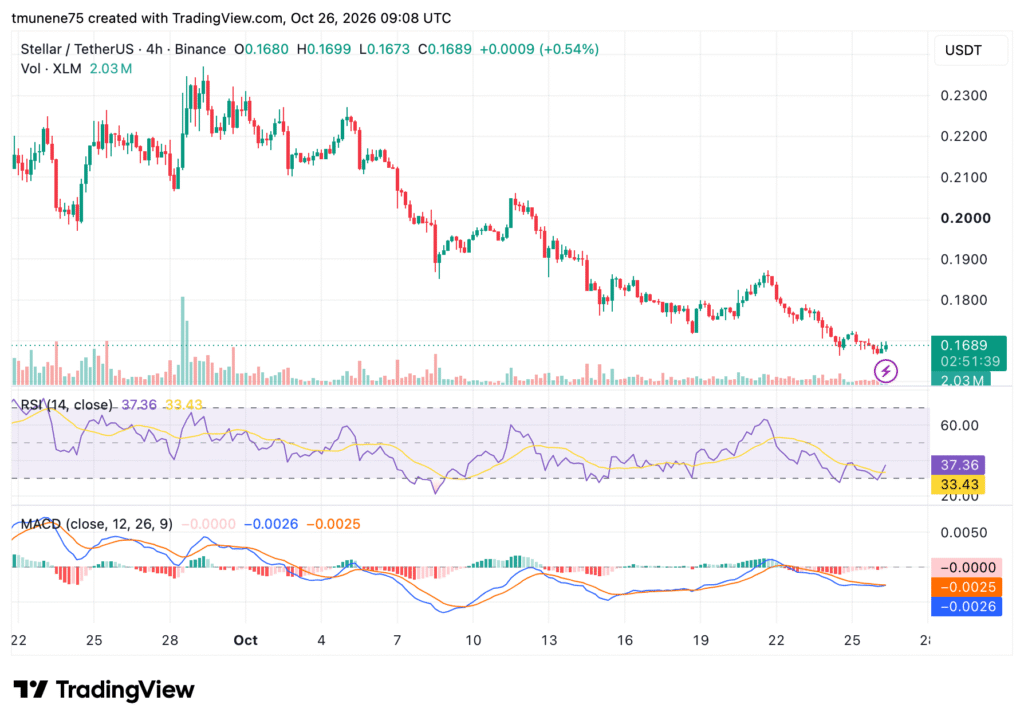
Stellar価格、XLMが2つの大きな上値抵抗に直面するなか0.80ドルを視野にXLMは、9月に0.23ドルを超える高値をつけた後に下落し、0.1689ドル付近で取引されています。目先のサポートは0.167~0.165ドル付近です。
アナリストは0.2254ドルを最初のレジスタンスと特定し、0.80ドルに向かう可能性のある道筋では、その後に0.45~0.50ドルの大きなゾーンが控えていると指摘しています。
RSIは50を下回り、MACDはやや弱気です。0.165ドルを下回れば下落が続く可能性がある一方、0.180ドルを回復すればモメンタムが改善する可能性があります。
アナリストのジャニス・アンドレウ氏が、0.80ドルに向かう可能性を前に2つのレジスタンス水準を示すなか、StellarのXLMトークンは0.17ドル付近のサポートを試しています。アンドレウ氏は、最初の難関として0.2254ドルを挙げ、その後に0.45~0.50ドルのマクロレジスタンスが控えていると指摘しました。一方、4時間足チャートでは、XLMが9月の0.23ドル超の高値から下落した後も、売り圧力が続いていることが示されています。
Stellar価格、XLMが2つの大きな上値抵抗に直面するなか0.80ドルを視野に
XLMは、9月に0.23ドルを超える高値をつけた後に下落し、0.1689ドル付近で取引されています。目先のサポートは0.167~0.165ドル付近です。
アナリストは0.2254ドルを最初のレジスタンスと特定し、0.80ドルに向かう可能性のある道筋では、その後に0.45~0.50ドルの大きなゾーンが控えていると指摘しています。
RSIは50を下回り、MACDはやや弱気です。0.165ドルを下回れば下落が続く可能性がある一方、0.180ドルを回復すればモメンタムが改善する可能性があります。
アナリストのジャニス・アンドレウ氏が、0.80ドルに向かう可能性を前に2つのレジスタンス水準を示すなか、StellarのXLMトークンは0.17ドル付近のサポートを試しています。アンドレウ氏は、最初の難関として0.2254ドルを挙げ、その後に0.45~0.50ドルのマクロレジスタンスが控えていると指摘しました。一方、4時間足チャートでは、XLMが9月の0.23ドル超の高値から下落した後も、売り圧力が続いていることが示されています。
アナリストは0.2254ドルを最初のレジスタンスと特定し、0.80ドルに向かう可能性のある道筋では、その後に0.45~0.50ドルの大きなゾーンが控えていると指摘しています。
RSIは50を下回り、MACDはやや弱気です。0.165ドルを下回れば下落が続く可能性がある一方、0.180ドルを回復すればモメンタムが改善する可能性があります。
アナリストのジャニス・アンドレウ氏が、0.80ドルに向かう可能性を前に2つのレジスタンス水準を示すなか、StellarのXLMトークンは0.17ドル付近のサポートを試しています。アンドレウ氏は、最初の難関として0.2254ドルを挙げ、その後に0.45~0.50ドルのマクロレジスタンスが控えていると指摘しました。一方、4時間足チャートでは、XLMが9月の0.23ドル超の高値から下落した後も、売り圧力が続いていることが示されています。
71

記事
翻訳参照
Tokenized Assets Surge Toward $40 BillionSupply the chart shows that the total value of tokenized assets increased from $0.7 billion in 2021-$38.8 billion in 2026 year-to-date.
Ondo brings traditional financial products like Treasuries and equities to the tokenized asset space.
Market value alone cannot establish trading activity, investor access, or Ondo’s share of the expanding tokenized asset market.
Total value of tokenized assets increased 500,000-fold, growing from $0.7 billion in 2021 to $38.8 billion in 2026.
Tokenized Assets Record Rapid Market Growth
The chart shows that the growth is steady and begins to rise significantly in 2023.Market value in 2023 was USD 1.7 billion and USD 1 billion in 2022. Total reached $10.1 billion by 2024.
Source: X
The value reported for the increase went up to $25.5 billion in 2025. The YTD total for 2026 is $38.8B. But that is not an actual calendar year.
The biggest increase was in 2024 with a total increase of almost six times. The following year added another $15.4 billion to the reported market value. The latest figure adds $13.3 billion beyond the 2025 total.
These figures describe the market’s reported value rather than its daily trading activity. They also fail to identify the quantity of investors who are trading tokenised financial products. Trading volumes and ownership figures would provide additional context.
Ondo Brings Traditional Financial Products On-Chain
ALLINCRYPTO linked the market’s expansion to Ondo and blockchain-based financial products. The post identified stocks and US Treasuries as examples of assets being tokenized. It described Ondo as a leading participant in this developing market.
Tokenization creates digital representations of assets through blockchain-based systems. Depending on their structure, these products can provide exposure to traditional financial instruments. Their ownership rights and redemption conditions depend on the arrangements governing each offering.
Tokenized Treasuries connect blockchain users with products linked to government debt. Tokenized equities extend similar arrangements to stock-market investments. These products remain distinct from cryptocurrencies because their value relates to underlying financial assets.
Ondo’s position in this sector places its offerings within a growing market. However, the supplied chart does not identify individual issuers or their respective market shares. It therefore cannot establish how much of the reported growth belongs to Ondo.
Market Growth Faces Practical Tests
A higher reported value does not necessarily imply improved liquidity or greater accessibility to investors. There are also products that could have a large stake but do not trade on the secondary market often. Some other people might support other uses, such as lending and using as collateral.
The other factor that investors consider is who the owner of the investment is and how secure the investment is. Redemption procedures and accurate pricing matter when products represent traditional financial assets. Access may also depend on eligibility rules and the jurisdictions involved.
The supplied material does not include a current ONDO token price. It also provides no figures linking token performance directly to the market’s expansion. Those measurements would be needed to assess price movements against sector growth.
The distinction between market expansion and individual project performance remains important. A growing category does not guarantee that every issuer will attract equal demand. Ondo’s position would require separate figures on its products and activity.
The chart shows that the value of the tokenized asset has risen significantly since 2021. This growth was especially marked from 2024. The growth will be determined by how these products meet the needs of investors and financial markets.
Tokenized Assets Surge Toward $40 Billion
Supply the chart shows that the total value of tokenized assets increased from $0.7 billion in 2021-$38.8 billion in 2026 year-to-date.
Ondo brings traditional financial products like Treasuries and equities to the tokenized asset space.
Market value alone cannot establish trading activity, investor access, or Ondo’s share of the expanding tokenized asset market.
Total value of tokenized assets increased 500,000-fold, growing from $0.7 billion in 2021 to $38.8 billion in 2026.
Tokenized Assets Record Rapid Market Growth
The chart shows that the growth is steady and begins to rise significantly in 2023.Market value in 2023 was USD 1.7 billion and USD 1 billion in 2022. Total reached $10.1 billion by 2024.
Source: X
The value reported for the increase went up to $25.5 billion in 2025. The YTD total for 2026 is $38.8B. But that is not an actual calendar year.
The biggest increase was in 2024 with a total increase of almost six times. The following year added another $15.4 billion to the reported market value. The latest figure adds $13.3 billion beyond the 2025 total.
These figures describe the market’s reported value rather than its daily trading activity. They also fail to identify the quantity of investors who are trading tokenised financial products. Trading volumes and ownership figures would provide additional context.
Ondo Brings Traditional Financial Products On-Chain
ALLINCRYPTO linked the market’s expansion to Ondo and blockchain-based financial products. The post identified stocks and US Treasuries as examples of assets being tokenized. It described Ondo as a leading participant in this developing market.
Tokenization creates digital representations of assets through blockchain-based systems. Depending on their structure, these products can provide exposure to traditional financial instruments. Their ownership rights and redemption conditions depend on the arrangements governing each offering.
Tokenized Treasuries connect blockchain users with products linked to government debt. Tokenized equities extend similar arrangements to stock-market investments. These products remain distinct from cryptocurrencies because their value relates to underlying financial assets.
Ondo’s position in this sector places its offerings within a growing market. However, the supplied chart does not identify individual issuers or their respective market shares. It therefore cannot establish how much of the reported growth belongs to Ondo.
Market Growth Faces Practical Tests
A higher reported value does not necessarily imply improved liquidity or greater accessibility to investors. There are also products that could have a large stake but do not trade on the secondary market often. Some other people might support other uses, such as lending and using as collateral.
The other factor that investors consider is who the owner of the investment is and how secure the investment is. Redemption procedures and accurate pricing matter when products represent traditional financial assets. Access may also depend on eligibility rules and the jurisdictions involved.
The supplied material does not include a current ONDO token price. It also provides no figures linking token performance directly to the market’s expansion. Those measurements would be needed to assess price movements against sector growth.
The distinction between market expansion and individual project performance remains important. A growing category does not guarantee that every issuer will attract equal demand. Ondo’s position would require separate figures on its products and activity.
The chart shows that the value of the tokenized asset has risen significantly since 2021. This growth was especially marked from 2024. The growth will be determined by how these products meet the needs of investors and financial markets.
Ondo brings traditional financial products like Treasuries and equities to the tokenized asset space.
Market value alone cannot establish trading activity, investor access, or Ondo’s share of the expanding tokenized asset market.
Total value of tokenized assets increased 500,000-fold, growing from $0.7 billion in 2021 to $38.8 billion in 2026.
Tokenized Assets Record Rapid Market Growth
The chart shows that the growth is steady and begins to rise significantly in 2023.Market value in 2023 was USD 1.7 billion and USD 1 billion in 2022. Total reached $10.1 billion by 2024.
Source: X
The value reported for the increase went up to $25.5 billion in 2025. The YTD total for 2026 is $38.8B. But that is not an actual calendar year.
The biggest increase was in 2024 with a total increase of almost six times. The following year added another $15.4 billion to the reported market value. The latest figure adds $13.3 billion beyond the 2025 total.
These figures describe the market’s reported value rather than its daily trading activity. They also fail to identify the quantity of investors who are trading tokenised financial products. Trading volumes and ownership figures would provide additional context.
Ondo Brings Traditional Financial Products On-Chain
ALLINCRYPTO linked the market’s expansion to Ondo and blockchain-based financial products. The post identified stocks and US Treasuries as examples of assets being tokenized. It described Ondo as a leading participant in this developing market.
Tokenization creates digital representations of assets through blockchain-based systems. Depending on their structure, these products can provide exposure to traditional financial instruments. Their ownership rights and redemption conditions depend on the arrangements governing each offering.
Tokenized Treasuries connect blockchain users with products linked to government debt. Tokenized equities extend similar arrangements to stock-market investments. These products remain distinct from cryptocurrencies because their value relates to underlying financial assets.
Ondo’s position in this sector places its offerings within a growing market. However, the supplied chart does not identify individual issuers or their respective market shares. It therefore cannot establish how much of the reported growth belongs to Ondo.
Market Growth Faces Practical Tests
A higher reported value does not necessarily imply improved liquidity or greater accessibility to investors. There are also products that could have a large stake but do not trade on the secondary market often. Some other people might support other uses, such as lending and using as collateral.
The other factor that investors consider is who the owner of the investment is and how secure the investment is. Redemption procedures and accurate pricing matter when products represent traditional financial assets. Access may also depend on eligibility rules and the jurisdictions involved.
The supplied material does not include a current ONDO token price. It also provides no figures linking token performance directly to the market’s expansion. Those measurements would be needed to assess price movements against sector growth.
The distinction between market expansion and individual project performance remains important. A growing category does not guarantee that every issuer will attract equal demand. Ondo’s position would require separate figures on its products and activity.
The chart shows that the value of the tokenized asset has risen significantly since 2021. This growth was especially marked from 2024. The growth will be determined by how these products meet the needs of investors and financial markets.
183
記事
翻訳参照
Ethena (ENA) Rebounds 8.8% as Analysts Watch $0.25 TargetENA rebounded 8.8% after Arthur Hayes sold 14 million tokens worth about $2.7 million, but the token remains below its 200-day moving average.
CryptoBullet expects a prolonged correction and identifies 0.122–0.172 as a potential buying zone before another sustained breakout.
Crypto Patel targets $0.25 initially, with longer-term levels up to $3; a break above $0.223 could strengthen the recovery outlook.
Ethena’s ENA token has rebounded 8.8% after Arthur Hayes sold 14 million tokens worth approximately $2.7 million. Analysts CryptoBullet and Crypto Patel have outlined different paths for the token, with both tracking potential gains. However, CryptoBullet expects a prolonged correction, while ENA trades near $0.211 below its 200-day moving average.
https://twitter.com/CryptoPatel/status/2112959601834426860?s=20
CryptoBullet Expects a Longer Correction Before Breakout
CryptoBullet said ENA rose fourfold between July and September, describing the rally as a sign of strength. The analyst classified the move as an aggressive five-wave impulse and expects a correction before another sustained breakout.
According to CryptoBullet, the pullback so far has not been sufficient. The analyst anticipates a prolonged flat correction and identified 0.122–0.172 as a potential buying zone. Meanwhile, ENA’s chart shows a decline from approximately 0.10–0.13 in late April toward 0.07–0.08 by mid-August.
The token then climbed above $0.10 in late August before accelerating toward $0.285 in September. However, October selling pushed it back toward 0.18–0.20 before the recent recovery.
Crypto Patel Maps ENA Targets From $0.13 to $3
Crypto Patel highlighted a possible trend reversal on the higher-timeframe chart and listed $0.13 and $0.25 as initial price targets. The analyst also identified longer-term targets at $0.50, $0.80, $1.25, and $3.
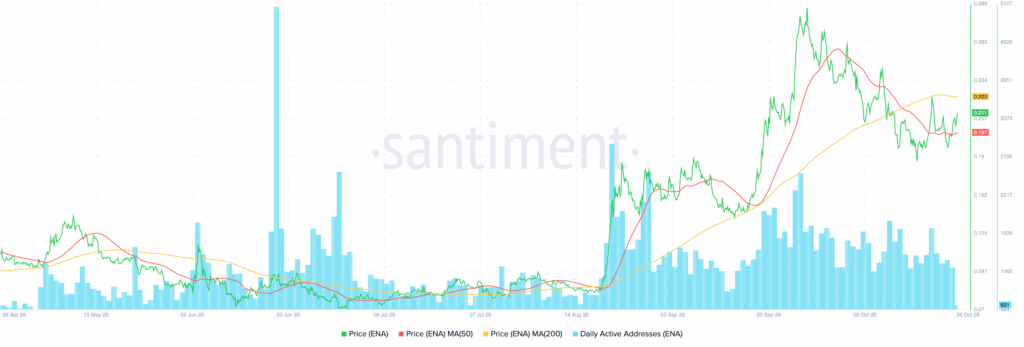
ENA currently trades around $0.211, above its 50-day moving average near $0.197 but below its 200-day average around $0.223. The latter level remains an important resistance area, while 0.197–0.200 provides near-term support.
ENA Network Activity and Resistance Levels Remain in Focus
The chart records major spikes in daily active addresses during June and the August–September rally. Network activity rose alongside the price advance, although recent readings alone cannot establish sustained adoption.
Source: Santiment
A move above $0.223 could open the way toward resistance between $0.234 and $0.250. Conversely, a break below $0.197 could expose ENA to further downside, with $0.180 representing another support level.
Ethena (ENA) Rebounds 8.8% as Analysts Watch $0.25 Target
ENA rebounded 8.8% after Arthur Hayes sold 14 million tokens worth about $2.7 million, but the token remains below its 200-day moving average.
CryptoBullet expects a prolonged correction and identifies 0.122–0.172 as a potential buying zone before another sustained breakout.
Crypto Patel targets $0.25 initially, with longer-term levels up to $3; a break above $0.223 could strengthen the recovery outlook.
Ethena’s ENA token has rebounded 8.8% after Arthur Hayes sold 14 million tokens worth approximately $2.7 million. Analysts CryptoBullet and Crypto Patel have outlined different paths for the token, with both tracking potential gains. However, CryptoBullet expects a prolonged correction, while ENA trades near $0.211 below its 200-day moving average.
https://twitter.com/CryptoPatel/status/2112959601834426860?s=20
CryptoBullet Expects a Longer Correction Before Breakout
CryptoBullet said ENA rose fourfold between July and September, describing the rally as a sign of strength. The analyst classified the move as an aggressive five-wave impulse and expects a correction before another sustained breakout.
According to CryptoBullet, the pullback so far has not been sufficient. The analyst anticipates a prolonged flat correction and identified 0.122–0.172 as a potential buying zone. Meanwhile, ENA’s chart shows a decline from approximately 0.10–0.13 in late April toward 0.07–0.08 by mid-August.
The token then climbed above $0.10 in late August before accelerating toward $0.285 in September. However, October selling pushed it back toward 0.18–0.20 before the recent recovery.
Crypto Patel Maps ENA Targets From $0.13 to $3
Crypto Patel highlighted a possible trend reversal on the higher-timeframe chart and listed $0.13 and $0.25 as initial price targets. The analyst also identified longer-term targets at $0.50, $0.80, $1.25, and $3.
ENA currently trades around $0.211, above its 50-day moving average near $0.197 but below its 200-day average around $0.223. The latter level remains an important resistance area, while 0.197–0.200 provides near-term support.
ENA Network Activity and Resistance Levels Remain in Focus
The chart records major spikes in daily active addresses during June and the August–September rally. Network activity rose alongside the price advance, although recent readings alone cannot establish sustained adoption.
Source: Santiment
A move above $0.223 could open the way toward resistance between $0.234 and $0.250. Conversely, a break below $0.197 could expose ENA to further downside, with $0.180 representing another support level.
CryptoBullet expects a prolonged correction and identifies 0.122–0.172 as a potential buying zone before another sustained breakout.
Crypto Patel targets $0.25 initially, with longer-term levels up to $3; a break above $0.223 could strengthen the recovery outlook.
Ethena’s ENA token has rebounded 8.8% after Arthur Hayes sold 14 million tokens worth approximately $2.7 million. Analysts CryptoBullet and Crypto Patel have outlined different paths for the token, with both tracking potential gains. However, CryptoBullet expects a prolonged correction, while ENA trades near $0.211 below its 200-day moving average.
https://twitter.com/CryptoPatel/status/2112959601834426860?s=20
CryptoBullet Expects a Longer Correction Before Breakout
CryptoBullet said ENA rose fourfold between July and September, describing the rally as a sign of strength. The analyst classified the move as an aggressive five-wave impulse and expects a correction before another sustained breakout.
According to CryptoBullet, the pullback so far has not been sufficient. The analyst anticipates a prolonged flat correction and identified 0.122–0.172 as a potential buying zone. Meanwhile, ENA’s chart shows a decline from approximately 0.10–0.13 in late April toward 0.07–0.08 by mid-August.
The token then climbed above $0.10 in late August before accelerating toward $0.285 in September. However, October selling pushed it back toward 0.18–0.20 before the recent recovery.
Crypto Patel Maps ENA Targets From $0.13 to $3
Crypto Patel highlighted a possible trend reversal on the higher-timeframe chart and listed $0.13 and $0.25 as initial price targets. The analyst also identified longer-term targets at $0.50, $0.80, $1.25, and $3.
ENA currently trades around $0.211, above its 50-day moving average near $0.197 but below its 200-day average around $0.223. The latter level remains an important resistance area, while 0.197–0.200 provides near-term support.
ENA Network Activity and Resistance Levels Remain in Focus
The chart records major spikes in daily active addresses during June and the August–September rally. Network activity rose alongside the price advance, although recent readings alone cannot establish sustained adoption.
Source: Santiment
A move above $0.223 could open the way toward resistance between $0.234 and $0.250. Conversely, a break below $0.197 could expose ENA to further downside, with $0.180 representing another support level.
121
記事
クジラの売却が続けばXRPは22%下落も、アナリストが警告1,000万〜1億トークンを保有するXRPウォレットは351から339に減少し、取引所残高は約5,000万XRP増加しました。
Ali Chartsは、1.26ドルを下回ると、下値目標の1.11ドルと0.98ドルが視野に入る可能性があると警告しています。
XRPは50日移動平均線と200日移動平均線を下回って取引されており、保有者数が825万人に達する一方で、アクティブアドレス数は約2万3,800まで減少しています。
アナリストのAli Chartsによると、大口保有者の売却が続き、価格が1.26ドルを下回れば、XRPは0.98ドル付近まで下落する可能性があります。同アナリストは、1,000万〜1億XRPを保有するウォレットが減少し、取引所残高が増加していると報告しました。一方、XRPは10月26日時点で1.276ドルで取引され、50日移動平均線を下回っていました。
クジラの売却が続けばXRPは22%下落も、アナリストが警告
1,000万〜1億トークンを保有するXRPウォレットは351から339に減少し、取引所残高は約5,000万XRP増加しました。
Ali Chartsは、1.26ドルを下回ると、下値目標の1.11ドルと0.98ドルが視野に入る可能性があると警告しています。
XRPは50日移動平均線と200日移動平均線を下回って取引されており、保有者数が825万人に達する一方で、アクティブアドレス数は約2万3,800まで減少しています。
アナリストのAli Chartsによると、大口保有者の売却が続き、価格が1.26ドルを下回れば、XRPは0.98ドル付近まで下落する可能性があります。同アナリストは、1,000万〜1億XRPを保有するウォレットが減少し、取引所残高が増加していると報告しました。一方、XRPは10月26日時点で1.276ドルで取引され、50日移動平均線を下回っていました。
Ali Chartsは、1.26ドルを下回ると、下値目標の1.11ドルと0.98ドルが視野に入る可能性があると警告しています。
XRPは50日移動平均線と200日移動平均線を下回って取引されており、保有者数が825万人に達する一方で、アクティブアドレス数は約2万3,800まで減少しています。
アナリストのAli Chartsによると、大口保有者の売却が続き、価格が1.26ドルを下回れば、XRPは0.98ドル付近まで下落する可能性があります。同アナリストは、1,000万〜1億XRPを保有するウォレットが減少し、取引所残高が増加していると報告しました。一方、XRPは10月26日時点で1.276ドルで取引され、50日移動平均線を下回っていました。
1
1.2k
記事
翻訳参照
Ethereum Market Cap Drops $54B as ETH Tests $2,300Ethereum’s market cap fell by $54 billion in three weeks as total open interest across exchanges dropped to $11.5 billion.
Binance open interest declined by $1.3 billion to $5.7 billion, while Gate, HTX and Bybit also recorded substantial monthly decreases.
ETH trades near $2,304 with bearish RSI and MACD readings; a break below $2,300 could expose $2,250 and $2,200 support.
Ethereum has lost $54 billion in market capitalization over three weeks as ETH fell about 15% and derivatives traders reduced exposure. Analyst Darkfost reported that total Ethereum open interest across exchanges dropped to $11.5 billion. Meanwhile, ETH traded near $2,304.53 on October 26, as technical indicators showed continued selling pressure.
Ethereum Open Interest Falls Across Major Exchanges
Darkfost reported that Ethereum open interest on Binance declined by $1.3 billion in one month, reaching $5.7 billion. Across other platforms, Gate recorded a $995 million decrease, HTX lost $857 million, and Bybit fell by $310 million over 30 days.
Despite the declines, Binance still accounted for 50% of Ethereum’s total open interest. Bybit held 17.5%, while Gate and OKX each accounted for 14.7%. Darkfost attributed the broader decline to falling prices, liquidations, and traders closing positions to reduce risk.
The analyst also noted that open interest fell more sharply in July. That deleveraging period preceded Ethereum’s stabilization and a technical rebound exceeding 32%, which pushed ETH above $2,800 for the first time since January.
ETH Chart Shows Bearish Momentum Near $2,300
The four-hour ETH/USD chart on Binance showed ETH trading at $2,304.53 on October 26, down $13.02, or 0.56%, on the latest candle. Ethereum traded around $2,700 in early October before falling below $2,600 and then $2,500.
Temporary rebounds lifted ETH toward $2,550 around October 12 and $2,510 on October 21. However, sellers regained control, pushing the price toward $2,300.
Source: TradingView
The Relative Strength Index stood at 36.68, below its moving average of 38.42. The MACD line also remained below its signal line, at -25.29 versus -22.21, with a histogram reading of -3.08.
Support Levels Put $2,250 and $2,200 in Focus
Ethereum is testing support near $2,300, with a breakdown potentially exposing $2,250 and $2,200. Resistance is around 2,350–2,400, followed by $2,500. Darkfost described deleveraging as part of the correction process, noting that such periods can bring fear and sometimes precede a final correction phase.
Ethereum Market Cap Drops $54B as ETH Tests $2,300
Ethereum’s market cap fell by $54 billion in three weeks as total open interest across exchanges dropped to $11.5 billion.
Binance open interest declined by $1.3 billion to $5.7 billion, while Gate, HTX and Bybit also recorded substantial monthly decreases.
ETH trades near $2,304 with bearish RSI and MACD readings; a break below $2,300 could expose $2,250 and $2,200 support.
Ethereum has lost $54 billion in market capitalization over three weeks as ETH fell about 15% and derivatives traders reduced exposure. Analyst Darkfost reported that total Ethereum open interest across exchanges dropped to $11.5 billion. Meanwhile, ETH traded near $2,304.53 on October 26, as technical indicators showed continued selling pressure.
Ethereum Open Interest Falls Across Major Exchanges
Darkfost reported that Ethereum open interest on Binance declined by $1.3 billion in one month, reaching $5.7 billion. Across other platforms, Gate recorded a $995 million decrease, HTX lost $857 million, and Bybit fell by $310 million over 30 days.
Despite the declines, Binance still accounted for 50% of Ethereum’s total open interest. Bybit held 17.5%, while Gate and OKX each accounted for 14.7%. Darkfost attributed the broader decline to falling prices, liquidations, and traders closing positions to reduce risk.
The analyst also noted that open interest fell more sharply in July. That deleveraging period preceded Ethereum’s stabilization and a technical rebound exceeding 32%, which pushed ETH above $2,800 for the first time since January.
ETH Chart Shows Bearish Momentum Near $2,300
The four-hour ETH/USD chart on Binance showed ETH trading at $2,304.53 on October 26, down $13.02, or 0.56%, on the latest candle. Ethereum traded around $2,700 in early October before falling below $2,600 and then $2,500.
Temporary rebounds lifted ETH toward $2,550 around October 12 and $2,510 on October 21. However, sellers regained control, pushing the price toward $2,300.
Source: TradingView
The Relative Strength Index stood at 36.68, below its moving average of 38.42. The MACD line also remained below its signal line, at -25.29 versus -22.21, with a histogram reading of -3.08.
Support Levels Put $2,250 and $2,200 in Focus
Ethereum is testing support near $2,300, with a breakdown potentially exposing $2,250 and $2,200. Resistance is around 2,350–2,400, followed by $2,500. Darkfost described deleveraging as part of the correction process, noting that such periods can bring fear and sometimes precede a final correction phase.
Binance open interest declined by $1.3 billion to $5.7 billion, while Gate, HTX and Bybit also recorded substantial monthly decreases.
ETH trades near $2,304 with bearish RSI and MACD readings; a break below $2,300 could expose $2,250 and $2,200 support.
Ethereum has lost $54 billion in market capitalization over three weeks as ETH fell about 15% and derivatives traders reduced exposure. Analyst Darkfost reported that total Ethereum open interest across exchanges dropped to $11.5 billion. Meanwhile, ETH traded near $2,304.53 on October 26, as technical indicators showed continued selling pressure.
Ethereum Open Interest Falls Across Major Exchanges
Darkfost reported that Ethereum open interest on Binance declined by $1.3 billion in one month, reaching $5.7 billion. Across other platforms, Gate recorded a $995 million decrease, HTX lost $857 million, and Bybit fell by $310 million over 30 days.
Despite the declines, Binance still accounted for 50% of Ethereum’s total open interest. Bybit held 17.5%, while Gate and OKX each accounted for 14.7%. Darkfost attributed the broader decline to falling prices, liquidations, and traders closing positions to reduce risk.
The analyst also noted that open interest fell more sharply in July. That deleveraging period preceded Ethereum’s stabilization and a technical rebound exceeding 32%, which pushed ETH above $2,800 for the first time since January.
ETH Chart Shows Bearish Momentum Near $2,300
The four-hour ETH/USD chart on Binance showed ETH trading at $2,304.53 on October 26, down $13.02, or 0.56%, on the latest candle. Ethereum traded around $2,700 in early October before falling below $2,600 and then $2,500.
Temporary rebounds lifted ETH toward $2,550 around October 12 and $2,510 on October 21. However, sellers regained control, pushing the price toward $2,300.
Source: TradingView
The Relative Strength Index stood at 36.68, below its moving average of 38.42. The MACD line also remained below its signal line, at -25.29 versus -22.21, with a histogram reading of -3.08.
Support Levels Put $2,250 and $2,200 in Focus
Ethereum is testing support near $2,300, with a breakdown potentially exposing $2,250 and $2,200. Resistance is around 2,350–2,400, followed by $2,500. Darkfost described deleveraging as part of the correction process, noting that such periods can bring fear and sometimes precede a final correction phase.
1
97
記事
ビットコインのクジラは入金を控える一方、個人投資家の預け入れはほぼ倍増Binanceへの個人投資家によるビットコイン流入額は、30日間でほぼ倍増して107億5,000万ドルに達した一方、クジラの入金額は59億ドルから38億ドルに減少しました。
Ali Chartsは、82,000ドルを上値抵抗線とし、ビットコインの調整が続く場合は72,500ドルが買いの候補水準になると指摘しています。
現在のサイクルでビットコインの最大下落率は7%に達しました。過去に完了したサイクルでは、下落率は28%以上でした。
アナリストのAli Chartsが上昇チャネルを下抜けた動きを追うなか、ビットコインは72,500ドルに向けて調整する可能性があります。一方、Darkfostのデータによると、Binanceへの個人投資家によるビットコイン流入額は6カ月ぶりの高水準に達する一方、クジラの入金額は減少を続けています。こうした対照的な動きは、BTCが80,000ドルを上回って推移し、アナリストが現在の市場サイクルにおける下落幅を分析するなかで見られています。
ビットコインのクジラは入金を控える一方、個人投資家の預け入れはほぼ倍増
Binanceへの個人投資家によるビットコイン流入額は、30日間でほぼ倍増して107億5,000万ドルに達した一方、クジラの入金額は59億ドルから38億ドルに減少しました。
Ali Chartsは、82,000ドルを上値抵抗線とし、ビットコインの調整が続く場合は72,500ドルが買いの候補水準になると指摘しています。
現在のサイクルでビットコインの最大下落率は7%に達しました。過去に完了したサイクルでは、下落率は28%以上でした。
アナリストのAli Chartsが上昇チャネルを下抜けた動きを追うなか、ビットコインは72,500ドルに向けて調整する可能性があります。一方、Darkfostのデータによると、Binanceへの個人投資家によるビットコイン流入額は6カ月ぶりの高水準に達する一方、クジラの入金額は減少を続けています。こうした対照的な動きは、BTCが80,000ドルを上回って推移し、アナリストが現在の市場サイクルにおける下落幅を分析するなかで見られています。
Ali Chartsは、82,000ドルを上値抵抗線とし、ビットコインの調整が続く場合は72,500ドルが買いの候補水準になると指摘しています。
現在のサイクルでビットコインの最大下落率は7%に達しました。過去に完了したサイクルでは、下落率は28%以上でした。
アナリストのAli Chartsが上昇チャネルを下抜けた動きを追うなか、ビットコインは72,500ドルに向けて調整する可能性があります。一方、Darkfostのデータによると、Binanceへの個人投資家によるビットコイン流入額は6カ月ぶりの高水準に達する一方、クジラの入金額は減少を続けています。こうした対照的な動きは、BTCが80,000ドルを上回って推移し、アナリストが現在の市場サイクルにおける下落幅を分析するなかで見られています。
1
205
記事
シンガポール、マレーシア、タイがデジタルマネーの利用を推進シンガポール金融管理局(MAS)、マレーシア中央銀行、タイ銀行は、業界と連携してクロスボーダーのデジタルマネー決済に取り組みます。
BLOOMは、デジタルマネーの受け入れ、クロスボーダー決済、ネットワークの相互運用性、本人確認や制裁対象者の確認などのプログラム可能な管理機能に取り組みます。
Ripple、Visa、Mastercard、世界銀行グループなどが、決済、財務、貿易金融における活用方法を検討する参加者に名を連ねています。
シンガポール、マレーシア、タイは金融機関と連携し、クロスボーダーのデジタルマネー決済に取り組みます。シンガポール金融管理局は10月23日、BLOOMを発表しました。マレーシア中央銀行とタイ銀行は政策当局メンバーとして参加しました。各国・地域の機関間で、規制対象のステーブルコインやトークン化預金を活用するための手法の策定を支援します。
シンガポール、マレーシア、タイがデジタルマネーの利用を推進
シンガポール金融管理局(MAS)、マレーシア中央銀行、タイ銀行は、業界と連携してクロスボーダーのデジタルマネー決済に取り組みます。
BLOOMは、デジタルマネーの受け入れ、クロスボーダー決済、ネットワークの相互運用性、本人確認や制裁対象者の確認などのプログラム可能な管理機能に取り組みます。
Ripple、Visa、Mastercard、世界銀行グループなどが、決済、財務、貿易金融における活用方法を検討する参加者に名を連ねています。
シンガポール、マレーシア、タイは金融機関と連携し、クロスボーダーのデジタルマネー決済に取り組みます。シンガポール金融管理局は10月23日、BLOOMを発表しました。マレーシア中央銀行とタイ銀行は政策当局メンバーとして参加しました。各国・地域の機関間で、規制対象のステーブルコインやトークン化預金を活用するための手法の策定を支援します。
BLOOMは、デジタルマネーの受け入れ、クロスボーダー決済、ネットワークの相互運用性、本人確認や制裁対象者の確認などのプログラム可能な管理機能に取り組みます。
Ripple、Visa、Mastercard、世界銀行グループなどが、決済、財務、貿易金融における活用方法を検討する参加者に名を連ねています。
シンガポール、マレーシア、タイは金融機関と連携し、クロスボーダーのデジタルマネー決済に取り組みます。シンガポール金融管理局は10月23日、BLOOMを発表しました。マレーシア中央銀行とタイ銀行は政策当局メンバーとして参加しました。各国・地域の機関間で、規制対象のステーブルコインやトークン化預金を活用するための手法の策定を支援します。
320
記事
翻訳参照
PENGU Chart Shows Signs of a Possible ReversalPENGU has rebounded twice near the $0.0067–$0.0070 area, raising the possibility of a base after months of downward pressure.
PENGU recovered better from overnight losses and came out with better daily performance in the latest session as compared to FARTCOIN.
A sustained move above nearby resistance could strengthen the reversal case, while renewed selling below support would weaken the current setup.
PENGU is showing signs of a possible reversal after months of selling, with repeated support rebounds and stronger short-term performance.
Repeated Rebounds Put Support in Focus
Pure8 described the PENGU daily chart as interesting, drawing attention to a possible change in price structure. The chart shows a decline from approximately $0.011172, followed by a low near $0.005840. Since then, buyers have pushed the token higher, although the earlier downtrend remains relevant.
Source: X
Two rounded recoveries stand out around the $0.0067–$0.0070 region. Each followed a retreat, with price subsequently climbing away from the lower range. Their resemblance suggests sellers may be losing some control, but two rebounds alone cannot establish a lasting floor.
The latest market data places PENGU near $0.007850, below its previous high. This leaves a considerable distance between the current price and the earlier peak. Buyers must produce further gains before the chart can show a convincing break from its declining structure.
The support region remains important if selling returns. However, a move below around $0.006746 would break the repeated re-bounce pattern, and the more significant low of $0.005840 is lower. If these areas were kept above, the recovery could be given more space to grow.
Resistance and Momentum Will Determine the Next Move
The chart also brings up the possibility of an inverse head and shoulders. Typically three troughs, the middle being lower than the other two. The supplied chart does not set a break above the neckline to confirm.
The first zone of interest is around $0.0078 – $0.0080. The 24-hour high is $0.007961, which brings the token closer to the nearby resistance level. If it continues to move upwards from this range, it will be more convincing that buyers are able to prolong the recovery.
The MACD panel indicates that momentum lines have reached the lower end of their range and are turning up. In addition, the histogram seems to be trending upward from a series of below-average readings. The image, however, does not validate a completed Bullish Cross, so it is not an ending evidence, but rather supporting evidence.
If PENGU hits resistance again, trading will become an issue. The price spike alone is not as strong a sign of a breakout as a breakout with increased volume. On the other hand, if the token rejects close to $0.0080, the token may stall out before another support test.
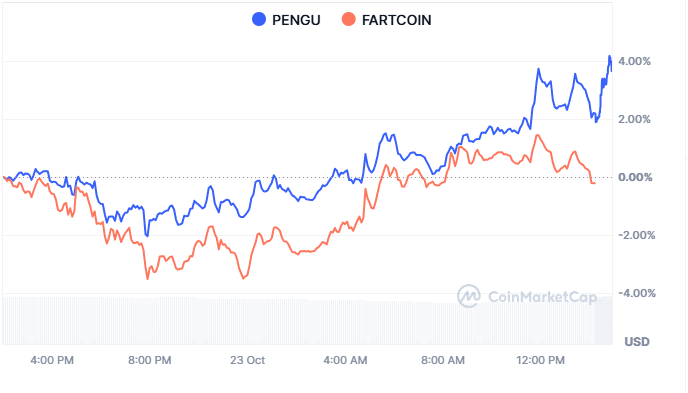
PENGU Outperforms FARTCOIN in the Latest Session
The comparison chart tracks PENGU in blue and FARTCOIN in orange across the same 24-hour period. Both assets decline during the evening, but FARTCOIN falls further, reaching below negative 3%. PENGU’s lowest reading stays closer to negative 2%, showing relative resilience during the sell-off.
Source: Coinmarketcap
Their paths begin separating more clearly during the overnight recovery. PENGU climbs into positive territory and advances through the morning, while FARTCOIN recovers more unevenly. The gap widens as the blue line rises, indicating stronger percentage performance from PENGU during this period.
PENGU briefly approaches a 4% gain before surrendering part of its advance. It finishes the displayed comparison near a 2% gain, while FARTCOIN falls back toward zero. This difference shows that PENGU retained more of its rebound despite the late pullback.
The accompanying market panel lists PENGU’s market capitalization at approximately $502.29 million. Its 24-hour trading volume stands near $95.15 million as of writing, down 2.44%. The price gain alongside lower volume means the advance did not coincide with rising turnover.
For now, PENGU has a possible reversal structure and stronger short-term performance than FARTCOIN. The next evidence must come from a sustained move above resistance, supported by continued buying. Failure near $0.0080 or a break below recent support would leave the recovery uncertain.
PENGU Chart Shows Signs of a Possible Reversal
PENGU has rebounded twice near the $0.0067–$0.0070 area, raising the possibility of a base after months of downward pressure.
PENGU recovered better from overnight losses and came out with better daily performance in the latest session as compared to FARTCOIN.
A sustained move above nearby resistance could strengthen the reversal case, while renewed selling below support would weaken the current setup.
PENGU is showing signs of a possible reversal after months of selling, with repeated support rebounds and stronger short-term performance.
Repeated Rebounds Put Support in Focus
Pure8 described the PENGU daily chart as interesting, drawing attention to a possible change in price structure. The chart shows a decline from approximately $0.011172, followed by a low near $0.005840. Since then, buyers have pushed the token higher, although the earlier downtrend remains relevant.
Source: X
Two rounded recoveries stand out around the $0.0067–$0.0070 region. Each followed a retreat, with price subsequently climbing away from the lower range. Their resemblance suggests sellers may be losing some control, but two rebounds alone cannot establish a lasting floor.
The latest market data places PENGU near $0.007850, below its previous high. This leaves a considerable distance between the current price and the earlier peak. Buyers must produce further gains before the chart can show a convincing break from its declining structure.
The support region remains important if selling returns. However, a move below around $0.006746 would break the repeated re-bounce pattern, and the more significant low of $0.005840 is lower. If these areas were kept above, the recovery could be given more space to grow.
Resistance and Momentum Will Determine the Next Move
The chart also brings up the possibility of an inverse head and shoulders. Typically three troughs, the middle being lower than the other two. The supplied chart does not set a break above the neckline to confirm.
The first zone of interest is around $0.0078 – $0.0080. The 24-hour high is $0.007961, which brings the token closer to the nearby resistance level. If it continues to move upwards from this range, it will be more convincing that buyers are able to prolong the recovery.
The MACD panel indicates that momentum lines have reached the lower end of their range and are turning up. In addition, the histogram seems to be trending upward from a series of below-average readings. The image, however, does not validate a completed Bullish Cross, so it is not an ending evidence, but rather supporting evidence.
If PENGU hits resistance again, trading will become an issue. The price spike alone is not as strong a sign of a breakout as a breakout with increased volume. On the other hand, if the token rejects close to $0.0080, the token may stall out before another support test.
PENGU Outperforms FARTCOIN in the Latest Session
The comparison chart tracks PENGU in blue and FARTCOIN in orange across the same 24-hour period. Both assets decline during the evening, but FARTCOIN falls further, reaching below negative 3%. PENGU’s lowest reading stays closer to negative 2%, showing relative resilience during the sell-off.
Source: Coinmarketcap
Their paths begin separating more clearly during the overnight recovery. PENGU climbs into positive territory and advances through the morning, while FARTCOIN recovers more unevenly. The gap widens as the blue line rises, indicating stronger percentage performance from PENGU during this period.
PENGU briefly approaches a 4% gain before surrendering part of its advance. It finishes the displayed comparison near a 2% gain, while FARTCOIN falls back toward zero. This difference shows that PENGU retained more of its rebound despite the late pullback.
The accompanying market panel lists PENGU’s market capitalization at approximately $502.29 million. Its 24-hour trading volume stands near $95.15 million as of writing, down 2.44%. The price gain alongside lower volume means the advance did not coincide with rising turnover.
For now, PENGU has a possible reversal structure and stronger short-term performance than FARTCOIN. The next evidence must come from a sustained move above resistance, supported by continued buying. Failure near $0.0080 or a break below recent support would leave the recovery uncertain.
PENGU recovered better from overnight losses and came out with better daily performance in the latest session as compared to FARTCOIN.
A sustained move above nearby resistance could strengthen the reversal case, while renewed selling below support would weaken the current setup.
PENGU is showing signs of a possible reversal after months of selling, with repeated support rebounds and stronger short-term performance.
Repeated Rebounds Put Support in Focus
Pure8 described the PENGU daily chart as interesting, drawing attention to a possible change in price structure. The chart shows a decline from approximately $0.011172, followed by a low near $0.005840. Since then, buyers have pushed the token higher, although the earlier downtrend remains relevant.
Source: X
Two rounded recoveries stand out around the $0.0067–$0.0070 region. Each followed a retreat, with price subsequently climbing away from the lower range. Their resemblance suggests sellers may be losing some control, but two rebounds alone cannot establish a lasting floor.
The latest market data places PENGU near $0.007850, below its previous high. This leaves a considerable distance between the current price and the earlier peak. Buyers must produce further gains before the chart can show a convincing break from its declining structure.
The support region remains important if selling returns. However, a move below around $0.006746 would break the repeated re-bounce pattern, and the more significant low of $0.005840 is lower. If these areas were kept above, the recovery could be given more space to grow.
Resistance and Momentum Will Determine the Next Move
The chart also brings up the possibility of an inverse head and shoulders. Typically three troughs, the middle being lower than the other two. The supplied chart does not set a break above the neckline to confirm.
The first zone of interest is around $0.0078 – $0.0080. The 24-hour high is $0.007961, which brings the token closer to the nearby resistance level. If it continues to move upwards from this range, it will be more convincing that buyers are able to prolong the recovery.
The MACD panel indicates that momentum lines have reached the lower end of their range and are turning up. In addition, the histogram seems to be trending upward from a series of below-average readings. The image, however, does not validate a completed Bullish Cross, so it is not an ending evidence, but rather supporting evidence.
If PENGU hits resistance again, trading will become an issue. The price spike alone is not as strong a sign of a breakout as a breakout with increased volume. On the other hand, if the token rejects close to $0.0080, the token may stall out before another support test.
PENGU Outperforms FARTCOIN in the Latest Session
The comparison chart tracks PENGU in blue and FARTCOIN in orange across the same 24-hour period. Both assets decline during the evening, but FARTCOIN falls further, reaching below negative 3%. PENGU’s lowest reading stays closer to negative 2%, showing relative resilience during the sell-off.
Source: Coinmarketcap
Their paths begin separating more clearly during the overnight recovery. PENGU climbs into positive territory and advances through the morning, while FARTCOIN recovers more unevenly. The gap widens as the blue line rises, indicating stronger percentage performance from PENGU during this period.
PENGU briefly approaches a 4% gain before surrendering part of its advance. It finishes the displayed comparison near a 2% gain, while FARTCOIN falls back toward zero. This difference shows that PENGU retained more of its rebound despite the late pullback.
The accompanying market panel lists PENGU’s market capitalization at approximately $502.29 million. Its 24-hour trading volume stands near $95.15 million as of writing, down 2.44%. The price gain alongside lower volume means the advance did not coincide with rising turnover.
For now, PENGU has a possible reversal structure and stronger short-term performance than FARTCOIN. The next evidence must come from a sustained move above resistance, supported by continued buying. Failure near $0.0080 or a break below recent support would leave the recovery uncertain.
478
記事
Glamsterdamのテストネットが近づくなか、イーサリアムは2,300ドルを試すETHは2,335ドル付近で取引されており、RSIは38.93、MACDヒストグラムはマイナスです。サポートは2,300~2,330ドル付近です。
Michael van de Poppe氏は、イーサリアムがさらに下落した場合のロングエントリー候補水準として、2,320ドルと2,230ドルを挙げています。
Crypto Patel氏は、GlamsterdamがHoodiテストネットの節目に近づくなか、ガス代が0.004ドルになると指摘しました。セキュリティと互換性については、引き続き検証が行われています。
弱気の勢いがETHを2,300ドルのサポートに向かわせるなか、イーサリアムは2,335ドル付近で取引されています。アナリストはエントリー候補水準やネットワークの動向に注目しています。Michael van de Poppe氏は、市場が軟調な局面でロングポジションの候補として2,320ドルと2,230ドルを挙げました。一方、Crypto Patel氏はガス代が0.004ドルになると指摘し、開発者らはGlamsterdamのテストネットにおける節目に近づいています。
Glamsterdamのテストネットが近づくなか、イーサリアムは2,300ドルを試す
ETHは2,335ドル付近で取引されており、RSIは38.93、MACDヒストグラムはマイナスです。サポートは2,300~2,330ドル付近です。
Michael van de Poppe氏は、イーサリアムがさらに下落した場合のロングエントリー候補水準として、2,320ドルと2,230ドルを挙げています。
Crypto Patel氏は、GlamsterdamがHoodiテストネットの節目に近づくなか、ガス代が0.004ドルになると指摘しました。セキュリティと互換性については、引き続き検証が行われています。
弱気の勢いがETHを2,300ドルのサポートに向かわせるなか、イーサリアムは2,335ドル付近で取引されています。アナリストはエントリー候補水準やネットワークの動向に注目しています。Michael van de Poppe氏は、市場が軟調な局面でロングポジションの候補として2,320ドルと2,230ドルを挙げました。一方、Crypto Patel氏はガス代が0.004ドルになると指摘し、開発者らはGlamsterdamのテストネットにおける節目に近づいています。
Michael van de Poppe氏は、イーサリアムがさらに下落した場合のロングエントリー候補水準として、2,320ドルと2,230ドルを挙げています。
Crypto Patel氏は、GlamsterdamがHoodiテストネットの節目に近づくなか、ガス代が0.004ドルになると指摘しました。セキュリティと互換性については、引き続き検証が行われています。
弱気の勢いがETHを2,300ドルのサポートに向かわせるなか、イーサリアムは2,335ドル付近で取引されています。アナリストはエントリー候補水準やネットワークの動向に注目しています。Michael van de Poppe氏は、市場が軟調な局面でロングポジションの候補として2,320ドルと2,230ドルを挙げました。一方、Crypto Patel氏はガス代が0.004ドルになると指摘し、開発者らはGlamsterdamのテストネットにおける節目に近づいています。
165
記事
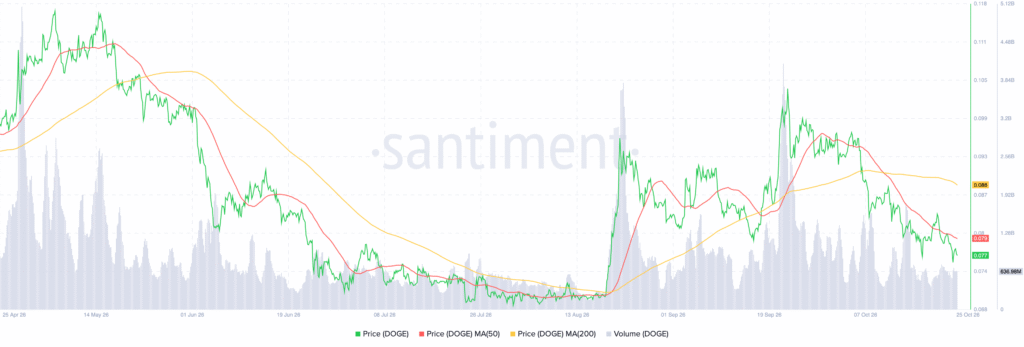
アナリストがブレイクアウトパターンと重要な抵抗線を注視するなか、Dogecoinは0.70ドルを視野にDOGEは0.077ドル付近で取引されており、50日移動平均線と200日移動平均線を下回っています。目先のサポートは0.075~0.077ドルの範囲にあります。
Giannis Andreou氏は、DOGEが0.07~0.08を維持し、複数の抵抗線を次々に突破すれば、0.70ドルに向かう可能性があると見ています。
Trader Tardigrade氏は、Dogecoinの月足チャートを2015~2017年の値動きと比較し、ブレイクアウトの可能性を示唆しましたが、時期については言及していません。
10月の下落で8月と9月の上昇分の大半が失われた後、Dogecoinは0.077ドル付近で取引されており、アナリストは長期的なブレイクアウトパターンの可能性を注視しています。Giannis Andreou氏は、DOGEが複数の抵抗線を突破すれば、0.70ドルに向かう可能性があると述べました。一方、Trader Tardigrade氏は、Dogecoinの月足チャートを2015~2017年の値動きと比較しました。
アナリストがブレイクアウトパターンと重要な抵抗線を注視するなか、Dogecoinは0.70ドルを視野に
DOGEは0.077ドル付近で取引されており、50日移動平均線と200日移動平均線を下回っています。目先のサポートは0.075~0.077ドルの範囲にあります。
Giannis Andreou氏は、DOGEが0.07~0.08を維持し、複数の抵抗線を次々に突破すれば、0.70ドルに向かう可能性があると見ています。
Trader Tardigrade氏は、Dogecoinの月足チャートを2015~2017年の値動きと比較し、ブレイクアウトの可能性を示唆しましたが、時期については言及していません。
10月の下落で8月と9月の上昇分の大半が失われた後、Dogecoinは0.077ドル付近で取引されており、アナリストは長期的なブレイクアウトパターンの可能性を注視しています。Giannis Andreou氏は、DOGEが複数の抵抗線を突破すれば、0.70ドルに向かう可能性があると述べました。一方、Trader Tardigrade氏は、Dogecoinの月足チャートを2015~2017年の値動きと比較しました。
Giannis Andreou氏は、DOGEが0.07~0.08を維持し、複数の抵抗線を次々に突破すれば、0.70ドルに向かう可能性があると見ています。
Trader Tardigrade氏は、Dogecoinの月足チャートを2015~2017年の値動きと比較し、ブレイクアウトの可能性を示唆しましたが、時期については言及していません。
10月の下落で8月と9月の上昇分の大半が失われた後、Dogecoinは0.077ドル付近で取引されており、アナリストは長期的なブレイクアウトパターンの可能性を注視しています。Giannis Andreou氏は、DOGEが複数の抵抗線を突破すれば、0.70ドルに向かう可能性があると述べました。一方、Trader Tardigrade氏は、Dogecoinの月足チャートを2015~2017年の値動きと比較しました。
2
434
記事
アナリストが警告、Cardanoは重要なサポートを割り込み、ADAに20%下落のリスク上昇価格チャネルを下抜けた後、0.220ドルのレジスタンスが維持されれば、ADAは0.166ドルに向けて20%下落する可能性があるとアナリストが警告しています。
CardanoのRSIは34.77、MACDは引き続きマイナス圏にあり、ADAが0.2056ドル付近で取引されるなか、売り圧力が続いていることを示しています。
ドイツのDZ BANKは、参加銀行の導入判断を条件として、meinKryptoでBitcoin、Ethereum、LitecoinとともにCardanoを取り扱っています。
アナリストのAli Chartsが、上昇価格チャネルを下抜けたと報告したことを受け、Cardanoは0.166ドルに向けて約20%下落する可能性があります。ADAは引き続き0.20ドル付近で取引されており、4時間足チャートでは弱気の勢いが見られます。一方、ドイツのDZ BANKは、meinKryptoプラットフォームで利用できる4種類の暗号資産の1つにCardanoを加えました。
アナリストが警告、Cardanoは重要なサポートを割り込み、ADAに20%下落のリスク
上昇価格チャネルを下抜けた後、0.220ドルのレジスタンスが維持されれば、ADAは0.166ドルに向けて20%下落する可能性があるとアナリストが警告しています。
CardanoのRSIは34.77、MACDは引き続きマイナス圏にあり、ADAが0.2056ドル付近で取引されるなか、売り圧力が続いていることを示しています。
ドイツのDZ BANKは、参加銀行の導入判断を条件として、meinKryptoでBitcoin、Ethereum、LitecoinとともにCardanoを取り扱っています。
アナリストのAli Chartsが、上昇価格チャネルを下抜けたと報告したことを受け、Cardanoは0.166ドルに向けて約20%下落する可能性があります。ADAは引き続き0.20ドル付近で取引されており、4時間足チャートでは弱気の勢いが見られます。一方、ドイツのDZ BANKは、meinKryptoプラットフォームで利用できる4種類の暗号資産の1つにCardanoを加えました。
CardanoのRSIは34.77、MACDは引き続きマイナス圏にあり、ADAが0.2056ドル付近で取引されるなか、売り圧力が続いていることを示しています。
ドイツのDZ BANKは、参加銀行の導入判断を条件として、meinKryptoでBitcoin、Ethereum、LitecoinとともにCardanoを取り扱っています。
アナリストのAli Chartsが、上昇価格チャネルを下抜けたと報告したことを受け、Cardanoは0.166ドルに向けて約20%下落する可能性があります。ADAは引き続き0.20ドル付近で取引されており、4時間足チャートでは弱気の勢いが見られます。一方、ドイツのDZ BANKは、meinKryptoプラットフォームで利用できる4種類の暗号資産の1つにCardanoを加えました。
2
367
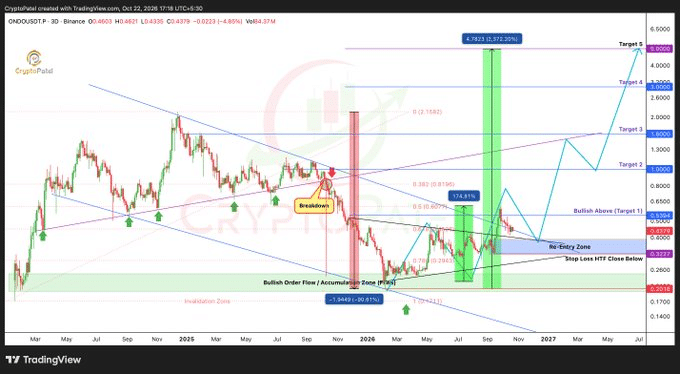
記事
回復が鈍るなか、ONDOは上値抵抗に直面ONDOは下落後、0.433ドル付近で取引されています。回復を狙う買い手にとって、0.435ドルが短期的な上値抵抗となっています。
最近の上昇局面では取引所への流入と流出が急増しており、価格がピークから後退するなか、ONDOの相場の方向性は不透明なままです。
0.39~0.33ドルの再エントリーゾーンは引き続き重要です。一方、上位時間足の終値が0.32ドルを下回れば、提示されたシナリオは無効になります。
高値をつけた後にその水準を維持できず反落したため、ONDOの値動きは引き続き弱気です。トレーダーは近くのサポートとレジスタンスの水準を意識して取引しています。
回復が鈍るなか、ONDOは上値抵抗に直面
ONDOは下落後、0.433ドル付近で取引されています。回復を狙う買い手にとって、0.435ドルが短期的な上値抵抗となっています。
最近の上昇局面では取引所への流入と流出が急増しており、価格がピークから後退するなか、ONDOの相場の方向性は不透明なままです。
0.39~0.33ドルの再エントリーゾーンは引き続き重要です。一方、上位時間足の終値が0.32ドルを下回れば、提示されたシナリオは無効になります。
高値をつけた後にその水準を維持できず反落したため、ONDOの値動きは引き続き弱気です。トレーダーは近くのサポートとレジスタンスの水準を意識して取引しています。
最近の上昇局面では取引所への流入と流出が急増しており、価格がピークから後退するなか、ONDOの相場の方向性は不透明なままです。
0.39~0.33ドルの再エントリーゾーンは引き続き重要です。一方、上位時間足の終値が0.32ドルを下回れば、提示されたシナリオは無効になります。
高値をつけた後にその水準を維持できず反落したため、ONDOの値動きは引き続き弱気です。トレーダーは近くのサポートとレジスタンスの水準を意識して取引しています。
400
本人確認中
記事
ArfとRipple、XRPLにRLUSDを活用した決済流動性を提供ArfとRippleは、XRPL上でRLUSDを活用し、認可を受けた国際送金事業者に短期の決済流動性を提供する計画です。
Arfは、年間約100億ドルの決済取扱高を報告しており、流動性は通常1~5日以内に返済されます。
XRPLのネイティブ融資プロトコルとの将来的な統合は、メインネットでの有効化に先立ち、修正案XLS-65およびXLS-66が承認されるかどうかに左右されます。
ArfとRippleは提携し、XRP Ledger(XRPL)上で、RLUSDを活用した決済流動性を、認可を受けた国際送金事業者に提供します。この提携により、国際送金の決済が完了するまでの短期運転資金を提供し、各市場の資金需要に対応します。Arfによると、年間決済取扱高は約100億ドルで、資金は月に4回転しています。
ArfとRipple、XRPLにRLUSDを活用した決済流動性を提供
ArfとRippleは、XRPL上でRLUSDを活用し、認可を受けた国際送金事業者に短期の決済流動性を提供する計画です。
Arfは、年間約100億ドルの決済取扱高を報告しており、流動性は通常1~5日以内に返済されます。
XRPLのネイティブ融資プロトコルとの将来的な統合は、メインネットでの有効化に先立ち、修正案XLS-65およびXLS-66が承認されるかどうかに左右されます。
ArfとRippleは提携し、XRP Ledger(XRPL)上で、RLUSDを活用した決済流動性を、認可を受けた国際送金事業者に提供します。この提携により、国際送金の決済が完了するまでの短期運転資金を提供し、各市場の資金需要に対応します。Arfによると、年間決済取扱高は約100億ドルで、資金は月に4回転しています。
Arfは、年間約100億ドルの決済取扱高を報告しており、流動性は通常1~5日以内に返済されます。
XRPLのネイティブ融資プロトコルとの将来的な統合は、メインネットでの有効化に先立ち、修正案XLS-65およびXLS-66が承認されるかどうかに左右されます。
ArfとRippleは提携し、XRP Ledger(XRPL)上で、RLUSDを活用した決済流動性を、認可を受けた国際送金事業者に提供します。この提携により、国際送金の決済が完了するまでの短期運転資金を提供し、各市場の資金需要に対応します。Arfによると、年間決済取扱高は約100億ドルで、資金は月に4回転しています。
110
一部該当

記事
TVLが2億4,400万ドルに達するなか、NEARはICP創設者からプライバシー面で批判レポートによると、NEARの預け入れ総額(TVL)は2億4,400万ドルで、ICPの1,200万ドルを上回る一方、Confidential Intentsには1億7,100万ドルが預け入れられている。
ICP創設者のドム氏はNEARの機密性モデルを批判し、vetKeysへの懸念を示したが、こうした主張には異論もある。
10月の上昇を維持できず、NEARはサポート水準に向けて後退した。29~30%がサポート、45~50%が引き続きレジスタンスとなっている。
NEARのチェーン上の預け入れ総額(TVL)は2億4,400万ドルで、ICPの1,200万ドルを上回っており、プライバシー技術をめぐる議論が激しさを増している。「Our Crypto Talk」では、この差に加え、ICP創設者のドム氏による批判も取り上げられた。同氏はNEARのConfidential Intentsに異議を唱え、vetKeysへの懸念を示した。一方、NEARのチャートは、10月の高値から調整した後、勢いが弱まっていることを示している。
TVLが2億4,400万ドルに達するなか、NEARはICP創設者からプライバシー面で批判
レポートによると、NEARの預け入れ総額(TVL)は2億4,400万ドルで、ICPの1,200万ドルを上回る一方、Confidential Intentsには1億7,100万ドルが預け入れられている。
ICP創設者のドム氏はNEARの機密性モデルを批判し、vetKeysへの懸念を示したが、こうした主張には異論もある。
10月の上昇を維持できず、NEARはサポート水準に向けて後退した。29~30%がサポート、45~50%が引き続きレジスタンスとなっている。
NEARのチェーン上の預け入れ総額(TVL)は2億4,400万ドルで、ICPの1,200万ドルを上回っており、プライバシー技術をめぐる議論が激しさを増している。「Our Crypto Talk」では、この差に加え、ICP創設者のドム氏による批判も取り上げられた。同氏はNEARのConfidential Intentsに異議を唱え、vetKeysへの懸念を示した。一方、NEARのチャートは、10月の高値から調整した後、勢いが弱まっていることを示している。
ICP創設者のドム氏はNEARの機密性モデルを批判し、vetKeysへの懸念を示したが、こうした主張には異論もある。
10月の上昇を維持できず、NEARはサポート水準に向けて後退した。29~30%がサポート、45~50%が引き続きレジスタンスとなっている。
NEARのチェーン上の預け入れ総額(TVL)は2億4,400万ドルで、ICPの1,200万ドルを上回っており、プライバシー技術をめぐる議論が激しさを増している。「Our Crypto Talk」では、この差に加え、ICP創設者のドム氏による批判も取り上げられた。同氏はNEARのConfidential Intentsに異議を唱え、vetKeysへの懸念を示した。一方、NEARのチャートは、10月の高値から調整した後、勢いが弱まっていることを示している。
1
912
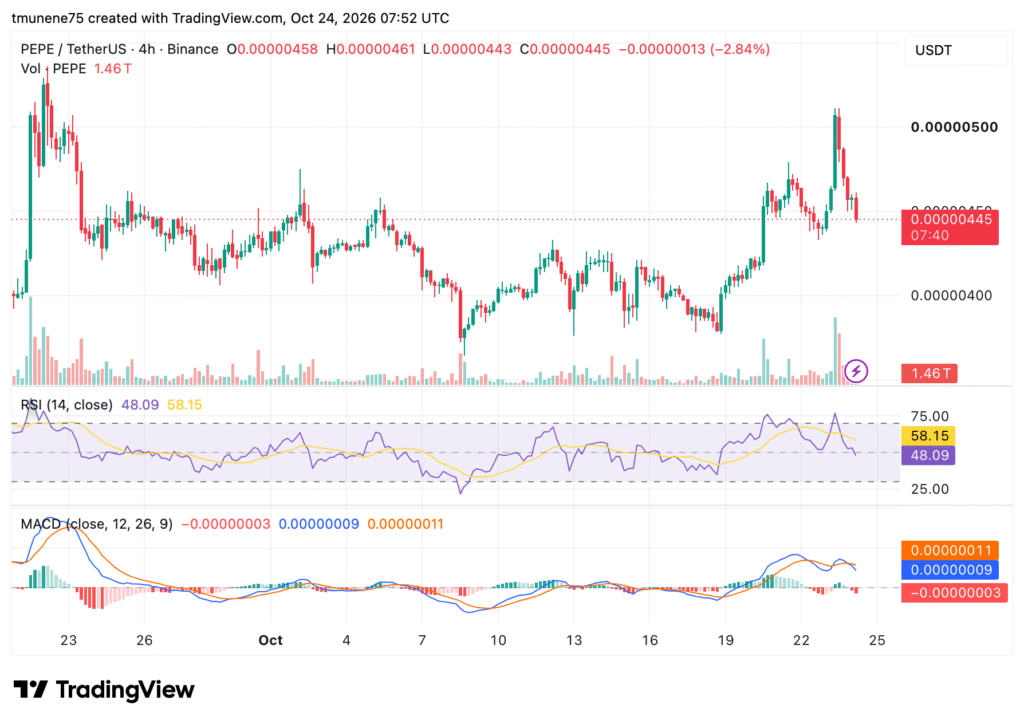
記事
取引所の資金フローが変化するなか、PEPEの上昇は0.00000440ドルの攻防へPEPEは10月17日から22日にかけて約13%上昇しましたが、取引所には2.11兆トークンが戻り、10月16日の流出分の40%超が巻き戻されました。
RSIが48.09まで低下し、MACDがマイナスに転じてモメンタムの弱まりを示すなか、PEPEは0.00000510ドルから0.00000445ドルまで下落しました。
アナリストのGiannis Andreou氏は、0.00000500ドルをブレイクアウトの水準と見ており、レジスタンスを突破し、再テストでも維持できれば0.00000727ドルに達する可能性があるとしています。
PEPEは10月17日から22日にかけて約13%上昇しましたが、取引所への流入再開とテクニカル面でのモメンタム低下が、現在この上昇に影を落としています。Santiment Intelligenceによると、取引所は10月16日に引き出された4.77兆トークンのうち、40%超を回収しました。一方、アナリストのGiannis Andreou氏は対称三角形を指摘し、PEPEは0.00000510ドルから直近のサポートに向けて下落しました。
取引所の資金フローが変化するなか、PEPEの上昇は0.00000440ドルの攻防へ
PEPEは10月17日から22日にかけて約13%上昇しましたが、取引所には2.11兆トークンが戻り、10月16日の流出分の40%超が巻き戻されました。
RSIが48.09まで低下し、MACDがマイナスに転じてモメンタムの弱まりを示すなか、PEPEは0.00000510ドルから0.00000445ドルまで下落しました。
アナリストのGiannis Andreou氏は、0.00000500ドルをブレイクアウトの水準と見ており、レジスタンスを突破し、再テストでも維持できれば0.00000727ドルに達する可能性があるとしています。
PEPEは10月17日から22日にかけて約13%上昇しましたが、取引所への流入再開とテクニカル面でのモメンタム低下が、現在この上昇に影を落としています。Santiment Intelligenceによると、取引所は10月16日に引き出された4.77兆トークンのうち、40%超を回収しました。一方、アナリストのGiannis Andreou氏は対称三角形を指摘し、PEPEは0.00000510ドルから直近のサポートに向けて下落しました。
RSIが48.09まで低下し、MACDがマイナスに転じてモメンタムの弱まりを示すなか、PEPEは0.00000510ドルから0.00000445ドルまで下落しました。
アナリストのGiannis Andreou氏は、0.00000500ドルをブレイクアウトの水準と見ており、レジスタンスを突破し、再テストでも維持できれば0.00000727ドルに達する可能性があるとしています。
PEPEは10月17日から22日にかけて約13%上昇しましたが、取引所への流入再開とテクニカル面でのモメンタム低下が、現在この上昇に影を落としています。Santiment Intelligenceによると、取引所は10月16日に引き出された4.77兆トークンのうち、40%超を回収しました。一方、アナリストのGiannis Andreou氏は対称三角形を指摘し、PEPEは0.00000510ドルから直近のサポートに向けて下落しました。
299

記事
翻訳参照
Uniswap Wallet Growth Hits Four-Year High as UNI Eyes $40Uniswap added 2,295 new UNI wallets in one day, its highest network growth since November 2022, according to Santiment.
Aggregator Hooks connect seven external liquidity sources across Ethereum, Base and Robinhood Chain, covering over 90% of DEX activity on those networks.
Analyst Giannis Andreou sees $40 as a potential UNI target if resistance levels from 6.50–7.20 through 25–30 are reclaimed.
Uniswap recorded 2,295 new UNI wallets in one day, its highest network growth since November 2022, according to Santiment Intelligence. The increase comes as Uniswap launches Aggregator Hooks across Ethereum mainnet, Base, and Robinhood Chain. Meanwhile, analyst Giannis Andreou outlined resistance levels that UNI must overcome for a potential recovery toward $40.
New Wallets Rise as Uniswap Expands Liquidity Routing
Santiment said network growth measures new addresses interacting with UNI for the first time. It identified $7 as the key downside level and $7.50 as the first meaningful recovery level to watch.
According to Santiment, holding $7 while wallet creation remains above its recent baseline could support another test of $8. However, losing $7 alongside declining wallet creation would suggest the increase reflected short-term activity rather than sustained adoption.
Uniswap also introduced Aggregator Hooks, which connect external liquidity sources to its v4 pools. The feature is available through the Uniswap Web App and API on Ethereum mainnet, Base, and Robinhood Chain.
Seven external sources were available at launch, covering more than 90% of decentralized exchange activity across those chains. Uniswap said its protocol has processed more than $4.5 trillion in swaps.
Aggregator Hooks Bring External Sources Into Uniswap v4
Each Aggregator Hook wraps an external liquidity source as a Uniswap v4 pool. Routers retrieve updated quotes every block, then select routes across Uniswap pools and connected external sources.
https://twitter.com/Uniswap/status/2113365305934131475?s=20
The resulting swap settles in one transaction without requiring additional approvals. External sources routed through Aggregator Hooks also pay protocol fees, which contribute to UNI burning.
Users can access the routing through the Uniswap Web App, while developers can integrate it through the API. The feature currently supports Ethereum mainnet, Base, and Robinhood Chain.
Analyst Maps UNI’s Potential Path Toward $40
Separately, Giannis Andreou said UNI has moved above a trendline connecting its 2021 and 2024 highs. He identified 6.50–7.20 as the range needed to maintain the recovery setup. Reclaiming 8–8.50 would bring 10–12 into focus, followed by 14–16 and 18–20.
https://twitter.com/gandreou007/status/2113337090503245964?s=20
A break above $20 could expose historical supply between $25 and $30, before a potential move toward 37–40. Andreou said the $40 scenario requires those resistance levels to become support. A weekly close below $6.50 followed by a failed reclaim would weaken the setup toward 5–5.50.
Uniswap Wallet Growth Hits Four-Year High as UNI Eyes $40
Uniswap added 2,295 new UNI wallets in one day, its highest network growth since November 2022, according to Santiment.
Aggregator Hooks connect seven external liquidity sources across Ethereum, Base and Robinhood Chain, covering over 90% of DEX activity on those networks.
Analyst Giannis Andreou sees $40 as a potential UNI target if resistance levels from 6.50–7.20 through 25–30 are reclaimed.
Uniswap recorded 2,295 new UNI wallets in one day, its highest network growth since November 2022, according to Santiment Intelligence. The increase comes as Uniswap launches Aggregator Hooks across Ethereum mainnet, Base, and Robinhood Chain. Meanwhile, analyst Giannis Andreou outlined resistance levels that UNI must overcome for a potential recovery toward $40.
New Wallets Rise as Uniswap Expands Liquidity Routing
Santiment said network growth measures new addresses interacting with UNI for the first time. It identified $7 as the key downside level and $7.50 as the first meaningful recovery level to watch.
According to Santiment, holding $7 while wallet creation remains above its recent baseline could support another test of $8. However, losing $7 alongside declining wallet creation would suggest the increase reflected short-term activity rather than sustained adoption.
Uniswap also introduced Aggregator Hooks, which connect external liquidity sources to its v4 pools. The feature is available through the Uniswap Web App and API on Ethereum mainnet, Base, and Robinhood Chain.
Seven external sources were available at launch, covering more than 90% of decentralized exchange activity across those chains. Uniswap said its protocol has processed more than $4.5 trillion in swaps.
Aggregator Hooks Bring External Sources Into Uniswap v4
Each Aggregator Hook wraps an external liquidity source as a Uniswap v4 pool. Routers retrieve updated quotes every block, then select routes across Uniswap pools and connected external sources.
https://twitter.com/Uniswap/status/2113365305934131475?s=20
The resulting swap settles in one transaction without requiring additional approvals. External sources routed through Aggregator Hooks also pay protocol fees, which contribute to UNI burning.
Users can access the routing through the Uniswap Web App, while developers can integrate it through the API. The feature currently supports Ethereum mainnet, Base, and Robinhood Chain.
Analyst Maps UNI’s Potential Path Toward $40
Separately, Giannis Andreou said UNI has moved above a trendline connecting its 2021 and 2024 highs. He identified 6.50–7.20 as the range needed to maintain the recovery setup. Reclaiming 8–8.50 would bring 10–12 into focus, followed by 14–16 and 18–20.
https://twitter.com/gandreou007/status/2113337090503245964?s=20
A break above $20 could expose historical supply between $25 and $30, before a potential move toward 37–40. Andreou said the $40 scenario requires those resistance levels to become support. A weekly close below $6.50 followed by a failed reclaim would weaken the setup toward 5–5.50.
Aggregator Hooks connect seven external liquidity sources across Ethereum, Base and Robinhood Chain, covering over 90% of DEX activity on those networks.
Analyst Giannis Andreou sees $40 as a potential UNI target if resistance levels from 6.50–7.20 through 25–30 are reclaimed.
Uniswap recorded 2,295 new UNI wallets in one day, its highest network growth since November 2022, according to Santiment Intelligence. The increase comes as Uniswap launches Aggregator Hooks across Ethereum mainnet, Base, and Robinhood Chain. Meanwhile, analyst Giannis Andreou outlined resistance levels that UNI must overcome for a potential recovery toward $40.
New Wallets Rise as Uniswap Expands Liquidity Routing
Santiment said network growth measures new addresses interacting with UNI for the first time. It identified $7 as the key downside level and $7.50 as the first meaningful recovery level to watch.
According to Santiment, holding $7 while wallet creation remains above its recent baseline could support another test of $8. However, losing $7 alongside declining wallet creation would suggest the increase reflected short-term activity rather than sustained adoption.
Uniswap also introduced Aggregator Hooks, which connect external liquidity sources to its v4 pools. The feature is available through the Uniswap Web App and API on Ethereum mainnet, Base, and Robinhood Chain.
Seven external sources were available at launch, covering more than 90% of decentralized exchange activity across those chains. Uniswap said its protocol has processed more than $4.5 trillion in swaps.
Aggregator Hooks Bring External Sources Into Uniswap v4
Each Aggregator Hook wraps an external liquidity source as a Uniswap v4 pool. Routers retrieve updated quotes every block, then select routes across Uniswap pools and connected external sources.
https://twitter.com/Uniswap/status/2113365305934131475?s=20
The resulting swap settles in one transaction without requiring additional approvals. External sources routed through Aggregator Hooks also pay protocol fees, which contribute to UNI burning.
Users can access the routing through the Uniswap Web App, while developers can integrate it through the API. The feature currently supports Ethereum mainnet, Base, and Robinhood Chain.
Analyst Maps UNI’s Potential Path Toward $40
Separately, Giannis Andreou said UNI has moved above a trendline connecting its 2021 and 2024 highs. He identified 6.50–7.20 as the range needed to maintain the recovery setup. Reclaiming 8–8.50 would bring 10–12 into focus, followed by 14–16 and 18–20.
https://twitter.com/gandreou007/status/2113337090503245964?s=20
A break above $20 could expose historical supply between $25 and $30, before a potential move toward 37–40. Andreou said the $40 scenario requires those resistance levels to become support. A weekly close below $6.50 followed by a failed reclaim would weaken the setup toward 5–5.50.
254
記事
ビットコインのオンチェーン移動額が210億ドルに、アナリストは7万3,000ドルをサポート水準として指摘100万ドル超相当の保有分に関連する使用済みアウトプットは210億ドルを超え、23万BTC超がオンチェーン上で移動しました。
Ali Chartsによると、過去4回の米中間選挙サイクルでビットコインは27~72%下落しました。ただし、相関関係は因果関係を証明するものではありません。
Ali Chartsは、短期保有者の取得原価に近い7万3,000ドルを重要なサポート水準として挙げ、売り圧力の枯渇や需要の再燃に注目すべきだとしています。
アナリストのDarkfostによると、2026年に入り、ビットコインではオンチェーン上で過去最大の動きが記録されました。100万ドル超相当の保有分に関連する使用済みアウトプットは、総額210億ドルを超えました。一方、Ali Chartsは、11月3日の投票が近づく中、米中間選挙前後に過去のビットコイン下落があったことを指摘しました。アナリストらは、送金、過去のリターン、下落の可能性がある水準に関する、それぞれ異なるシグナルに言及しました。
ビットコインのオンチェーン移動額が210億ドルに、アナリストは7万3,000ドルをサポート水準として指摘
100万ドル超相当の保有分に関連する使用済みアウトプットは210億ドルを超え、23万BTC超がオンチェーン上で移動しました。
Ali Chartsによると、過去4回の米中間選挙サイクルでビットコインは27~72%下落しました。ただし、相関関係は因果関係を証明するものではありません。
Ali Chartsは、短期保有者の取得原価に近い7万3,000ドルを重要なサポート水準として挙げ、売り圧力の枯渇や需要の再燃に注目すべきだとしています。
アナリストのDarkfostによると、2026年に入り、ビットコインではオンチェーン上で過去最大の動きが記録されました。100万ドル超相当の保有分に関連する使用済みアウトプットは、総額210億ドルを超えました。一方、Ali Chartsは、11月3日の投票が近づく中、米中間選挙前後に過去のビットコイン下落があったことを指摘しました。アナリストらは、送金、過去のリターン、下落の可能性がある水準に関する、それぞれ異なるシグナルに言及しました。
Ali Chartsによると、過去4回の米中間選挙サイクルでビットコインは27~72%下落しました。ただし、相関関係は因果関係を証明するものではありません。
Ali Chartsは、短期保有者の取得原価に近い7万3,000ドルを重要なサポート水準として挙げ、売り圧力の枯渇や需要の再燃に注目すべきだとしています。
アナリストのDarkfostによると、2026年に入り、ビットコインではオンチェーン上で過去最大の動きが記録されました。100万ドル超相当の保有分に関連する使用済みアウトプットは、総額210億ドルを超えました。一方、Ali Chartsは、11月3日の投票が近づく中、米中間選挙前後に過去のビットコイン下落があったことを指摘しました。アナリストらは、送金、過去のリターン、下落の可能性がある水準に関する、それぞれ異なるシグナルに言及しました。
284
記事
SECのトークン化規則、ブロックチェーンへのアクセスをめぐり厳しい scrutinySolanaの支持者はバリデーターの支配力を判断する基準の明確化を求める一方、Hederaはパブリックだがパーミッション型のブロックチェーンも適用除外の対象に含めるようSECに要請している。
金曜日時点で、OKXICEの当初のリストに掲載された62社のうち22社がトークン化に異議を唱えており、Wells Fargo、Arm Holdings、Intuitなどが含まれていた。
SECによる5年間の適用除外措置は2031年9月17日まで有効で、より広範な変更には委員会の措置と正式な規則制定手続きが必要となる可能性がある。
米国証券取引委員会(SEC)によるトークン化の適用除外措置をめぐり、トークン化された株式の取引をどのブロックチェーンが支えられるのかという疑問が浮上している。暗号資産関連団体、金融業界の代表者、法律専門家から寄せられた意見は、「パブリックかつパーミッションレス」の定義に異議を唱えている。9月に導入された暫定的な枠組みの下で、3社がトークン化証券の取引プラットフォームの準備を進めるなか、議論が起きている。
SECのトークン化規則、ブロックチェーンへのアクセスをめぐり厳しい scrutiny
Solanaの支持者はバリデーターの支配力を判断する基準の明確化を求める一方、Hederaはパブリックだがパーミッション型のブロックチェーンも適用除外の対象に含めるようSECに要請している。
金曜日時点で、OKXICEの当初のリストに掲載された62社のうち22社がトークン化に異議を唱えており、Wells Fargo、Arm Holdings、Intuitなどが含まれていた。
SECによる5年間の適用除外措置は2031年9月17日まで有効で、より広範な変更には委員会の措置と正式な規則制定手続きが必要となる可能性がある。
米国証券取引委員会(SEC)によるトークン化の適用除外措置をめぐり、トークン化された株式の取引をどのブロックチェーンが支えられるのかという疑問が浮上している。暗号資産関連団体、金融業界の代表者、法律専門家から寄せられた意見は、「パブリックかつパーミッションレス」の定義に異議を唱えている。9月に導入された暫定的な枠組みの下で、3社がトークン化証券の取引プラットフォームの準備を進めるなか、議論が起きている。
金曜日時点で、OKXICEの当初のリストに掲載された62社のうち22社がトークン化に異議を唱えており、Wells Fargo、Arm Holdings、Intuitなどが含まれていた。
SECによる5年間の適用除外措置は2031年9月17日まで有効で、より広範な変更には委員会の措置と正式な規則制定手続きが必要となる可能性がある。
米国証券取引委員会(SEC)によるトークン化の適用除外措置をめぐり、トークン化された株式の取引をどのブロックチェーンが支えられるのかという疑問が浮上している。暗号資産関連団体、金融業界の代表者、法律専門家から寄せられた意見は、「パブリックかつパーミッションレス」の定義に異議を唱えている。9月に導入された暫定的な枠組みの下で、3社がトークン化証券の取引プラットフォームの準備を進めるなか、議論が起きている。
492
ログインして、さらにコンテンツを読む
厳選トピックで世界の暗号資産トレーダーの仲間入り
⚡️ 暗号資産に関する最新かつ有益な情報が見つかります。
💬 世界最大の暗号資産取引所から信頼されています。
👍 認証を受けたクリエイターから、有益なインサイトを得られます。
メール / 電話番号