
BullRun_Signals
9.1k 投稿
BullRun_Signals
 厳選トピック確認済+
X: BullRun Signals | Teaching the streets about Web3 | Tokens · Memecoins · NFTs · DeFi | 19.5K X and 37k Binance fam | CMC Verified |
超高頻度トレーダー
3.3年
46 フォロー
38.8K+ フォロワー
42.6K+ いいね
投稿
すべて
引用
動画
ライブ
翻訳参照
wah kya baat hai 😂🤣

Neeeno
·
--
@Binance Square Official Binance baby, my friends are saying you don’t love me anymore. 😭
Is it true, baby?
all I asked for was ONE tiny glimpse of the @Dusk Livestream leaderboard. 🥹
Ek jhalak leaderboard ki qeemat tum kya jaano, Binance baby… 😭
Other people want flowers from their lover.
Me?
I just want to know whether I’m Rank #37 or fighting for my life at #937. 😂💀
Please show the leaderboard before my friends convince me this relationship is one-sided. 😭😂
Don’t make our private relationship a public humiliation, baby.
SHOW. ME. THE. LEADERBOARD. 😂🔪
Is it true, baby?
all I asked for was ONE tiny glimpse of the @Dusk Livestream leaderboard. 🥹
Ek jhalak leaderboard ki qeemat tum kya jaano, Binance baby… 😭
Other people want flowers from their lover.
Me?
I just want to know whether I’m Rank #37 or fighting for my life at #937. 😂💀
Please show the leaderboard before my friends convince me this relationship is one-sided. 😭😂
Don’t make our private relationship a public humiliation, baby.
SHOW. ME. THE. LEADERBOARD. 😂🔪
私のフォロワーが「お金を要求してくる」とか言うなら、報告してください。誰かがあなたを困らせたり、いじめたりするなら、報告するか、スクリーンショットを送ってください。そうすれば私が報告する手伝いをします。
@Binance Square Official は誰でも利用できます。特定の人の個人的なアプリではありません。私たちは、公平で安全な環境が必要です。投稿に感謝します🙌
@Binance Square Official は誰でも利用できます。特定の人の個人的なアプリではありません。私たちは、公平で安全な環境が必要です。投稿に感謝します🙌


Binance Square Official
·
--
Binance Square コミュニティ・ガバナンス告知(8月17日~8月23日)
安全で礼儀を重んだコミュニティがあるからこそ、Binance Squareは参加する価値があります。
1. チャットルーム、コメント、または動画内のウォーターマークを通じて、ユーザーを第三者プラットフォームへ誘導したり、寄付を募ったり、個人の連絡先情報を共有したりすることは、当社のルールに反します。重大または繰り返しの場合、投稿およびコメントの許可を失う可能性があります。
2. 詐欺的な行為を行うアカウント、あるいは他のユーザーをいじめる、嫌がらせをする、プライバシーを侵害する、侮辱する、または個人的に攻撃するアカウントも同様です。これは人々や資産を危険にさらします。重大な場合は、投稿およびコメントの権限を永久に失うこともあります。
1. チャットルーム、コメント、または動画内のウォーターマークを通じて、ユーザーを第三者プラットフォームへ誘導したり、寄付を募ったり、個人の連絡先情報を共有したりすることは、当社のルールに反します。重大または繰り返しの場合、投稿およびコメントの許可を失う可能性があります。
2. 詐欺的な行為を行うアカウント、あるいは他のユーザーをいじめる、嫌がらせをする、プライバシーを侵害する、侮辱する、または個人的に攻撃するアカウントも同様です。これは人々や資産を危険にさらします。重大な場合は、投稿およびコメントの権限を永久に失うこともあります。

#dusk $DUSK @Dusk I'll be honest, I used to roll my eyes a little every time someone posted "RWA is the next big narrative" with a chart and three buzzwords. It felt like the same pitch dressed up in a new coin.
Then I actually sat down and read through Dusk's partnership details on NPEX, and something clicked differently for me.
NPEX isn't some crypto-native startup playing dress-up as a financial institution. It's an AFM-regulated exchange, licensed as an MTF, a Broker, and an ECSP. That's regulatory weight most projects in this space never even get close to. And according to Dusk's own partnership material, NPEX is planning to bring 300M+ EUR in assets onchain through Dusk.
That's the number that made me stop scrolling.
Because up until that point, my mental model of "RWA" was basically this: take something real, wrap it in a token, call it innovation. Simple math, blockchain plus real-world asset equals progress. Convenient, but shallow.
What changed my thinking is realizing this isn't really about tokenizing assets for the sake of it. It's about an actual regulated market participant, one that already has licenses, oversight, and existing institutional trust, choosing to plug into blockchain infrastructure instead of building around it.
That's a very different kind of story. It's not "crypto disrupts finance." It's "finance decides to use crypto's rails, on its own terms, within its own regulatory box."
And honestly, that's the only version of this RWA narrative I actually believe moves the needle. Not more experiments living in a sandbox, but real bridges connecting to institutions that were already playing by the rules long before any of us showed up.
Then I actually sat down and read through Dusk's partnership details on NPEX, and something clicked differently for me.
NPEX isn't some crypto-native startup playing dress-up as a financial institution. It's an AFM-regulated exchange, licensed as an MTF, a Broker, and an ECSP. That's regulatory weight most projects in this space never even get close to. And according to Dusk's own partnership material, NPEX is planning to bring 300M+ EUR in assets onchain through Dusk.
That's the number that made me stop scrolling.
Because up until that point, my mental model of "RWA" was basically this: take something real, wrap it in a token, call it innovation. Simple math, blockchain plus real-world asset equals progress. Convenient, but shallow.
What changed my thinking is realizing this isn't really about tokenizing assets for the sake of it. It's about an actual regulated market participant, one that already has licenses, oversight, and existing institutional trust, choosing to plug into blockchain infrastructure instead of building around it.
That's a very different kind of story. It's not "crypto disrupts finance." It's "finance decides to use crypto's rails, on its own terms, within its own regulatory box."
And honestly, that's the only version of this RWA narrative I actually believe moves the needle. Not more experiments living in a sandbox, but real bridges connecting to institutions that were already playing by the rules long before any of us showed up.
#dusk $DUSK @Dusk
では、Duskは実際のところどこで際立っているのでしょうか?
私は以前、「ブロックチェーンが透明であるほど、特に金融において信頼できるようになる」と考えていました。誰でもすべての取引を見て検証できるなら、それは明確な優位性のように感じるからです。
しかしDuskを調べるほど、この見方が重要な何かを見落としていると気づきました。
私の注意を強く引いたのは、Duskがプログラマブルなプライバシーに取り組む姿勢です。情報はプライベートにすべきときは非公開にし、透明性が有用なときは透明にし、必要に応じて特定の情報を適切な相手に開示できるようにしています。
最初は、それがブロックチェーンのプライバシーを言い換えただけのようにも聞こえるかもしれません。ですが、規制された金融の文脈では、それははるかに大きな課題だと思います。
金融データのすべてを公開の場に置くべきではありません。同時に、すべてを単純に暗号化して、規制当局や機関、または他の権限を持つ関係者が、その下で何が起きているかを盲目的に信じてくれることを期待するわけにもいきません。
そこで私は、Hedgerを別の観点から見始めました。
同型暗号とゼロ知識証明の活用は、取引データを隠すことだけが目的ではありません。より興味深いのは、すべてを誰にでも見せずに、特定の条件のもとで取引や状態を検証できる可能性です。
そしてそれが、金融ブロックチェーンにおけるプライバシーの捉え方を変えました。
もしかするとプライバシーは、「すべてを隠す」ことが本質ではないのかもしれません。むしろ「必要なタイミングで、必要な相手に必要な情報を届ける」ことが本質なのです。
Duskが、特に規制対象の資産において、その仕組みを大規模に実現できるなら、それは同社の主張を支える最も重要な要素の一つになる可能性があると思います。
とはいえ、まだ「証明された」とは言う準備ができていません。真の試練は、ネットワーク上で実際の金融活動が始まったときに、プログラマブルなプライバシーがどのように振る舞うかを見届けることです。
では、Duskは実際のところどこで際立っているのでしょうか?
私は以前、「ブロックチェーンが透明であるほど、特に金融において信頼できるようになる」と考えていました。誰でもすべての取引を見て検証できるなら、それは明確な優位性のように感じるからです。
しかしDuskを調べるほど、この見方が重要な何かを見落としていると気づきました。
私の注意を強く引いたのは、Duskがプログラマブルなプライバシーに取り組む姿勢です。情報はプライベートにすべきときは非公開にし、透明性が有用なときは透明にし、必要に応じて特定の情報を適切な相手に開示できるようにしています。
最初は、それがブロックチェーンのプライバシーを言い換えただけのようにも聞こえるかもしれません。ですが、規制された金融の文脈では、それははるかに大きな課題だと思います。
金融データのすべてを公開の場に置くべきではありません。同時に、すべてを単純に暗号化して、規制当局や機関、または他の権限を持つ関係者が、その下で何が起きているかを盲目的に信じてくれることを期待するわけにもいきません。
そこで私は、Hedgerを別の観点から見始めました。
同型暗号とゼロ知識証明の活用は、取引データを隠すことだけが目的ではありません。より興味深いのは、すべてを誰にでも見せずに、特定の条件のもとで取引や状態を検証できる可能性です。
そしてそれが、金融ブロックチェーンにおけるプライバシーの捉え方を変えました。
もしかするとプライバシーは、「すべてを隠す」ことが本質ではないのかもしれません。むしろ「必要なタイミングで、必要な相手に必要な情報を届ける」ことが本質なのです。
Duskが、特に規制対象の資産において、その仕組みを大規模に実現できるなら、それは同社の主張を支える最も重要な要素の一つになる可能性があると思います。
とはいえ、まだ「証明された」とは言う準備ができていません。真の試練は、ネットワーク上で実際の金融活動が始まったときに、プログラマブルなプライバシーがどのように振る舞うかを見届けることです。
bearish
50%
bullish
50%
neutral
0%
4 投票 • 投票は終了しました
#dusk $DUSK @Dusk
それで、DUSKの本当の強みはどこにあると思うの?
私はかつて、ブロックチェーンの最大の利点はシンプルだと考えていました。つまり、すべてが可視化され、透明で、誰でも公開検証できること。
しかし、現実の金融ユースケースを深く掘り下げるほど、このモデルには明確な限界があることに気づきました。
投資家は、自分が資格を満たしていることを証明する必要があるかもしれない。
機関は、取引が規制に適合していることを示す必要があるかもしれない。
企業は、ある資産の所有権を確認する必要があるかもしれない。
でも、それらを証明するために、根底にあるデータをすべて公開する必要は本当にあるのでしょうか?
そこにこそ、DUSKのプライバシーへのアプローチで私が注目した理由があります。
DUSKは、プライバシーをブロックチェーンの上に“後付け”するものとして扱うのではなく、Confidential Security Contract(機密セキュリティ契約)によって、プライバシーをスマートコントラクトのロジックそのものに直接統合しています。
それは、私のブロックチェーンのセキュリティに対する考え方を変えます。
もしかすると、問いは「どうすればブロックチェーンをもっとプライベートにできるか?」ではないのかもしれません。
それは——
「どの情報を開示する必要があるのかを正確にどう決めるか。そして、それ以外はすべて保護したままにするにはどうするか?」
従来の金融は、すでにそのやり方で機能しています。取引の資格があることを検証するのに、相手方の財務履歴すべてや、保有するすべての資産にアクセスする必要はありません。
必要なのは、信頼できる“証明”です。
もしブロックチェーンが同じような選択的検証を提供できるなら、プライバシーはもはや透明性や検証可能性と競合する必要がなくなります。
そしてそれこそが、より重要な進化かもしれません。
ブロックチェーンを完全に隠されたシステムにするのではなく、プライバシーを“プログラム可能に”、選択的に、そして制御可能にすること。
それで、DUSKの本当の強みはどこにあると思うの?
私はかつて、ブロックチェーンの最大の利点はシンプルだと考えていました。つまり、すべてが可視化され、透明で、誰でも公開検証できること。
しかし、現実の金融ユースケースを深く掘り下げるほど、このモデルには明確な限界があることに気づきました。
投資家は、自分が資格を満たしていることを証明する必要があるかもしれない。
機関は、取引が規制に適合していることを示す必要があるかもしれない。
企業は、ある資産の所有権を確認する必要があるかもしれない。
でも、それらを証明するために、根底にあるデータをすべて公開する必要は本当にあるのでしょうか?
そこにこそ、DUSKのプライバシーへのアプローチで私が注目した理由があります。
DUSKは、プライバシーをブロックチェーンの上に“後付け”するものとして扱うのではなく、Confidential Security Contract(機密セキュリティ契約)によって、プライバシーをスマートコントラクトのロジックそのものに直接統合しています。
それは、私のブロックチェーンのセキュリティに対する考え方を変えます。
もしかすると、問いは「どうすればブロックチェーンをもっとプライベートにできるか?」ではないのかもしれません。
それは——
「どの情報を開示する必要があるのかを正確にどう決めるか。そして、それ以外はすべて保護したままにするにはどうするか?」
従来の金融は、すでにそのやり方で機能しています。取引の資格があることを検証するのに、相手方の財務履歴すべてや、保有するすべての資産にアクセスする必要はありません。
必要なのは、信頼できる“証明”です。
もしブロックチェーンが同じような選択的検証を提供できるなら、プライバシーはもはや透明性や検証可能性と競合する必要がなくなります。
そしてそれこそが、より重要な進化かもしれません。
ブロックチェーンを完全に隠されたシステムにするのではなく、プライバシーを“プログラム可能に”、選択的に、そして制御可能にすること。
privacy matter
67%
security matter
33%
feature matters
0%
6 投票 • 投票は終了しました
#dusk $DUSK @Dusk Privacy in financial markets can't simply mean “nobody can see anything.”
That creates its own problems.
What interests me about Dusk's approach is the idea of reviewable privacy.
Hedger is designed for confidential EVM workflows using homomorphic encryption and zero-knowledge proofs.
The goal isn't blind secrecy.
It is privacy where it is needed, while still allowing authorized review when compliance requires it.
That distinction is important.
Traditional finance needs confidentiality.
Regulated finance also needs accountability.
Dusk is trying to make both programmable at the infrastructure level.
That creates its own problems.
What interests me about Dusk's approach is the idea of reviewable privacy.
Hedger is designed for confidential EVM workflows using homomorphic encryption and zero-knowledge proofs.
The goal isn't blind secrecy.
It is privacy where it is needed, while still allowing authorized review when compliance requires it.
That distinction is important.
Traditional finance needs confidentiality.
Regulated finance also needs accountability.
Dusk is trying to make both programmable at the infrastructure level.
bullish
50%
bearish
50%
4 投票 • 投票は終了しました

#dusk $DUSK @Dusk
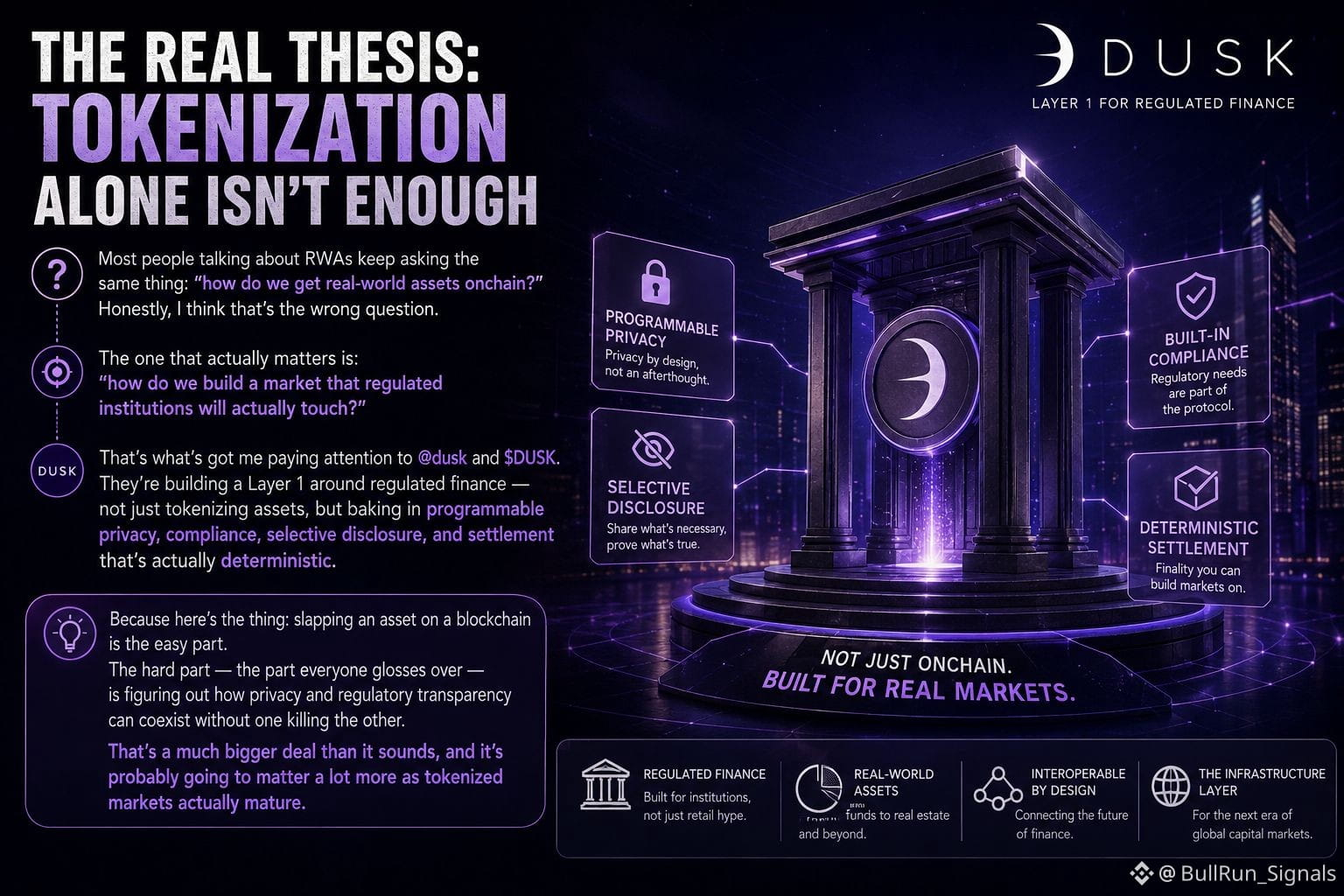
本当の論文:トークン化だけでは不十分だ
RWAsについて語る人のほとんどが、いつも同じことを聞いてきます。「現実世界の資産をオンチェーンにするにはどうすればいいのか?」
正直、それは違う問いだと思います。本当に重要なのは:「規制された機関が実際に触れられる市場をどうやって構築するのか?」
それで私が@Dusk とDUSKに注目しているんです。
彼らは規制された金融のためのレイヤー1を作っています。単に資産をトークン化するだけでなく、プログラマブルなプライバシー、コンプライアンス、選択的開示、そして実際に決定論的な決済を組み込んでいる。
なぜなら、資産をブロックチェーンに載せるのは簡単な部分だからです。難しいのは、みんなが見落としがちな部分——プライバシーと規制に基づく透明性を、どちらかがどちらかを殺さない形で両立させる方法を見つけること。
これは、聞こえる以上にずっと大きな問題で、トークン化された市場が本当に成熟していくにつれて、よりはるかに重要になっていくはずです。
本当の論文:トークン化だけでは不十分だ
RWAsについて語る人のほとんどが、いつも同じことを聞いてきます。「現実世界の資産をオンチェーンにするにはどうすればいいのか?」
正直、それは違う問いだと思います。本当に重要なのは:「規制された機関が実際に触れられる市場をどうやって構築するのか?」
それで私が@Dusk とDUSKに注目しているんです。
彼らは規制された金融のためのレイヤー1を作っています。単に資産をトークン化するだけでなく、プログラマブルなプライバシー、コンプライアンス、選択的開示、そして実際に決定論的な決済を組み込んでいる。
なぜなら、資産をブロックチェーンに載せるのは簡単な部分だからです。難しいのは、みんなが見落としがちな部分——プライバシーと規制に基づく透明性を、どちらかがどちらかを殺さない形で両立させる方法を見つけること。
これは、聞こえる以上にずっと大きな問題で、トークン化された市場が本当に成熟していくにつれて、よりはるかに重要になっていくはずです。
DUSK WILL PUMP
80%
DUSK WILL NOT PUMP
10%
I WILL KEEP WATCHING
10%
10 投票 • 投票は終了しました
ログインして、さらにコンテンツを読む