Binance Square

Virat BNB

image
認証済みクリエイター
Crypto lover Living the crypto journey tracking trends, and delivering insights from the fast-moving digital asset space. No hype. Just setups.
取引を発注
高頻度トレーダー
1年
286 フォロー
30.9K+ フォロワー
24.4K+ いいね
3.8K+ 共有
投稿
ポートフォリオ
·
--
翻訳参照
Exploring Fabric Protocol’s Role in Decentralized Robotics InfrastructureWhen you walk into a warehouse today you will notice something. Robots are moving around lifting boxes scanning items and routing packages across the floor with a calm that looks almost mechanical. At glance it looks like a perfectly coordinated system.. If you look a little closer you will start to wonder who actually controls all of this. Usually behind that movement there is a tightly controlled platform. One company owns the machines writes the software collects the data and coordinates how everything operates. This structure has been the way robotics works for decades. It is good for reliability. Making sure everything runs smoothly. It also means that one company has all the control. Once you notice that the entire system starts to look a little different. Fabric Protocol is trying to change that. Of building another robotics platform it is exploring what happens if the infrastructure that coordinates robots becomes open. In this model machines, developers and operators interact through networks rather than proprietary software environments. The idea sounds big. The change itself is fairly simple. Robots already do work that generates value. They move goods collect data and assist people in routine tasks. The question is how that work gets coordinated. If you look at how robotics works today you will quickly see the limitations. Most robotic systems are controlled by one organization. They design the hardware develop the control software gather data and manage the machines through their own platform. That structure ensures performance and strict oversight. It also limits innovation. Developers outside those ecosystems rarely get to influence how machines evolve. Smaller organizations often face barriers when trying to deploy advanced automation. Robotics becomes powerful. It is also closed off. Fabric is approaching the problem from a direction. Of focusing on the machines themselves it is focusing on the infrastructure beneath them. If decentralized networks can coordinate systems across global markets. As blockchain systems already show. Then maybe similar infrastructure could coordinate machines performing work in the physical world. That idea immediately introduces a challenge. The moment robots start interacting inside networks identity becomes important. The system needs to know which machine performed a task, when it happened and whether the outcome can be trusted. Fabric introduces identities for both humans and machines. When a robot completes work. Transporting goods, collecting environmental data or executing a logistics task. It authenticates itself through that identity. The activity becomes part of the networks record. Identity alone does not solve the problem. Machines must also prove that the work actually happened. Fabric relies on distributed ledger infrastructure to document tasks, validation events and economic exchanges. The ledger itself is not the real innovation. Distributed ledgers exist in blockchain systems. What matters here is what the ledger allows machines to prove. Work can be verified. Developers, operators and validators can confirm events without relying on an authority to maintain the record. In a network where machines operate across environments there must be a neutral place where activity is documented. The ledger becomes that shared reference point. Fabric also treats robot capabilities differently from robotics platforms. Most robotic systems bundle. Software together tightly. Expanding a machines abilities often requires redesigning portions of the system. Fabric treats robot capabilities as components instead. Developers can create navigation algorithms, perception tools, coordination systems or other functional modules that expand what machines can do. Robots operating within the network can integrate modules depending on their tasks. A logistics robot might rely heavily on navigation and object recognition. A service robot might combine sensing with interaction tools. Innovation starts to come from contributors rather than a single engineering team. Open ecosystems rarely work without incentives. Fabric introduces a based economic layer designed to coordinate participation across the network. Developers who build modules, contributors who provide valuable data and validators who verify completed tasks can receive rewards through the protocol. The token also enables governance. Participants can help shape how the system evolves. Approving upgrades adjusting incentive structures or refining verification methods. Once machines start acting in real environments governance becomes important. Autonomous systems raise questions about oversight, accountability and protocol rules. Fabric attempts to embed these governance processes within the network. If this model works the implications will extend well beyond a technology platform. Logistics networks could coordinate operations across organizations rather than building isolated automation systems. Service robots in healthcare or hospitality might gain capabilities through modules developed by independent contributors. Researchers could experiment with systems inside shared infrastructure rather than constructing expensive standalone environments. In words Fabric treats robotic capability as shared infrastructure rather than proprietary hardware. Within the broader Web3 landscape this represents a shift. Many decentralized projects focus on coordination or digital asset ownership. Fabric pushes those ideas into a domain. Machines performing real work in the physical world. That transition raises questions. How should autonomous machines participate in economies? What governance structures make sense when both humans and AI agents interact within the system?. How can trust be maintained when machines operate independently across multiple environments? None of this will be simple. Integrating robotics, artificial intelligence, decentralized networks and governance systems introduces technical complexity. Adoption will depend on whether developers, hardware manufacturers and operators see advantages in participating. Incentive structures must reward contributions rather than short-term speculation. Still something important is changing. As Fabric Protocol and robots become more capable the infrastructure coordinating them may matter as much, as the robots themselves. The future of robotics may not simply depend on building robots. It may depend on building the networks that allow Fabric Protocol and robots to work together. @FabricFND $ROBO #ROBO

Exploring Fabric Protocol’s Role in Decentralized Robotics Infrastructure

When you walk into a warehouse today you will notice something. Robots are moving around lifting boxes scanning items and routing packages across the floor with a calm that looks almost mechanical. At glance it looks like a perfectly coordinated system.. If you look a little closer you will start to wonder who actually controls all of this.

Usually behind that movement there is a tightly controlled platform. One company owns the machines writes the software collects the data and coordinates how everything operates. This structure has been the way robotics works for decades. It is good for reliability. Making sure everything runs smoothly.

It also means that one company has all the control.

Once you notice that the entire system starts to look a little different.

Fabric Protocol is trying to change that. Of building another robotics platform it is exploring what happens if the infrastructure that coordinates robots becomes open. In this model machines, developers and operators interact through networks rather than proprietary software environments. The idea sounds big. The change itself is fairly simple. Robots already do work that generates value. They move goods collect data and assist people in routine tasks. The question is how that work gets coordinated.

If you look at how robotics works today you will quickly see the limitations. Most robotic systems are controlled by one organization. They design the hardware develop the control software gather data and manage the machines through their own platform. That structure ensures performance and strict oversight.

It also limits innovation.

Developers outside those ecosystems rarely get to influence how machines evolve. Smaller organizations often face barriers when trying to deploy advanced automation. Robotics becomes powerful. It is also closed off.

Fabric is approaching the problem from a direction. Of focusing on the machines themselves it is focusing on the infrastructure beneath them. If decentralized networks can coordinate systems across global markets. As blockchain systems already show. Then maybe similar infrastructure could coordinate machines performing work in the physical world.

That idea immediately introduces a challenge.

The moment robots start interacting inside networks identity becomes important. The system needs to know which machine performed a task, when it happened and whether the outcome can be trusted.

Fabric introduces identities for both humans and machines. When a robot completes work. Transporting goods, collecting environmental data or executing a logistics task. It authenticates itself through that identity. The activity becomes part of the networks record.

Identity alone does not solve the problem.

Machines must also prove that the work actually happened.

Fabric relies on distributed ledger infrastructure to document tasks, validation events and economic exchanges. The ledger itself is not the real innovation. Distributed ledgers exist in blockchain systems. What matters here is what the ledger allows machines to prove.

Work can be verified.

Developers, operators and validators can confirm events without relying on an authority to maintain the record. In a network where machines operate across environments there must be a neutral place where activity is documented. The ledger becomes that shared reference point.

Fabric also treats robot capabilities differently from robotics platforms. Most robotic systems bundle. Software together tightly. Expanding a machines abilities often requires redesigning portions of the system.

Fabric treats robot capabilities as components instead.

Developers can create navigation algorithms, perception tools, coordination systems or other functional modules that expand what machines can do. Robots operating within the network can integrate modules depending on their tasks. A logistics robot might rely heavily on navigation and object recognition. A service robot might combine sensing with interaction tools.

Innovation starts to come from contributors rather than a single engineering team.

Open ecosystems rarely work without incentives. Fabric introduces a based economic layer designed to coordinate participation across the network. Developers who build modules, contributors who provide valuable data and validators who verify completed tasks can receive rewards through the protocol.

The token also enables governance.

Participants can help shape how the system evolves. Approving upgrades adjusting incentive structures or refining verification methods. Once machines start acting in real environments governance becomes important. Autonomous systems raise questions about oversight, accountability and protocol rules.

Fabric attempts to embed these governance processes within the network.

If this model works the implications will extend well beyond a technology platform. Logistics networks could coordinate operations across organizations rather than building isolated automation systems. Service robots in healthcare or hospitality might gain capabilities through modules developed by independent contributors.

Researchers could experiment with systems inside shared infrastructure rather than constructing expensive standalone environments.

In words Fabric treats robotic capability as shared infrastructure rather than proprietary hardware.

Within the broader Web3 landscape this represents a shift. Many decentralized projects focus on coordination or digital asset ownership. Fabric pushes those ideas into a domain. Machines performing real work in the physical world.

That transition raises questions.

How should autonomous machines participate in economies? What governance structures make sense when both humans and AI agents interact within the system?. How can trust be maintained when machines operate independently across multiple environments?

None of this will be simple. Integrating robotics, artificial intelligence, decentralized networks and governance systems introduces technical complexity. Adoption will depend on whether developers, hardware manufacturers and operators see advantages in participating. Incentive structures must reward contributions rather than short-term speculation.

Still something important is changing.

As Fabric Protocol and robots become more capable the infrastructure coordinating them may matter as much, as the robots themselves.
The future of robotics may not simply depend on building robots.
It may depend on building the networks that allow Fabric Protocol and robots to work together.

@Fabric Foundation $ROBO #ROBO
·
--
ブリッシュ
翻訳参照
Brent Oil Surges Past $106 as Strait of Hormuz Closure Sparks Global Supply Fears Global energy markets are facing renewed turbulence as Brent crude oil climbs above $106 per barrel, driven by the ongoing closure of the Strait of Hormuz, one of the world’s most critical oil transit routes. With the disruption now entering its third week, analysts warn that nearly 20% of global oil supply could be affected if the situation continues. According to the International Energy Agency, the disruption could become one of the largest supply shocks in modern energy history if shipping traffic through the strait does not resume soon. The Strait of Hormuz is a vital chokepoint for oil exports from major producers in the Middle East, meaning prolonged restrictions can rapidly tighten global supply. The surge in oil prices is already rippling through broader financial markets. Rising energy costs are reigniting inflation concerns, forcing traders to reconsider expectations for monetary policy from the Federal Reserve. Instead of anticipating interest rate cuts later this year, some investors are now beginning to price in the possibility that rates may remain higher for longer—or even rise again if inflation accelerates. This macro uncertainty has also triggered a risk-off sentiment across global markets, including crypto. Higher energy prices can strengthen inflation pressures and reduce liquidity in risk assets, which often leads investors to temporarily shift toward safer positions. For now, markets remain highly sensitive to developments around the Strait of Hormuz. If the disruption persists, oil volatility could intensify further, amplifying inflation fears and creating broader ripple effects across commodities, equities, and digital assets alike. #KATBinancePre-TGE #UseAIforCryptoTrading #OilPricesSlide #TrumpSaysIranWarWillEndVerySoon
Brent Oil Surges Past $106 as Strait of Hormuz Closure Sparks Global Supply Fears

Global energy markets are facing renewed turbulence as Brent crude oil climbs above $106 per barrel, driven by the ongoing closure of the Strait of Hormuz, one of the world’s most critical oil transit routes. With the disruption now entering its third week, analysts warn that nearly 20% of global oil supply could be affected if the situation continues.

According to the International Energy Agency, the disruption could become one of the largest supply shocks in modern energy history if shipping traffic through the strait does not resume soon. The Strait of Hormuz is a vital chokepoint for oil exports from major producers in the Middle East, meaning prolonged restrictions can rapidly tighten global supply.

The surge in oil prices is already rippling through broader financial markets. Rising energy costs are reigniting inflation concerns, forcing traders to reconsider expectations for monetary policy from the Federal Reserve. Instead of anticipating interest rate cuts later this year, some investors are now beginning to price in the possibility that rates may remain higher for longer—or even rise again if inflation accelerates.

This macro uncertainty has also triggered a risk-off sentiment across global markets, including crypto. Higher energy prices can strengthen inflation pressures and reduce liquidity in risk assets, which often leads investors to temporarily shift toward safer positions.

For now, markets remain highly sensitive to developments around the Strait of Hormuz. If the disruption persists, oil volatility could intensify further, amplifying inflation fears and creating broader ripple effects across commodities, equities, and digital assets alike.

#KATBinancePre-TGE #UseAIforCryptoTrading #OilPricesSlide #TrumpSaysIranWarWillEndVerySoon
·
--
ブリッシュ
翻訳参照
$BITCOIN just tested the $74.4K resistance and the market immediately showed rejection. After the sharp impulse from $72.2K, price is now cooling off and consolidating around the $73.4K zone while bulls try to defend momentum. The key level to watch right now is $73K. This zone aligns with the rising Supertrend support and has become the short-term battlefield between buyers and sellers. If bulls defend this level, Bitcoin could reload for another push toward $74K–$75K liquidity. But losing this support may trigger a quick flush toward the $72.5K demand area. Trade Setup Entry: $73,200 – $73,500 Stop Loss: $72,800 Targets: • TP1: $74,200 • TP2: $74,900 • TP3: $76,000 Momentum is building again — if $BTC reclaims $74.5K, the breakout could be explosive. 🚀 #MetaPlansLayoffs #BTCReclaims70k #AaveSwapIncident #TrumpSaysIranWarWillEndVerySoon #JobsDataShock $BTC {spot}(BTCUSDT)
$BITCOIN just tested the $74.4K resistance and the market immediately showed rejection. After the sharp impulse from $72.2K, price is now cooling off and consolidating around the $73.4K zone while bulls try to defend momentum.

The key level to watch right now is $73K. This zone aligns with the rising Supertrend support and has become the short-term battlefield between buyers and sellers.

If bulls defend this level, Bitcoin could reload for another push toward $74K–$75K liquidity. But losing this support may trigger a quick flush toward the $72.5K demand area.

Trade Setup

Entry: $73,200 – $73,500
Stop Loss: $72,800

Targets:
• TP1: $74,200
• TP2: $74,900
• TP3: $76,000

Momentum is building again — if $BTC reclaims $74.5K, the breakout could be explosive. 🚀
#MetaPlansLayoffs #BTCReclaims70k #AaveSwapIncident #TrumpSaysIranWarWillEndVerySoon #JobsDataShock
$BTC
·
--
ブリッシュ
翻訳参照
$BNB is heating up again. After bouncing from the $670 zone, buyers stepped in aggressively and pushed price toward the $687 resistance. The structure still shows higher lows, suggesting bulls are trying to keep control while the market consolidates. Right now $675–$676 is acting as the key support area. As long as BNB holds above this level, the upside structure remains intact. A clean push above $685–$688 could trigger the next momentum leg. Trade Setup Entry Zone: $676 – $679 Stop Loss: $671 Target 1: $688 Target 2: $695 Target 3: $705 If bulls reclaim $688, momentum could accelerate quickly. But if price loses $675, expect a short-term pullback toward $670 liquidity before the next move. $BNB is sitting at a decision point — the next breakout could define the next trend. 🔥 #MetaPlansLayoffs #BTCReclaims70k #BinanceTGEUP #UseAIforCryptoTrading #OilPricesSlide $BNB {spot}(BNBUSDT)
$BNB is heating up again. After bouncing from the $670 zone, buyers stepped in aggressively and pushed price toward the $687 resistance. The structure still shows higher lows, suggesting bulls are trying to keep control while the market consolidates.

Right now $675–$676 is acting as the key support area. As long as BNB holds above this level, the upside structure remains intact. A clean push above $685–$688 could trigger the next momentum leg.

Trade Setup

Entry Zone: $676 – $679
Stop Loss: $671
Target 1: $688
Target 2: $695
Target 3: $705

If bulls reclaim $688, momentum could accelerate quickly. But if price loses $675, expect a short-term pullback toward $670 liquidity before the next move.

$BNB is sitting at a decision point — the next breakout could define the next trend. 🔥
#MetaPlansLayoffs #BTCReclaims70k #BinanceTGEUP #UseAIforCryptoTrading #OilPricesSlide
$BNB
ビットコインが$73Kに近づく中、$767MのETF流入が機関投資家の需要の高まりを示すビットコインは再び重要な技術的ゾーンに近づいており、$72,900の周辺で取引が行われ、過去24時間で2.5%の上昇、過去1週間でほぼ6.5%の成長を記録しています。取引活動も活発化しており、日次ボリュームは$28億に達しています。一方、この資産の時価総額は$1.46兆を超えており、ビットコインは暗号市場全体で約59%の支配力を維持しています。 この勢いの主要な要因は、スポットビットコインETFを通じて流入する資本の継続的な急増です。3月9日から3月13日までの期間に、ETFは約$767百万の純流入を記録し、2026年の最初の5日間の流入ストリークを示しました。最大の寄与はブラックロックのiSharesビットコイン・トラスト(IBIT)からで、期間中に単独で$600百万近くを引き寄せました。これらの流入は、従来の金融がビットコインの価格発見においてますます影響力を持ち続けていることを浮き彫りにしています。

ビットコインが$73Kに近づく中、$767MのETF流入が機関投資家の需要の高まりを示す

ビットコインは再び重要な技術的ゾーンに近づいており、$72,900の周辺で取引が行われ、過去24時間で2.5%の上昇、過去1週間でほぼ6.5%の成長を記録しています。取引活動も活発化しており、日次ボリュームは$28億に達しています。一方、この資産の時価総額は$1.46兆を超えており、ビットコインは暗号市場全体で約59%の支配力を維持しています。

この勢いの主要な要因は、スポットビットコインETFを通じて流入する資本の継続的な急増です。3月9日から3月13日までの期間に、ETFは約$767百万の純流入を記録し、2026年の最初の5日間の流入ストリークを示しました。最大の寄与はブラックロックのiSharesビットコイン・トラスト(IBIT)からで、期間中に単独で$600百万近くを引き寄せました。これらの流入は、従来の金融がビットコインの価格発見においてますます影響力を持ち続けていることを浮き彫りにしています。
翻訳参照
Rethinking Blockchain Transparency: How Midnight Network Approaches Privacy@MidnightNetwork For more than a decade, blockchain has carried a simple promise: everything is visible. Every transaction can be traced, every smart contract inspected, every movement of value recorded on a public ledger. In the early years, that radical transparency felt like the breakthrough. Trust without institutions. Verification without permission. But the longer blockchain has existed, the more that same transparency has started to feel… complicated. It works beautifully for open financial systems like cryptocurrencies. Yet once blockchain begins drifting closer to real economic infrastructure, the model starts showing friction. Businesses cannot expose operational data to competitors. Financial institutions cannot publish customer activity on public ledgers. Even individuals sometimes discover that a single wallet address, once tied to their identity, quietly reveals years of financial behavior. Transparency built trust in early blockchain systems. Trust built on exposure, however, has limits. This tension sits quietly behind much of Web3 today. The industry still celebrates openness, but the practical reality is that many real-world systems require a more careful balance between verification and confidentiality. Midnight Network emerges from that unresolved question. The project was developed by Input Output Global (IOG), the research and engineering organization responsible for the Cardano ecosystem. Instead of treating privacy as a feature that might be added later, Midnight approaches the problem from the opposite direction. If blockchain infrastructure is going to support real economic coordination—finance, identity systems, supply chains—then privacy cannot remain an afterthought. But solving that problem requires something delicate. A private system that cannot be verified would defeat the entire purpose of blockchain. Midnight is trying to navigate the narrow space between those two extremes. The approach relies on a field of cryptography known as zero-knowledge proofs. At first glance the idea sounds almost contradictory. It allows one party to prove that something is true without revealing the information that makes it true. In blockchain terms, that changes the structure of verification itself. A network can confirm that a transaction follows the correct rules without exposing the transaction details. Identity credentials can be validated without publishing personal information. And complex computations—sometimes surprisingly complex ones—can be proven correct without revealing how they were executed in the first place. What sounds like a mathematical trick is actually a structural shift in how blockchains handle truth. Midnight relies on a specific form of this cryptography called zk-SNARKs, which produce compact proofs that the network can verify quickly. Instead of placing sensitive data directly on-chain, the system records evidence that the data satisfies certain conditions. The blockchain verifies the outcome. The underlying data stays private. It’s a subtle change, but an important one. The ledger becomes less like an open database and more like a verification machine—confirming that rules were followed without necessarily exposing everything behind them. Of course, cryptography alone does not make a usable network. Developers still need tools, and most smart contract platforms were originally designed around the assumption that all data is visible. That assumption breaks down in privacy-focused systems. Midnight addresses this by introducing its own smart contract language called Compact. Rather than forcing developers to bolt privacy onto existing frameworks, Compact treats confidentiality as part of the programming model itself. Developers can define which data remains private, which conditions must be publicly verifiable, and how proofs are generated inside an application. This detail often gets overlooked, but it matters. Privacy systems become far easier to build when the programming environment understands privacy from the beginning. Midnight also isn’t meant to exist in isolation. The network is designed to operate alongside Cardano, creating a structure where transparent and confidential systems can interact rather than compete. In practice, this could allow applications to split their operations across multiple environments. Public actions—token transfers, governance votes, ecosystem coordination—might occur on transparent chains. Sensitive operations could move to privacy-preserving layers like Midnight. This layered architecture is becoming increasingly common across Web3. Instead of one blockchain trying to handle every task, specialized networks are starting to work together. Some prioritize scalability. Others focus on interoperability. Midnight, at least for now, is clearly focused on privacy. Where that infrastructure might matter most becomes clearer when looking beyond cryptocurrency markets. Financial institutions exploring decentralized settlement systems face obvious privacy constraints. Customer transactions cannot be broadcast publicly. Healthcare systems present another case—patient records and medical data require strict confidentiality, yet institutions still need verifiable systems for sharing information. Supply chains may end up being an even quieter but larger opportunity. Companies often need to prove regulatory compliance or product authenticity without exposing operational strategies to competitors. In each of these situations, the goal is not secrecy for its own sake. The goal is verifiable coordination between participants who cannot fully trust each other but still need shared infrastructure. That is the environment Midnight is trying to prepare for. Whether it ultimately becomes a widely used platform is still uncertain. Blockchain ecosystems evolve in unpredictable ways, and developer adoption tends to determine which technologies actually gain traction. But the questions Midnight raises are increasingly difficult for the industry to ignore. The first generation of blockchains asked how systems could be transparent enough to remove centralized trust. The next generation may be asking a more complicated question how decentralized systems can remain trustworthy even when not everything is visible. And the industry hasn’t fully solved that problem yet. What Midnight suggests, however, is that the future of Web3 may not be defined by radical transparency alone, but by something more nuanced: systems capable of proving truth without exposing everything behind it. $NIGHT #night

Rethinking Blockchain Transparency: How Midnight Network Approaches Privacy

@MidnightNetwork For more than a decade, blockchain has carried a simple promise: everything is visible. Every transaction can be traced, every smart contract inspected, every movement of value recorded on a public ledger. In the early years, that radical transparency felt like the breakthrough. Trust without institutions. Verification without permission.

But the longer blockchain has existed, the more that same transparency has started to feel… complicated.

It works beautifully for open financial systems like cryptocurrencies. Yet once blockchain begins drifting closer to real economic infrastructure, the model starts showing friction. Businesses cannot expose operational data to competitors. Financial institutions cannot publish customer activity on public ledgers. Even individuals sometimes discover that a single wallet address, once tied to their identity, quietly reveals years of financial behavior.

Transparency built trust in early blockchain systems. Trust built on exposure, however, has limits.

This tension sits quietly behind much of Web3 today. The industry still celebrates openness, but the practical reality is that many real-world systems require a more careful balance between verification and confidentiality. Midnight Network emerges from that unresolved question.

The project was developed by Input Output Global (IOG), the research and engineering organization responsible for the Cardano ecosystem. Instead of treating privacy as a feature that might be added later, Midnight approaches the problem from the opposite direction. If blockchain infrastructure is going to support real economic coordination—finance, identity systems, supply chains—then privacy cannot remain an afterthought.

But solving that problem requires something delicate. A private system that cannot be verified would defeat the entire purpose of blockchain. Midnight is trying to navigate the narrow space between those two extremes.

The approach relies on a field of cryptography known as zero-knowledge proofs. At first glance the idea sounds almost contradictory. It allows one party to prove that something is true without revealing the information that makes it true.

In blockchain terms, that changes the structure of verification itself.

A network can confirm that a transaction follows the correct rules without exposing the transaction details. Identity credentials can be validated without publishing personal information. And complex computations—sometimes surprisingly complex ones—can be proven correct without revealing how they were executed in the first place.

What sounds like a mathematical trick is actually a structural shift in how blockchains handle truth.

Midnight relies on a specific form of this cryptography called zk-SNARKs, which produce compact proofs that the network can verify quickly. Instead of placing sensitive data directly on-chain, the system records evidence that the data satisfies certain conditions.

The blockchain verifies the outcome. The underlying data stays private.

It’s a subtle change, but an important one. The ledger becomes less like an open database and more like a verification machine—confirming that rules were followed without necessarily exposing everything behind them.

Of course, cryptography alone does not make a usable network. Developers still need tools, and most smart contract platforms were originally designed around the assumption that all data is visible.

That assumption breaks down in privacy-focused systems.

Midnight addresses this by introducing its own smart contract language called Compact. Rather than forcing developers to bolt privacy onto existing frameworks, Compact treats confidentiality as part of the programming model itself. Developers can define which data remains private, which conditions must be publicly verifiable, and how proofs are generated inside an application.

This detail often gets overlooked, but it matters. Privacy systems become far easier to build when the programming environment understands privacy from the beginning.

Midnight also isn’t meant to exist in isolation. The network is designed to operate alongside Cardano, creating a structure where transparent and confidential systems can interact rather than compete.

In practice, this could allow applications to split their operations across multiple environments. Public actions—token transfers, governance votes, ecosystem coordination—might occur on transparent chains. Sensitive operations could move to privacy-preserving layers like Midnight.

This layered architecture is becoming increasingly common across Web3. Instead of one blockchain trying to handle every task, specialized networks are starting to work together. Some prioritize scalability. Others focus on interoperability. Midnight, at least for now, is clearly focused on privacy.

Where that infrastructure might matter most becomes clearer when looking beyond cryptocurrency markets.

Financial institutions exploring decentralized settlement systems face obvious privacy constraints. Customer transactions cannot be broadcast publicly. Healthcare systems present another case—patient records and medical data require strict confidentiality, yet institutions still need verifiable systems for sharing information.

Supply chains may end up being an even quieter but larger opportunity. Companies often need to prove regulatory compliance or product authenticity without exposing operational strategies to competitors.

In each of these situations, the goal is not secrecy for its own sake. The goal is verifiable coordination between participants who cannot fully trust each other but still need shared infrastructure.

That is the environment Midnight is trying to prepare for.

Whether it ultimately becomes a widely used platform is still uncertain. Blockchain ecosystems evolve in unpredictable ways, and developer adoption tends to determine which technologies actually gain traction.

But the questions Midnight raises are increasingly difficult for the industry to ignore.

The first generation of blockchains asked how systems could be transparent enough to remove centralized trust. The next generation may be asking a more complicated question how decentralized systems can remain trustworthy even when not everything is visible.

And the industry hasn’t fully solved that problem yet.

What Midnight suggests, however, is that the future of Web3 may not be defined by radical transparency alone, but by something more nuanced: systems capable of proving truth without exposing everything behind it.
$NIGHT #night
翻訳参照
@MidnightNetwork While most blockchains focus on being open this openness often means they do not protect user privacy well. The Midnight Network is working on an approach. It uses a technology called zero-knowledge to check transactions and data without revealing sensitive information. This network does not require users to share everything to prove something is true. Instead it keeps information private while still ensuring the blockchain is trustworthy. If this model succeeds on a scale Midnight could lead to a change in Web3 infrastructure. In this setup privacy would be a key feature, not something added later. The Midnight Networks approach could make a difference. It aims to balance openness and privacy. This balance is crucial for users who want to keep some information private. The networks use of zero-knowledge technology is a part of this approach. Midnight Network is quietly exploring this direction. The networks goal is to make privacy a core part of blockchain technology. This goal is important for users who value their privacy. The success of Midnight Networks approach could signal a shift toward a type of Web3 infrastructure. In this infrastructure privacy would be a main focus. The Midnight Networks approach would make blockchain technology more user-friendly. It would give users control over their information. This control is essential for users who want to keep their information private. The use of zero-knowledge technology is a part of this approach. It allows the network to verify transactions without revealing information. This approach could make blockchain technology more appealing, to users who value their privacy. $NIGHT #night
@MidnightNetwork While most blockchains focus on being open this openness often means they do not protect user privacy well. The Midnight Network is working on an approach. It uses a technology called zero-knowledge to check transactions and data without revealing sensitive information.

This network does not require users to share everything to prove something is true. Instead it keeps information private while still ensuring the blockchain is trustworthy. If this model succeeds on a scale Midnight could lead to a change in Web3 infrastructure. In this setup privacy would be a key feature, not something added later.

The Midnight Networks approach could make a difference. It aims to balance openness and privacy. This balance is crucial for users who want to keep some information private. The networks use of zero-knowledge technology is a part of this approach.

Midnight Network is quietly exploring this direction. The networks goal is to make privacy a core part of blockchain technology. This goal is important for users who value their privacy. The success of Midnight Networks approach could signal a shift toward a type of Web3 infrastructure.

In this infrastructure privacy would be a main focus. The Midnight Networks approach would make blockchain technology more user-friendly. It would give users control over their information. This control is essential for users who want to keep their information private.

The use of zero-knowledge technology is a part of this approach. It allows the network to verify transactions without revealing information. This approach could make blockchain technology more appealing, to users who value their privacy.

$NIGHT #night
翻訳参照
The Emerging Robot Economy and Fabric Protocol’s Infrastructure Layer@FabricFND The first thing you notice in a modern warehouse is not the noise it’s the quiet coordination. Small robots glide between shelves, lifting boxes, scanning barcodes, and routing packages toward loading docks with surprising precision. It almost looks effortless. But pause for a moment and the scene begins to raise a different question. Who actually controls this system? Today the answer is usually straightforward. A single company owns the machines, writes the software, collects the data, and coordinates the work. Robots operate inside tightly controlled environments where every component belongs to the same platform. That model has shaped robotics for years. It delivers efficiency and predictability. But it also concentrates control. And that assumption—that robotics must live inside closed systems—is exactly where Fabric Protocol begins to challenge the status quo. Fabric starts from a different premise. Instead of building another proprietary robotics platform, it asks what happens if the infrastructure coordinating robots becomes open. In this framework, machines, developers, and operators interact through decentralized systems rather than a single corporate platform. The idea is sometimes described as a robot economy. The phrase sounds ambitious, but the underlying shift is fairly practical. Robots already generate value by performing work—moving goods, collecting data, assisting humans in repetitive tasks. The question is how that value gets coordinated and distributed. Look at how robotics works today and the limitations become clear. Most robotic platforms are vertically integrated. A company designs the hardware, builds the control software, gathers operational data, and manages the entire system internally. That structure makes sense for reliability. It allows organizations to maintain tight control over performance and safety. But it also keeps innovation contained. Developers outside those ecosystems rarely influence how machines evolve. Smaller companies often struggle to deploy advanced automation without expensive partnerships. Robotics becomes powerful, but not particularly open. Fabric explores whether the underlying infrastructure could evolve differently. If decentralized networks can coordinate financial activity across global systems—as blockchain already demonstrates—perhaps similar infrastructure could coordinate machines performing work in the physical world. That idea immediately introduces a problem. The moment robots begin operating in open networks, one question appears right away: trust. How does the system know what a robot actually did? Fabric addresses this through machine identity. In the network’s architecture, both humans and robots can possess verifiable digital identities. When a robot performs work—transporting goods, collecting environmental data, executing a logistics task—it authenticates itself through that identity. The action can then be recorded as part of the network’s activity. Identity alone isn’t enough, though. Work must also be verified. Fabric relies on distributed ledger infrastructure to record tasks, validation events, and economic transactions. The ledger itself isn’t the interesting part. Distributed ledgers exist in many systems. What matters is what they enable. Machines can prove that work occurred. Developers, operators, and validators can observe those records without relying on a single authority to maintain them. In a network where many actors interact—some human, some autonomous—there needs to be a neutral place where activity is documented. The ledger becomes that place. Fabric’s architecture also approaches robotics differently at the capability level. Traditional robotic systems often bundle hardware and software into rigid designs. Expanding a machine’s functionality usually requires major redesigns or entirely new systems. Fabric treats robot capabilities as modular components instead. Developers can create software modules that extend what robots can do—navigation algorithms, perception systems, task coordination tools. Robots operating within the network can integrate these modules depending on their role. A logistics robot might rely heavily on navigation and object recognition. A service robot might combine environmental sensing with human interaction tools. That modular structure changes where innovation happens. Instead of coming from a single engineering team, new capabilities can emerge from distributed contributors. Of course, open ecosystems rarely work without incentives. Fabric introduces a token-based economic layer to coordinate participation across the network. Developers who create useful modules, contributors who provide valuable data, and validators who confirm completed tasks can receive rewards through the system. The token also enables governance. Participants can influence how the protocol evolves—approving upgrades, adjusting incentives, or shaping verification rules. Governance becomes unavoidable once machines begin acting independently in real environments. Robots operating outside tightly controlled facilities introduce questions about accountability and oversight. Who verifies behavior? Who decides protocol rules? Who intervenes if systems behave unexpectedly? Fabric attempts to embed these governance processes directly within the network itself. If the model works, the implications stretch across multiple industries. Logistics networks could coordinate robotic operations across companies instead of building isolated automation systems. Service robots might gain new capabilities through modules developed by independent contributors. Researchers could experiment with robotic algorithms inside shared infrastructure rather than building expensive standalone systems. In other words, Fabric treats robotic capability as shared infrastructure. Not just hardware owned by a single company. Within the broader Web3 ecosystem, this represents an interesting shift. Many decentralized projects focus on financial systems or digital asset ownership. Fabric pushes those ideas further—into environments where machines perform real physical work. That transition raises difficult questions. How should autonomous machines participate in digital economies? What governance structures make sense when both humans and AI agents operate within the same system? And how can trust be maintained when machines act independently across different environments? None of this is easy. Integrating robotics, artificial intelligence, decentralized infrastructure, and governance mechanisms introduces serious technical complexity. Adoption will depend on whether developers, manufacturers, and operators see real advantages in participating. Incentive systems must also reward meaningful contributions rather than speculative behavior. Still, something important is shifting. As robots become more capable, the infrastructure coordinating them may matter just as much as the machines themselves. Automation will not simply be about building smarter robots. It will be about building systems that allow those machines to work together. And the future of robotics may ultimately be shaped not by who owns the machines, but by who builds the infrastructure that connects them. $ROBO #ROBO

The Emerging Robot Economy and Fabric Protocol’s Infrastructure Layer

@Fabric Foundation The first thing you notice in a modern warehouse is not the noise it’s the quiet coordination. Small robots glide between shelves, lifting boxes, scanning barcodes, and routing packages toward loading docks with surprising precision. It almost looks effortless. But pause for a moment and the scene begins to raise a different question. Who actually controls this system?

Today the answer is usually straightforward. A single company owns the machines, writes the software, collects the data, and coordinates the work. Robots operate inside tightly controlled environments where every component belongs to the same platform. That model has shaped robotics for years. It delivers efficiency and predictability.

But it also concentrates control.

And that assumption—that robotics must live inside closed systems—is exactly where Fabric Protocol begins to challenge the status quo.

Fabric starts from a different premise. Instead of building another proprietary robotics platform, it asks what happens if the infrastructure coordinating robots becomes open. In this framework, machines, developers, and operators interact through decentralized systems rather than a single corporate platform. The idea is sometimes described as a robot economy. The phrase sounds ambitious, but the underlying shift is fairly practical. Robots already generate value by performing work—moving goods, collecting data, assisting humans in repetitive tasks. The question is how that value gets coordinated and distributed.

Look at how robotics works today and the limitations become clear. Most robotic platforms are vertically integrated. A company designs the hardware, builds the control software, gathers operational data, and manages the entire system internally. That structure makes sense for reliability. It allows organizations to maintain tight control over performance and safety.

But it also keeps innovation contained.

Developers outside those ecosystems rarely influence how machines evolve. Smaller companies often struggle to deploy advanced automation without expensive partnerships. Robotics becomes powerful, but not particularly open.

Fabric explores whether the underlying infrastructure could evolve differently. If decentralized networks can coordinate financial activity across global systems—as blockchain already demonstrates—perhaps similar infrastructure could coordinate machines performing work in the physical world.

That idea immediately introduces a problem. The moment robots begin operating in open networks, one question appears right away: trust.

How does the system know what a robot actually did?

Fabric addresses this through machine identity. In the network’s architecture, both humans and robots can possess verifiable digital identities. When a robot performs work—transporting goods, collecting environmental data, executing a logistics task—it authenticates itself through that identity. The action can then be recorded as part of the network’s activity.

Identity alone isn’t enough, though.

Work must also be verified. Fabric relies on distributed ledger infrastructure to record tasks, validation events, and economic transactions. The ledger itself isn’t the interesting part. Distributed ledgers exist in many systems. What matters is what they enable.

Machines can prove that work occurred.

Developers, operators, and validators can observe those records without relying on a single authority to maintain them. In a network where many actors interact—some human, some autonomous—there needs to be a neutral place where activity is documented.

The ledger becomes that place.

Fabric’s architecture also approaches robotics differently at the capability level. Traditional robotic systems often bundle hardware and software into rigid designs. Expanding a machine’s functionality usually requires major redesigns or entirely new systems.

Fabric treats robot capabilities as modular components instead.

Developers can create software modules that extend what robots can do—navigation algorithms, perception systems, task coordination tools. Robots operating within the network can integrate these modules depending on their role. A logistics robot might rely heavily on navigation and object recognition. A service robot might combine environmental sensing with human interaction tools.

That modular structure changes where innovation happens.

Instead of coming from a single engineering team, new capabilities can emerge from distributed contributors.

Of course, open ecosystems rarely work without incentives.

Fabric introduces a token-based economic layer to coordinate participation across the network. Developers who create useful modules, contributors who provide valuable data, and validators who confirm completed tasks can receive rewards through the system. The token also enables governance. Participants can influence how the protocol evolves—approving upgrades, adjusting incentives, or shaping verification rules.

Governance becomes unavoidable once machines begin acting independently in real environments. Robots operating outside tightly controlled facilities introduce questions about accountability and oversight. Who verifies behavior? Who decides protocol rules? Who intervenes if systems behave unexpectedly?

Fabric attempts to embed these governance processes directly within the network itself.

If the model works, the implications stretch across multiple industries. Logistics networks could coordinate robotic operations across companies instead of building isolated automation systems. Service robots might gain new capabilities through modules developed by independent contributors. Researchers could experiment with robotic algorithms inside shared infrastructure rather than building expensive standalone systems.

In other words, Fabric treats robotic capability as shared infrastructure.

Not just hardware owned by a single company.

Within the broader Web3 ecosystem, this represents an interesting shift. Many decentralized projects focus on financial systems or digital asset ownership. Fabric pushes those ideas further—into environments where machines perform real physical work.

That transition raises difficult questions.

How should autonomous machines participate in digital economies? What governance structures make sense when both humans and AI agents operate within the same system? And how can trust be maintained when machines act independently across different environments?

None of this is easy. Integrating robotics, artificial intelligence, decentralized infrastructure, and governance mechanisms introduces serious technical complexity. Adoption will depend on whether developers, manufacturers, and operators see real advantages in participating. Incentive systems must also reward meaningful contributions rather than speculative behavior.

Still, something important is shifting.

As robots become more capable, the infrastructure coordinating them may matter just as much as the machines themselves. Automation will not simply be about building smarter robots. It will be about building systems that allow those machines to work together.

And the future of robotics may ultimately be shaped not by who owns the machines, but by who builds the infrastructure that connects them.

$ROBO #ROBO
·
--
ブリッシュ
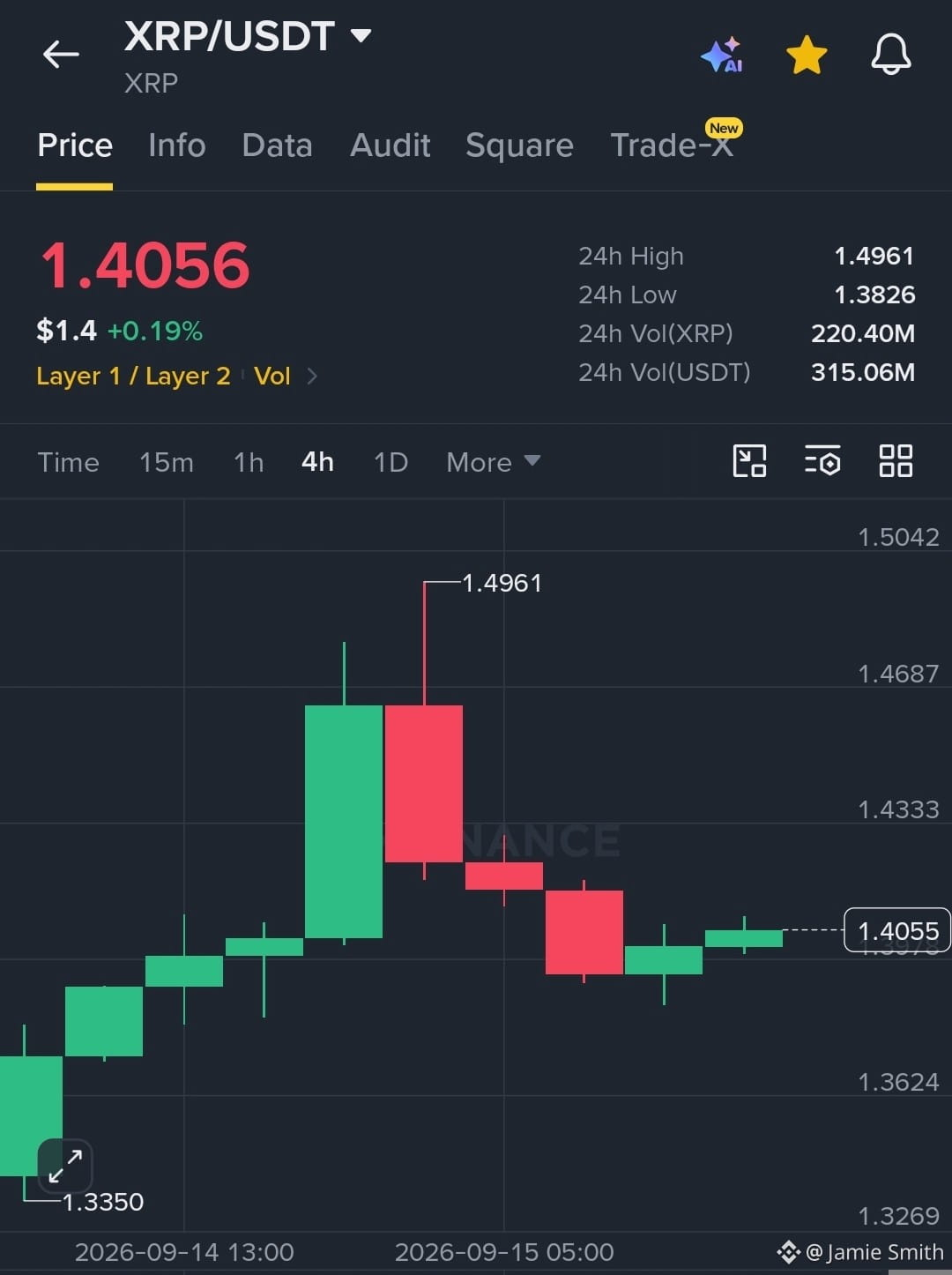
$XRP レジスタンスのテスト — ブレイクアウトの準備は整いましたか? $XRP は $1.43 まで上昇し、現在はレジスタンスのすぐ下で統合しています。バイヤーはまだ $1.41 のサポートゾーンを守っており、価格がトレンドサポートの上にある限り構造は強気のままです。 このような高値近くでのタイトな統合は、しばしば潜在的なブレイクアウトムーブを示唆します。 📊 トレードセットアップ: • エントリー: $1.41 – $1.42 • ターゲット 1: $1.46 • ターゲット 2: $1.50 • ターゲット 3: $1.58 • ストップロス: $1.38 もし XRP が $1.43 のレジスタンスをサポートに変えれば、モメンタムは $1.50 以上に向かって迅速に加速する可能性があります。 🔥 市場は圧縮されています…そして XRP は爆発の準備が整っているかもしれません。 #XRP #MetaPlansLayoffs #AaveSwapIncident #UseAIforCryptoTrading #CFTCChairCryptoPlan $XRP {spot}(XRPUSDT)
$XRP レジスタンスのテスト — ブレイクアウトの準備は整いましたか?

$XRP は $1.43 まで上昇し、現在はレジスタンスのすぐ下で統合しています。バイヤーはまだ $1.41 のサポートゾーンを守っており、価格がトレンドサポートの上にある限り構造は強気のままです。

このような高値近くでのタイトな統合は、しばしば潜在的なブレイクアウトムーブを示唆します。

📊 トレードセットアップ:
• エントリー: $1.41 – $1.42
• ターゲット 1: $1.46
• ターゲット 2: $1.50
• ターゲット 3: $1.58
• ストップロス: $1.38

もし XRP が $1.43 のレジスタンスをサポートに変えれば、モメンタムは $1.50 以上に向かって迅速に加速する可能性があります。

🔥 市場は圧縮されています…そして XRP は爆発の準備が整っているかもしれません。

#XRP #MetaPlansLayoffs #AaveSwapIncident #UseAIforCryptoTrading #CFTCChairCryptoPlan
$XRP
·
--
ブリッシュ
翻訳参照
$BTC Is Heating Up — Breakout Incoming? After tapping $71.9K, $BTC cooled down slightly but buyers stepped in again around $71.4K support. The structure still looks strong and the supertrend is holding the bullish bias. Right now the market is compressing just under resistance — and compression often leads to explosive moves. 📊 Trade Setup: • Entry: $71,400 – $71,600 • Target 1: $72,000 • Target 2: $72,800 • Target 3: $74,000 (if breakout momentum continues) • Stop Loss: $70,900 If BTC breaks $72K with volume, we could see a fast continuation move as liquidity gets swept above the highs. 🔥 The market is quiet… but not for long. #Bitcoin #BTCReclaims70k #MetaPlansLayoffs #OilPricesSlide #CFTCChairCryptoPlan $BTC {spot}(BTCUSDT)
$BTC Is Heating Up — Breakout Incoming?

After tapping $71.9K, $BTC cooled down slightly but buyers stepped in again around $71.4K support. The structure still looks strong and the supertrend is holding the bullish bias.

Right now the market is compressing just under resistance — and compression often leads to explosive moves.

📊 Trade Setup:
• Entry: $71,400 – $71,600
• Target 1: $72,000
• Target 2: $72,800
• Target 3: $74,000 (if breakout momentum continues)
• Stop Loss: $70,900

If BTC breaks $72K with volume, we could see a fast continuation move as liquidity gets swept above the highs.

🔥 The market is quiet… but not for long.

#Bitcoin #BTCReclaims70k #MetaPlansLayoffs #OilPricesSlide #CFTCChairCryptoPlan
$BTC
·
--
ブリッシュ
$BNB 取引セットアップ – モメンタム構築 $BNB は$666への急上昇後、$659付近で強く保持しています。構造はまだ強気に見え、価格は$660付近のスーパートレンドサポートゾーンを尊重し続けています。買い手は明らかに下落を防いでいます。 📊 取引アイデア: • エントリー: $658 – $661ゾーン • ターゲット1: $668 • ターゲット2: $675 • ターゲット3: $690(モメンタムが拡大した場合) • ストップロス: $651 もしブルが$666の抵抗を取り戻せば、$680以上に向かう迅速な圧縮が見られるかもしれません。ボリュームは健康的で、トレンド構造はまだ intact です。 ⚡ 時には最高の取引は忍耐から来ます。リクレイムを見守り、その後モメンタムに残りを任せましょう。 #BNB #PCEMarketWatch #BinanceTGEUP #MetaPlansLayoffs #CFTCChairCryptoPlan $BNB {spot}(BNBUSDT)
$BNB 取引セットアップ – モメンタム構築

$BNB は$666への急上昇後、$659付近で強く保持しています。構造はまだ強気に見え、価格は$660付近のスーパートレンドサポートゾーンを尊重し続けています。買い手は明らかに下落を防いでいます。

📊 取引アイデア:
• エントリー: $658 – $661ゾーン
• ターゲット1: $668
• ターゲット2: $675
• ターゲット3: $690(モメンタムが拡大した場合)
• ストップロス: $651

もしブルが$666の抵抗を取り戻せば、$680以上に向かう迅速な圧縮が見られるかもしれません。ボリュームは健康的で、トレンド構造はまだ intact です。

⚡ 時には最高の取引は忍耐から来ます。リクレイムを見守り、その後モメンタムに残りを任せましょう。

#BNB #PCEMarketWatch #BinanceTGEUP #MetaPlansLayoffs #CFTCChairCryptoPlan
$BNB
·
--
ブリッシュ
翻訳参照
$NIGHT is starting to wake up. Price pushed toward 0.0524, pulled back, and now it’s slowly building momentum again around 0.0515. The structure looks like quiet accumulation — small pullbacks, steady recovery, and buyers stepping in before deeper drops. Volume remains strong and the market clearly isn’t losing interest. If this level holds, the next move could easily test the 0.052–0.053 zone again. Sometimes the biggest moves begin exactly like this — calm charts, tight ranges, and traders slowly realizing something is brewing. Keep your eyes on $NIGHT. The night might just be getting started. 🌙 #TrumpSaysIranWarWillEndVerySoon #BinanceTGEUP #PCEMarketWatch #BTCReclaims70k #MetaPlansLayoffs
$NIGHT is starting to wake up.
Price pushed toward 0.0524, pulled back, and now it’s slowly building momentum again around 0.0515. The structure looks like quiet accumulation — small pullbacks, steady recovery, and buyers stepping in before deeper drops.

Volume remains strong and the market clearly isn’t losing interest.

If this level holds, the next move could easily test the 0.052–0.053 zone again.

Sometimes the biggest moves begin exactly like this — calm charts, tight ranges, and traders slowly realizing something is brewing.

Keep your eyes on $NIGHT. The night might just be getting started. 🌙

#TrumpSaysIranWarWillEndVerySoon #BinanceTGEUP #PCEMarketWatch #BTCReclaims70k #MetaPlansLayoffs
翻訳参照
Fabric Protocol is looking at a way to do things with robots. It thinks that of robots being controlled by big companies they should be able to work together with people and other machines in a open system. This system is like a team where robots can be identified and they can keep a record of what they do. They can also work together with people in a way that's fair and transparent. Developers can make things that robots can do and people who help make the system better get rewards. The main idea of Fabric Protocol is that robots are going to be doing more work in the real world. So the system that controls them should be open and accessible, to everyone not just controlled by one company. Fabric Protocol wants robots and machines and people to be able to work in a way that is collaborative and fair. Fabric Protocol is trying to make this happen by creating a system where Fabric Protocol can help robots work together with people. @FabricFND $ROBO {spot}(ROBOUSDT) #ROBO
Fabric Protocol is looking at a way to do things with robots. It thinks that of robots being controlled by big companies they should be able to work together with people and other machines in a open system. This system is like a team where robots can be identified and they can keep a record of what they do. They can also work together with people in a way that's fair and transparent.

Developers can make things that robots can do and people who help make the system better get rewards. The main idea of Fabric Protocol is that robots are going to be doing more work in the real world. So the system that controls them should be open and accessible, to everyone not just controlled by one company. Fabric Protocol wants robots and machines and people to be able to work in a way that is collaborative and fair. Fabric Protocol is trying to make this happen by creating a system where Fabric Protocol can help robots work together with people.

@Fabric Foundation $ROBO
#ROBO
·
--
ブリッシュ
翻訳参照
The Midnight Network is a blockchain that really cares about keeping things private. It is trying to fix a problem that Web3 is facing, which is being open and honest while also keeping peoples information safe. The Midnight Network uses something called zero-knowledge proof technology to make sure transactions and smart contracts are legitimate without giving away secrets. This way people who build things on the network can make sure that the people who use their stuff have their information protected and everything stays safe and follows the rules. The Midnight Network is very connected, to the Cardano ecosystem. It also has this idea of " privacy" which is really cool. This means that people who use the Midnight Network get to decide what information they want to share and what they want to keep to themselves. The Midnight Network has its special token called NIGHT. The NIGHT token helps the network make decisions. It also helps make transactions happen across the whole ecosystem. @MidnightNetwork $NIGHT {spot}(NIGHTUSDT) #night
The Midnight Network is a blockchain that really cares about keeping things private. It is trying to fix a problem that Web3 is facing, which is being open and honest while also keeping peoples information safe. The Midnight Network uses something called zero-knowledge proof technology to make sure transactions and smart contracts are legitimate without giving away secrets. This way people who build things on the network can make sure that the people who use their stuff have their information protected and everything stays safe and follows the rules.

The Midnight Network is very connected, to the Cardano ecosystem. It also has this idea of " privacy" which is really cool. This means that people who use the Midnight Network get to decide what information they want to share and what they want to keep to themselves. The Midnight Network has its special token called NIGHT. The NIGHT token helps the network make decisions. It also helps make transactions happen across the whole ecosystem.

@MidnightNetwork $NIGHT
#night
Fabric Protocolとは?分散型ロボット経済に関する完全ガイド@FabricFND ロボティクスと人工知能は急速に進化しています。かつてタスクに苦労していた機械は、今ではパッケージを仕分け、倉庫をナビゲートし、医療を支援しています。これらの機械を調整するシステムはあまり変わっていません。ほとんどのロボットは、1つの会社によって制御されるシステム内で動作しています。これにより、企業はコントロールを保持します。また、革新が制限されます。 Fabric Protocolはアプローチを取ります。ロボットを専有システム内にロックされたツールとして扱うことによって、ロボットがオープンシステム内で動作できるというアイデアを探求します。このフレームワークでは、機械が共有システムを通じて開発者、オペレーター、バリデーターと相互作用します。核心的なアイデアはシンプルです:ロボットは作業を行うことで価値を生み出します。その作業を調整するインフラストラクチャがオープンであれば、より多くの人々が貢献し、その価値を共有できます。

Fabric Protocolとは?分散型ロボット経済に関する完全ガイド

@Fabric Foundation ロボティクスと人工知能は急速に進化しています。かつてタスクに苦労していた機械は、今ではパッケージを仕分け、倉庫をナビゲートし、医療を支援しています。これらの機械を調整するシステムはあまり変わっていません。ほとんどのロボットは、1つの会社によって制御されるシステム内で動作しています。これにより、企業はコントロールを保持します。また、革新が制限されます。

Fabric Protocolはアプローチを取ります。ロボットを専有システム内にロックされたツールとして扱うことによって、ロボットがオープンシステム内で動作できるというアイデアを探求します。このフレームワークでは、機械が共有システムを通じて開発者、オペレーター、バリデーターと相互作用します。核心的なアイデアはシンプルです:ロボットは作業を行うことで価値を生み出します。その作業を調整するインフラストラクチャがオープンであれば、より多くの人々が貢献し、その価値を共有できます。
翻訳参照
Midnight Network and the Future of Private Smart Contracts@MidnightNetwork Blockchain is often described as transparent by design. This means that Blockchain transactions can be viewed on a ledger balances can be. The movement of Blockchain assets can be traced by anyone with the right tools. The openness of Blockchain played a role in building trust around decentralized systems because verification did not rely on any authority. The Blockchain network itself could confirm what happened. When Blockchain started moving beyond token transfers a different challenge began to appear. Many real-world systems rely on some level of privacy. For example banks manage records companies protect internal business operations and individuals expect certain information about their finances or identity to remain private. A transparent ledger while useful for verification does not always fit well with these kinds of situations. This is where the idea of contracts becomes important. Traditional smart contracts usually run on blockchains where most inputs and outputsre visible. Anyone observing the Blockchain network can see how a contract behaves and what data it interacts with. That transparency ensures fairness and trust. It can also expose information that participants would prefer to keep confidential. Private smart contracts attempt to solve that tension. Of publishing every detail on the Blockchain they allow certain data to remain hidden while still proving that the contract executed correctly. The Midnight Network is one project exploring how this might work in practice. The Midnight Network focuses on building an environment where smart contracts can interact with information without revealing that information to the Blockchain network. The system still verifies that the contract followed its rules. The sensitive inputs used during execution stay protected. The key idea behind this design comes from a method known as zero-knowledge proofs. The intuition behind it is simple. Imagine proving that you meet a requirement without revealing the documents that prove it. The system checks the condition confirms that it is true. The underlying details remain private. Midnight uses this principle to create a system where not everything's visible by default. The system allows only the necessary information to be revealed. The Blockchain network still verifies the result. It does not need access to every piece of data that produced that result. Midnight is designed to operate alongside the Cardano ecosystem not replacing it. The goal is to provide a privacy-focused environment that complements existing Blockchain infrastructure. Developers can build applications that interact with public Blockchain networks while performing computations inside Midnights privacy layer. From a developers perspective this creates possibilities. Smart contracts can process protected data and still produce results that other Blockchain systems can verify. The Blockchain confirms that the computation is correct without exposing the inputs used to reach that outcome. Midnights economic structure also reflects an attempt to support long-term Blockchain network stability. The system introduces two components: NIGHT and DUST. NIGHT acts as the token of the ecosystem. It represents participation in the Midnight Network plays a role in governance and security. Holders of the NIGHT token contribute to maintaining the infrastructure. May influence decisions about how the Midnight Network evolves. DUST serves a purpose. It works more like a resource that powers Midnight Network activity. When users run contracts or perform Blockchain transactions they consume DUST as capacity. This design separates ownership from the cost of Midnight Network usage. The larger significance of contracts becomes clearer when considering where Blockchain technology might be heading. As decentralized Blockchain systems expand into areas such as identity management, infrastructure and supply chains, privacy becomes increasingly important. A supply chain might need to confirm the origin of goods without exposing supplier relationships. In situations like these verification is essential. So is confidentiality. Privacy-preserving smart contracts offer one way to balance those needs. Building this type of Blockchain infrastructure is not simple. Developers also need tools that make it easier to build applications around encrypted or protected data. There is also the question of regulation. Privacy technologies can raise concerns about oversight and compliance. Midnight attempts to address this by focusing on proofs than complete anonymity. The system still allows rules and conditions to be confirmed even if the underlying data remains hidden. Like Blockchain projects Midnights long-term impact will depend on adoption. Infrastructure alone is not enough. Developers need to build applications organizations need to experiment with the Blockchain technology and users need to find value in the Blockchain systems that emerge. What Midnight represents however is part of a shift in how Blockchain technology's evolving. In the days of crypto transparency was seen as the solution, for building trust. Today the conversation is becoming more nuanced. Trust is still important. Privacy is increasingly part of the discussion well. If decentralized Blockchain systems are going to support real-world applications they will need ways to verify outcomes without exposing every detail. The Midnight Network is one attempt to explore how that balance might be achieved. $NIGHT #night

Midnight Network and the Future of Private Smart Contracts

@MidnightNetwork Blockchain is often described as transparent by design. This means that Blockchain transactions can be viewed on a ledger balances can be. The movement of Blockchain assets can be traced by anyone with the right tools. The openness of Blockchain played a role in building trust around decentralized systems because verification did not rely on any authority. The Blockchain network itself could confirm what happened.

When Blockchain started moving beyond token transfers a different challenge began to appear. Many real-world systems rely on some level of privacy. For example banks manage records companies protect internal business operations and individuals expect certain information about their finances or identity to remain private.

A transparent ledger while useful for verification does not always fit well with these kinds of situations.

This is where the idea of contracts becomes important. Traditional smart contracts usually run on blockchains where most inputs and outputsre visible. Anyone observing the Blockchain network can see how a contract behaves and what data it interacts with. That transparency ensures fairness and trust. It can also expose information that participants would prefer to keep confidential.

Private smart contracts attempt to solve that tension. Of publishing every detail on the Blockchain they allow certain data to remain hidden while still proving that the contract executed correctly.

The Midnight Network is one project exploring how this might work in practice. The Midnight Network focuses on building an environment where smart contracts can interact with information without revealing that information to the Blockchain network. The system still verifies that the contract followed its rules. The sensitive inputs used during execution stay protected.

The key idea behind this design comes from a method known as zero-knowledge proofs. The intuition behind it is simple. Imagine proving that you meet a requirement without revealing the documents that prove it. The system checks the condition confirms that it is true. The underlying details remain private.

Midnight uses this principle to create a system where not everything's visible by default. The system allows only the necessary information to be revealed. The Blockchain network still verifies the result. It does not need access to every piece of data that produced that result.

Midnight is designed to operate alongside the Cardano ecosystem not replacing it. The goal is to provide a privacy-focused environment that complements existing Blockchain infrastructure. Developers can build applications that interact with public Blockchain networks while performing computations inside Midnights privacy layer.

From a developers perspective this creates possibilities. Smart contracts can process protected data and still produce results that other Blockchain systems can verify. The Blockchain confirms that the computation is correct without exposing the inputs used to reach that outcome.

Midnights economic structure also reflects an attempt to support long-term Blockchain network stability. The system introduces two components: NIGHT and DUST. NIGHT acts as the token of the ecosystem. It represents participation in the Midnight Network plays a role in governance and security. Holders of the NIGHT token contribute to maintaining the infrastructure. May influence decisions about how the Midnight Network evolves.

DUST serves a purpose. It works more like a resource that powers Midnight Network activity. When users run contracts or perform Blockchain transactions they consume DUST as capacity. This design separates ownership from the cost of Midnight Network usage.

The larger significance of contracts becomes clearer when considering where Blockchain technology might be heading. As decentralized Blockchain systems expand into areas such as identity management, infrastructure and supply chains, privacy becomes increasingly important. A supply chain might need to confirm the origin of goods without exposing supplier relationships.

In situations like these verification is essential. So is confidentiality. Privacy-preserving smart contracts offer one way to balance those needs.

Building this type of Blockchain infrastructure is not simple. Developers also need tools that make it easier to build applications around encrypted or protected data. There is also the question of regulation. Privacy technologies can raise concerns about oversight and compliance.

Midnight attempts to address this by focusing on proofs than complete anonymity. The system still allows rules and conditions to be confirmed even if the underlying data remains hidden.

Like Blockchain projects Midnights long-term impact will depend on adoption. Infrastructure alone is not enough. Developers need to build applications organizations need to experiment with the Blockchain technology and users need to find value in the Blockchain systems that emerge.

What Midnight represents however is part of a shift in how Blockchain technology's evolving. In the days of crypto transparency was seen as the solution, for building trust. Today the conversation is becoming more nuanced. Trust is still important. Privacy is increasingly part of the discussion well.

If decentralized Blockchain systems are going to support real-world applications they will need ways to verify outcomes without exposing every detail. The Midnight Network is one attempt to explore how that balance might be achieved.
$NIGHT #night
·
--
弱気相場
$SOL / USDT 取引セットアップ ⚡ $SOL は、$87の抵抗ゾーンからの急激な拒否を受けて、$87付近をうろついています。価格は現在、サポートをテストしており、次の決定的な動きに向けてモメンタムが構築されています。構造はボラティリティ圧縮を示しており、ブレイクアウトが近い可能性があります。 取引セットアップ: 📈 ロングエントリー: $86.50 – $86.80 🎯 目標: $88.50 → $90.00 🛑 ストップロス: $85.80 もしSOLが$87.40を回復すれば、買い手は$89–$90の流動性ゾーンに向けて速いスクイーズを引き起こす可能性があります。 注意深く見守ってください… ソラナは次の爆発的な脚に備えているかもしれません。 🚀📊 #MetaPlansLayoffs #BTCReclaims70k #BinanceTGEUP #TrumpSaysIranWarWillEndVerySoon #CFTCChairCryptoPlan $SOL {spot}(SOLUSDT)
$SOL / USDT 取引セットアップ ⚡

$SOL は、$87の抵抗ゾーンからの急激な拒否を受けて、$87付近をうろついています。価格は現在、サポートをテストしており、次の決定的な動きに向けてモメンタムが構築されています。構造はボラティリティ圧縮を示しており、ブレイクアウトが近い可能性があります。

取引セットアップ:

📈 ロングエントリー: $86.50 – $86.80
🎯 目標: $88.50 → $90.00
🛑 ストップロス: $85.80

もしSOLが$87.40を回復すれば、買い手は$89–$90の流動性ゾーンに向けて速いスクイーズを引き起こす可能性があります。

注意深く見守ってください… ソラナは次の爆発的な脚に備えているかもしれません。 🚀📊
#MetaPlansLayoffs #BTCReclaims70k #BinanceTGEUP #TrumpSaysIranWarWillEndVerySoon #CFTCChairCryptoPlan
$SOL
·
--
ブリッシュ
·
--
ブリッシュ
翻訳参照
·
--
ブリッシュ
翻訳参照
Blockchain made transparency its biggest strength, but real-world systems also need privacy. Midnight Network explores this balance using zero-knowledge technology that allows information to be verified without exposing the data behind it. By enabling selective disclosure and confidential smart contracts, the project opens new possibilities for Web3 applications where trust and privacy must exist together. @MidnightNetwork $NIGHT {spot}(NIGHTUSDT) #night
Blockchain made transparency its biggest strength, but real-world systems also need privacy. Midnight Network explores this balance using zero-knowledge technology that allows information to be verified without exposing the data behind it. By enabling selective disclosure and confidential smart contracts, the project opens new possibilities for Web3 applications where trust and privacy must exist together.

@MidnightNetwork $NIGHT
#night
さらにコンテンツを探すには、ログインしてください
暗号資産関連最新ニュース総まとめ
⚡️ 暗号資産に関する最新のディスカッションに参加
💬 お気に入りのクリエイターと交流
👍 興味のあるコンテンツがきっと見つかります
メール / 電話番号
サイトマップ
Cookieの設定
プラットフォーム利用規約