

Bit_Rase
29.2k 投稿

Bit_Rase
 厳選トピック確認済+
報告
ユーザーをブロック
Crypto Enthusiast | #BTC since 2017 | NFTs, Exchanges and Blockchain Analysis #Binance kol X.🇵🇰 @X_Girlz0
取引を発注
高頻度トレーダー
4.9年
359 フォロー
42.9K+ フォロワー
110.5K+ いいね
投稿
ポートフォリオ
すべて
引用
ライブ
·
--
翻訳参照
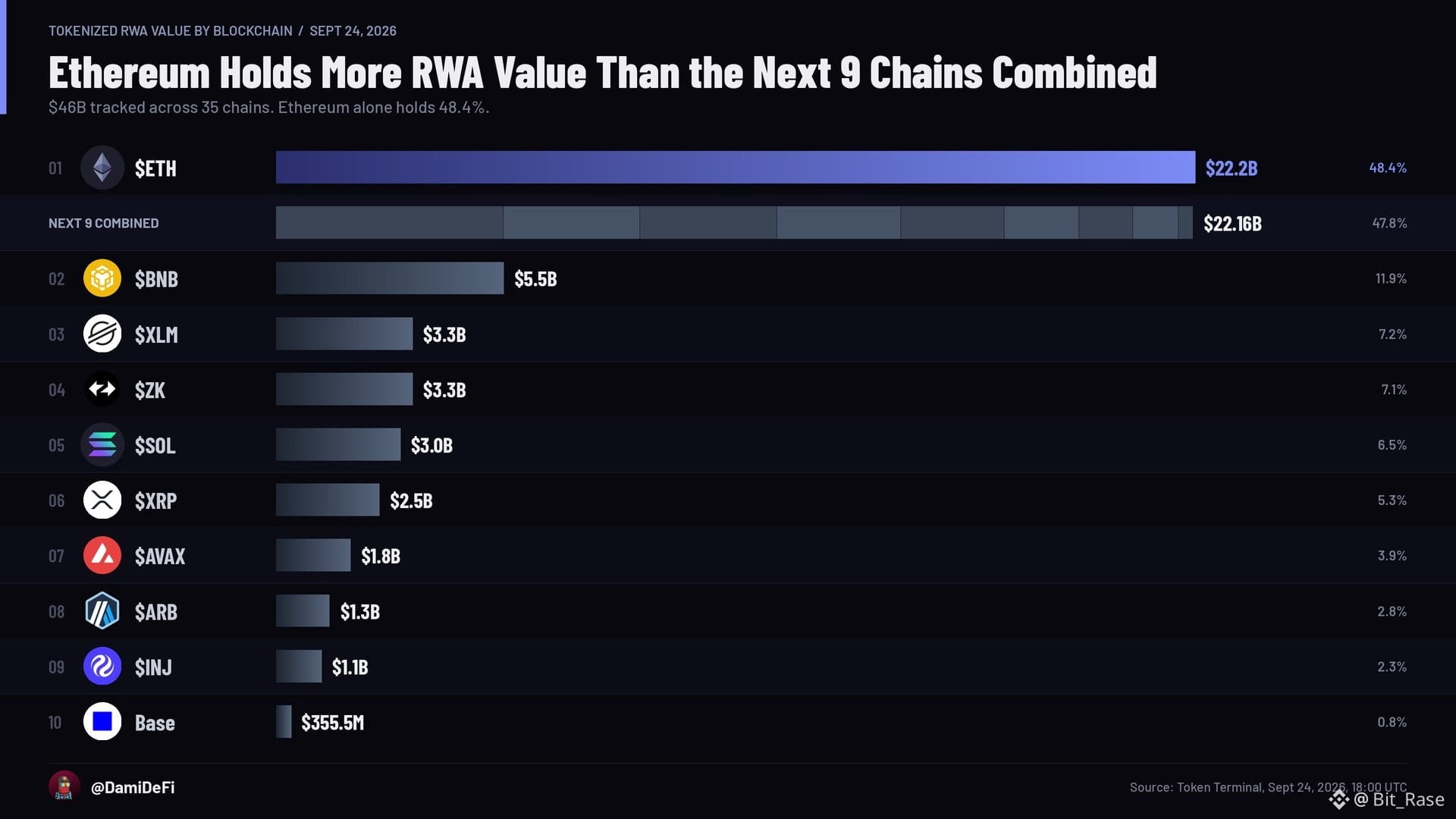
Ethereum Alone Holds Nearly Half of All Tokenized Real-World Asset Value Across 35 Blockchains, More Than the Next Nine Chains Combined.
Here's the RWA asset value breakdown by blockchain as of September 24, 2026, per Token Terminal:
$ETH : $22.2B (48.4% market share)
$BNB: $5.5B (11.9%)
$XLM: $3.3B (7.2%)
$ZK: $3.3B (7.1%)
$SOL: $3.0B (6.5%)
$XRP: $2.5B (5.3%)
$AVAX: $1.8B (3.9%)
$ARB: $1.3B (2.8%)
$INJ: $1.1B (2.3%)
Base: $355.5M (0.8%)
The total tokenized RWA market sits at $46B spread across 35 chains, and Ethereum's lead isn't close, it holds more RWA value than the remaining 34 chains combined.
$BNB is a distant second at under a quarter of Ethereum's share.
What's notable further down the list is $XLM and $ZK essentially tied for third, two chains with very different reputations, one built explicitly around payments and the other a general-purpose zkEVM, both carving out similar footholds in tokenized assets.
$BASE rounds out the top 10 at under 1% market share, a surprisingly small slice given how dominant the chain has been in other metrics like stablecoin settlement and smart wallet adoption this year.
Source: Token Terminal
Ethereum Alone Holds Nearly Half of All Tokenized Real-World Asset Value Across 35 Blockchains, More Than the Next Nine Chains Combined.
Here's the RWA asset value breakdown by blockchain as of September 24, 2026, per Token Terminal:
$ETH : $22.2B (48.4% market share)
$BNB : $5.5B (11.9%)
$XLM: $3.3B (7.2%)
$ZK : $3.3B (7.1%)
$SOL: $3.0B (6.5%)
$XRP: $2.5B (5.3%)
$AVAX: $1.8B (3.9%)
$ARB: $1.3B (2.8%)
$INJ: $1.1B (2.3%)
Base: $355.5M (0.8%)
The total tokenized RWA market sits at $46B spread across 35 chains, and Ethereum's lead isn't close, it holds more RWA value than the remaining 34 chains combined.
$BNB is a distant second at under a quarter of Ethereum's share.
What's notable further down the list is $XLM and $ZK essentially tied for third, two chains with very different reputations, one built explicitly around payments and the other a general-purpose zkEVM, both carving out similar footholds in tokenized assets.
$BASE rounds out the top 10 at under 1% market share, a surprisingly small slice given how dominant the chain has been in other metrics like stablecoin settlement and smart wallet adoption this year.
Source: Token Terminal
Here's the RWA asset value breakdown by blockchain as of September 24, 2026, per Token Terminal:
$ETH : $22.2B (48.4% market share)
$BNB : $5.5B (11.9%)
$XLM: $3.3B (7.2%)
$ZK : $3.3B (7.1%)
$SOL: $3.0B (6.5%)
$XRP: $2.5B (5.3%)
$AVAX: $1.8B (3.9%)
$ARB: $1.3B (2.8%)
$INJ: $1.1B (2.3%)
Base: $355.5M (0.8%)
The total tokenized RWA market sits at $46B spread across 35 chains, and Ethereum's lead isn't close, it holds more RWA value than the remaining 34 chains combined.
$BNB is a distant second at under a quarter of Ethereum's share.
What's notable further down the list is $XLM and $ZK essentially tied for third, two chains with very different reputations, one built explicitly around payments and the other a general-purpose zkEVM, both carving out similar footholds in tokenized assets.
$BASE rounds out the top 10 at under 1% market share, a surprisingly small slice given how dominant the chain has been in other metrics like stablecoin settlement and smart wallet adoption this year.
Source: Token Terminal
120
·
--
翻訳参照
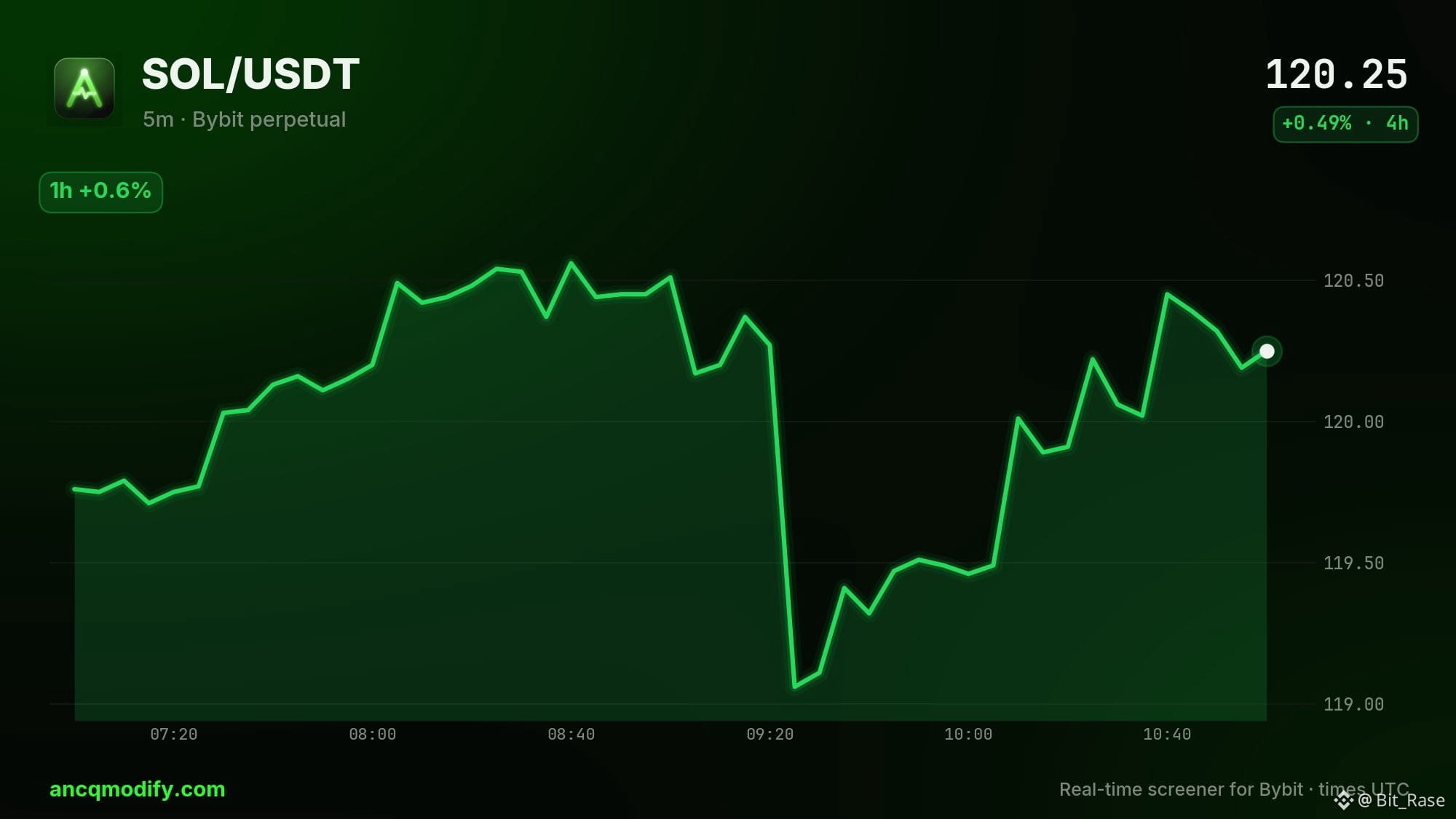
NEW: The Solana Foundation has launched Solana DVP, an open-source atomic Delivery-versus-Payment standard designed for institutional securities settlement.
The initiative includes input from J.P. Morgan, adding further institutional expertise to Solana’s push into tokenized financial markets.
Solana DVP aims to enable securities and payments to settle atomically, helping make on-chain settlement more efficient, transparent, and programmable.
A notable step toward bringing traditional financial infrastructure further on-chain. $SOL
{future}(SOLUSDT)
NEW: The Solana Foundation has launched Solana DVP, an open-source atomic Delivery-versus-Payment standard designed for institutional securities settlement.
The initiative includes input from J.P. Morgan, adding further institutional expertise to Solana’s push into tokenized financial markets.
Solana DVP aims to enable securities and payments to settle atomically, helping make on-chain settlement more efficient, transparent, and programmable.
A notable step toward bringing traditional financial infrastructure further on-chain. $SOL
The initiative includes input from J.P. Morgan, adding further institutional expertise to Solana’s push into tokenized financial markets.
Solana DVP aims to enable securities and payments to settle atomically, helping make on-chain settlement more efficient, transparent, and programmable.
A notable step toward bringing traditional financial infrastructure further on-chain. $SOL
1
164
·
--
翻訳参照
Hyperscale Data holds approximately $56.4 million in bitcoin, cash, and cash on October 4th, 2026.
美股速考
29 minutes ago
Hyperscale Data holds approximately $56.4 million in bitcoin, cash, and cash on October 4th, 2026.
$BTC
{future}(BTCUSDT)
Hyperscale Data holds approximately $56.4 million in bitcoin, cash, and cash on October 4th, 2026.
美股速考
29 minutes ago
Hyperscale Data holds approximately $56.4 million in bitcoin, cash, and cash on October 4th, 2026.
$BTC
美股速考
29 minutes ago
Hyperscale Data holds approximately $56.4 million in bitcoin, cash, and cash on October 4th, 2026.
$BTC
170
·
--
記事
翻訳参照
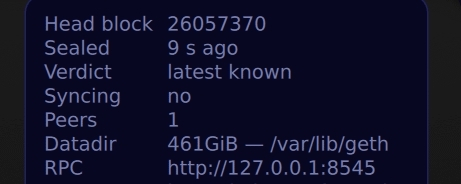
Ethereum is testing whether GlamsterdamEthereum is testing whether Glamsterdam can push Sepolia’s gas limit from 60M to 200M without compromising validator performance.
The 3.3× capacity jump could materially expand @ethereum’s L1 execution headroom for DeFi and stablecoin activity.
Here’s how $ETH is engineering the capacity jump.
— — —
► Ethereum needs more block capacity
Ethereum has steadily raised its gas limit from 30M in 2021 to 60M in 2025, rather than making one abrupt capacity jump.
Now, Glamsterdam is testing 60M → 200M, a 3.33× increase in available block capacity.
But 200M gas ≠ 3.33× TPS.
Gas measures computational work, while actual throughput depends on execution complexity, state access, propagation, demand, and validator hardware. Block time remains 12 seconds.
— — —
► Why not simply increase the gas limit?
Larger blocks increase the load on validators, bandwidth, CPUs, storage, and block propagation.
At 200M gas:
• Old state pricing → ~380 GiB/year of state growth
• New approach → ~120 GiB/year target
That is why Glamsterdam combines higher capacity with parallel execution and better state economics.
— — —
► ePBS: improve block production and propagation
EIP-7732 moves proposer-builder separation into Ethereum’s protocol, reducing reliance on external MEV-Boost relays.
Builder commits → proposer selects → payload revealed
• Propagation window: ~2s → ~9s
• Payload Timeliness Committee verifies timely payload reveal
This gives validators more time to handle larger blocks as Ethereum increases capacity.
— — —
► Block-Level Access Lists: parallelizing execution
EIP-7928 lets blocks include the accounts, storage slots, and state changes touched by transactions.
This enables:
• Parallel disk reads
• Parallel execution of non-conflicting transactions
• Cheaper state-root computation
200M gas creates more work, while BALs help process that work in parallel, making larger blocks more practical.
— — —
► State repricing: making higher capacity sustainable
Higher block capacity means more state-changing activity, increasing the long-term burden on Ethereum nodes.
State repricing separates the cost of creating new state from using existing state:
• Existing-account transfers can become up to ~71% cheaper
• New accounts and storage become more expensive
This makes persistent state growth more economically sustainable.
— — —
► Why the Prysm update matters
Prysm v7.2.1 was released just before the Sepolia test because the previous version still defaulted to a 60M gas limit.
• Prysm 7.2.0 → 60M default
• Prysm 7.2.1 → 200M scheduled default
• Teku 26.9.1 → 60M default
Without the update, validators could have continued proposing smaller blocks and weakened the 200M capacity test.
— — —
► devnet-11 already showed an early signal
Before Sepolia, Ethereum tested the BAL path on devnet-11.
• 2,302 BAL performance tests passed
• 570.7B gas processed in 3m 15s
• ~2.9B gas/s execution throughput
• Gas limit moved from 60M → 200M without loss of finality
However, 2.9B gas/s measures client execution throughput, not TPS.
— — —
► The biggest operational risk: fake builders
Under ePBS, builders bid → win the slot → reveal the payload.
On Sepolia, attackers can create multiple builder identities, win slots with aggressive bids, and withhold the payload.
This empty-payload griefing could disrupt the public rehearsal and interfere with testing the new builder pipeline.
Client-side builder identity rejection was proposed as a mitigation.
— — —
The real test is whether Ethereum can scale L1 capacity without pushing validators beyond practical hardware limits.
Glamsterdam is attacking that constraint through parallel execution, better block propagation, and sustainable state economics.
If Sepolia holds at 200M gas, Ethereum gets a stronger case for materially higher L1 capacity.
Ethereum is testing whether Glamsterdam
Ethereum is testing whether Glamsterdam can push Sepolia’s gas limit from 60M to 200M without compromising validator performance.
The 3.3× capacity jump could materially expand @ethereum’s L1 execution headroom for DeFi and stablecoin activity.
Here’s how $ETH is engineering the capacity jump.
— — —
► Ethereum needs more block capacity
Ethereum has steadily raised its gas limit from 30M in 2021 to 60M in 2025, rather than making one abrupt capacity jump.
Now, Glamsterdam is testing 60M → 200M, a 3.33× increase in available block capacity.
But 200M gas ≠ 3.33× TPS.
Gas measures computational work, while actual throughput depends on execution complexity, state access, propagation, demand, and validator hardware. Block time remains 12 seconds.
— — —
► Why not simply increase the gas limit?
Larger blocks increase the load on validators, bandwidth, CPUs, storage, and block propagation.
At 200M gas:
• Old state pricing → ~380 GiB/year of state growth
• New approach → ~120 GiB/year target
That is why Glamsterdam combines higher capacity with parallel execution and better state economics.
— — —
► ePBS: improve block production and propagation
EIP-7732 moves proposer-builder separation into Ethereum’s protocol, reducing reliance on external MEV-Boost relays.
Builder commits → proposer selects → payload revealed
• Propagation window: ~2s → ~9s
• Payload Timeliness Committee verifies timely payload reveal
This gives validators more time to handle larger blocks as Ethereum increases capacity.
— — —
► Block-Level Access Lists: parallelizing execution
EIP-7928 lets blocks include the accounts, storage slots, and state changes touched by transactions.
This enables:
• Parallel disk reads
• Parallel execution of non-conflicting transactions
• Cheaper state-root computation
200M gas creates more work, while BALs help process that work in parallel, making larger blocks more practical.
— — —
► State repricing: making higher capacity sustainable
Higher block capacity means more state-changing activity, increasing the long-term burden on Ethereum nodes.
State repricing separates the cost of creating new state from using existing state:
• Existing-account transfers can become up to ~71% cheaper
• New accounts and storage become more expensive
This makes persistent state growth more economically sustainable.
— — —
► Why the Prysm update matters
Prysm v7.2.1 was released just before the Sepolia test because the previous version still defaulted to a 60M gas limit.
• Prysm 7.2.0 → 60M default
• Prysm 7.2.1 → 200M scheduled default
• Teku 26.9.1 → 60M default
Without the update, validators could have continued proposing smaller blocks and weakened the 200M capacity test.
— — —
► devnet-11 already showed an early signal
Before Sepolia, Ethereum tested the BAL path on devnet-11.
• 2,302 BAL performance tests passed
• 570.7B gas processed in 3m 15s
• ~2.9B gas/s execution throughput
• Gas limit moved from 60M → 200M without loss of finality
However, 2.9B gas/s measures client execution throughput, not TPS.
— — —
► The biggest operational risk: fake builders
Under ePBS, builders bid → win the slot → reveal the payload.
On Sepolia, attackers can create multiple builder identities, win slots with aggressive bids, and withhold the payload.
This empty-payload griefing could disrupt the public rehearsal and interfere with testing the new builder pipeline.
Client-side builder identity rejection was proposed as a mitigation.
— — —
The real test is whether Ethereum can scale L1 capacity without pushing validators beyond practical hardware limits.
Glamsterdam is attacking that constraint through parallel execution, better block propagation, and sustainable state economics.
If Sepolia holds at 200M gas, Ethereum gets a stronger case for materially higher L1 capacity.
The 3.3× capacity jump could materially expand @ethereum’s L1 execution headroom for DeFi and stablecoin activity.
Here’s how $ETH is engineering the capacity jump.
— — —
► Ethereum needs more block capacity
Ethereum has steadily raised its gas limit from 30M in 2021 to 60M in 2025, rather than making one abrupt capacity jump.
Now, Glamsterdam is testing 60M → 200M, a 3.33× increase in available block capacity.
But 200M gas ≠ 3.33× TPS.
Gas measures computational work, while actual throughput depends on execution complexity, state access, propagation, demand, and validator hardware. Block time remains 12 seconds.
— — —
► Why not simply increase the gas limit?
Larger blocks increase the load on validators, bandwidth, CPUs, storage, and block propagation.
At 200M gas:
• Old state pricing → ~380 GiB/year of state growth
• New approach → ~120 GiB/year target
That is why Glamsterdam combines higher capacity with parallel execution and better state economics.
— — —
► ePBS: improve block production and propagation
EIP-7732 moves proposer-builder separation into Ethereum’s protocol, reducing reliance on external MEV-Boost relays.
Builder commits → proposer selects → payload revealed
• Propagation window: ~2s → ~9s
• Payload Timeliness Committee verifies timely payload reveal
This gives validators more time to handle larger blocks as Ethereum increases capacity.
— — —
► Block-Level Access Lists: parallelizing execution
EIP-7928 lets blocks include the accounts, storage slots, and state changes touched by transactions.
This enables:
• Parallel disk reads
• Parallel execution of non-conflicting transactions
• Cheaper state-root computation
200M gas creates more work, while BALs help process that work in parallel, making larger blocks more practical.
— — —
► State repricing: making higher capacity sustainable
Higher block capacity means more state-changing activity, increasing the long-term burden on Ethereum nodes.
State repricing separates the cost of creating new state from using existing state:
• Existing-account transfers can become up to ~71% cheaper
• New accounts and storage become more expensive
This makes persistent state growth more economically sustainable.
— — —
► Why the Prysm update matters
Prysm v7.2.1 was released just before the Sepolia test because the previous version still defaulted to a 60M gas limit.
• Prysm 7.2.0 → 60M default
• Prysm 7.2.1 → 200M scheduled default
• Teku 26.9.1 → 60M default
Without the update, validators could have continued proposing smaller blocks and weakened the 200M capacity test.
— — —
► devnet-11 already showed an early signal
Before Sepolia, Ethereum tested the BAL path on devnet-11.
• 2,302 BAL performance tests passed
• 570.7B gas processed in 3m 15s
• ~2.9B gas/s execution throughput
• Gas limit moved from 60M → 200M without loss of finality
However, 2.9B gas/s measures client execution throughput, not TPS.
— — —
► The biggest operational risk: fake builders
Under ePBS, builders bid → win the slot → reveal the payload.
On Sepolia, attackers can create multiple builder identities, win slots with aggressive bids, and withhold the payload.
This empty-payload griefing could disrupt the public rehearsal and interfere with testing the new builder pipeline.
Client-side builder identity rejection was proposed as a mitigation.
— — —
The real test is whether Ethereum can scale L1 capacity without pushing validators beyond practical hardware limits.
Glamsterdam is attacking that constraint through parallel execution, better block propagation, and sustainable state economics.
If Sepolia holds at 200M gas, Ethereum gets a stronger case for materially higher L1 capacity.
333
·
--
$GIGGLE
{future}(GIGGLEUSDT)
GIGGLEは出来高が急増するなか38ドルを上回って推移しており、次の重要なレジスタンスは40ドルです。CZ/Giggle Academy関連の材料が強気の勢いを支えています。40ドルを明確に上抜ければ、上昇が加速する可能性があります。
ロング戦略。
エントリー:38.40ドル~39.20ドル
利確目標:40.00ドル~42.00ドル~45.00ドル~48.00ドル
損切り:37.20ドル
$GIGGLE
GIGGLEは出来高が急増するなか38ドルを上回って推移しており、次の重要なレジスタンスは40ドルです。CZ/Giggle Academy関連の材料が強気の勢いを支えています。40ドルを明確に上抜ければ、上昇が加速する可能性があります。
ロング戦略。
エントリー:38.40ドル~39.20ドル
利確目標:40.00ドル~42.00ドル~45.00ドル~48.00ドル
損切り:37.20ドル
GIGGLEは出来高が急増するなか38ドルを上回って推移しており、次の重要なレジスタンスは40ドルです。CZ/Giggle Academy関連の材料が強気の勢いを支えています。40ドルを明確に上抜ければ、上昇が加速する可能性があります。
ロング戦略。
エントリー:38.40ドル~39.20ドル
利確目標:40.00ドル~42.00ドル~45.00ドル~48.00ドル
損切り:37.20ドル
1
531
·
--
$CRV CRVは急激な売りの後、$0.33の価格帯を防衛しています。一方でRSIは回復しており、モメンタムはプラスに転じています。ロングのセットアップ。
エントリー: $0.334 - $0.342
TP: $0.355 - $0.37 - $0.39 - $0.42
SL: $0.323
$CRV CRVは急激な売りの後、$0.33の価格帯を防衛しています。一方でRSIは回復しており、モメンタムはプラスに転じています。ロングのセットアップ。
エントリー: $0.334 - $0.342
TP: $0.355 - $0.37 - $0.39 - $0.42
SL: $0.323
エントリー: $0.334 - $0.342
TP: $0.355 - $0.37 - $0.39 - $0.42
SL: $0.323
2
235
·
--
$DASH DASHは、$73を拒否した後の強い売りで下落しており、現在は$61のサポートゾーンをテストしています。モメンタムは弱気ですが、市場はすでに過売買(売られすぎ)状態です。ショートのセットアップ。
エントリー:$65.50 - $67.00
TP:$63 - $61 - $58 - $55
SL:$69.20
$DASH DASHは、$73を拒否した後の強い売りで下落しており、現在は$61のサポートゾーンをテストしています。モメンタムは弱気ですが、市場はすでに過売買(売られすぎ)状態です。ショートのセットアップ。
エントリー:$65.50 - $67.00
TP:$63 - $61 - $58 - $55
SL:$69.20
エントリー:$65.50 - $67.00
TP:$63 - $61 - $58 - $55
SL:$69.20
2
445
·
--
$OG OGは$2.90のゾーンを拒否した後、$2.76近辺で推移しており、現在の重要なサポートは$2.80です。モメンタムはまちまちなので、この局面は慎重なショート有利のセッティングです。
エントリー: $2.82 - $2.90
TP: $2.74 - $2.65 - $2.55 - $2.45
SL: $2.98
$OG OGは$2.90のゾーンを拒否した後、$2.76近辺で推移しており、現在の重要なサポートは$2.80です。モメンタムはまちまちなので、この局面は慎重なショート有利のセッティングです。
エントリー: $2.82 - $2.90
TP: $2.74 - $2.65 - $2.55 - $2.45
SL: $2.98
エントリー: $2.82 - $2.90
TP: $2.74 - $2.65 - $2.55 - $2.45
SL: $2.98
3
607
·
--
$ETH ETHは$2,750〜$2,800のサプライゾーンを奪還できず、$2,700のエリアを拒否しています。一方で本日の出来高は急激に跳ね上がりました。短期のセットアップです。
エントリー: $2,680 - $2,705
TP: $2,635 - $2,570 - $2,500 - $2,420
SL: $2,755
$ETH ETHは$2,750〜$2,800のサプライゾーンを奪還できず、$2,700のエリアを拒否しています。一方で本日の出来高は急激に跳ね上がりました。短期のセットアップです。
エントリー: $2,680 - $2,705
TP: $2,635 - $2,570 - $2,500 - $2,420
SL: $2,755
エントリー: $2,680 - $2,705
TP: $2,635 - $2,570 - $2,500 - $2,420
SL: $2,755
2
226
·
--
$NMR NMRは151%の出来高急増で上値を切り上げていますが、次の反落を引き起こす可能性がある重要な抵抗線が$10.65です。長めの仕込み。
エントリー:$9.90 - $10.15
TP:$10.65 - $11.20 - $11.80 - $12.50
SL:$9.55
$NMR NMRは151%の出来高急増で上値を切り上げていますが、次の反落を引き起こす可能性がある重要な抵抗線が$10.65です。長めの仕込み。
エントリー:$9.90 - $10.15
TP:$10.65 - $11.20 - $11.80 - $12.50
SL:$9.55
エントリー:$9.90 - $10.15
TP:$10.65 - $11.20 - $11.80 - $12.50
SL:$9.55
1
453
·
--
$PUMP ポンプが出来高が急増する中で$0.00464を上抜けてブレイクし、継続中の自社株買いが実際の需要を後押しする触媒になっています。モメンタムのセットアップ。
エントリー:$0.00495~$0.00515
TP:$0.0054~$0.0058~$0.0063~$0.007
SL:$0.00460
$PUMP ポンプが出来高が急増する中で$0.00464を上抜けてブレイクし、継続中の自社株買いが実際の需要を後押しする触媒になっています。モメンタムのセットアップ。
エントリー:$0.00495~$0.00515
TP:$0.0054~$0.0058~$0.0063~$0.007
SL:$0.00460
エントリー:$0.00495~$0.00515
TP:$0.0054~$0.0058~$0.0063~$0.007
SL:$0.00460
211
·
--
$BTC ビットコインは再び$85Kを拒否し、現在は$83Kのサポートゾーンをテストしており、レバレッジ・ポジションはアンワインディング(巻き戻し)を開始しています。短期セットアップ。
エントリー: $84,000 - $84,500
TP: $82,600 - $81,200 - $79,500 - $77,000
SL: $85,300
$BTC ビットコインは再び$85Kを拒否し、現在は$83Kのサポートゾーンをテストしており、レバレッジ・ポジションはアンワインディング(巻き戻し)を開始しています。短期セットアップ。
エントリー: $84,000 - $84,500
TP: $82,600 - $81,200 - $79,500 - $77,000
SL: $85,300
エントリー: $84,000 - $84,500
TP: $82,600 - $81,200 - $79,500 - $77,000
SL: $85,300
2
100
·
--
$ALGO ALGOは強い複数日間の上昇後、$0.121のレジスタンスから押し戻されており、短期のモメンタムが弱まっています。短期のセットアップです。
エントリー: $0.1185 - $0.1210
TP: $0.115 - $0.111 - $0.107 - $0.103
SL: $0.1245
$ALGO ALGOは強い複数日間の上昇後、$0.121のレジスタンスから押し戻されており、短期のモメンタムが弱まっています。短期のセットアップです。
エントリー: $0.1185 - $0.1210
TP: $0.115 - $0.111 - $0.107 - $0.103
SL: $0.1245
エントリー: $0.1185 - $0.1210
TP: $0.115 - $0.111 - $0.107 - $0.103
SL: $0.1245
2
286
·
--
$XAUT XAUTは、$4,250のサポートゾーンを下抜けしており、モメンタムは弱気のまま、50/200期間の構造はデッドクロスを示しています。ショートのセットアップ。
エントリー: $4,220 - $4,250
TP: $4,180 - $4,120 - $4,050 - $3,980
SL: $4,310
$XAUT XAUTは、$4,250のサポートゾーンを下抜けしており、モメンタムは弱気のまま、50/200期間の構造はデッドクロスを示しています。ショートのセットアップ。
エントリー: $4,220 - $4,250
TP: $4,180 - $4,120 - $4,050 - $3,980
SL: $4,310
エントリー: $4,220 - $4,250
TP: $4,180 - $4,120 - $4,050 - $3,980
SL: $4,310
1
3
289
·
--
$HBAR HBARは強い週次の上昇の後、$0.095を上回って推移しており、勢いはまだ強気です。$0.098-$0.100がブレイクアウトゾーンとして機能しています。ロングセットアップ。
エントリー:$0.0945 - $0.0965
TP:$0.099 - $0.103 - $0.108 - $0.115
SL:$0.0915
$HBAR HBARは強い週次の上昇の後、$0.095を上回って推移しており、勢いはまだ強気です。$0.098-$0.100がブレイクアウトゾーンとして機能しています。ロングセットアップ。
エントリー:$0.0945 - $0.0965
TP:$0.099 - $0.103 - $0.108 - $0.115
SL:$0.0915
エントリー:$0.0945 - $0.0965
TP:$0.099 - $0.103 - $0.108 - $0.115
SL:$0.0915
2
257
·
--
$ZEC ZECは大規模な急騰の後、強い機関投資家の資金流入とともに1,500ドルを上回って推移しており、今日Grayscale ZEC ETFが3対1の分割を完了しました。モメンタムは依然として強いです。ロングのセットアップです。
エントリー:$1,500 - $1,540
TP:$1,600 - $1,700 - $1,850 - $2,000
SL:$1,430
$ZEC ZECは大規模な急騰の後、強い機関投資家の資金流入とともに1,500ドルを上回って推移しており、今日Grayscale ZEC ETFが3対1の分割を完了しました。モメンタムは依然として強いです。ロングのセットアップです。
エントリー:$1,500 - $1,540
TP:$1,600 - $1,700 - $1,850 - $2,000
SL:$1,430
エントリー:$1,500 - $1,540
TP:$1,600 - $1,700 - $1,850 - $2,000
SL:$1,430
2
267
·
--
$QNT QNTは、引き上げの前に$350を上回る位置でちょうど急騰して爆発し、極めて大きな出来高と、この動きを後押しした主要な銀行系の触媒がありました。重要なのは$350〜$370のゾーンを取り戻せるかどうかです。長めのセットアップです。
エントリー: $270 - $285
TP: $320 - $350 - $380 - $420
SL: $248
$QNT QNTは、引き上げの前に$350を上回る位置でちょうど急騰して爆発し、極めて大きな出来高と、この動きを後押しした主要な銀行系の触媒がありました。重要なのは$350〜$370のゾーンを取り戻せるかどうかです。長めのセットアップです。
エントリー: $270 - $285
TP: $320 - $350 - $380 - $420
SL: $248
エントリー: $270 - $285
TP: $320 - $350 - $380 - $420
SL: $248
2
315
·
--
28%のデイリー上昇の後に$ONE ONEが爆発的に動いたが、極端な出来高の後、価格は現在$0.0030のレジスタンスゾーンへ押し込んでいます。短期セットアップ。
エントリー: $0.00290 - $0.00305
TP: $0.00265 - $0.00240 - $0.00215 - $0.00190
SL: $0.00320
28%のデイリー上昇の後に$ONE ONEが爆発的に動いたが、極端な出来高の後、価格は現在$0.0030のレジスタンスゾーンへ押し込んでいます。短期セットアップ。
エントリー: $0.00290 - $0.00305
TP: $0.00265 - $0.00240 - $0.00215 - $0.00190
SL: $0.00320
エントリー: $0.00290 - $0.00305
TP: $0.00265 - $0.00240 - $0.00215 - $0.00190
SL: $0.00320
2
364
ログインして、さらにコンテンツを読む
厳選トピックで世界の暗号資産トレーダーの仲間入り
⚡️ 暗号資産に関する最新かつ有益な情報が見つかります。
💬 世界最大の暗号資産取引所から信頼されています。
👍 認証を受けたクリエイターから、有益なインサイトを得られます。
メール / 電話番号
トレンドトピック
BinanceLaunchesBinanceIntelligence
閲覧回数 416,175
3,142人が討論中
#BinanceLaunchesBinanceIntelligence
⚡ AIと暗号資産取引が融合:Binance Intelligenceが稼働開始!⚡
Binanceの新しいAIスイートで、取引が大きく進化しました:
1️⃣ Binance AI:パーソナライズされた市場ダッシュボードと、4時間ごとのマクロ市場音声ブリーフィング。
2️⃣ Binance AI Pro:自然な言葉で指示するだけで、自動売買戦略を構築・実行。
3️⃣ Binance Agent OS:自律型金融AIエージェント向けの開発者フレームワーク。
戦略を説明 ➔ ペーパーテスト ➔ 24時間365日実行。
AIを活用して、次の取引戦略を作っていますか?ぜひ下のコメント欄で教えてください!👇
#BinanceLaunchesBinanceIntelligence #BinanceSquare #CryptoAI #Trading $EDEN
Hazi BNB
·いいね:1件
·閲覧回数 917
BitcoinTargets2026OpenAt$87570
閲覧回数 2,552
77人が討論中
BitcoinRejectedAt$87KThirdTime
閲覧回数 2,501
64人が討論中