

$LUNC 🔥🔥⚔️🔥🔥🌠💵🗝️
#EvolveAtBinanceBlockchainWeek
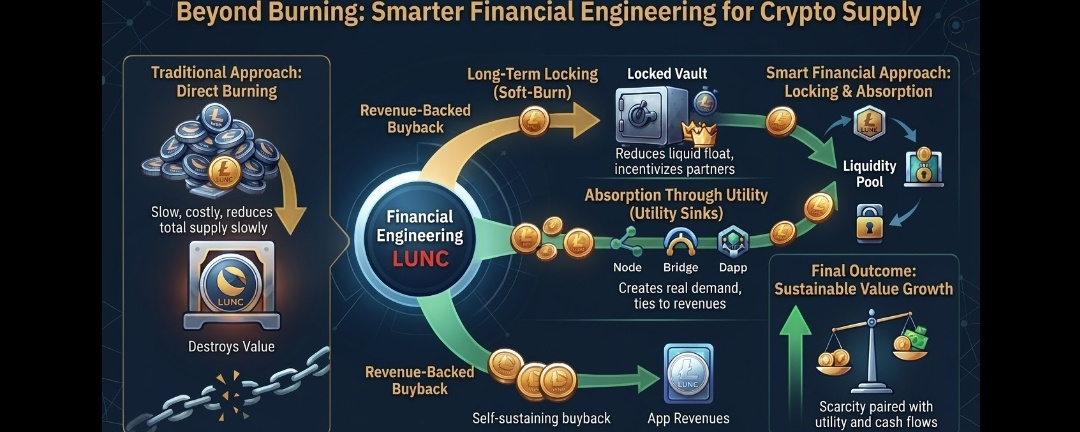
For high-supply crypto assets, token burning is often the first reflex to reduce supply. Yet financial analysis shows it is a slow, blunt tool that destroys existing units without building lasting economic value.
A sharper approach shifts supply from liquid sellable float to locked, productive capital tied to utility and real revenue.
Core Pillars
Long-Term Locking (Soft-Burn / Time-Locks): Rewarding holders with fee shares or governance weight for locking tokens over time, shrinking liquid float so demand moves price more effectively.
Utility Sinks: Requiring tokens to run nodes, unlock fee discounts, or back cross-chain bridges and protocols.
Revenue-Backed Buybacks: Funding market buybacks from genuine application revenue rather than draining treasuries or imposing liquidity-killing taxes.
Recurring Demand: Supply cuts fall short without real usage; sustainable price action requires steady economic demand.
Advanced Mechanisms
Dynamic Fee-Burning: Scaling burn rates with activity—near zero during quiet markets to protect liquidity, and higher during peak volume.
Early-Exit Penalty: Deducting a fee (such as 10%–25%) for early unlocks, burning half and rewarding committed lockers with the rest.
Protocol-Owned Liquidity (POL): Offering time-locked tokens at a modest discount for stable assets to build self-sustaining liquidity and market depth.
Bottom line: Markets reward scarcity backed by utility and real cash flows, not burn counts alone.