$QNT: The Creator's Dilemma: Engagement Bait vs Genuine Educational Value
$QNT: QNT shows an hourly direction up while volume sits above baseline, a pattern that often invites quick commentary. Does the presence of a Write‑to‑Earn program change how such observations are presented, or does it merely add a layer of personal incentive?
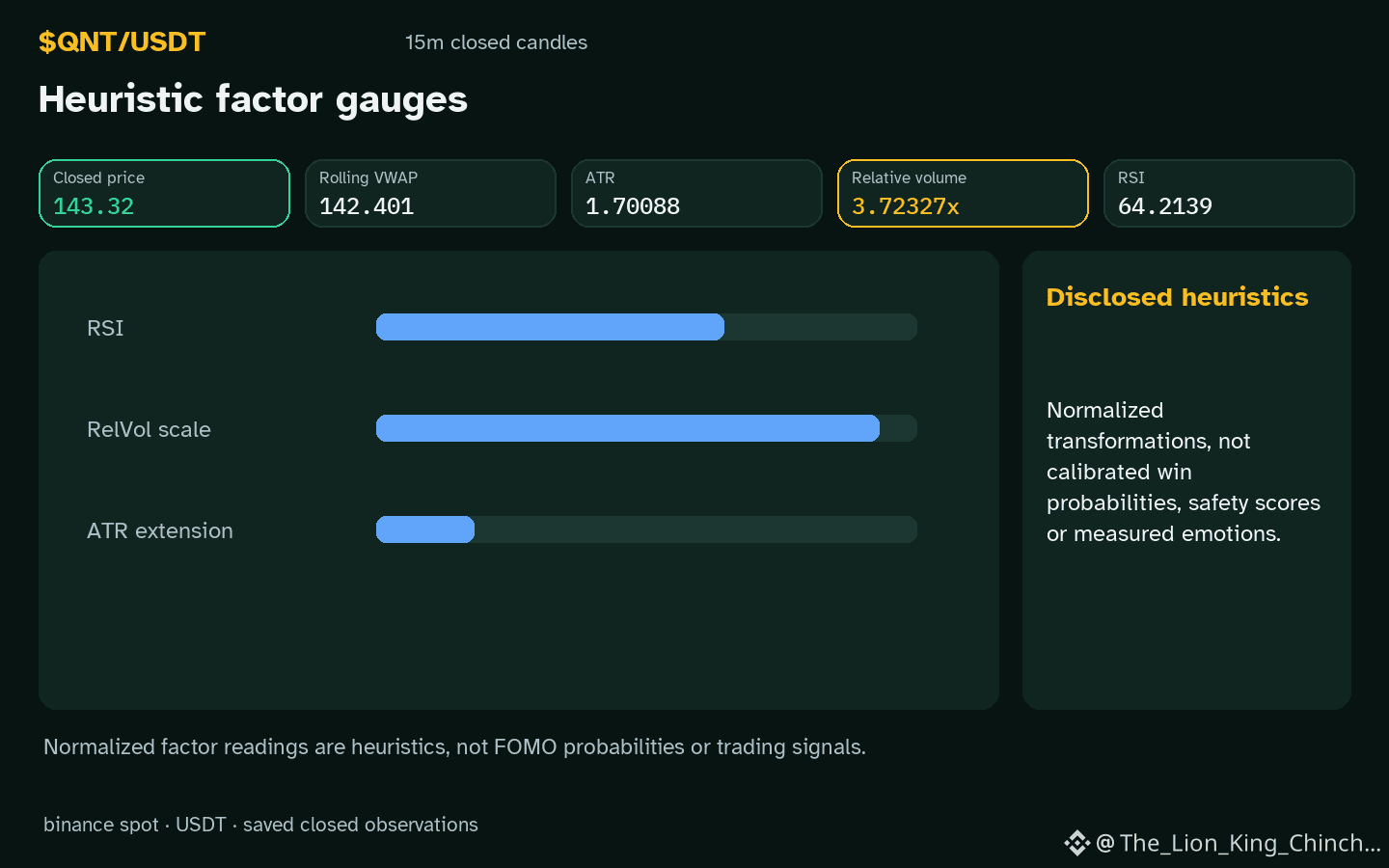
The dilemma centers on separating factual signals from the desire to earn platform rewards. The recorded observation notes that price remains inside its recorded range, with relative volume 3.72x baseline and RSI 64.2 indicating modest momentum. One could argue that this data alone supports a neutral outlook, yet the prospect of earning tokens for publishing content may push authors toward louder claims.
A useful mechanism to test this bias is a self‑check rule: before posting, write a short summary that excludes any mention of potential earnings, then compare it to the final version. If the two differ substantially, the incentive may have colored the analysis. Conversely, if the content remains unchanged, the platform reward likely has limited impact on the factual narrative.
Future closed‑candle evidence that shows a significant price move contrary to the current range, or a sharp shift in RSI, would weaken the present interpretation and signal that the earlier neutral stance was incomplete. Readers should always ask which parts of a post are driven by observable market data and which might stem from platform‑driven motivation. 🤔
Probabilistic market research, not a recommendation or guaranteed return.
#QNT