$ASTER: When Activity Masks Effort
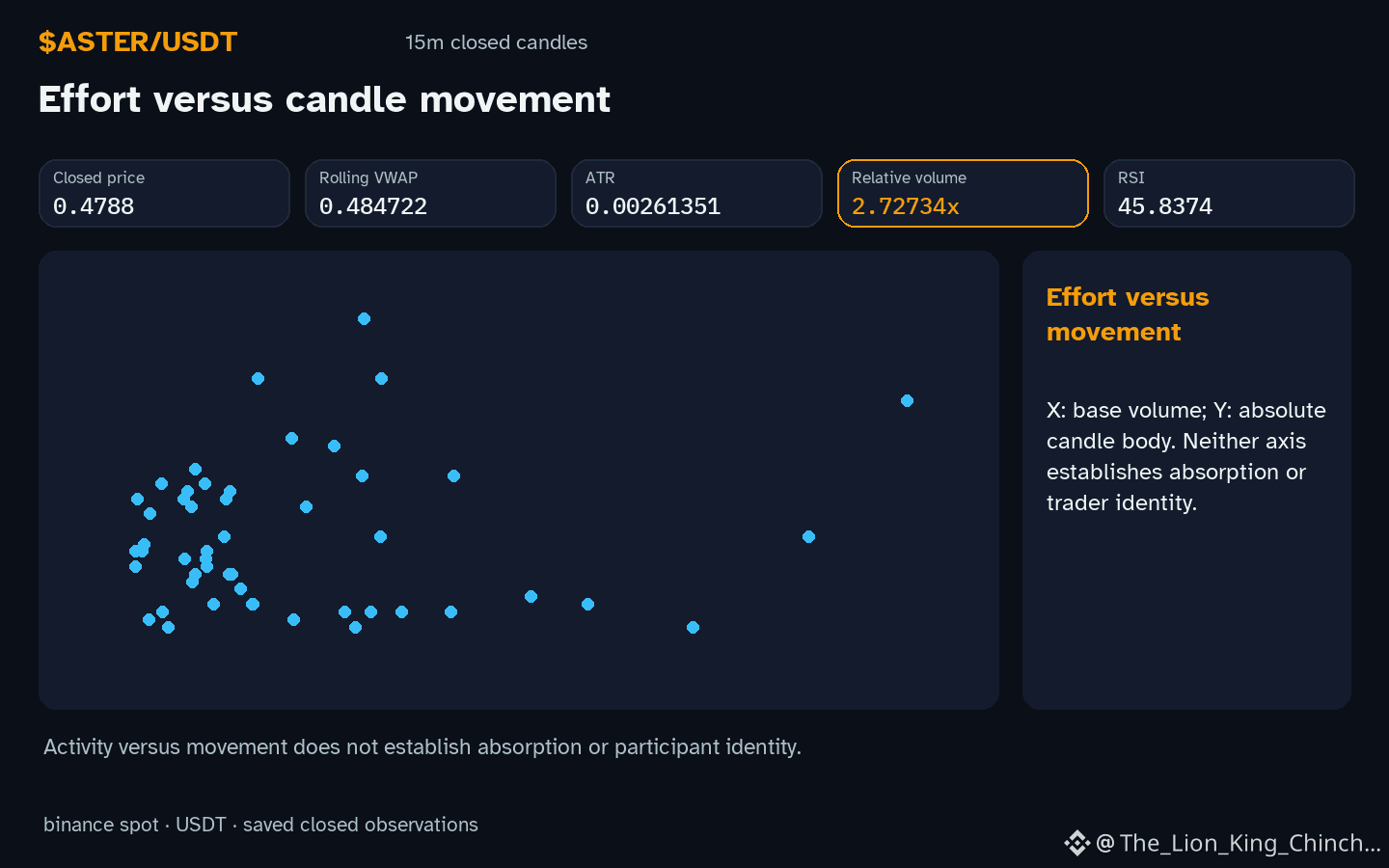
$ASTER: Why do traders often equate a surge in 2.73x baseline with personal skill? $ASTER shows an hourly up direction while volume sits above baseline, a pattern that can spark the bias of over‑trading as a false badge of effort.
### The question
The core tension is whether we judge the process of trading or the outcome of a single move. Observing an up tick and high relative volume can create an anchoring effect, pulling attention toward the most recent activity and making it feel more meaningful than it may be.
### Evidence and an alternative
The recorded data notes an hourly up direction and volume above baseline, but it does not prove that each extra trade adds value. A counterexample is a flat daily range where many small entries produce little net change; the same relative volume could appear, yet the overall result remains unchanged. This illustrates loss‑aversion: traders may fear missing a perceived edge and add trades, even when the underlying price range offers little upside.
### A practical self‑check
Before adding a new entry, pause and ask: "Am I acting because I see volume, or because I want to feel productive?" Then compare the intended risk per trade to the overall portfolio exposure. If the added risk exceeds a small fraction of the portfolio, the badge of effort may be illusory. Future closed‑candle evidence showing a neutral or negative net change despite continued high relative volume would weaken the interpretation that activity equals advantage.
Probabilistic market research, not a recommendation or guaranteed return.
#ASTER #TradingPsychology #CryptoLearning