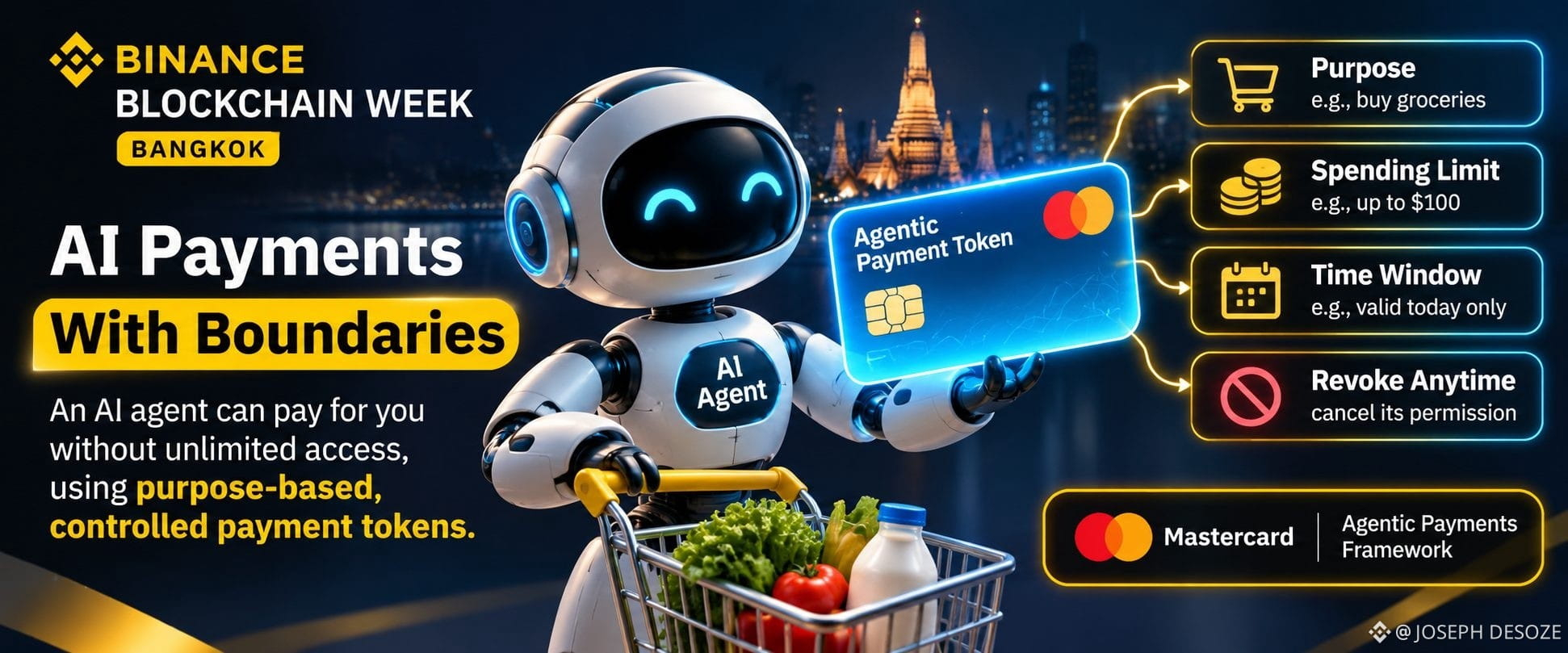

One thing I find interesting about AI payments is that we may not need to give AI agents unlimited access to our money to make them useful.
Mastercard is working on a different approach. Its agentic payment tokens can come with specific rules about what an AI agent is allowed to do. For example, an agent could be authorised to make a particular purchase, stay within a spending limit or operate only during a certain time window. Permissions can also be withdrawn. Mastercard US +1
I think this is an important distinction.
When people talk about AI handling financial transactions, it's easy to focus on how quickly an agent can make a payment. But speed isn't the only issue. What happens if the agent misunderstands an instruction or tries to do something outside its assigned task?
That's where these restrictions become useful. Instead of trusting an agent with unrestricted payment access, the system can define its boundaries before it acts.
Of course, having these features in a payment framework doesn't mean every platform already supports them. Real-world implementation and compatibility still matter.
This is one reason the AI and agentic payments discussions at Binance Blockchain Week caught my attention.
The bigger question now is whether these permission systems will work smoothly across different payment providers, rather than remaining isolated features.
#BinanceBlockchainWeek2026 #Binance
VERIFY BEFORE POSTING:
* Mastercard's current documentation on spending limits, purpose restrictions and token revocation.
* November 28–29 event dates and the relevant session details.
* Do not imply universal adoption of Mastercard's framework.