South Korea just ended its 9-year ICO ban — but handed the keys to the banks.
The Financial Services Commission unveiled its draft Digital Asset Act on Tuesday, and it is the biggest rewrite of Korean crypto rules since the 2017 ICO ban. Domestic ICOs return, but only with a whitepaper filed to the FSC first. Won-pegged stablecoins are coming too — yet only bank-led consortia may issue them at first: banks must collectively hold 50% plus one share, with at least 5 billion won (~$3.7M) in capital, 100% reserves held at banks, redemption at par on demand, and no interest paid to holders. Offshore stablecoins like $USDT could circulate domestically if they meet FSC standards.
Exchanges face a shake-up as well: major shareholders capped at 20%, extendable to 34% only with FSC approval, with a three-year grace period for Upbit and Bithumb. The industry was caught off guard by how strict the package is — and it is still only a draft, heading to the National Assembly where lawmakers can rewrite it.
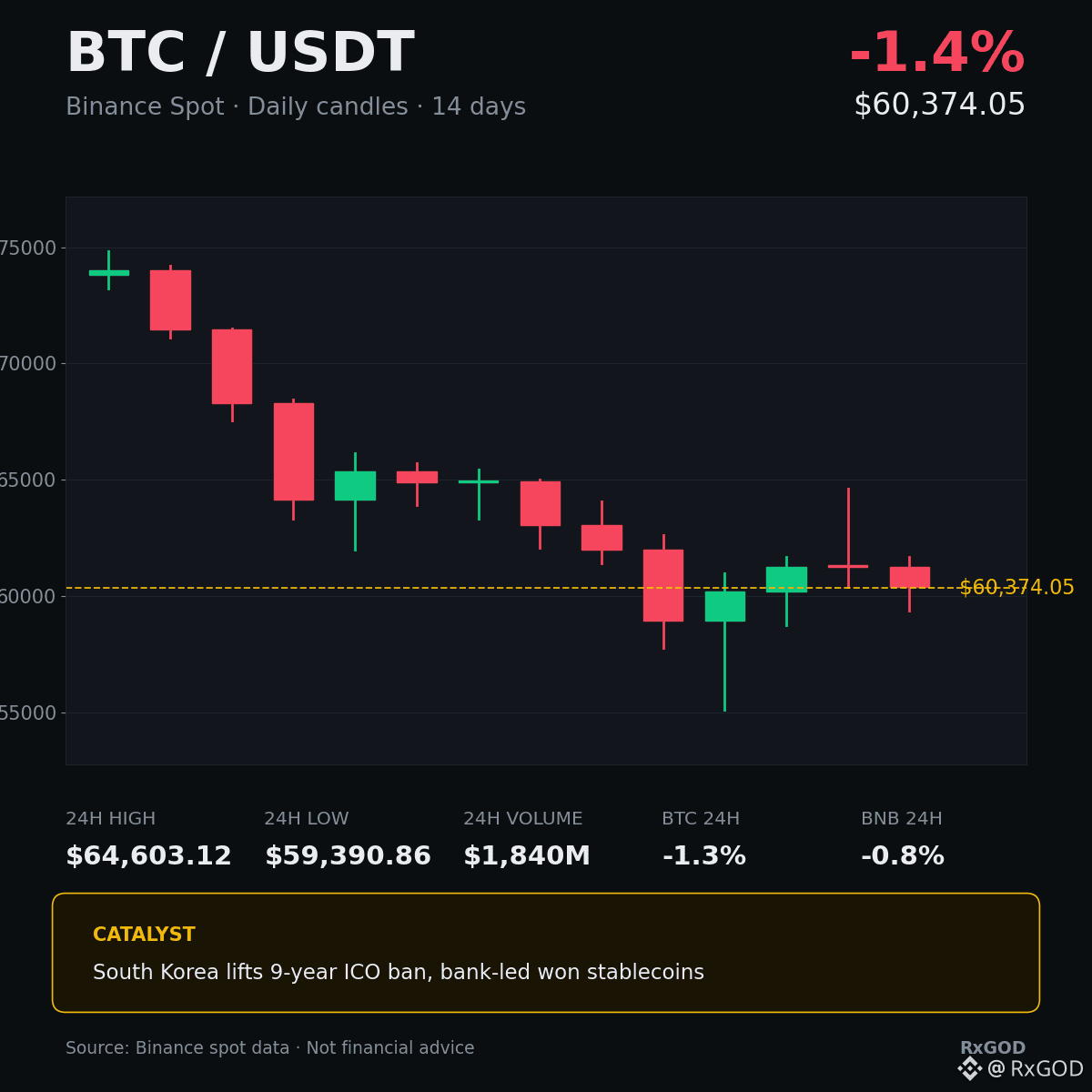
Meanwhile $BTC clings to $60,374 (-1.4% in 24h, -18.5% over 14 days, sitting at just 26% of its 14-day range) with the Fear & Greed Index at 9 — Extreme Fear.
So, is a bank-run stablecoin still crypto, or just a bank in disguise? And would you trust a won stablecoin from a bank consortium more than USDT?
Not financial advice — DYOR.
#SouthKoreaBeginsCryptoProviderShareholderReviews #CryptoNews #ExtremeFear #BitcoinsReboundFadesBelow$60K