

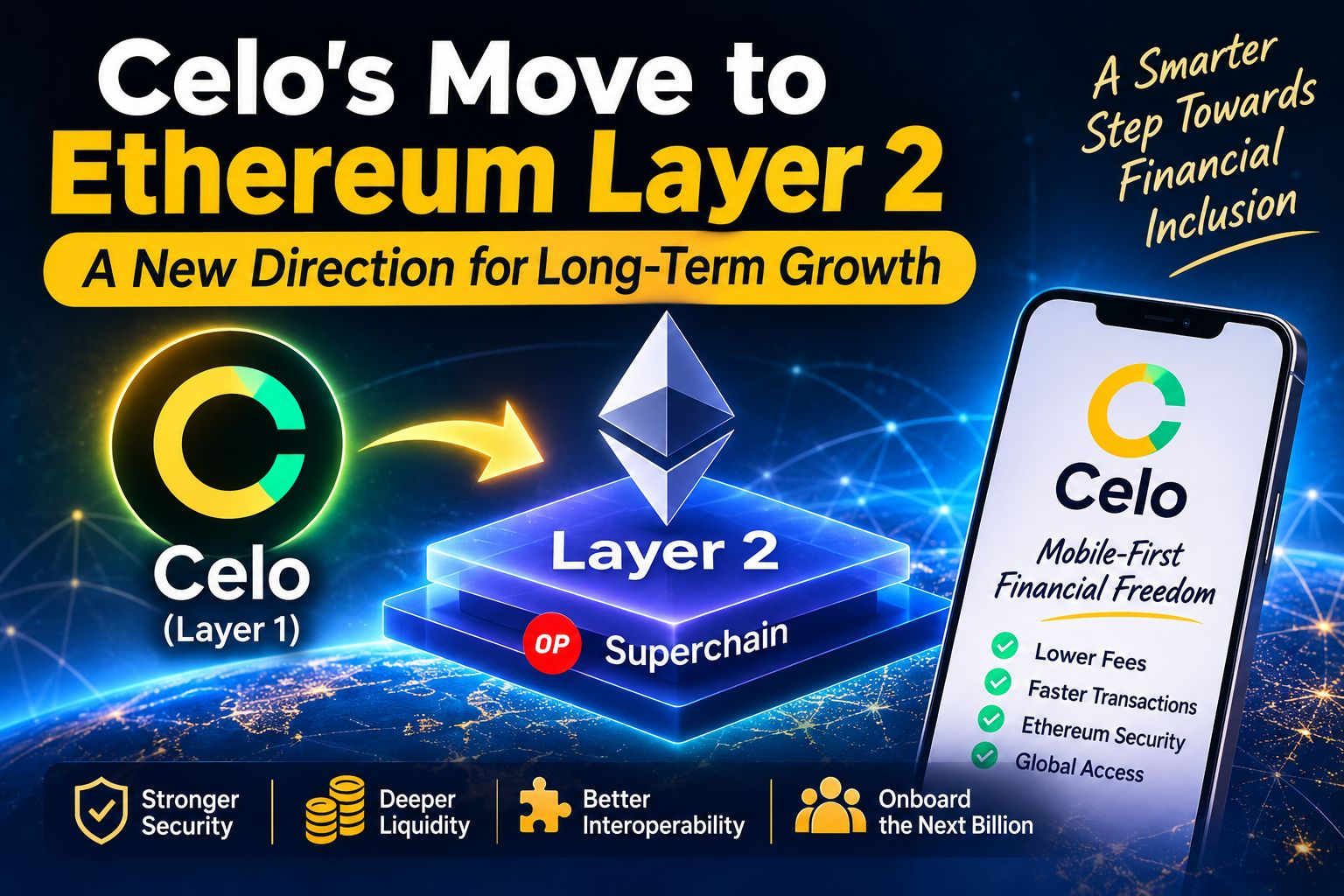
Sometimes, the biggest progress in blockchain technology comes from changing the foundation rather than building more features on top of it. Celo’s transition from an independent Layer 1 blockchain to an Ethereum Layer 2 is a good example of this kind of thinking.
What makes this move interesting is that Celo has not abandoned the purpose it was originally built for. Its focus remains on making financial services more accessible, especially through mobile devices and affordable digital payments. Instead, the project has chosen a different technical path to support that mission more effectively.
By adopting the OP Stack and joining Ethereum’s Superchain ecosystem, Celo gains access to a much broader infrastructure. This creates opportunities for better interoperability, stronger connections with Ethereum-based applications, and easier access for developers who already understand the EVM environment.
There is also an important economic aspect to this transition. Lower transaction costs can make everyday blockchain activities more practical. For users in regions where traditional financial services are expensive or difficult to access, affordable payments and stablecoin transactions could have meaningful value.
However, technology alone does not guarantee adoption. Celo still needs applications that solve real problems, reliable infrastructure, and an active community willing to build around its ecosystem.
The most interesting part of this evolution is the balance between maintaining an original identity and becoming part of something much larger.
Perhaps Celo’s biggest opportunity is not simply becoming another Ethereum Layer 2, but showing how shared infrastructure can support a more accessible financial system. The real test will be how effectively this new architecture translates into everyday use
