$MUBARAK: Is Fatigue Distorting Your Entry?
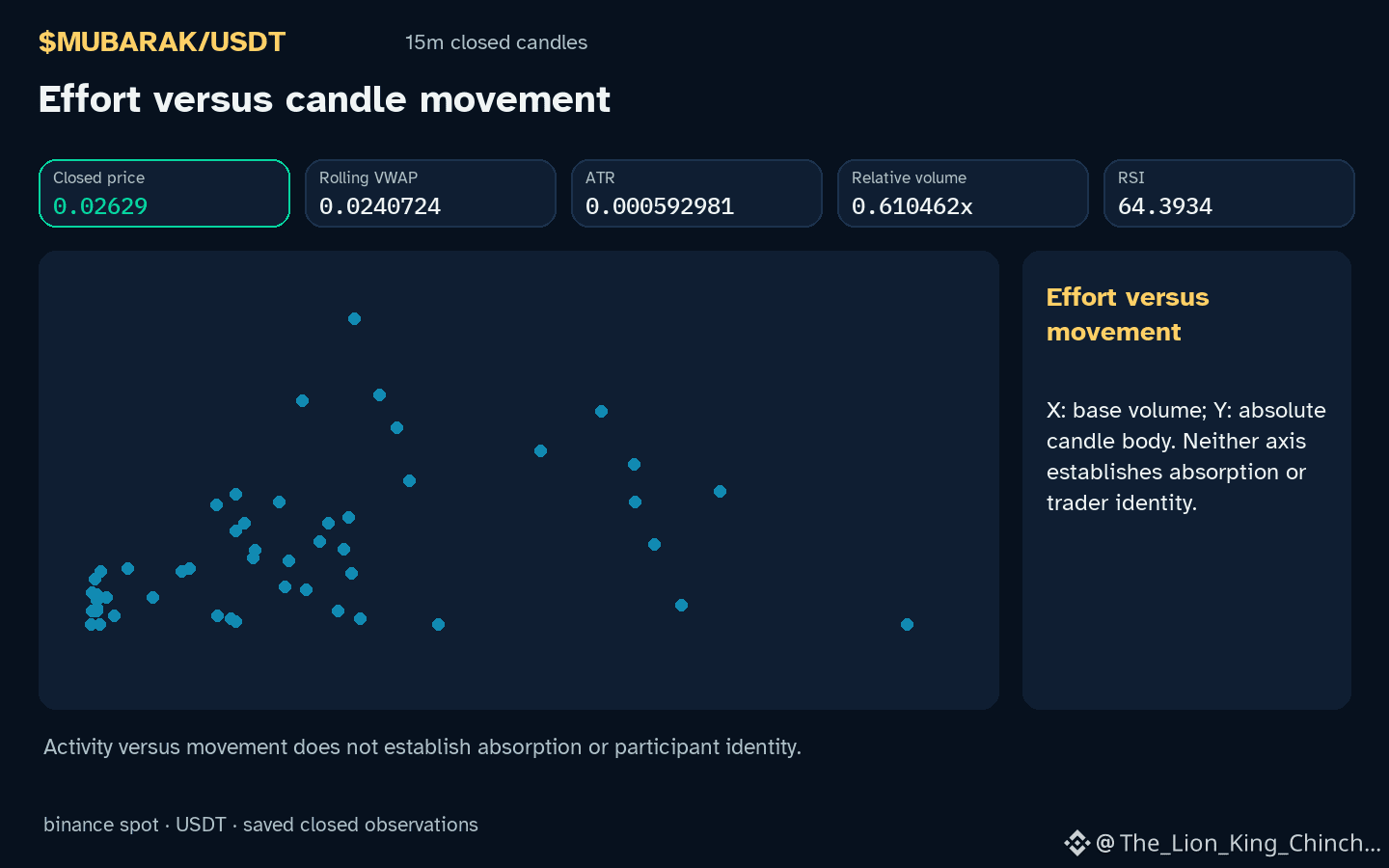
Is $MUBARAK moving up due to fresh demand or your own mental drift? The record shows an hourly up move inside the recorded range, with volume not above baseline. This tension invites a hypothetical look at interoceptive awareness, or how body sensations influence judgment. Imagine a trader who feels tension in the jaw while staring at a chart. That physical cue might trigger an urge to chase the latest candle. If you act on that urge, you sacrifice entry quality. You are no longer measuring the market; you are measuring your fatigue. The practical trade-off here is entry quality versus chasing. Chasing feels like action, but it often occurs when cognitive clarity is lowest. The evidence supports a distinction. The observed price action is a closed data point. It does not prove momentum is accelerating. Relative volume at 0.61x baseline suggests participation is normal, not exceptional. RSI at 64.4 provides context but does not predict reversal. A conditional explanation suggests that if mental exhaustion is present, the brain seeks quick resolution. This can make a neutral move feel compelling. However, the counterexample is clear: a calm observer sees the same candles and sees no urgency. The limits of this evidence are strict. Candles cannot diagnose mental states. They only show price and volume. We cannot infer order flow or hidden motives from this data. The mechanism is hypothetical: fatigue lowers the threshold for acting. To reassess, wait for the next closed candle. If price holds above 0.02377 with rising volume, the move strengthens. If it fades, your earlier urge was likely internal noise, not market signal. Check your physical state before interpreting charts. This simple pause distinguishes market reality from internal drift. It prevents confusing personal stress with external trends.
Probabilistic market research, not a recommendation or guaranteed return.
#MUBARAK #RiskManagement #CryptoLearning