$TAO: When Volume Speaks, Should You Pause?
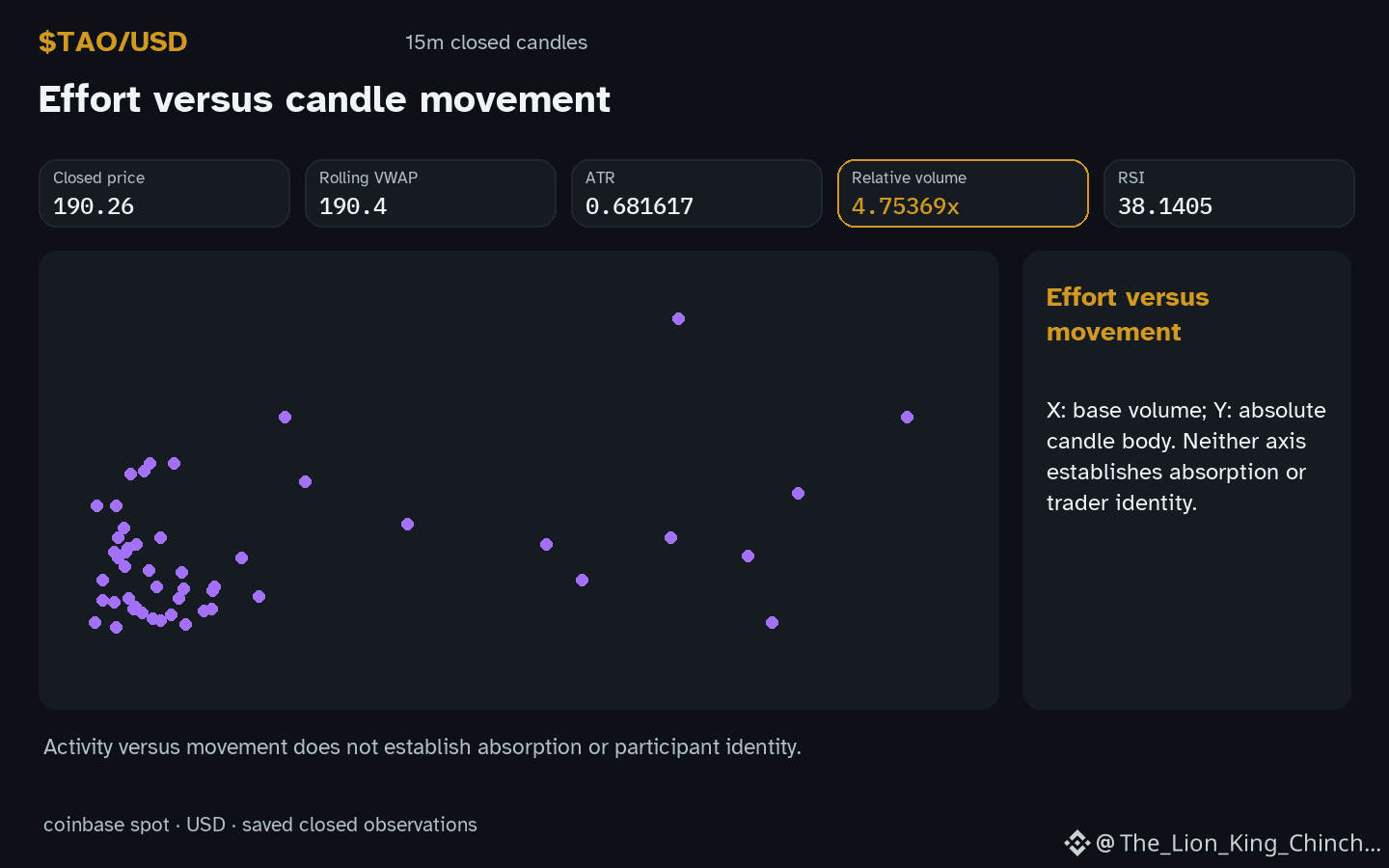
$TAO: TAO is trading below its recent support while the hourly direction stays down and volume runs above baseline. Does this combination justify a quick entry or a careful pause?
A common assumption is that higher‑than‑average volume confirms the price move, encouraging traders to chase the trend. In a thought experiment, imagine two bots: one relies on a deep‑learning model that ingests the full candle‑volume history, while the other uses a shallow feed that only checks the latest hourly change and relative volume 4.75. The deep model might flag the down move as potentially exhausted because the price sits under support 190.66 and the RSI 38.1 is neutral, suggesting hidden buying pressure. The shallow bot, however, could interpret the same data as a clear signal to enter, trusting the volume spike alone.
The practical trade‑off here is entry quality versus chasing. A high‑quality entry waits for an invalidation signal – perhaps a bounce above support or a reversal in RSI – before committing. Chasing based on the volume spike may capture a short‑term dip but risks a deeper slide if the support fails.
A counterexample would be a candle that closes above support despite the same volume pattern, weakening the deep‑model hypothesis. To reassess, watch the next closed‑hourly candle: if price rises back into the support‑resistance range and RSI moves higher, the shallow interpretation loses strength, and a delayed entry becomes more justified.
Probabilistic market research, not a recommendation or guaranteed return.
#TAO