

#southkoreaplanstolet3500listedfirmsbuybitcoin
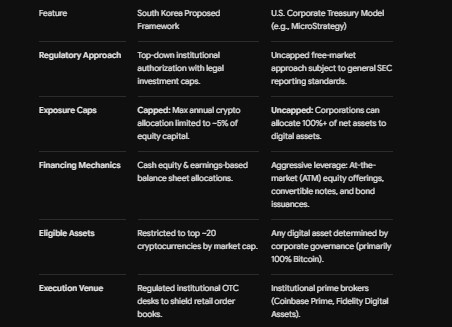
South Korea’s emerging guidelines under the draft Digital Asset Basic Act set up a highly regulated, corporate-governed pathway to Bitcoin exposure. This contrasts sharply with the unrestrained, capital-markets-driven "Bitcoin Treasury Company" model pioneered by U.S. firms like Strategy (formerly MicroStrategy).
The primary differences lie across regulatory philosophy, risk constraints, capital structure, and asset scope.
Key Comparison
Core Structural Distinctions
1. Hedged Diversification vs. Pure-Play Leveraged Strategy
South Korea (Conservative Allocation): The Financial Services Commission (FSC) framework is designed to let standard operating companies (e.g., KOSPI tech or industrial firms) diversify a small fraction of their surplus cash into crypto assets. The 5% equity capital cap ensures that crypto remains a secondary treasury asset rather than defining the company's core valuation.
U.S. / MicroStrategy (Financial Engineering): Strategy acts essentially as a Bitcoin holding vehicle with a software business attached. It regularly issues convertible debt, preferred stock, and new shares specifically to buy more Bitcoin (issuing billions in securities to maximize "BTC Yield").
2. Regulatory Risk Management
South Korea: By restricting corporate access to the Top 20 digital assets and implementing formal over-the-counter (OTC) trade desk rules, South Korean regulators aim to prevent market manipulation, retail volatility spillover, and speculative corporate collapses.
United States: While U.S. financial accounting standard updates (FASB fair-value rules) have made holding Bitcoin easier for American balance sheets, there are no statutory limits on how much crypto a U.S. board of directors can buy.
3. Impact on Local Market Liquidity
Historically, South Korea’s crypto market has been dominated by retail traders, giving rise to the structural "Kimchi Premium" (where local prices exceed global market rates during peak demand). Permitting ~3,500 listed firms to buy through regulated OTC channels introduces deep institutional liquidity, which is expected to normalize pricing gaps against global markets over time.