
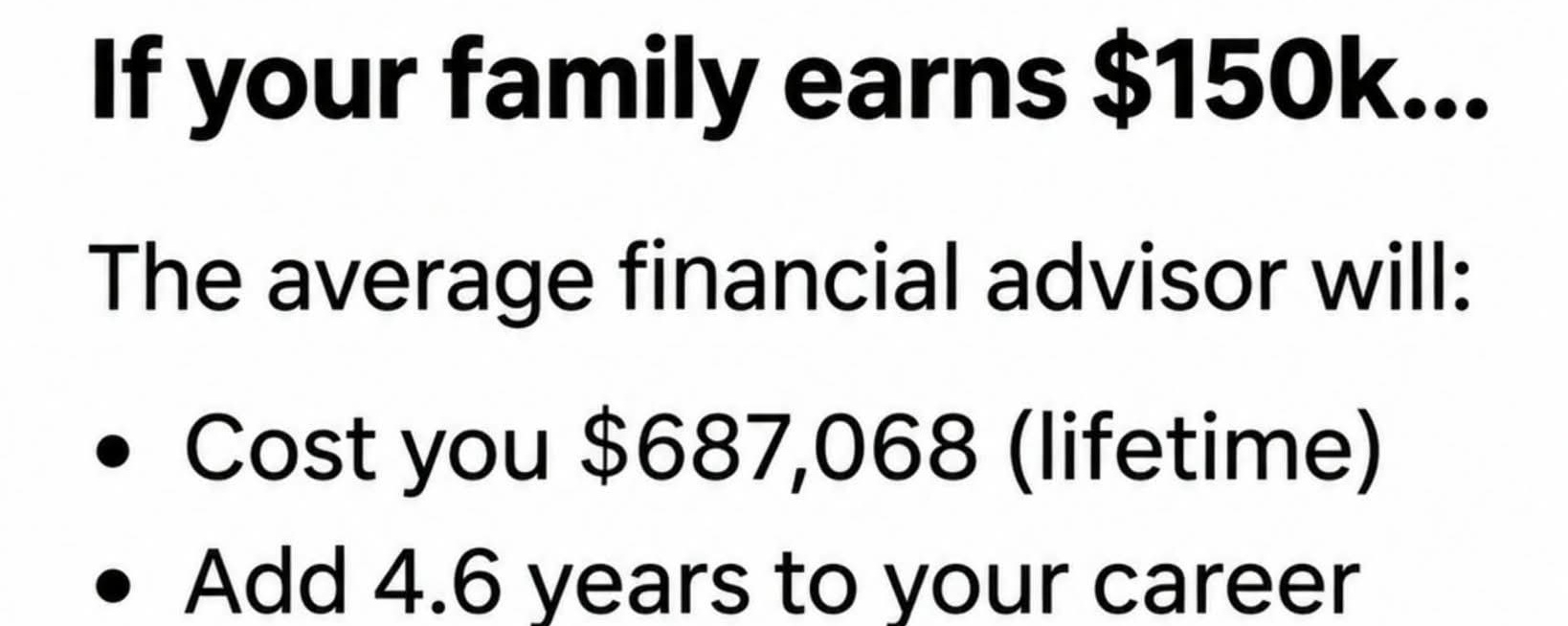

I think this is a question worth asking, especially for households earning $150,000 or more.
A higher income doesn't automatically mean better financial decisions.
And paying someone to manage your money doesn't automatically mean you're getting more value.
Here's what many families should understand before hiring an advisor:
1. Know exactly what you're paying.
An advisory fee of 1% may not sound significant.
But on a $500,000 portfolio, that's $5,000 every year.
Over 20 years, even before considering investment growth, that's $100,000 in fees if the balance and fee remain unchanged.
The actual lifetime cost can be considerably different as the portfolio grows or shrinks.
2. Understand what you're receiving in return.
Are you getting tax-efficient investment planning?
Retirement projections?
Estate planning coordination?
Help managing risk during market downturns?
Or are you mainly paying someone to select a collection of ETFs?
Those services are not equally valuable, and the difference matters.
3. Know what you can manage yourself.
For someone with a straightforward financial situation, managing a diversified portfolio, monitoring expenses, and maintaining a retirement contribution strategy may be manageable.
But complicated taxes, business ownership, estate issues, and major financial decisions can justify professional advice.
4. Don't confuse saving on fees with making better decisions.
An advisor's value isn't measured only by whether they beat the market.
Sometimes the biggest benefit is preventing costly emotional decisions, keeping a financial plan on track, or identifying tax mistakes.
The important thing is to know whether those benefits justify what you're paying.
My view is simple: people should understand their own financial system even when they hire someone else to manage part of it.
You don't need to become a professional portfolio manager.
But you should know where your money is invested, what you're paying, and why each decision is being made.
One question worth considering:
If your family earns $150,000 a year, would you prefer to manage a simple investment portfolio yourself, or pay a professional for ongoing financial guidance?
The answer may depend more on your financial complexity than your income.