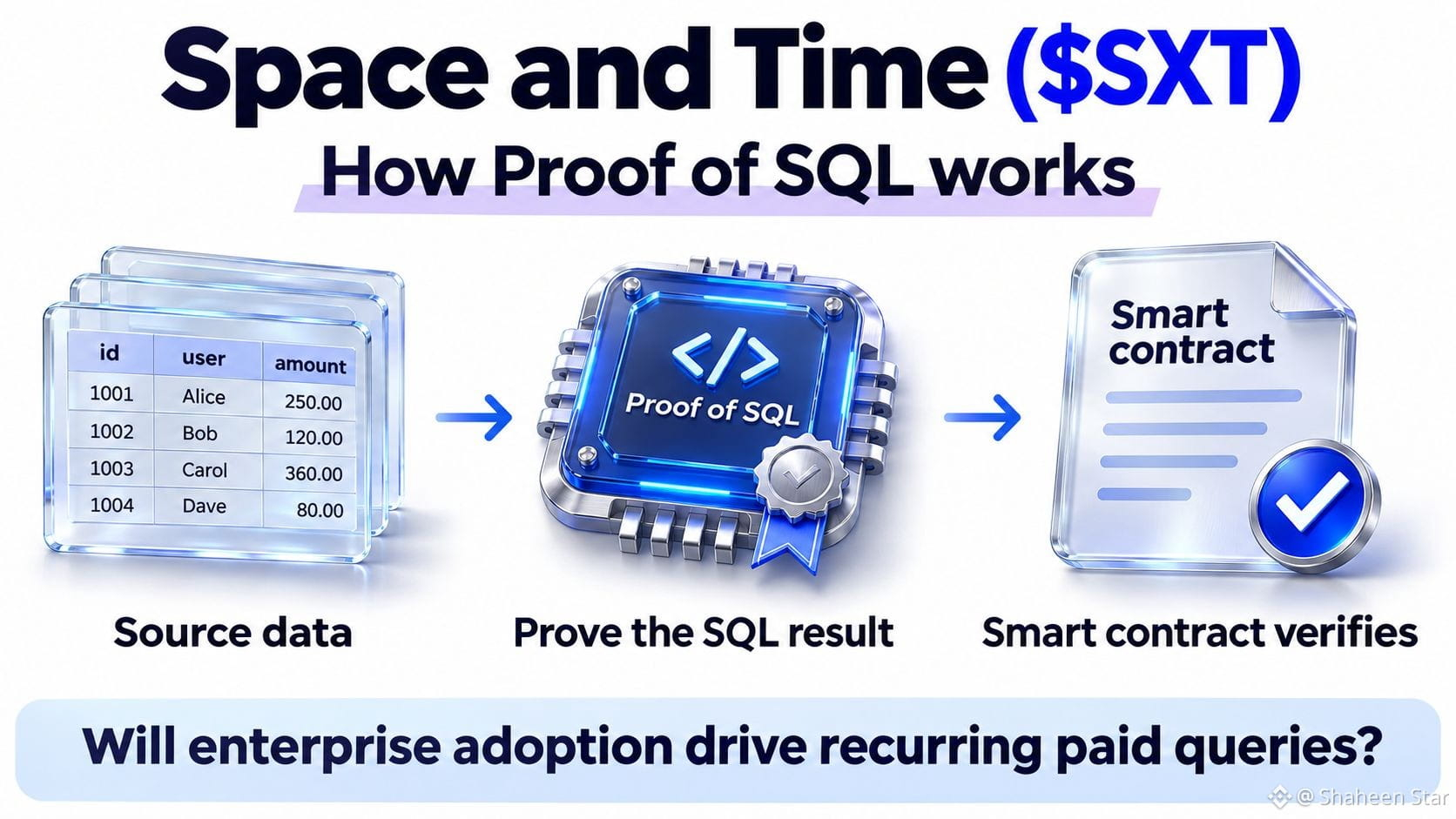
I’ve been watching how smart contracts get their data, and Space and Time ($SXT) caught my eye. A lending protocol could verify a collateral calculation without processing every underlying record onchain. That’s what Proof of SQL brings to the table: a contract can check that a query ran correctly against a specific dataset. The quality of the source data still matters.
Microsoft’s venture fund M12 backed the project, and November’s enterprise launch raised a question for me. Businesses can run the technology privately. SXT is used for staking and query fees on the public network, so how much of that enterprise interest will translate into recurring paid queries on SXT Chain?
Liquidity can rotate into ZK tokens on a headline and leave before integrations reach production. Space and Time also has to compete with established indexers and oracle providers. Proving costs, response times, and integration effort will shape whether developers use it routinely.
Would you put more weight on the number of live apps or on how often those apps pay for queries?
#sxt $SXT @SpaceandTime