$HBAR: Short Squeeze Myths and Liquidation Mechanics
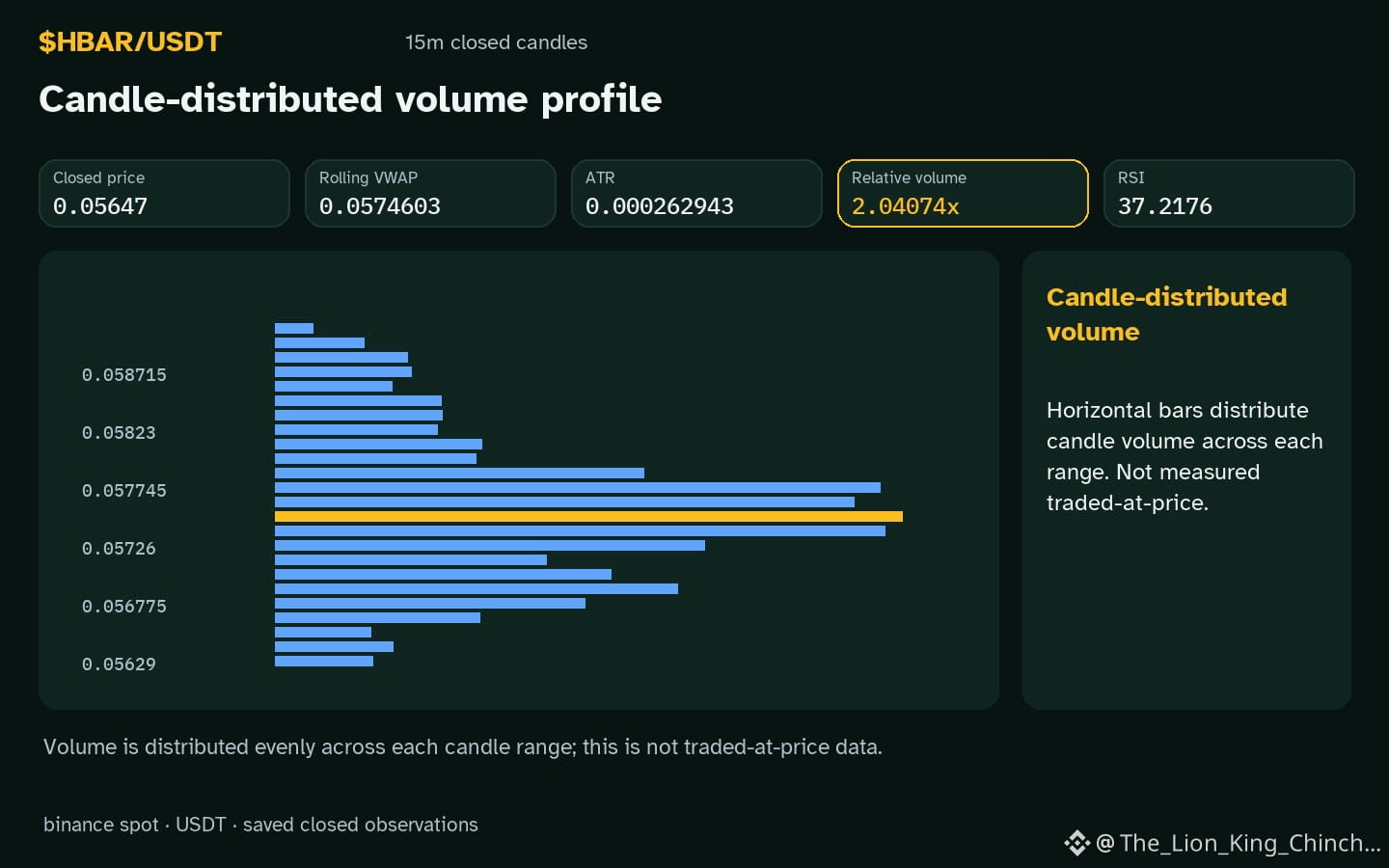
The ticker $HBAR shows an hourly down direction while volume sits above baseline, prompting a question about short squeezes and long liquidations.\n\n**Myth**\nMany traders assume that a spike in volume automatically forces a short squeeze, creating a rapid price rise. This belief overlooks the need for actual buying pressure to overcome existing short positions.\n\n**Explanation**\nA short squeeze occurs when short sellers must cover their positions, buying back the asset. For this to happen, buyers need to step in with enough demand to push price higher. Volume above baseline, expressed as a 2.04x baseline ratio, indicates heightened activity but does not reveal who is buying. If the activity consists mainly of sellers adding to short exposure, the price may continue downward despite the volume signal.\n\n**Counterexample**\nConsider a scenario where the same 2.04x baseline volume appears while the hourly change -0.842845% is negative and the RSI 37.2 is low. In such a case, the market may be experiencing panic selling rather than a coordinated buying surge, weakening the short squeeze narrative.\n\n**Self‑check**\nTo test the hypothesis, observe the next closed candle. If the price reverses upward and the RSI climbs, the earlier volume may have been a precursor to a squeeze. Conversely, if price keeps falling and RSI remains low, the volume likely reflected continued selling pressure.\n\n**Reassessment Condition**\nFuture evidence that would challenge the squeeze interpretation includes a continued negative hourly change combined with a flat or declining RSI, suggesting that volume alone is insufficient to trigger a short squeeze. This highlights the importance of pairing volume ratios with price and momentum clues before drawing conclusions.
Probabilistic market research, not a recommendation or guaranteed return.
The headline or the underlying mechanism?
#HBAR #CryptoLearning