I’ve watched crypto recycle the same promises through several cycles: faster finance, smarter contracts, AI everywhere. The language changes, but one old problem remains — applications are only as dependable as the data behind them.
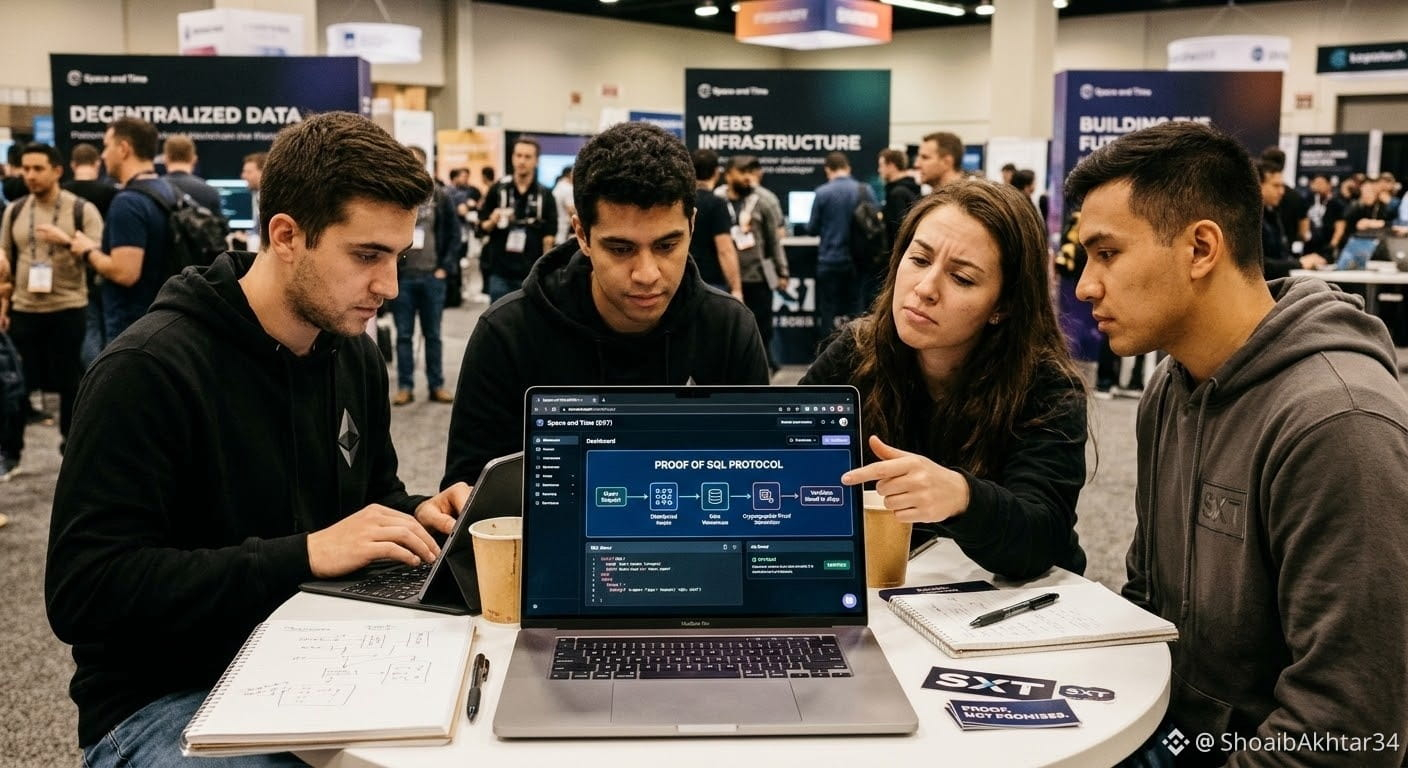
That’s why Space and Time SXT has my attention. Its proposition is practical: applications can query large datasets, while cryptographic proofs help verify that SQL calculations were executed correctly. In DeFi, historical transaction data could support lending or reward decisions without asking users to blindly trust a database operator. For tokenized assets and AI agents, verifiable calculations may matter as much as the interface.
But I don’t confuse a correct calculation with true information. A proof can show that a query ran as claimed; it cannot guarantee every source record was accurate or complete. Data quality, integrations, decentralization and genuine demand are still difficult problems.
SXT also has a defined role: it pays for network data and query workloads, while staking helps secure validator activity. That gives the token a potential connection to usage, though the model only matters if real workloads persist.
I’m not calling this a sure thing. I’m watching to see whether builders keep using Space and Time after the narrative moves on. In crypto, that is usually the test that matters.
#sxt $SXT @SpaceandTime