$ARB: Why Crowd Excitement Can Mislead When It Hits a Weak Spot
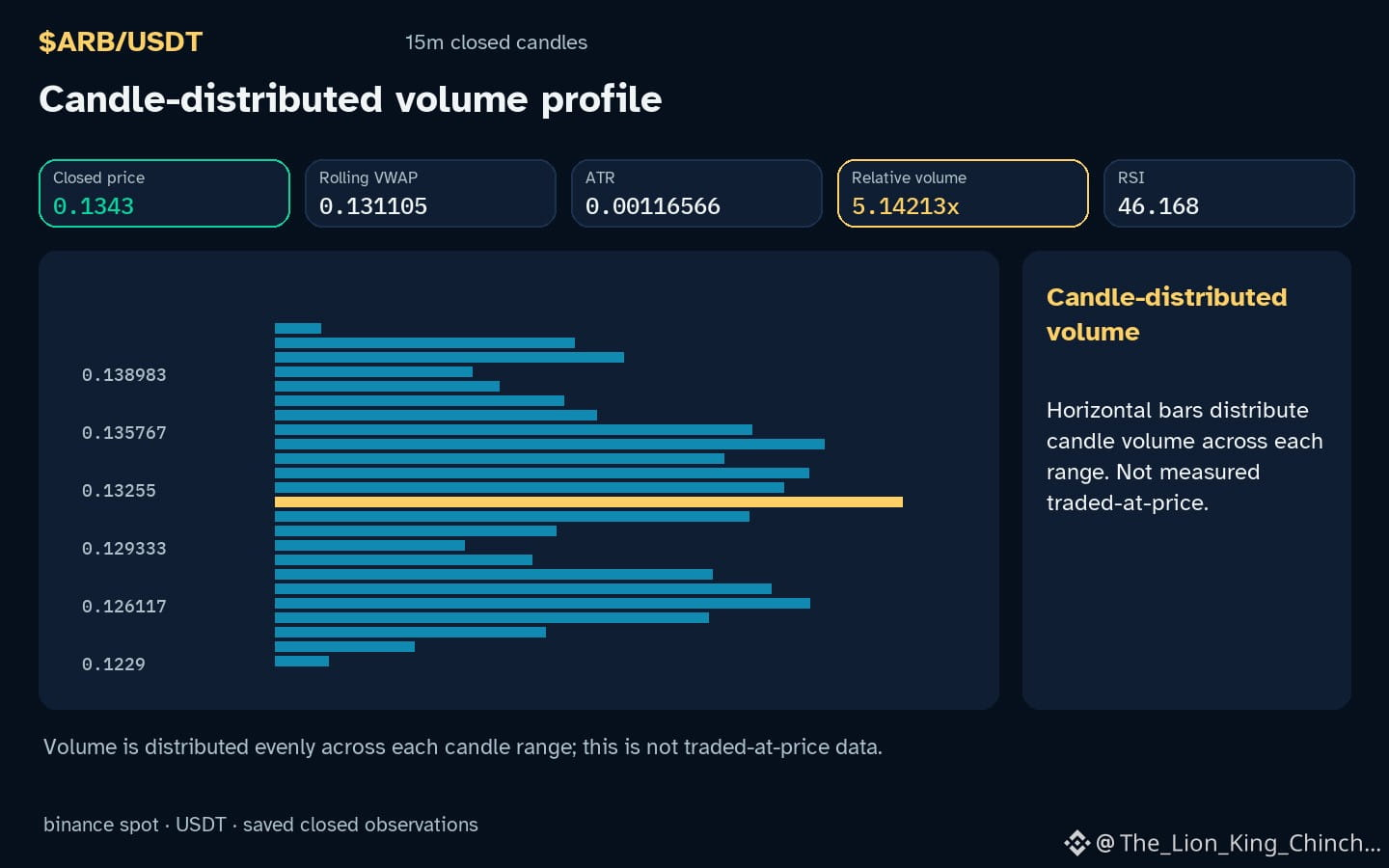
$ARB: ARB shows an hourly down direction while volume sits above baseline, prompting the question: does strong attention to a rally sometimes land at the least favorable price level? This tension illustrates the anchoring bias, where market participants fixate on recent volume spikes and overlook the underlying price context.
The observation of high relative volume 5.14x alongside a downward price move suggests that traders may be drawn to the surge as a signal of strength, even though the price is already testing a local resistance level. The bias can cause an over‑weighting of the volume cue and an under‑weighting of the price trend, leading to premature entry at a point where upside potential is limited.
A counterexample would be a scenario where volume rises while the price is climbing toward a clear breakout; in that case, anchoring on volume would align with a favorable direction.
To check whether anchoring is influencing your view, pause and ask: "If the volume spike disappeared, would I still consider this entry attractive?" If the answer changes, the bias may be at play. Future closed‑candle data showing a sustained price rise despite the current downtrend would weaken the anchoring explanation and suggest the volume signal was not misleading.
Probabilistic market research, not a recommendation or guaranteed return.
The comparison to keep in mind: $ETH has hourly direction down and volume above its baseline; $INIT has hourly direction up and volume not above its baseline. This alone does not establish correlation.
#ARB #ETH