$PENGU: How Reference Points Shape Market Narrative
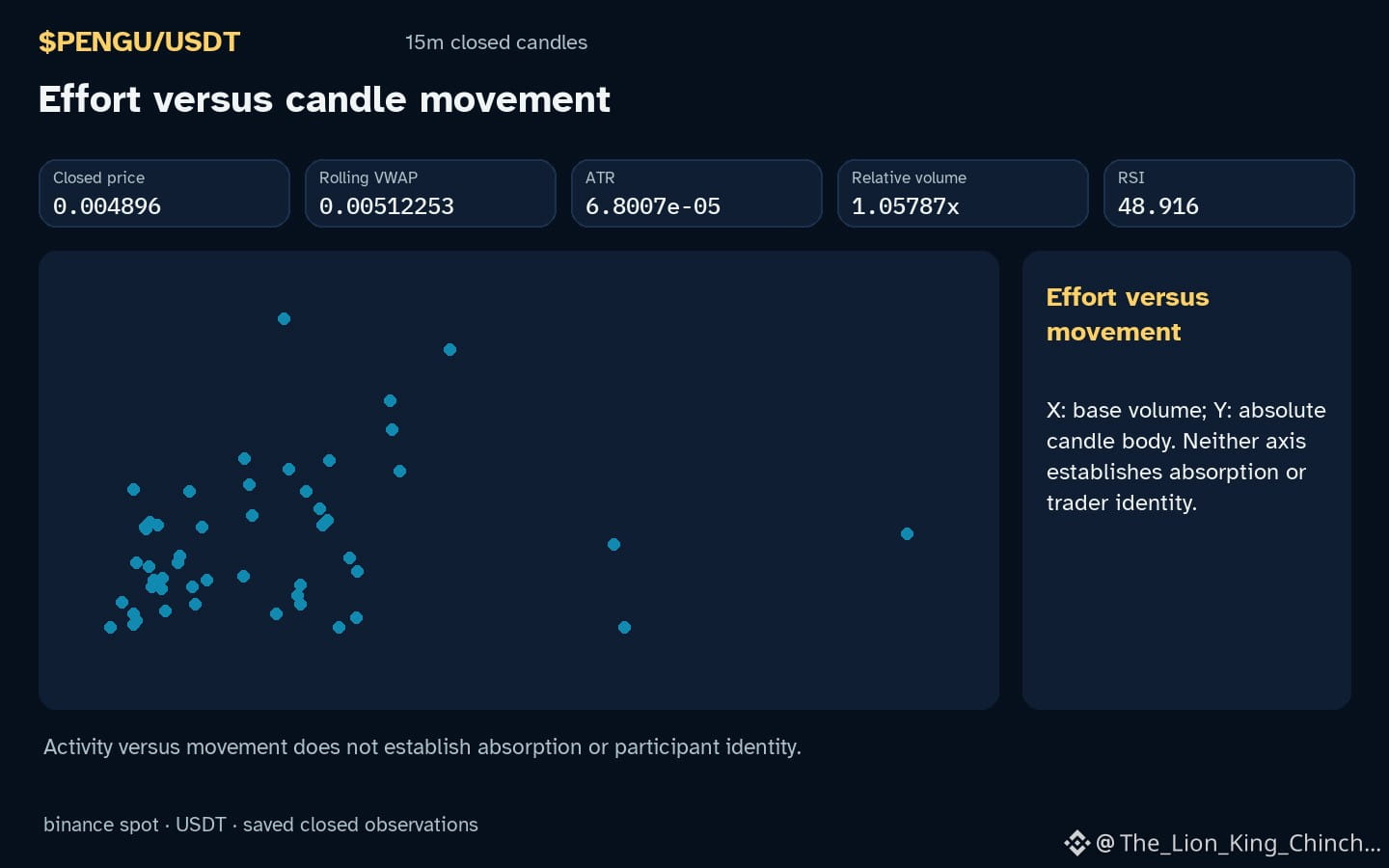
The recent hourly down move of $PENGU catches attention because volume sits 1.06x baseline, yet price remains inside the recorded range. Does the way analysts frame the current level create an anchoring bias that colors our interpretation?
The observation shows a downward direction with elevated volume while the candle stays within local support and resistance. One plausible explanation is that commentators may treat the most recent low as a new reference point, prompting traders to over‑react to a perceived breakout that has not yet materialised. This anchoring can inflate perceived risk and lead to premature exits, even though the range suggests a bounded move.
A counterexample would be a scenario where the price pierces the lower support on the next closed candle, confirming a genuine shift rather than a narrative bias. The evidence does not prove causality; it merely illustrates how a reference point can be manipulated in commentary.
To guard against this bias, apply a practical self‑check: note the current reference level, then pause and ask whether your reaction would change if the price were quoted a few pips higher. If the answer flips, the anchoring effect may be influencing you. Future hourly candles that close well below the local support would weaken the anchoring hypothesis and suggest a real trend reversal.
Remember, the data reflects only one interval. Assess each new candle on its own merits before allowing a single narrative to dominate your decision making.
Probabilistic market research, not a recommendation or guaranteed return.
#PENGU #TradingPsychology #CryptoLearning