


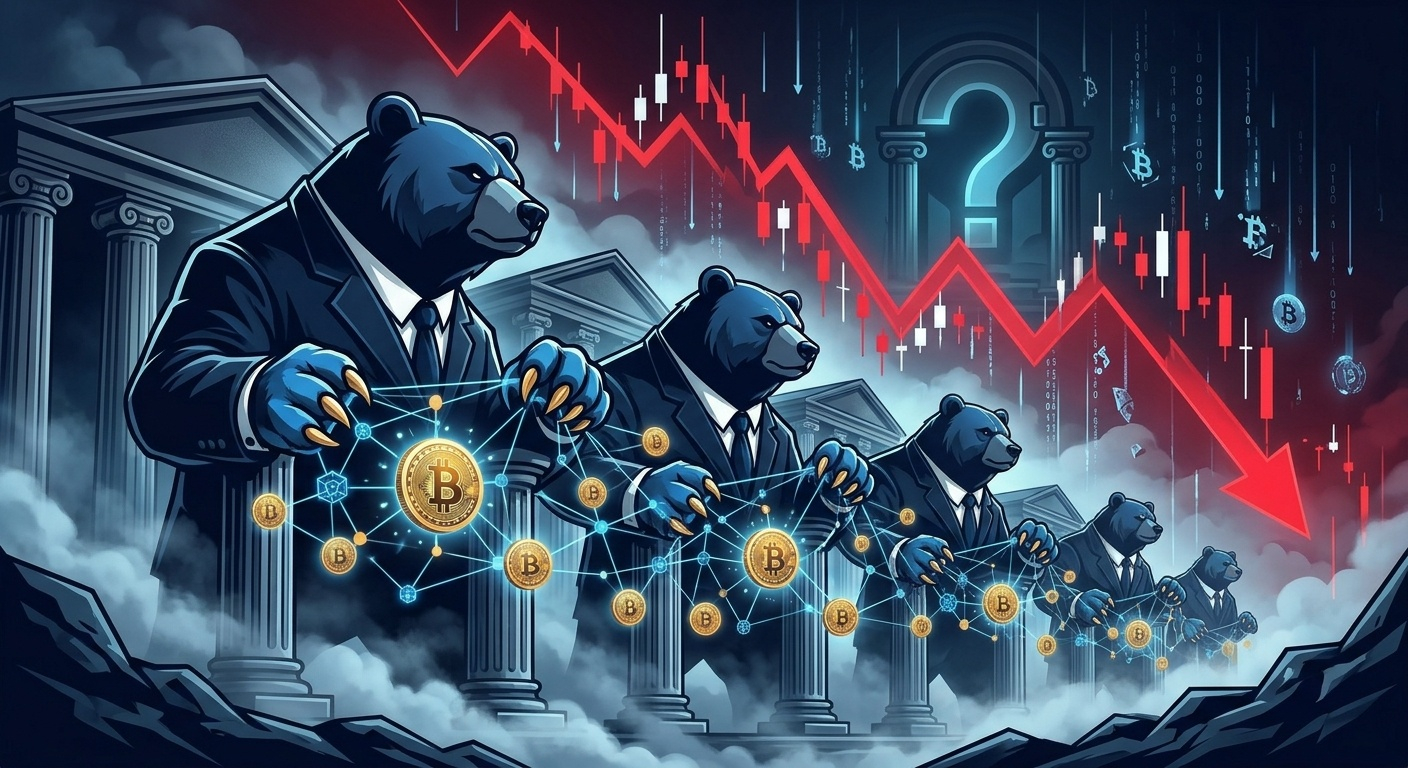


How Banks Crashed Crypto Prices
For a long time, the crypto industry awaited the arrival of major banks as its main growth driver. In 2026, it finally happened—but instead of skyrocketing prices, the market got a prolonged correction.
How Banks Can Drive Prices Down
• Liquidity capture and functional replacement. Previously, investors and businesses bought Bitcoin, Ethereum, or traditional stablecoins (USDT, USDC) as an alternative to slow bank transfers or as an inflation hedge. Now that banks are launching their own regulated stablecoins (such as the Project Faro consortium or Japanese megabanks) and instant blockchain settlements, the need for independent cryptocurrencies for these purposes is declining. Capital is flowing out of the open crypto market into closed banking ecosystems.
• Growth in short positions and hedging. With the arrival of bank desks, custodians, and derivatives (futures, ETF options), major players gained the ability not only to buy the asset, but also to effectively bet against it. Banks hedge their clients' risks by selling futures, which puts constant downward pressure on the spot price and dampens sharp upward rallies.
• Strict compliance and cutting off "gray" channels. Bank integration means the widespread enforcement of regulations like the Travel Rule (83% of countries), the blocking of anonymous wallets, and bans on P2P transactions (such as in Russia). A massive layer of retail and shadow capital that used to flow freely onto crypto exchanges and push prices up is now cut off from the market due to bank checks and account freezes.
• Demand restrictions on the banks themselves. Due to strict Basel Committee requirements (a 1,250% risk weight and a 1–2% capital limit), banks physically cannot become major buyers of Bitcoin. Instead, they actively act as sellers—for example, liquidating confiscated or collateralized client assets—while collecting fees for servicing the infrastructure.
The arrival of traditional finance worked against prices for four key reasons:
• Liquidity capture. Banks are launching their own regulated stablecoins and tokenizing real-world assets. Businesses and investors no longer need to buy volatile coins for fast settlements—capital is moving into closed banking networks.
• Betting on a decline. With the growth of bank derivatives and ETF options, institutional players gained convenient tools for shorting and hedging. This weighs on the spot market and suppresses any attempts at sharp growth.
• Strict compliance. The rollout of the Travel Rule standard, account freezes, and P2P bans have cut exchanges off from a massive flow of retail and shadow capital that previously drove prices higher.
• Purchase restrictions for banks. Under international Basel Committee rules, holding Bitcoin on a balance sheet is unprofitable for banks due to prohibitive capital requirements. They build the infrastructure and earn fees, but they do not buy up the coins themselves.
Ultimately, banks have "tamed" the market: they took blockchain technology for their own purposes while stripping cryptocurrencies of their former freedom and speculative fuel.
"If this perspective on the current correction rings true to you—support the post with a reaction so more people in the feed can see the real picture of what's happening."
• #Bitcoin #BTC #Ethereum #ETH
• #CryptoMarket #MarketPullback #CryptoNews
• #BearMarket #InstitutionalAdoption #Regulation
• #Stablecoins #DeFi #TradFi