
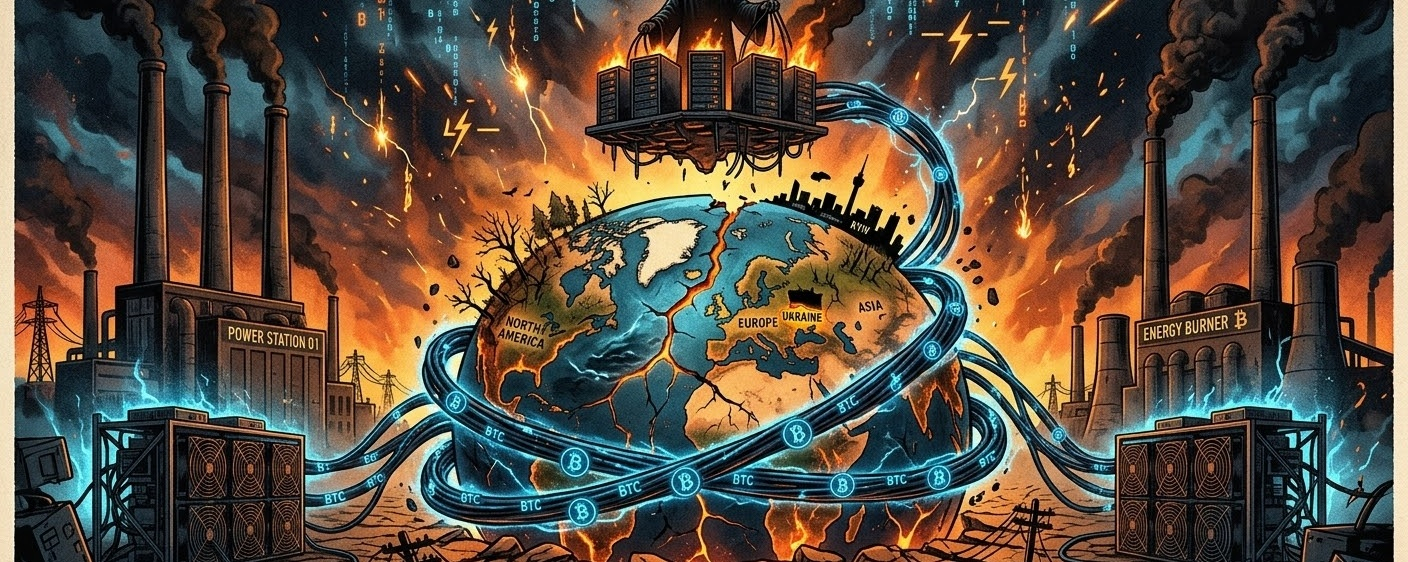

The mysterious disappearance of Satoshi Nakamoto after launching Bitcoin in 2009 sparked a radical theory: the cryptocurrency is not a financial experiment, but an engineered mechanism designed to trigger a global energy collapse and deplete Earth's resources.
The Architecture of Energy Burning
At the core of the network lies the Proof-of-Work algorithm, which makes destroying electricity the primary condition for the system's survival:
Forced Difficulty: The more miners join the network, the harder the calculations become, forcing the construction of massive data centers.
Energy as Security: The security of the blockchain is directly proportional to the volume of gigawatt-hours burned.
The Hidden Detonator
Proponents of this hypothesis believe this resource intensity is no accident. Satoshi Nakamoto created an "economic black hole" to incentivize humanity to voluntarily pour trillions of dollars into mining digital bits, undermining the planet's power grid.
"A system that rewards burning kilowatt-hours is an ideal pump that drains energy from the real world into a digital abyss."
Global Consequences
Today, the Bitcoin network's energy consumption rivals that of an entire European country (such as Poland or Sweden). Mining prolongs the lifespan of outdated coal power plants and provokes local energy crises.
Whether this is a malicious plot to destroy the Earth or simply a consequence of human greed remains an open question. Yet the fact remains: civilization is voluntarily burning the planet's real resources for the sake of virtual code

yes
回答を入力してください
期限切れ