honestly, crypto fatigue is real. every cycle brings a new story, a new ticker, and influencers explaining why this time is different.
we’ve watched excitement rotate through defi, nfts, ai, and whatever comes next. eventually, the noise sounds familiar.
and then there’s the data problem.
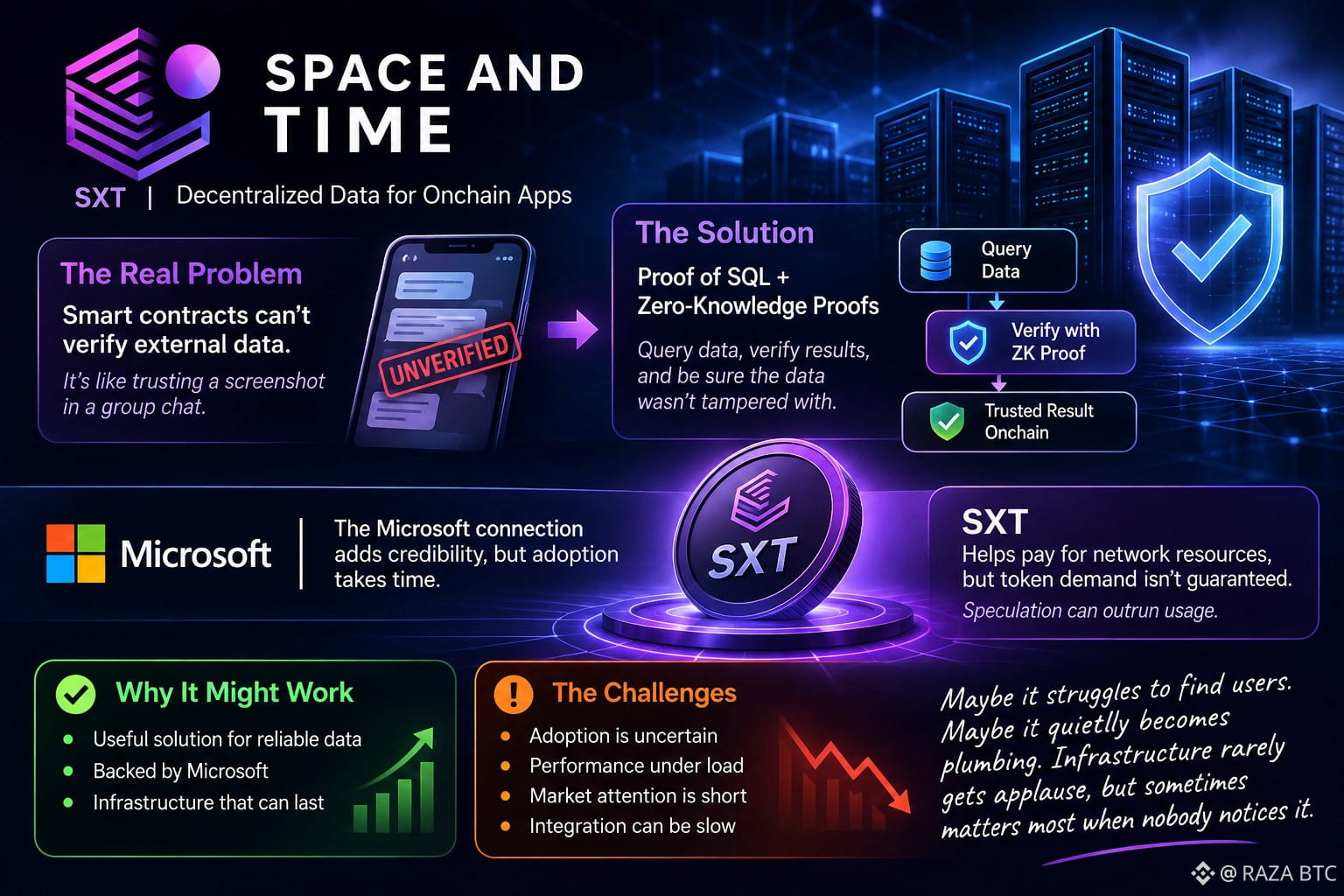
smart contracts can’t inspect datasets or know whether an outside answer has been changed. it’s like making a decision in a group chat full of screenshots, with nobody able to prove which one is real.
space and time caught my attention because it is tackling that problem. its Proof of SQL approach lets applications query data, while zero-knowledge proofs help verify the result was computed correctly and the underlying data wasn’t tampered with. heavy work happens offchain; the proof can be checked onchain. think of it as bringing a referee into an argument instead of trusting the loudest person.
the Microsoft connection adds credibility, but doesn’t guarantee adoption. developers still need reasons to integrate it, and integrations can be slow and awkward. proof generation, data availability, and performance under real demand all need to hold up.
SXT helps pay for network resources, but that doesn’t mean token demand automatically follows. speculation can outrun usage quickly.
maybe this struggles to find users. maybe it quietly becomes plumbing. infrastructure rarely gets applause, but sometimes matters most when nobody notices it.
for now, i’m watching execution, not promises.
#sxt $SXT $NEX $AKE
@SpaceandTime