$HBAR: Intent Trap
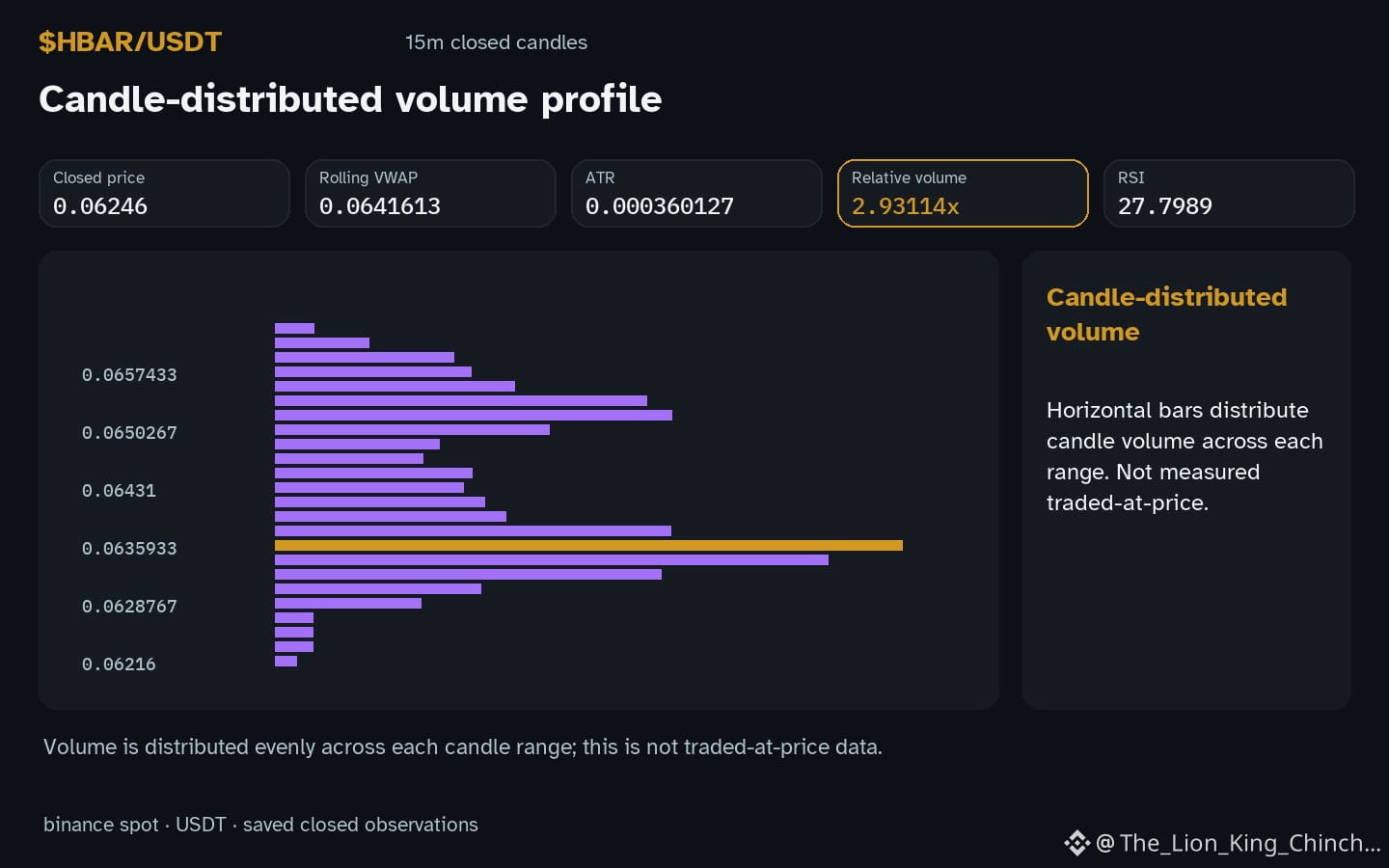
Does pre-session intention clarify entry timing for $HBAR? The record shows $HBAR trading inside a recorded range, trending down each hourly candle. Relative volume is 2.93x the baseline. This pairing creates a specific tension.
Intent Mechanism
Imagine two hypothetical traders. One sets an intention to observe until a clear invalidation level breaks. The other intends to enter immediately for excitement. High volume paired with downward hourly direction can trigger excitement. However, volume alone does not confirm exhaustion. It only measures activity against a baseline. A trader acting on excitement might enter before structure resolves. A trader who waits may miss a reversal if it happens quickly.
Entry Quality Trade-off
Consider entry quality versus chasing. If $HBAR stays inside the recorded range, the quality of an entry remains speculative. Chasing movement increases the risk of poor pricing. Waiting for structure can improve entry quality but risks missing the move entirely. A meaningful invalidation level might be the local support at 0.06245. If price holds above this level, the downward momentum lacks confirmation. If it breaks, the entry signal strengthens. The trade-off is whether to trust the current range or wait for a confirmed break.
Self-Check and Counterexample
A counterexample helps clarify this idea. Suppose $HBAR bounces from support with rising volume. The initial intention to sell might fail. The trader must reassess based on new evidence. If the price closes above the previous resistance at 0.06407, the prior interpretation weakens. The self-check involves asking: did I enter based on a clear rule or on excitement? If the signal is ambiguous, waiting is safer. Reassess when price crosses the local bounds. Do not rely on volume alone to predict direction. Check if the candle closes outside the recorded range before confirming a trend shift.
Probabilistic market research, not a recommendation or guaranteed return.
#HBAR #RiskManagement #CryptoLearning