

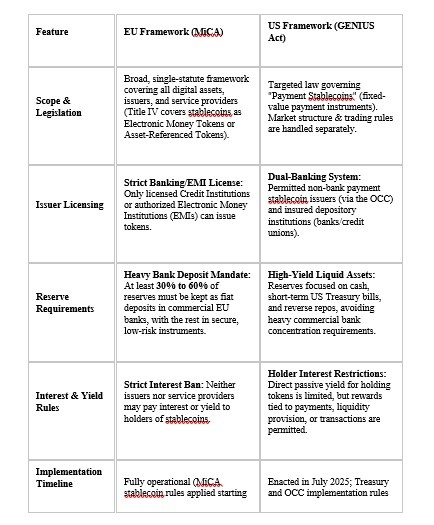
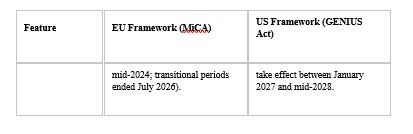
The approach to stablecoin regulation differs fundamentally between the United States and the European Union. The EU implemented a single, holistic crypto-asset framework (MiCA), whereas the US enacted a stablecoin-specific law (the GENIUS Act
Key Structural Differences: US vs. EU (MiCA)
Core Drivers Behind the Divergence
Bank Reserve Liquidity vs. Treasury Backing:
MiCA's Bottleneck: Requiring issuers to hold up to 60% of fiat reserves in European commercial bank accounts introduces operational friction and subjects reserves to lower-yield bank conditions. This rule prompted issuers like Tether (USDT) to exit regulated EU exchanges rather than shift reserves.
The US Model: The US approach favors government liquidity. Issuers back stablecoins almost entirely with US Treasuries and repos, maintaining high yields while offering full monthly reserve transparency.
Single EU Passport vs. US Dual-Regulatory Pathway:
MiCA: Once an issuer secures an EMI license in one EU member state (e.g., France), it obtains a passport to offer stablecoins across all 27 EU nations.
US System: Mirrors traditional dual banking, allowing issuers to seek a federal license through the OCC or operate under qualifying state-level non-bank licenses.
Approach to Market Intermediaries:
MiCA requires all Crypto-Asset Service Providers (CASPs) to delist or restrict non-compliant stablecoins.
US law phases in restrictions on digital asset platforms offering unapproved foreign stablecoins to US citizens, pushing offshore issuers to align with US reserve/AML standards or geofence US users.

